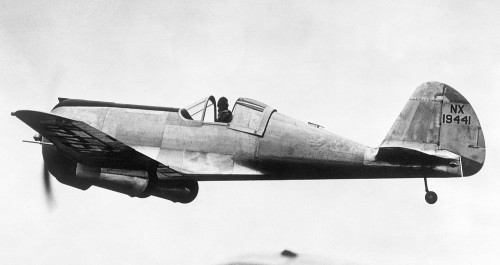
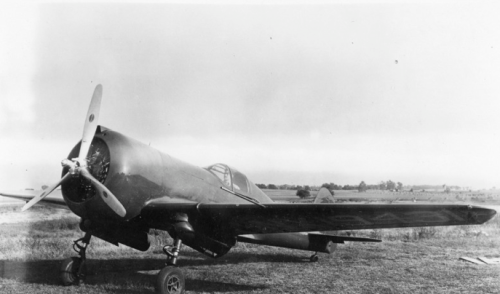
The Curtiss-Wright CW-21 was a lightweight, export-oriented fighter-interceptor developed in 1938 by the St Louis Aeroplane Division of Curtiss-Wright.
Designed by Willis Wells under the direction of George A. Page, the aircraft prioritised rapid climb performance over durability or dogfighting capability.
It lacked armour protection and self-sealing fuel tanks, trading survivability for speed and altitude advantage.
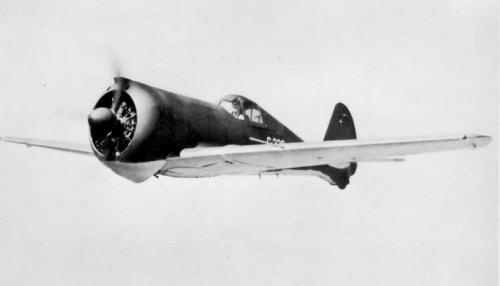
The CW-21 was never adopted by the United States Army Air Corps, which rejected the design after testing at Wright Field.
The aircraft’s operational history is divided between two primary users:
The Chinese Nationalist Air Force
and
The Royal Netherlands East Indies Army Air Force (ML-KNIL).
In China, the prototype was delivered in early 1939 and reportedly saw immediate combat use.
Curtiss-Wright test pilot Bob Fausel claimed to have shot down a Japanese bomber on 4 April 1939 while flying the prototype.
A contract followed for four completed aircraft and 27 kits to be assembled locally at the CAMCO factory in Loiwing, Yunnan Province.
However, Japanese air raids on 26 October 1940 destroyed many of the kits before assembly was completed.
The three completed aircraft were lost in a ferrying accident on 23 December 1941 while en route from Rangoon to Kunming in poor weather.
As a result, the CW-21’s contribution to the Chinese war effort was minimal and short-lived.
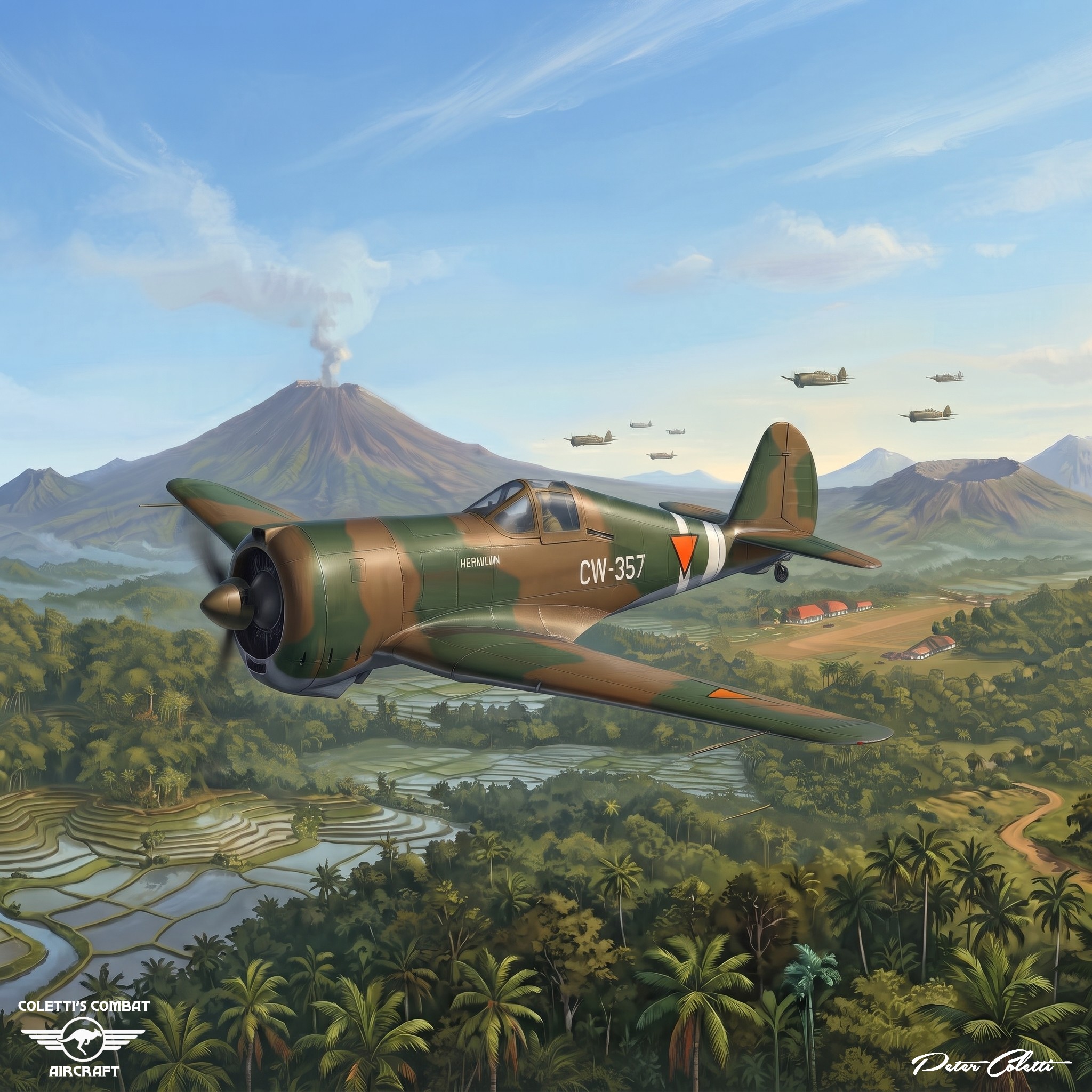
In the Dutch East Indies, the ML-KNIL ordered 24 CW-21B variants in April 1940.
These were delivered to Andir Airfield near Bandung, Java, in early 1941.
The CW-21B featured improved landing gear and minor aerodynamic refinements.
Dutch pilots flew the aircraft during the Japanese invasion of the East Indies in early 1942.
Despite its excellent climb rate—reportedly up to 5,000 feet per minute—the CW-21B was outmatched by the more numerous and better-coordinated Japanese fighters.
Several victories were claimed, but most aircraft were destroyed in combat or during the final retreat.
At least one CW-21B was captured by Japanese forces and repurposed as a liaison aircraft.
In total, only 62 CW-21s were built.
The aircraft’s operational legacy is defined by its limited deployment, rapid obsolescence, and the logistical challenges of wartime assembly and support.
Though it never served with U.S. forces, the CW-21 remains a notable example of pre-war American export fighter design, emphasising climb performance as a tactical niche.
The Variants
Curtiss-Wright Model 21
The Curtiss-Wright Model 21, commonly referred to as the CW-21, was developed in 1938 by the St Louis Aeroplane Division of Curtiss-Wright.
It was conceived as a lightweight, high-climb interceptor designed for export rather than domestic U.S. military service.
The design was led by Willis Wells under the direction of George A. Page, and it was based loosely on the earlier CW-19 two-seat trainer.
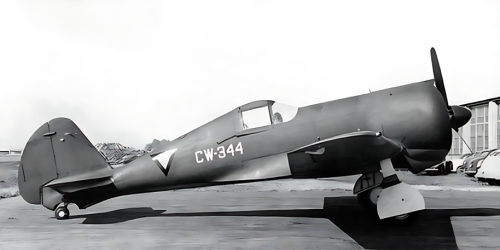
The CW-21 was a single-seat, low-wing monoplane with all-metal construction and a retractable tailwheel undercarriage.
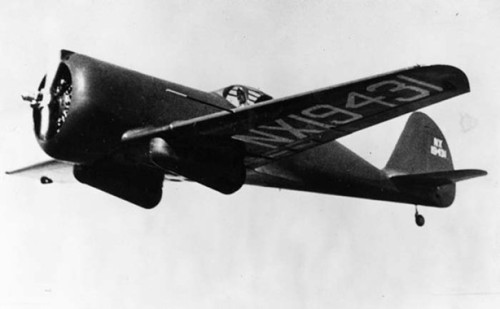
Its most distinctive feature was the rearward-retracting main landing gear housed in large underwing fairings, visually similar to those on the Seversky P-35.
The aircraft was powered by a Wright R-1820-G5 radial engine rated at 1,000 hp and armed with one. 50-calibre and one. 30-calibre machine gun mounted in the nose.
The prototype, registered NX19431 (c/n 21-1), first flew on 22 September 1938.
It was never adopted by the United States Army Air Corps, which rejected the design after testing at Wright Field.
However, the aircraft attracted interest from the Chinese Nationalist Air Force.
In 1939, Curtiss-Wright delivered three completed CW-21 aircraft and 27 sets of components to China for assembly by the Central Aircraft Manufacturing Company (CAMCO) at Loiwing.
Japanese air raids in October 1940 destroyed many of the kits before they could be assembled.
The exact number of CW-21s completed and flown in China remains unknown, but it is believed to be fewer than ten.
The three completed aircraft were lost in a ferrying accident in December 1941.
Model 21B Interceptor (CW-21B)
The CW-21B was a refined version of the original CW-21, developed specifically for the Royal Netherlands East Indies Army Air Force (ML-KNIL).
Ordered in April 1940, a total of 24 CW-21B aircraft were delivered to Java in early 1941.
The CW-21B retained the same basic airframe and engine as the CW-21 but incorporated several key improvements:
The main landing gear was redesigned to retract inward, eliminating the bulky underwing fairings and improving aerodynamics.
The airframe was strengthened, and cockpit ergonomics were improved.
Minor refinements were made to the engine cowling and control surfaces.
Despite its excellent climb rate—reportedly up to 5,000 feet per minute—the CW-21B was lightly built and lacked armour or self-sealing fuel tanks.
It was intended to intercept bombers quickly and avoid dogfighting with enemy fighters.
During the Japanese invasion of the Dutch East Indies in early 1942, CW-21Bs were deployed in combat.
Dutch pilots claimed several aerial victories, but the aircraft were ultimately outclassed by more robust Japanese fighters such as the Nakajima Ki-43.
Most CW-21Bs were destroyed in combat or scuttled during retreat.
At least one was captured and repurposed by Japanese forces.