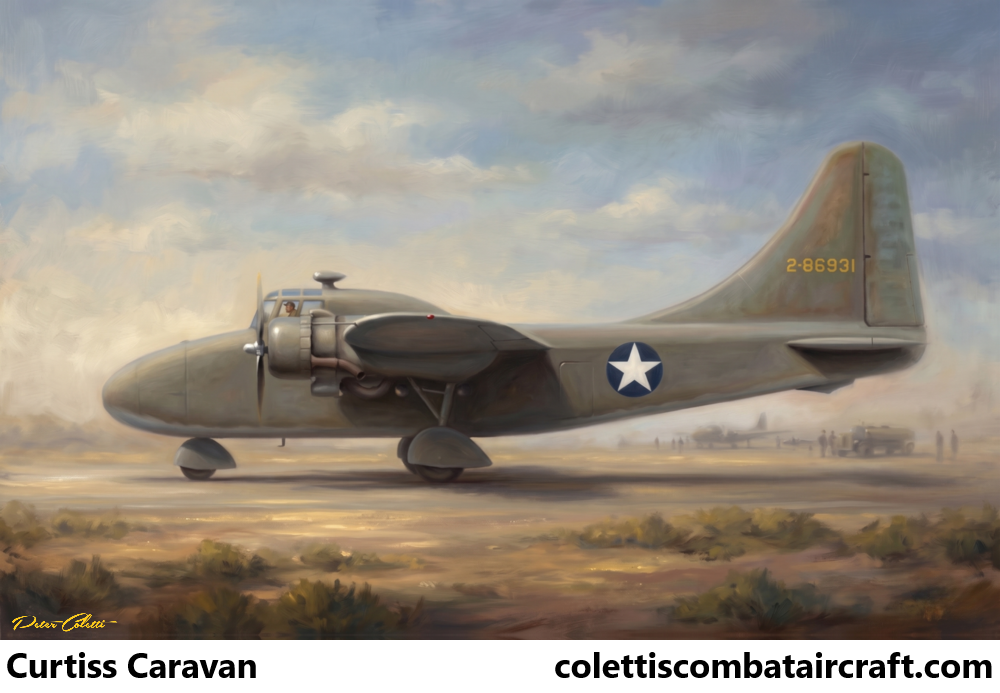
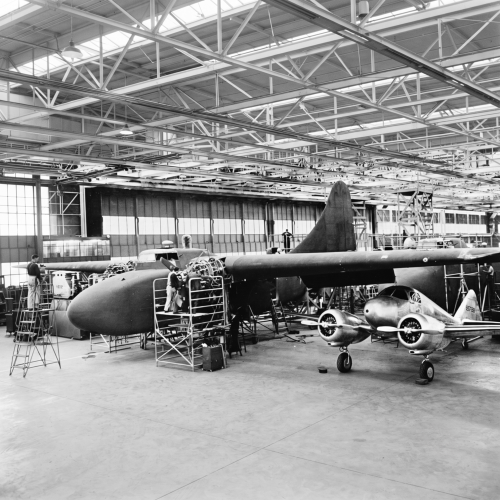
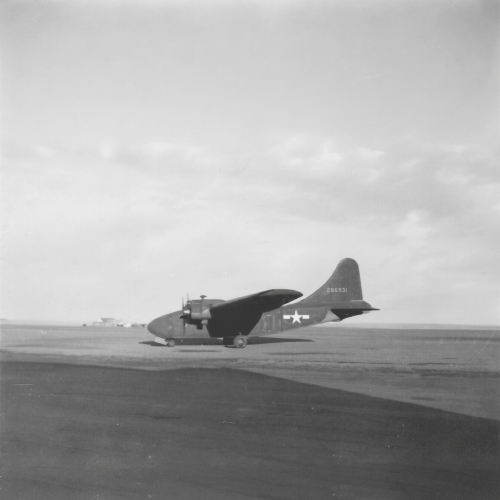
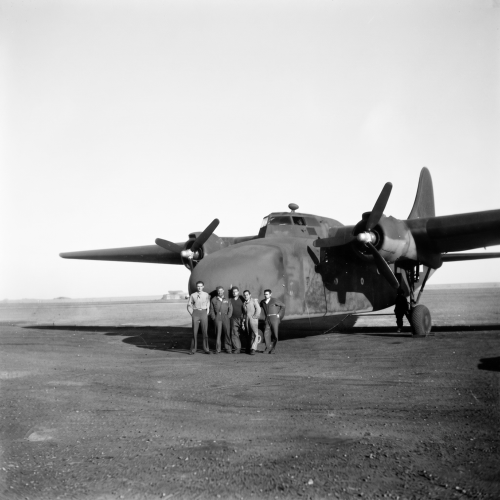
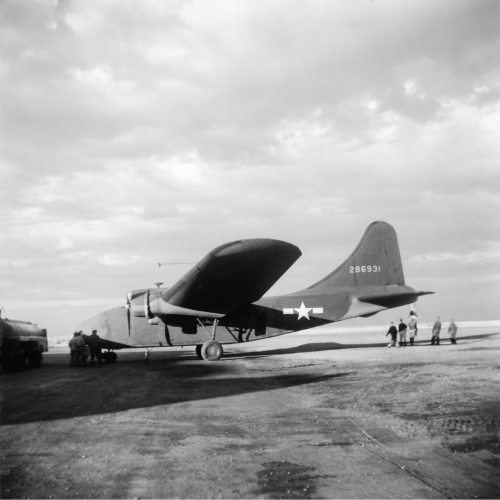
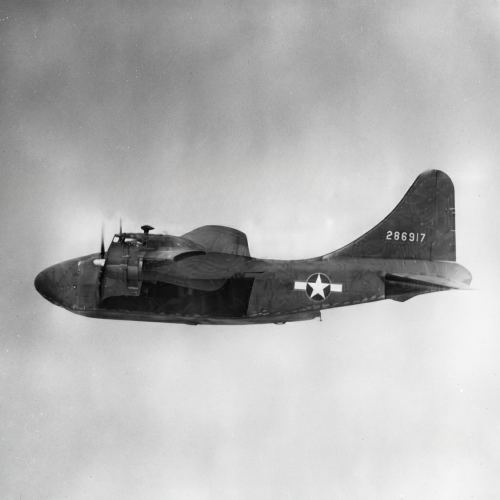
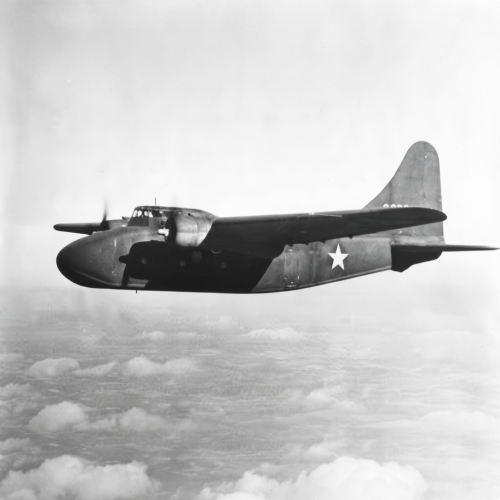
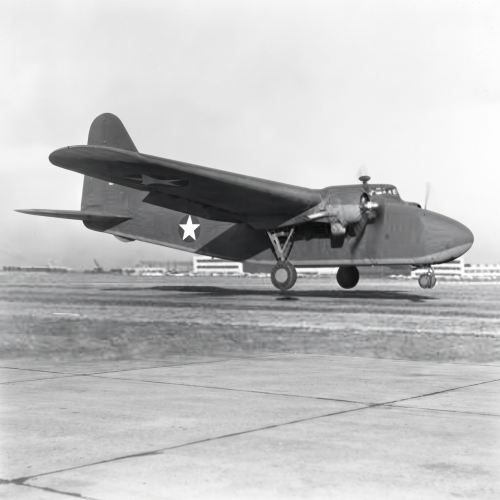
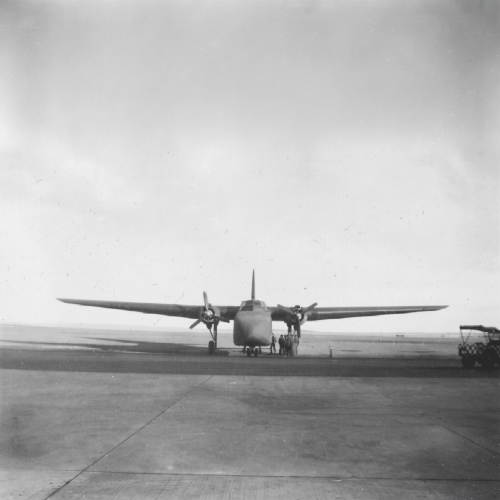
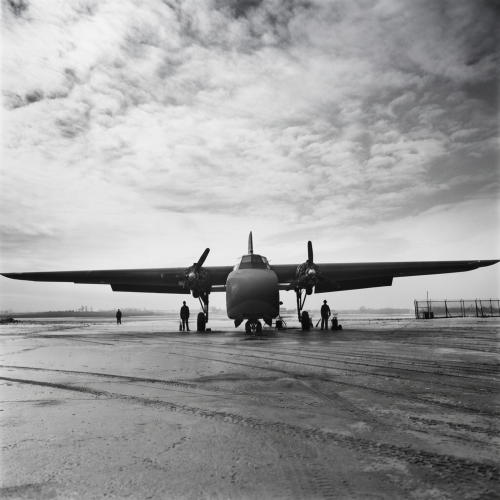
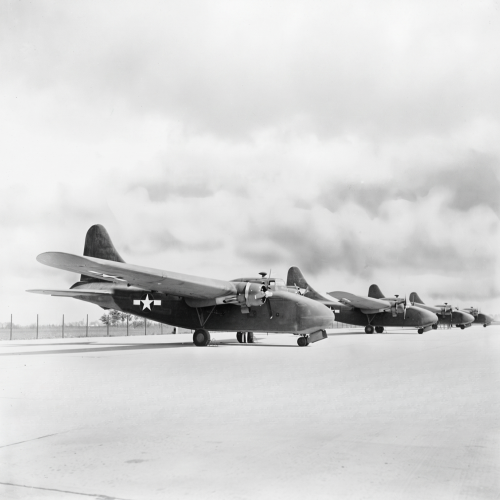
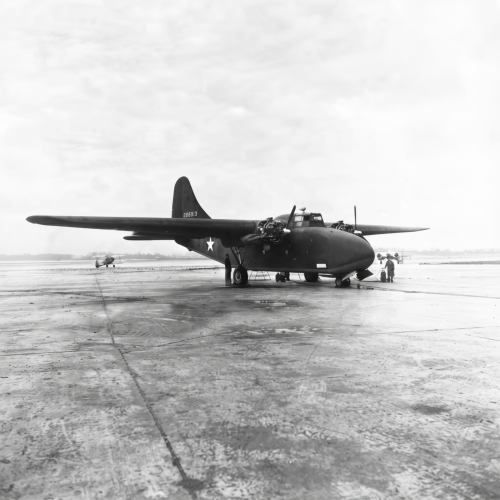
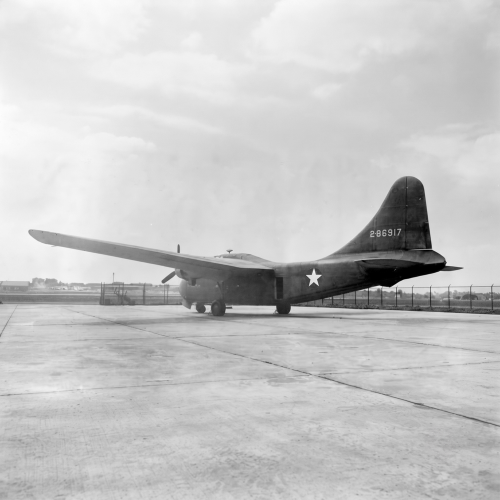
The Curtiss‑Wright C‑76 Caravan emerged directly from the United States’ early‑war fear of strategic material shortages.
After the attack on Pearl Harbour in December 1941, U.S. aircraft production surged, and planners anticipated severe shortages of aluminium, copper, zinc, and tin.
This led the U.S. Army Air Forces (USAAF) to explore aircraft built from non‑strategic materials, particularly wood.
In 1941, Curtiss‑Wright received a contract to design an all‑wood medium transport aircraft whose performance would meet or exceed that of the Douglas C‑47 Skytrain.
The resulting aircraft—company designation CW‑27, military designation C‑76 Caravan—was intended as a contingency transport should aluminium become unavailable.
Design Philosophy and Construction
Chief designer George A. Page, Jr., a pioneer in aircraft design, led the effort.
The C‑76 was conceived as a high‑wing, twin‑engine monoplane with tricycle landing gear, a modern configuration compared to the tail‑wheel C‑47 and Curtiss’ own C‑46 Commando.
Wooden Airframe
Although the British de Havilland Mosquito had proven the viability of lightweight balsa‑birch plywood construction, Curtiss engineers—guided by Forest Products Laboratory research—insisted on dense mahogany plywood.
This decision dramatically increased weight and contributed to chronic performance issues.
To support production, the Army Materiel Command stockpiled mahogany, and furniture manufacturers such as the Baldwin Piano Company were subcontracted to fabricate components.
Assembly was planned at Curtiss‑Wright’s new Louisville plant, with additional production contracted to Higgins Aircraft in New Orleans.
Cargo Features
The C‑76 incorporated several innovative transport features:
A swing‑out nose section that opened to the right, enabling loading of oversized cargo such as jeeps or small artillery pieces.
A large cabin capable of carrying 23 personnel (per early design) or up to 45 troops in later specifications.
A design emphasis on rapid loading and unloading for assault transport operations.
Powerplant
The aircraft was powered by two Pratt & Whitney R‑1830 Twin Wasp radial engines, each producing approximately 1,200 horsepower.
Dimensions and Performance
The C‑76 was one of the largest wooden aircraft ever built.
Its principal specifications included:
Length: 68 ft 4 in
Wingspan: 108 ft 2 in
Height: 27 ft 3 in
Wing area: 1,560 sq ft
Gross weight: ~28,000 lb
Cruising speed: ~160 mph
Range: ~750 miles
Service ceiling: ~22,600 ft
Despite its size, the aircraft was underpowered, and its heavy wooden structure produced a poor power‑to‑weight ratio.
Flight tests revealed severe airframe vibrations and stability issues, sometimes requiring ballast beyond maximum take-off weight.
Development and Testing
The first prototype, designated YC‑76, flew on May 3, 1943, from Curtiss‑Wright’s St Louis facility.
Structural Failures
Testing quickly exposed serious flaws:
Excessive weight from structural reinforcements.
Engine‑induced vibrations that stressed the wooden airframe.
Poor durability and high maintenance demands.
Static wing tests that failed at only 40% of the design load, far below acceptable standards.
A catastrophic accident occurred on May 10, 1943, when the second prototype disintegrated midair due to missing bolts, killing all three crew members.
These failures undermined confidence in the aircraft’s structural integrity and long‑term viability.
Production
The original contract called for:
11 YC‑76 preproduction aircraft
5 C‑76 production aircraft
9 YC‑76A revised variants
Production was attempted at:
Curtiss‑Wright’s St Louis Division
Curtiss‑Wright’s Louisville plant
Higgins Aircraft’s New Orleans factory (contract cancelled before completion)
Only 25 aircraft were completed in total, at an estimated programme cost of $400 million.
Operational Assessment and Cancellation
By mid‑1943, the strategic rationale for a wooden transport evaporated.
U.S. aluminium production had surged, eliminating the need for wooden substitutes.
At the same time, the C‑76’s performance was clearly inferior to existing transports such as the C‑47 and C‑46.
The USAAF cancelled the programme on August 3, 1943, and by October 1, 1945, ordered all remaining aircraft purged from inventory.
Service Use
No C‑76 Caravan ever saw combat service.
Surviving airframes were relegated to:
Ground handling training
Structural testing
Survey work
Limited non‑combat utility roles
Several were sold as surplus; at least one was condemned after further accidents.
Variants
YC‑76
The initial preproduction prototype series.
Featured the baseline mahogany plywood structure and Twin Wasp engines.
C‑76
The intended production model.
Only five were completed before cancellation.
YC‑76A
A revised variant incorporating structural modifications intended to address weight and durability issues.
Nine were built, but testing still revealed unacceptable deficiencies.
Historical Significance
Although a failure as an operational aircraft, the Curtiss‑Wright C‑76 Caravan remains historically important as:
A major U.S. experiment in large‑scale wooden aircraft construction during WWII.
A case study in the limitations of substituting strategic materials under wartime pressure.
An example of how engineering decisions—such as choosing mahogany over lighter woods—can determine the fate of an entire aircraft programme.
A reminder that not all wartime innovations succeed, but even failures contribute to the evolution of aircraft design and materials science.