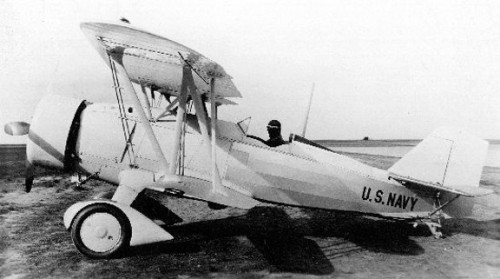
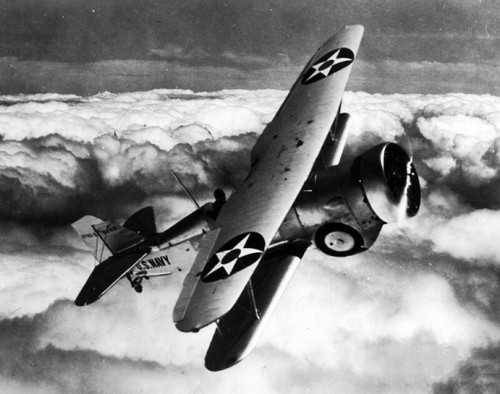
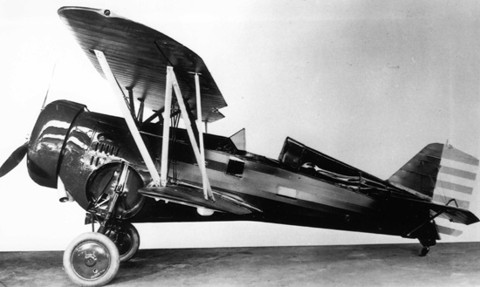
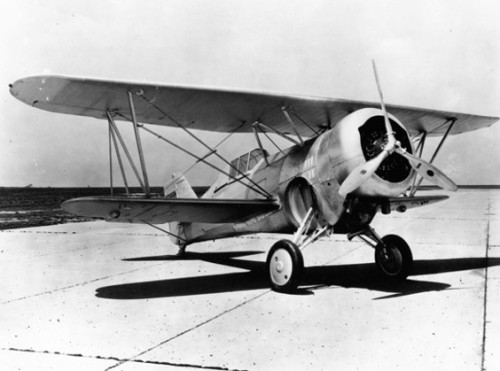
The Curtiss F11C Goshawk, introduced in 1932, was a carrier-based biplane fighter and fighter-bomber developed for the U.S. Navy.
It was part of the Curtiss Hawk family and designated Model 64 by Curtiss.
The aircraft featured:
A 600 hp Wright R-1510-98 radial engine.
Metal-covered control surfaces for improved durability.
A hardpoint under the fuselage for a 474 lb (215 kg) bomb or auxiliary fuel tank.
Two fixed forward-firing. 30 in (7.62 mm) machine guns.
The F11C was later redesignated BF2C-1 under the Navy’s bomber-fighter classification.
Only 28 production units were built, making it a limited but influential design.
U.S. Navy Service
The F11C/BF2C Goshawk served briefly aboard USS Saratoga (VF-1B, VB-2B) and USS Enterprise (VB-6).
It was used primarily for dive-bombing trials and fighter-bomber training but was quickly rendered obsolete by faster monoplanes like the Grumman F3F and Brewster F2A.
By the outbreak of WWII, the Goshawk had been retired from frontline U.S. Navy service and relegated to training or experimental roles.
Export Success and Combat Use
Despite its short U.S. career, the Goshawk and its export variants (notably the Hawk II and Hawk III) saw extensive use in foreign air forces during WWII:
China
The Hawk III (a derivative of the F11C) was the main fighter of the Chinese Nationalist Air Force during the early stages of the Second Sino-Japanese War (1937–1945).
It was used in air defence, ground attack, and escort missions, notably during the Battle of Shanghai.
Chinese pilots flying Hawk IIIs scored early victories against Japanese bombers, despite being outmatched by newer aircraft like the Mitsubishi A5M.
Thailand
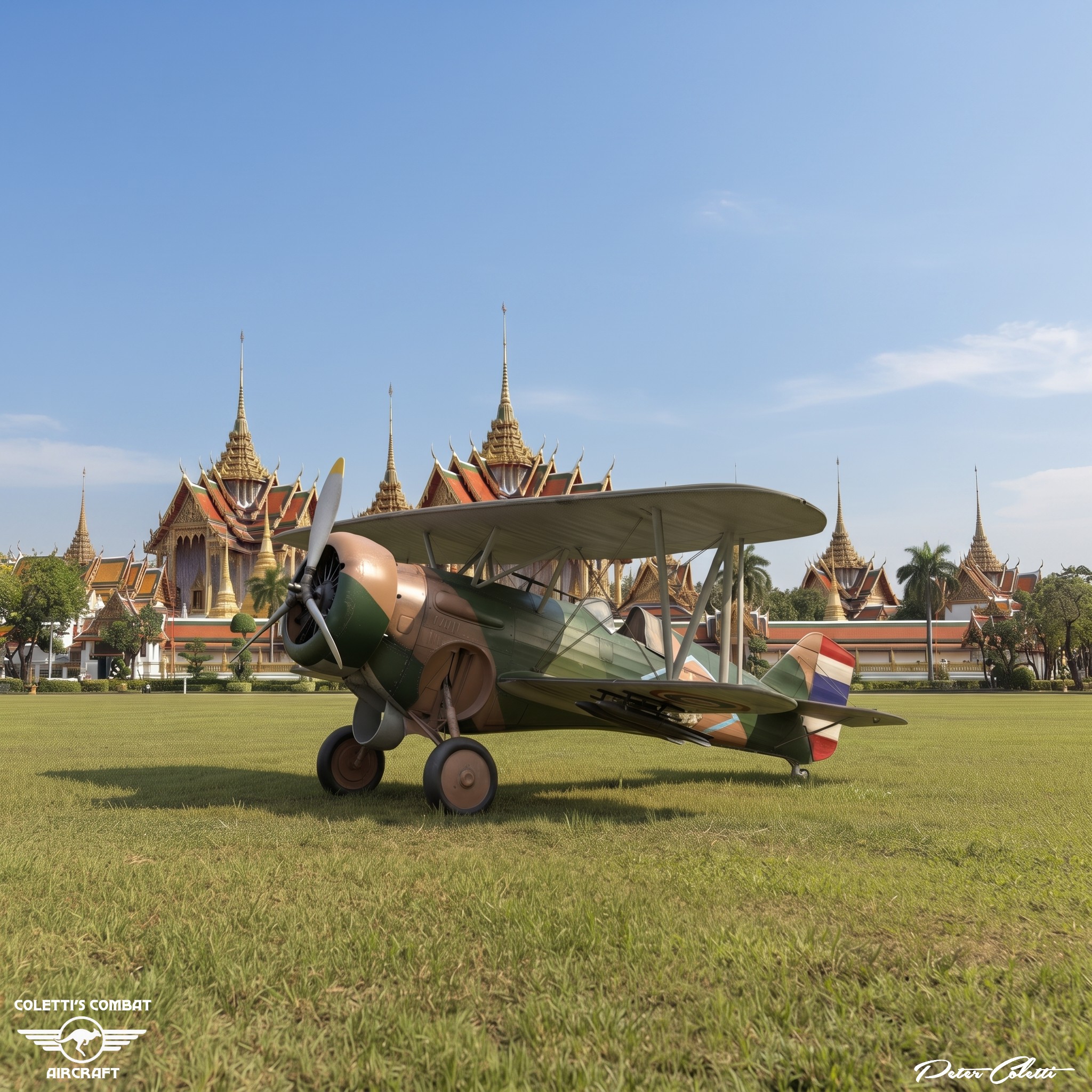
Thailand operated Hawk IIIs during the Franco-Thai War (1940–41) and into WWII.
These aircraft were used for border patrol and limited combat operations, though they were soon replaced by more modern types.
Colombia
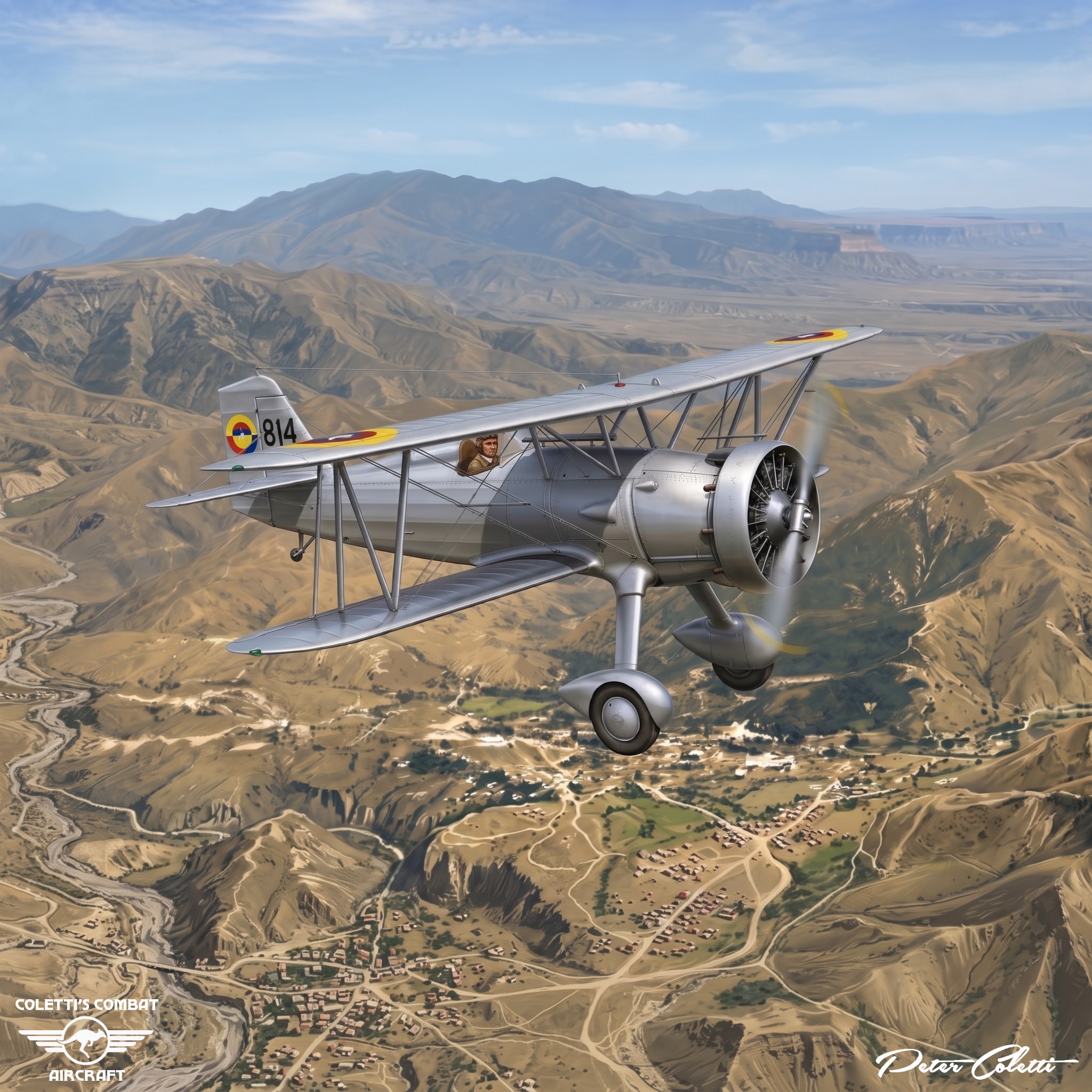
Colombia used Hawk IIs during the Leticia Incident (1932–33), and some remained in service into the early 1940s for coastal patrol and training.
Peru
Peru operated Hawk IIs and IIIs during the Ecuadorian–Peruvian War (1941), using them for ground support and reconnaissance.
Others
Other countries including Chile, Norway, and Turkey acquired Hawk variants, but these were mostly used for training or secondary roles by the time WWII began.
Legacy
The Curtiss F11C Goshawk marked the end of Boeing’s monopoly on U.S. Navy single-seat fighters and helped Curtiss establish dominance in Army aviation.
Though obsolete by WWII, its export variants extended its combat relevance well into the 1940s.
It served as a bridge between WWI-era biplanes and modern monoplane fighters, influencing dive-bombing tactics and carrier operations.
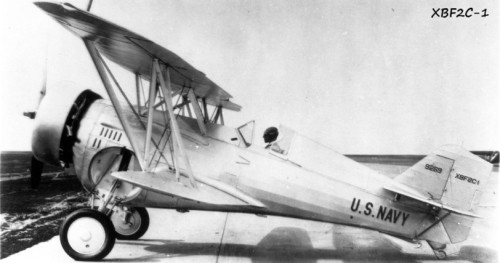
XF11C-1 (Model 64)
Type
First prototype of the Goshawk series.
Origin
Developed from the earlier Curtiss F6C Hawk.
Engine
600 hp Wright R-1510-98 radial.
Features
Introduced metal-covered control surfaces, a single-leg cantilever landing gear, and a hardpoint for a 474 lb bomb or auxiliary fuel tank.
Significance
Marked Curtiss’s shift towards dual-role fighter-bombers for the U.S. Navy.
First flown in September 1932, it laid the foundation for the F11C-2 production model.
XF11C-2 (Model 64A) → XBFC-2
Type
Second prototype with refinements.
Engine
Wright R-1820-78 Cyclone.
Modifications
Longer landing gear legs with low-pressure tyres, a tailwheel replacing a tail skid, and underwing racks for light bombs.
Redesignation
Became XBFC-2 after the Navy adopted the “Bomber-Fighter” classification.
Role
Served as the direct prototype for the F11C-2 production aircraft.
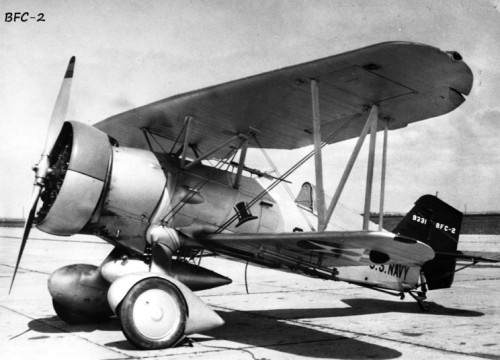
F11C-2 (Model 64A) → BFC-2
Type
Production version of the XF11C-2.
Production
28 built.
Armament
Two fixed .30-in machine guns; under-fuselage bomb crutch for dive-bombing.
Service
Operated aboard USS Saratoga and USS Enterprise in fighter-bomber roles.
Redesignated BFC-2 in 1934 to reflect its dive-bombing capability.
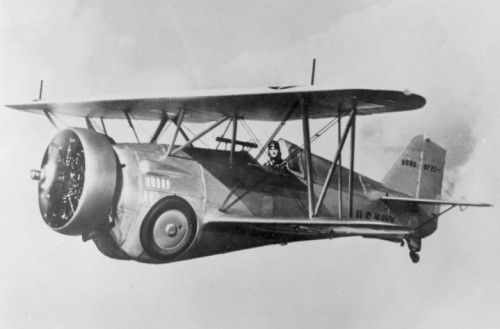
XF11C-3 (Model 67) → XBF2C-1
Type
Experimental conversion of an F11C-2.
Engine
700 hp Wright R-1820-80.
Innovation
Featured retractable landing gear—an advanced feature for biplanes.
Redesignation
Became XBF2C-1, serving as the prototype for the BF2C-1 production model.
Purpose
Tested aerodynamic improvements and structural upgrades for carrier operations.
BF2C-1 Goshawk (Model 67A)
Type
Final U.S. Navy production variant.
Production
27 built.
Engine
Wright R-1820-80 Cyclone.
Features
Retractable landing gear, Townend ring cowling, and improved dive-bombing capability.
Service
Briefly used by VB-6 aboard USS Enterprise; retired early due to landing gear reliability issues.
Legacy
Though short-lived in U.S. service, its design influenced export models like the Hawk III.
Saw action in the Leticia Incident (Colombia), Chaco War (Bolivia), and early Sino-Japanese War (China).
Thai Designation
B.Kh.9 in Royal Thai Air Force service.
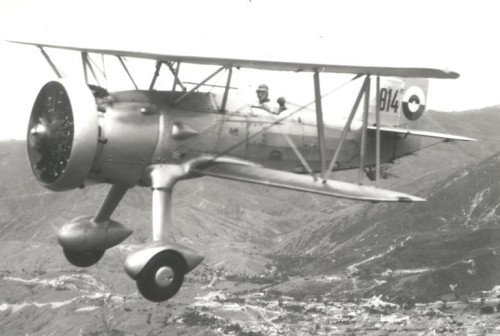
Hawk III (Model 68)
Type
Export version of BF2C-1.
Engine
770 hp Wright R-1820-F53.
Production
137 built.
Customers
Argentina, China, Thailand, and Turkey.
Combat Use
Main fighter of the Chinese Nationalist Air Force during the early Sino-Japanese War; also used by Thailand during the Franco-Thai War.
Thai Designation
B.Kh.10 in Royal Thai Air Force service.
Legacy
Most successful Hawk variant in combat, especially in Asia.
Hawk IV (Model 79)
Type
Final evolution of the Hawk series.
Engine
790 hp Wright R-1820-F56.
Production
One demonstrator built.
Purpose
Intended to attract further export interest with enhanced performance.
Outcome
Did not enter mass production but showcased Curtiss’s final refinements to the biplane fighter-bomber concept.
Specifications
(F11C-2) & (BFC-2) Crew
1 Length
22 ft 7 in (6.88 m) Wingspan
31 ft 6 in (9.60 m) Height
9 ft 8.625 in (2.96228 m) Wing area
262 sq ft (24.3 m²) Airfoil Root and Tip
Clark Y Empty weight
3,037 lb (1,378 kg) Gross weight
4,132 lb (1,874 kg) Powerplant
1 × Wright R-1820-78 Cyclone,
9-cylinder air-cooled radial piston engine,
600 hp (450 kW) Propellers
3-bladed metal propeller Performance Maximum speed
202 mph (325 km/h, 176 kn) Cruise speed
150 mph (240 km/h, 130 kn) Range
522 mi (840 km, 454 nmi) Service ceiling
25,100 ft (7,700 m) Rate of climb
2,300 ft/min (12 m/s) Armament Guns
2 × fixed, synchronised. 30 in (7.62 mm) AN/M2 Browning machine guns in the forward fuselage Bombs
1 × 474 lb (215 kg) bomb on an under-fuselage hardpoint or
2 × 117 lb (53 kg) bombs were carried, one under each lower wing.
Sources
I reviewed a selection of publications to gather inspiration for composing the text for this aircraft.
Here’s the list of sources.
Curtiss Aircraft, 1907-1947, by Peter M. Bowers.
Curtiss Company Profile 1907-1947 by Aeroplane Monthly.
A History of Chinese Aviation: Encyclopaedia of Aircraft and Aviation in China until 1949 by Lennart Andersson.
Curtiss Navy Hawks In Action 156, Squadron Signal Publications.
Encyclopaedia of Chinese Aircraft, Vol. 1.
Latin American Air Wars And Aircraft, 1912-1969 – Dan Hagedorn.