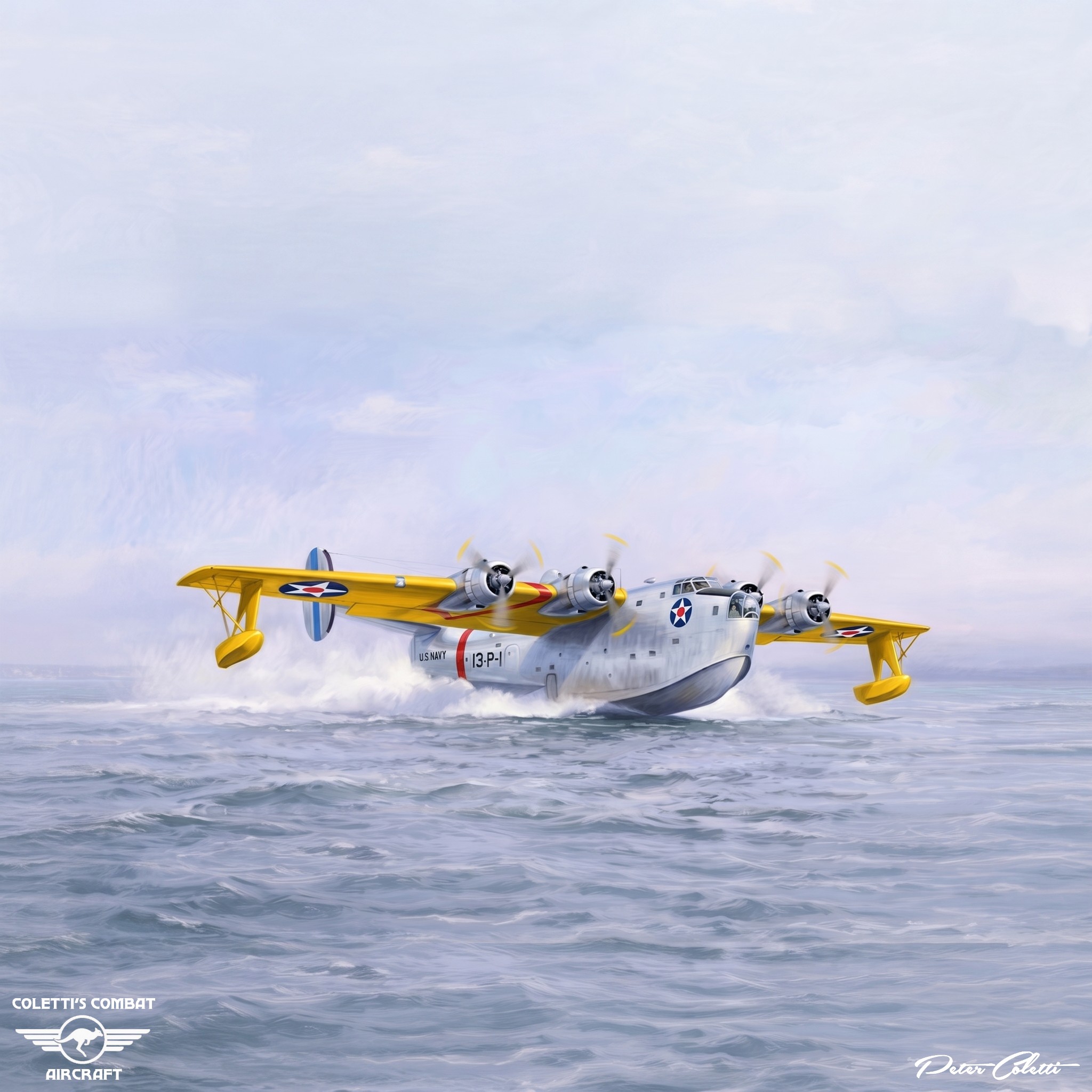
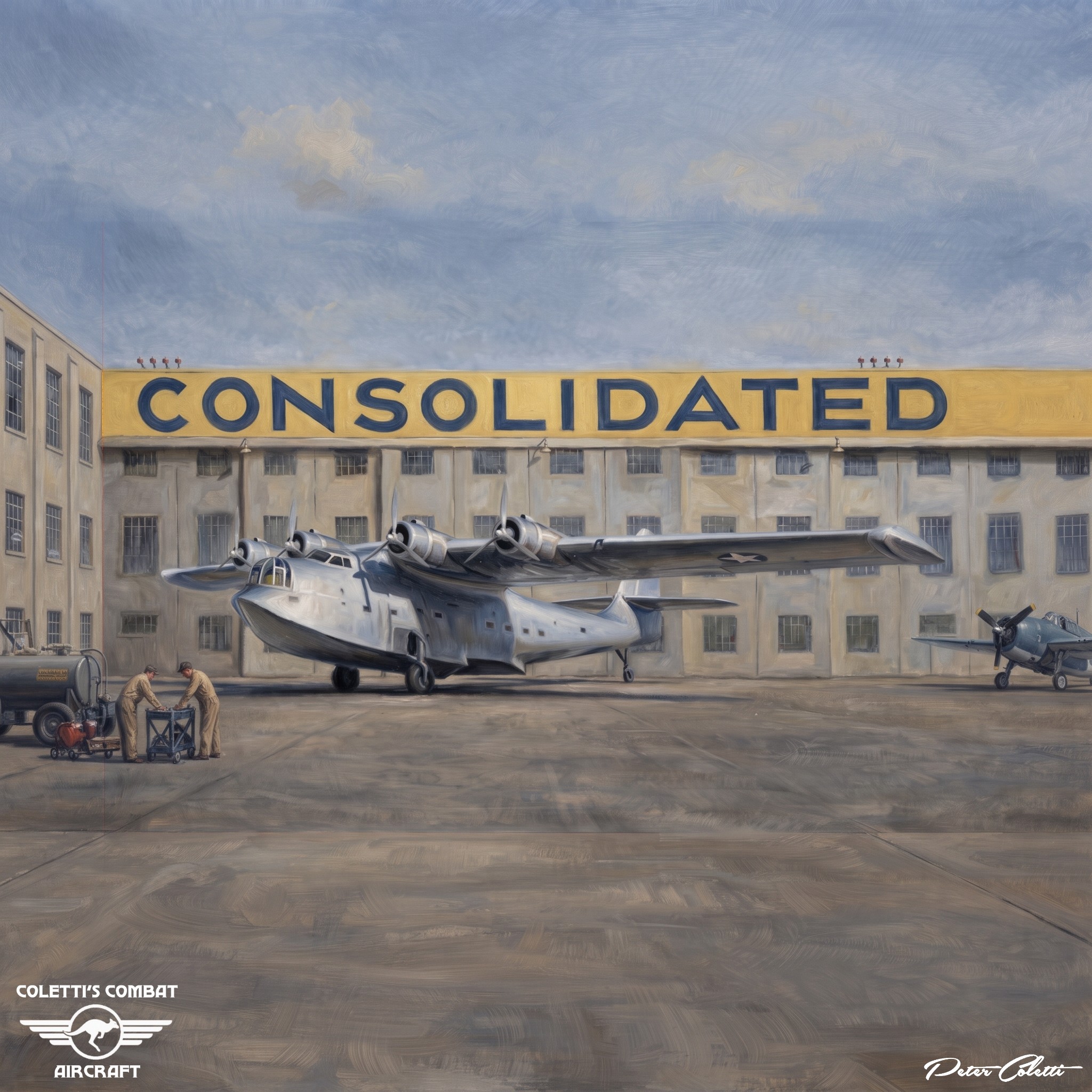
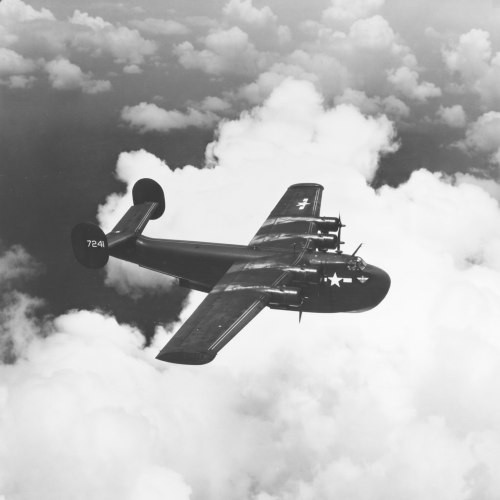
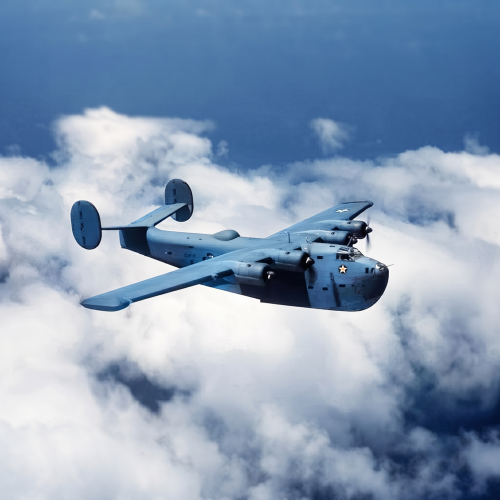
The Consolidated PB2Y Coronado emerged from a late‑1930s U.S. Navy requirement for a next‑generation flying boat that would exceed the capabilities of the PBY Catalina.
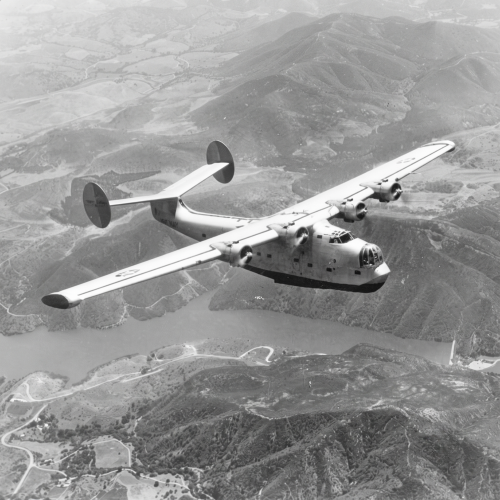
Consolidated PB2Y-3 Coronado
The Navy sought a larger, longer‑range, heavier‑armed patrol bomber capable of operating across the vast Pacific, where water landings were often the only option.
Two prototypes were ordered: the Consolidated XPB2Y‑1 and the Sikorsky XPBS‑1, both contracted in 1936.
The Sikorsky aircraft flew first, but the Navy ultimately favoured Consolidated’s design after the XPB2Y‑1 made its maiden flight on 17 December 1937.
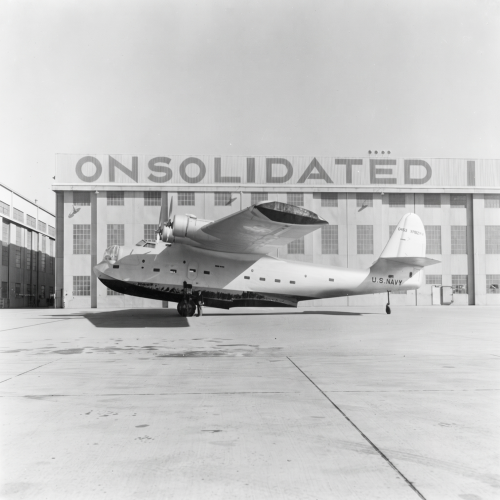
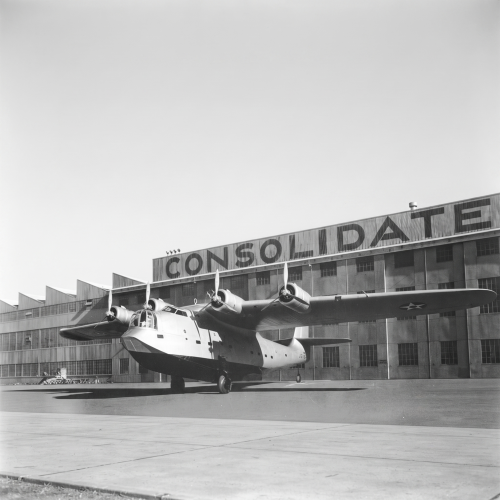
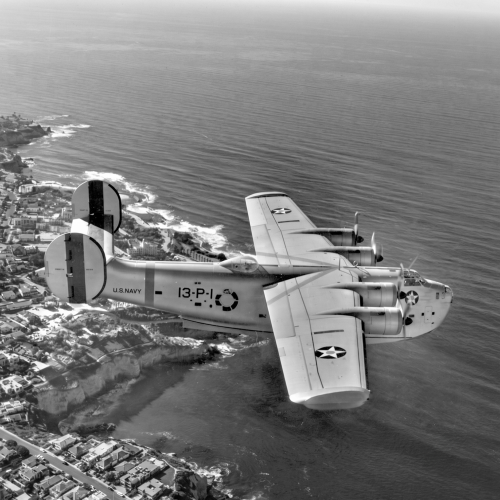
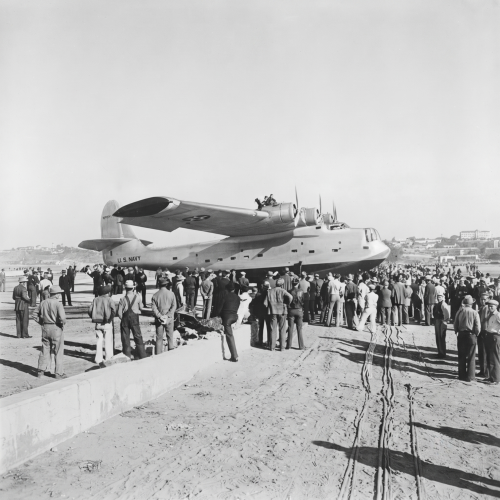
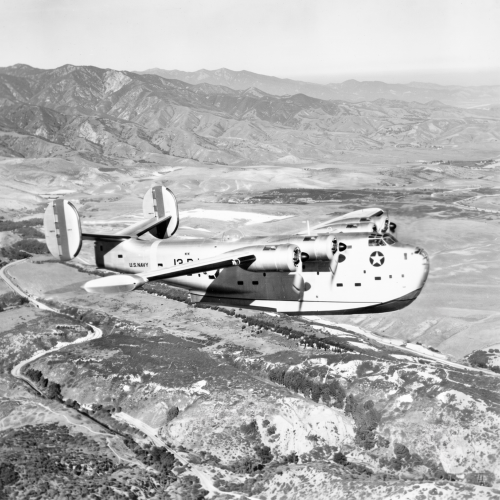
Consolidated XPB2Y-1 Coronado
Early testing revealed serious stability problems, especially lateral instability.
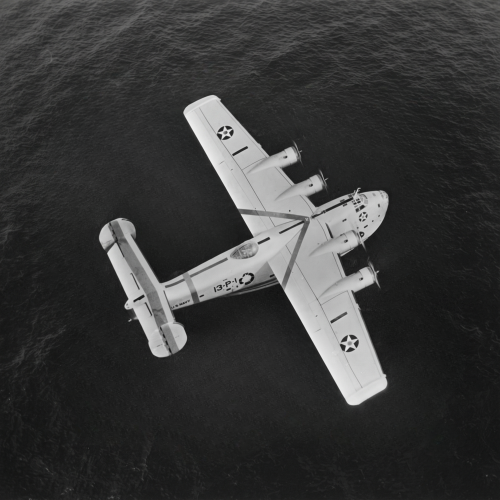
Consolidated spent more than a year refining the design, experimenting with twin fins, hull reshaping, and eventually adopting a tail configuration similar to the company’s B‑24 Liberator.
Hydrodynamic issues also required a deeper hull and a redesigned bow.
Consolidated XPB2Y-1 Coronado
These refinements produced the PB2Y‑2, ordered in March 1939, with deliveries beginning in December 1940.
The Coronado was expensive—roughly three times the cost of a PBY Catalina—but it represented a major step forward in flying‑boat engineering, incorporating retractable wingtip floats, thick wing roots with internal bomb bays, and all‑metal construction.
Design and Technical Characteristics
Airframe and Hydrodynamics
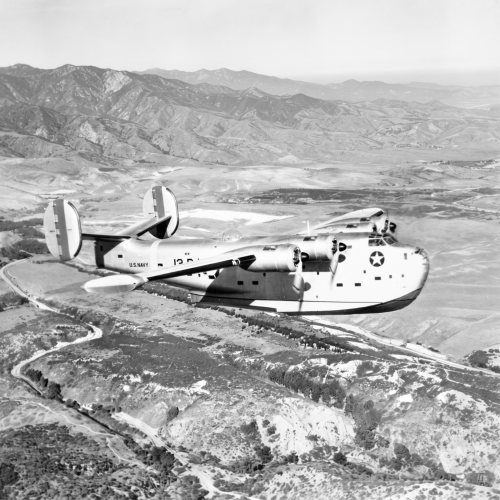
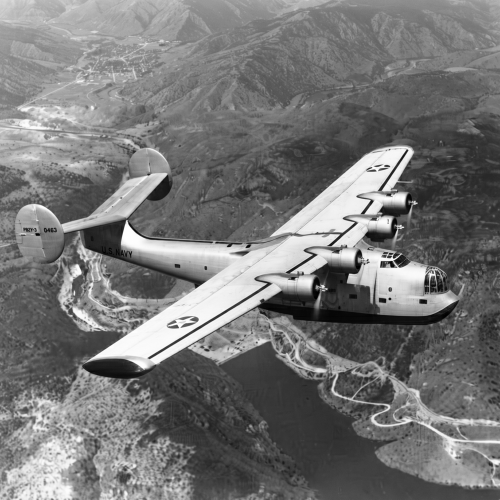
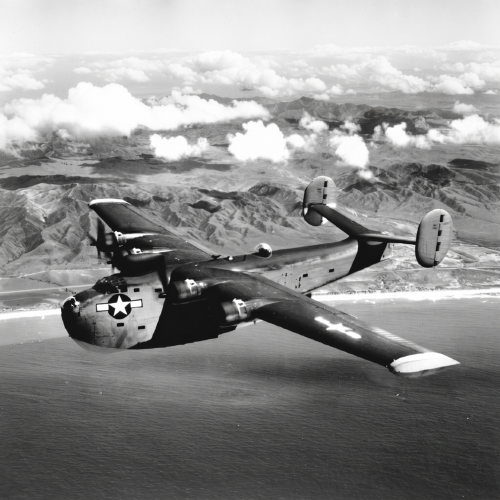
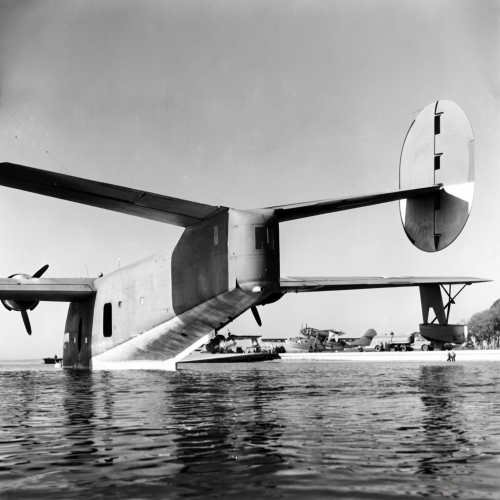
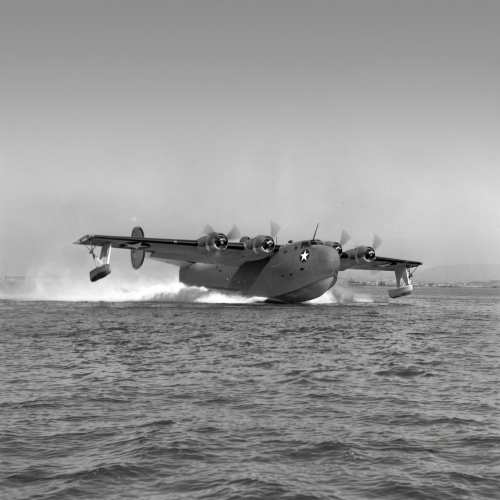
The PB2Y featured a high cantilever wing, a deep hull optimised for open-ocean operations, and retractable floats that formed streamlined wingtips when raised.
Its large wing area (165 m²) and tall vertical surfaces gave it a distinctive profile among WWII flying boats.
The hull was designed for long‑distance water operations, with reinforced chines and a stepped planing bottom.
The aircraft’s size made it the largest flying boat in U.S. Navy service during the early war years.
Consolidated PB2Y-3 Coronado
Powerplant and Propulsion
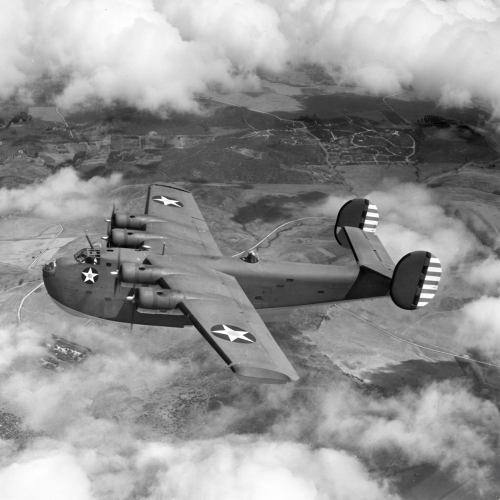
Most Coronados were powered by four Pratt & Whitney R‑1830 Twin Wasp radial engines, with power ratings varying by variant:
PB2Y‑2: R‑1830‑78, 1,020 hp
PB2Y‑3: R‑1830‑88, 1,200 hp
PB2Y‑5: R‑1830‑92, 1,200 hp (single‑stage supercharger optimized for low‑altitude transport)
The inner engines used reversible‑pitch propellers to assist water manoeuvring, while the outer engines used feathering propellers.
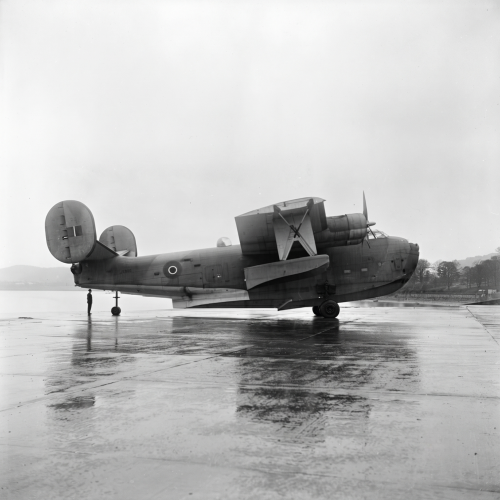
Consolidated PB2Y-2 Coronado
Crew and Internal Layout
A typical combat Coronado carried a crew of nine to ten, including pilots, a navigator, a radio operator, engineers, and gunners.
The thick wing roots housed bomb bays and fuel tanks, while the fuselage included multiple defensive positions.
Consolidated PB2Y-5 Coronado
Armament
Combat‑configured Coronados carried:
Up to eight .50‑cal machine guns in powered nose, dorsal, tail, and waist positions
Up to 12,000 lb (5,400 kg) of bombs or two Mark 13 torpedoes are stored in wing bomb bays
Consolidated PB2Y-3 Coronado
Performance
Performance varied by variant, but typical figures for the PB2Y‑5 include:
Max speed: ~194 mph (310 km/h)
Cruise speed: ~170 mph (272 km/h)
Range: ~1,070 miles (1,720 km)
Service ceiling: ~20,500 ft (6,250 m)
The Coronado’s range was significantly shorter than the Catalina or the British Sunderland, limiting its usefulness as a long‑range patrol bomber.
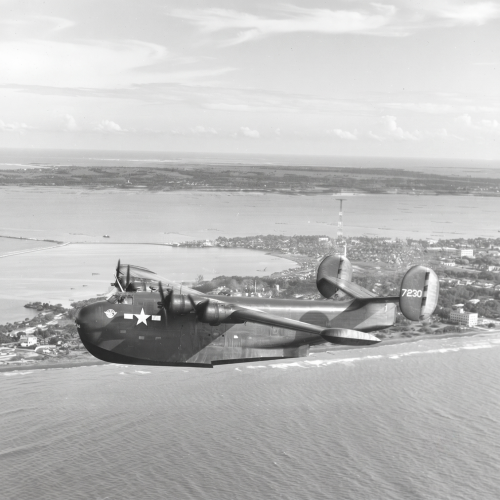
Consolidated PB2Y-3 Coronado
Operational History in World War II
Early Combat Use
The PB2Y‑3 entered service shortly after the attack on Pearl Harbour.
Coronado’s flew anti-submarine patrols, bombing missions, and reconnaissance, though their limited range and heavy fuel consumption quickly revealed shortcomings.
They participated in several raids, including four attacks on Wake Island between 30 January and 9 February 1944.
Combat encounters were relatively rare, but Coronados claimed five enemy aircraft were shot down during the war.
Consolidated PB2Y-3 Coronado
Transport and Medical Roles
By mid‑war, the Coronado’s operational niche shifted decisively towards transport, logistics, and medical evacuation.
The aircraft’s large hull made it ideal for carrying cargo, personnel, and wounded.
Specialised transport variants could carry 44 passengers or 25 stretchers in medical configuration.
The Coronado became a major asset of the Naval Air Transport Service (NATS), moving personnel and supplies across the Pacific.
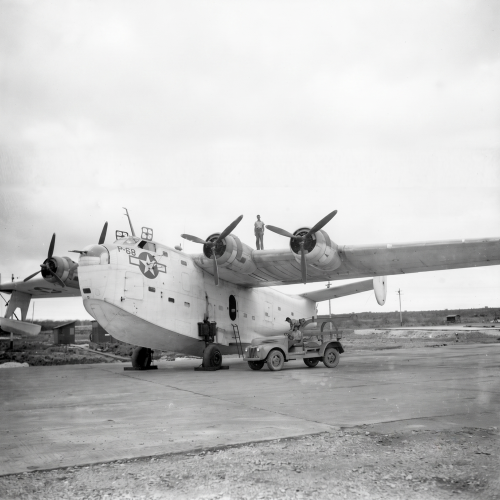
Consolidated PB2Y-3R Coronado
RAF Service
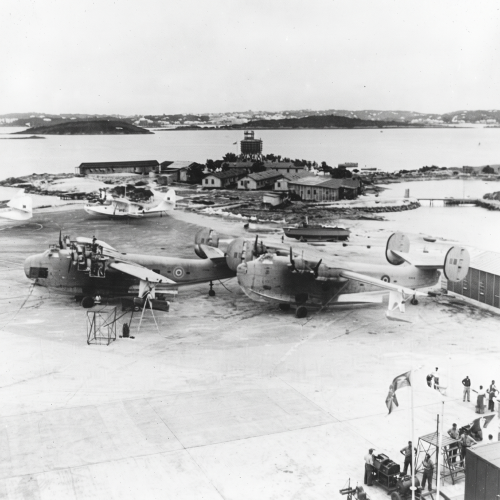
Ten Coronado’s were supplied to the Royal Air Force as Coronado I (PB2Y‑3B).
Intended for maritime patrol, they were quickly reassigned to transport duties due to their short range.
RAF Coronado’s operated transatlantic routes via Bermuda, Puerto Rico, Newfoundland, Brazil, and West Africa.
Consolidated PB2Y-3 Coronado
Notable Missions
One Coronado famously transported Admiral Chester Nimitz to Tokyo Bay for the signing of the Japanese surrender in September 1945.
Consolidated PB2Y-3R Coronado
Accidents and Losses
The Coronado suffered numerous accidents—water operations, heavy weights, and complex handling contributed to mishaps.
Several wrecks remain in places such as Saipan’s Tanapag Lagoon and Kwajalein Atoll, where they have become subjects of marine archaeological study.
Variants
XPB2Y‑1
Prototype with four XR‑1830‑72 engines (1,050 hp).
One built.
PB2Y‑2
First production model; six built.
It featured a modified hull, six .50‑cal guns, and R‑1830‑78 engines.
XPB2Y‑3
One PB2Y‑2 converted into the prototype for the PB2Y‑3.
Transport conversion with faired‑over turrets and seating for 44 passengers; 31 built.
XPB2Y‑4
Experimental version with four Wright R‑2600 engines (1,600 hp).
PB2Y‑5 / PB2Y‑5R
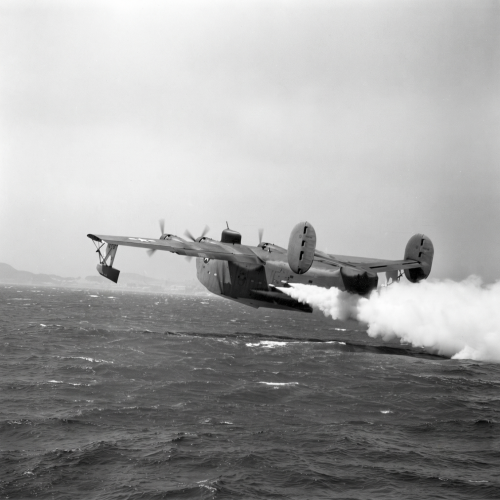
PB2Y‑3 conversions with R‑1830‑92 engines, increased fuel capacity, and optional RATOG (rocket‑assisted takeoff).
The PB2Y‑5R served as an unarmed transport and medical evacuation aircraft.
Consolidated PB2Y-3R Coronado
Postwar Fate
By 1946, the Coronado was considered obsolete.
Its short range, high operating cost, and the rapid postwar shift towards land‑based transports led to mass retirement.
Most were scrapped or used as gunnery targets.
A few entered civilian service; Howard Hughes reportedly used one for water‑landing practice before flying the H‑4 Hercules.
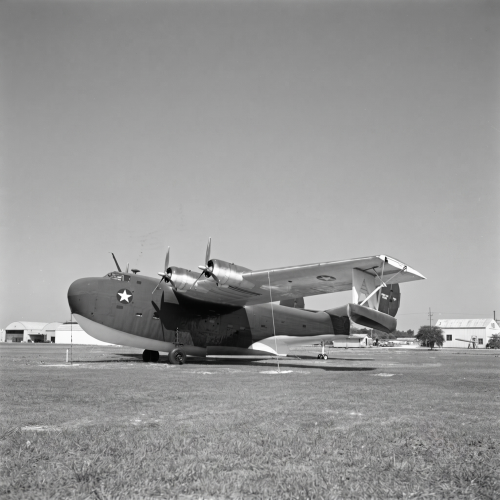
Only one Coronado survives today: BuNo 7099, preserved at the National Naval Aviation Museum in Pensacola, Florida.
Consolidated PB2Y-3 Coronado
Summary
The Consolidated PB2Y Coronado was an ambitious, technically advanced flying boat that ultimately found its greatest value not as a bomber but as a transport.
Though overshadowed by the Catalina and Mariner, the Coronado played a vital logistical role across the Pacific and remains a striking example of late flying-boat design—an aircraft built for a world where oceans were runways and range was measured in thousands of miles of open water.