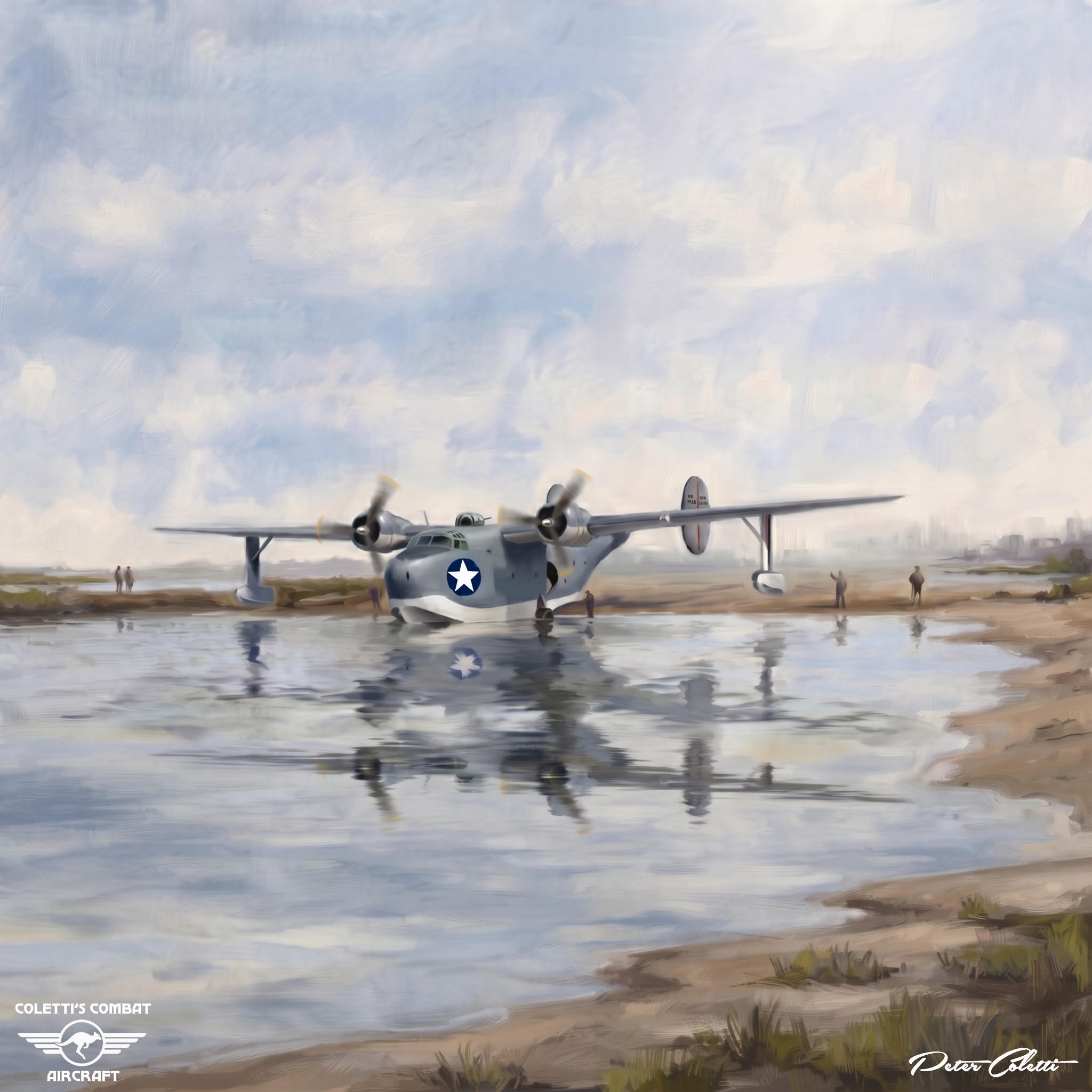
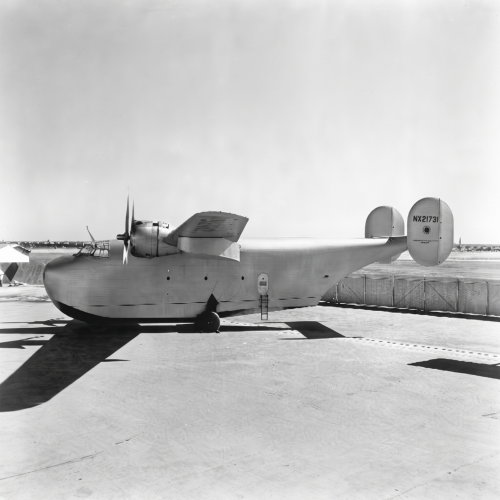
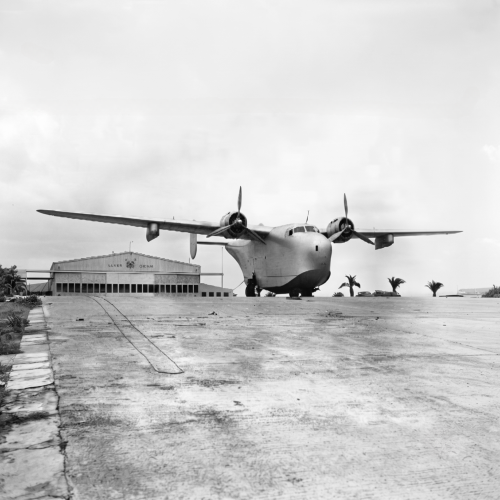
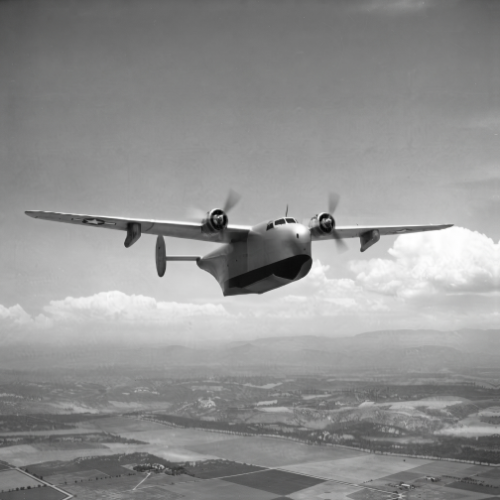
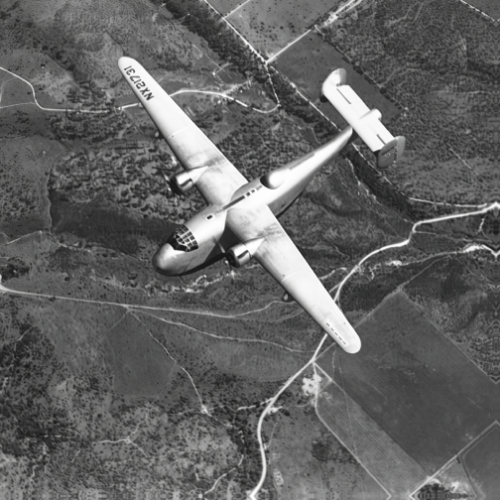
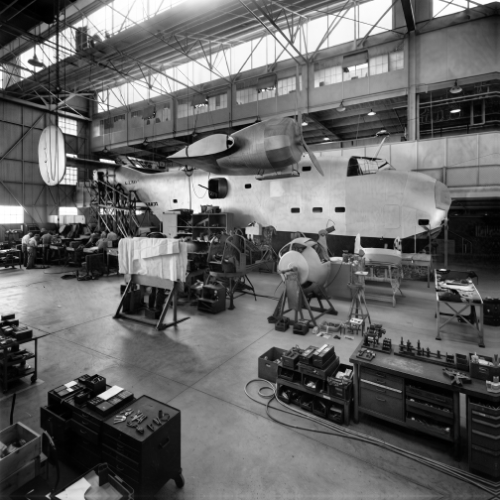
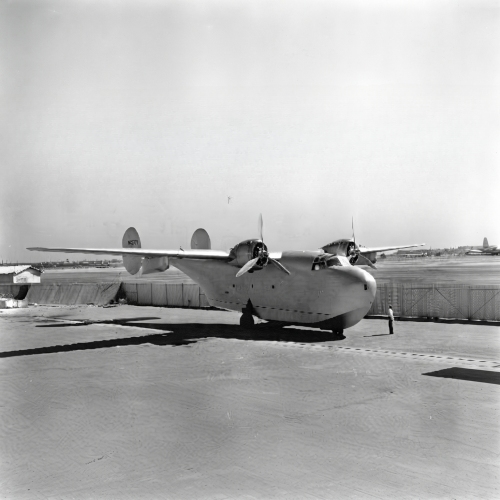
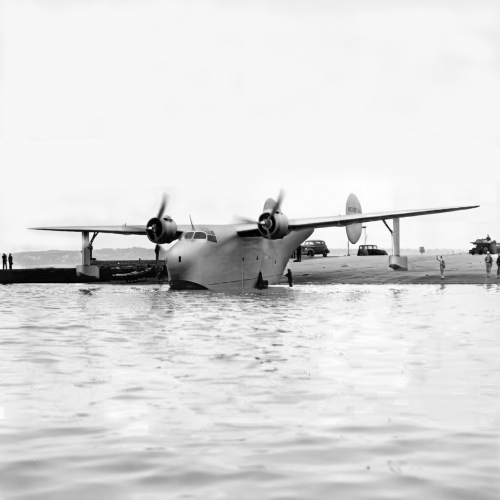
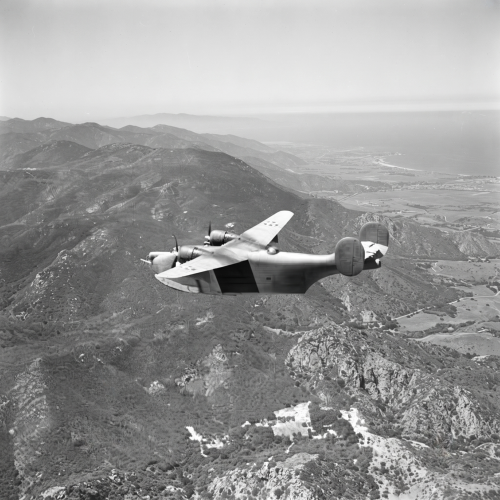
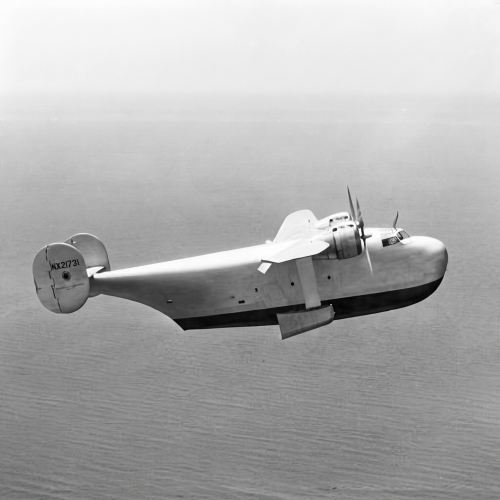
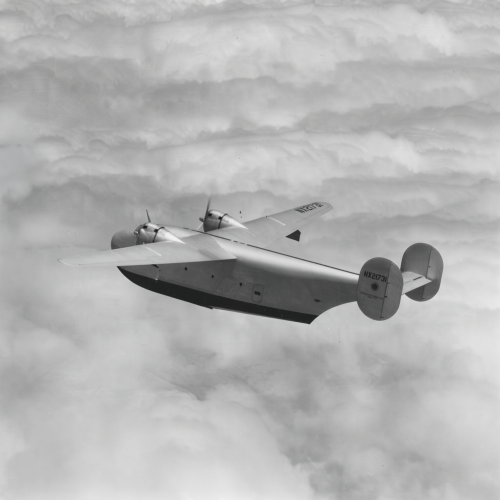
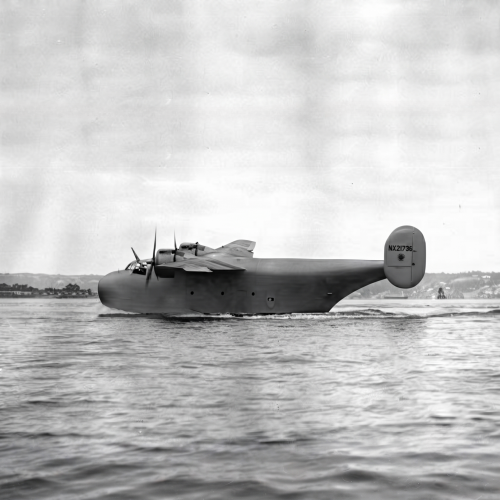
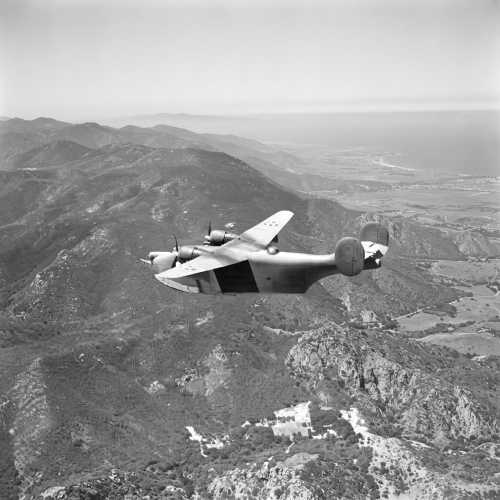
The Consolidated XP4Y Corregidor—company designation Model 31—was one of the most advanced flying boats ever built before World War II.
It began life in the late 1930s as a high‑speed transoceanic passenger flying boat concept intended for Pan American Airways.
Consolidated Aircraft, already successful with the PBY Catalina, wanted to leap ahead technologically with a design that combined long range, high cruise speed, and modern aerodynamics.
The breakthrough came from adopting the Davis high‑aspect‑ratio wing, a low‑drag airfoil that promised exceptional efficiency.
Consolidated invested heavily in wind tunnel testing, and the results were so promising that the company committed to using the Davis wing on the Model 31.
This same wing would later define the B‑24 Liberator.
The prototype flew on 5 May 1939, demonstrating performance far beyond any contemporary flying boat.
With war approaching, the U.S. Navy purchased the aircraft, redesignated it XP4Y‑1, and began converting it from a civil transport into a long‑range maritime patrol aircraft.
The Navy later named it Corregidor, after the fortress island in the Philippines.
Airframe and Structural Design
Hull and Fuselage
The Corregidor was a large, all‑metal flying boat with a two‑deck internal arrangement.
Its hull featured:
A single‑step planing bottom for efficient water take-off
A streamlined, flush‑riveted fuselage
A stepped cockpit providing excellent forward visibility
Space originally intended for over 50 passengers or sleeper berths in civil service
The hull was designed for both oceanic operations and long‑range endurance, with internal volume for fuel, crew stations, and military equipment.
Wing
The aircraft’s most important feature was its high‑mounted Davis wing, offering:
Very low drag at cruise
High lift for heavy take-off weights
A span of 110 ft
Fowler flaps for improved low‑speed handling
Internal fuel tanks for extended range
This wing made the Corregidor faster and more efficient than any flying boat of its era.
Tail Unit
The tail used a twin‑fin configuration, similar to what later appeared on the B‑24:
High horizontal stabilizer
Two oval vertical fins
Good directional stability and reduced spray interference
Water Gear
The aircraft used:
Retractable wingtip floats that folded into streamlined housings
Beaching gear for land handling, though it was not an amphibian
Powerplant and Systems
The XP4Y‑1 was powered by:
Two Wright R‑3350‑8 Cyclone 18 radial engines
Each producing roughly 2,300 hp
These were among the most powerful engines available at the time and later became famous on the B‑29 Superfortress.
Their installation on a flying boat was ambitious and contributed to the Corregidor’s high speed.
The aircraft incorporated:
Hydraulic systems for flaps and turrets
Long‑range radio equipment
Dual‑deck crew stations
Sound‑proofed cockpit and navigator’s compartment
Performance
Approximate performance figures for the XP4Y‑1:
Maximum speed: ~247–250 mph
Cruise speed: ~135–140 mph
Range: ~3,280–3,500 miles
Service ceiling: ~21,400 ft
Rate of climb: ~1,230 ft/min
Gross weight: ~48,000 lb
These numbers made the Corregidor dramatically faster and longer‑ranged than the PBY Catalina, and competitive with land‑based patrol aircraft.
Military Conversion and Armament
When the Navy militarized the Model 31, it added:
Nose turret (planned 37 mm cannon)
Dorsal turret with twin .50‑cal machine guns
Tail turret with twin .50‑cal machine guns
External bomb racks for up to 4,000 lb of bombs or depth charges
The crew complement in patrol configuration was expected to be the following:
Pilot and copilot
Navigator/bombardier
Radio operator
Multiple gunners
The Corregidor would have been one of the most heavily armed flying boats of its time.
Planned Production and Cancellation
In October 1942, the U.S. Navy placed an order for 200 P4Y‑1 production aircraft, intending to build them at a new Consolidated plant in New Orleans.
However, several factors doomed the program:
R‑3350 engine shortages
The B‑29 programme consumed all available engines.
Without R‑3350s, production could not begin.
The PBY Catalina was already in mass production
It was slower and less advanced, but proven, available, and easier to build.
Wartime urgency
The Navy prioritised aircraft that could be produced immediately.
As a result, the P4Y‑1 order was cancelled, and the New Orleans plant was redirected to build more PBYs.
Operational History and WWII Context
The XP4Y‑1 never entered squadron service.
Instead:
It served as a testbed for engines, armament, and systems.
It validated the Davis wing in a large flying boat.
It influenced thinking about high‑speed maritime patrol aircraft.
By the time the U.S. entered WWII, the Corregidor was fully tested but lacked a production pathway.
The Navy’s needs shifted towards aircraft that could be built quickly and in huge numbers, leaving the Corregidor as a technological dead end despite its impressive performance.
The sole prototype was eventually scrapped after the war.
Legacy
The Consolidated XP4Y Corregidor is historically significant because the following:
It was the fastest flying boat of its era.
It proved the Davis wing, which became central to the B-24 Liberator.
It represented the peak of pre‑war flying boat design.
It demonstrated that flying boats could match land‑based aircraft in speed and range.
Although it never reached production, the Corregidor remains one of the most advanced flying boats ever built and a fascinating “what‑might‑have‑been” of WWII aviation.