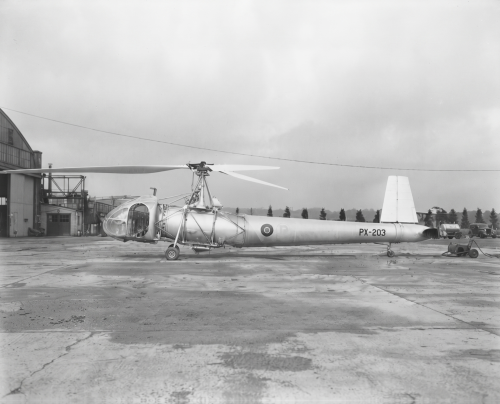
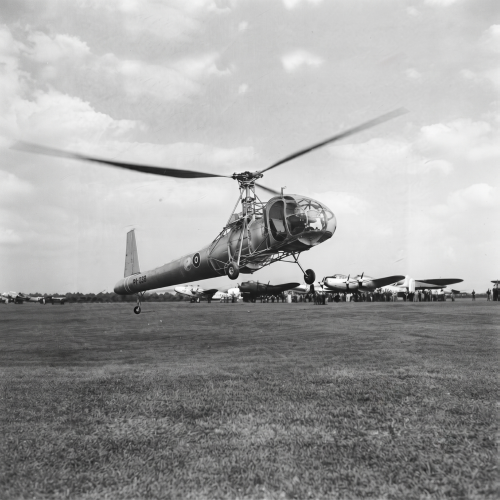
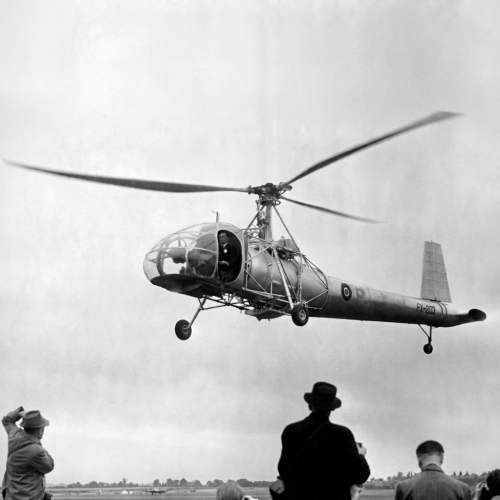
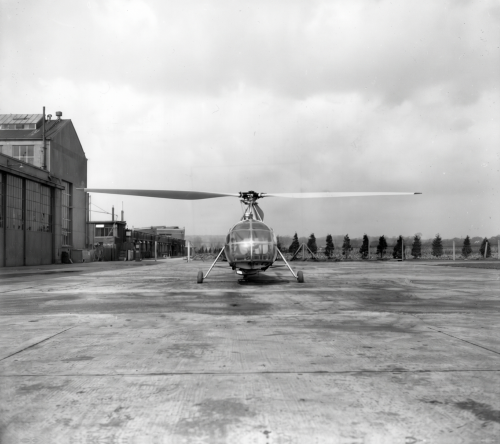
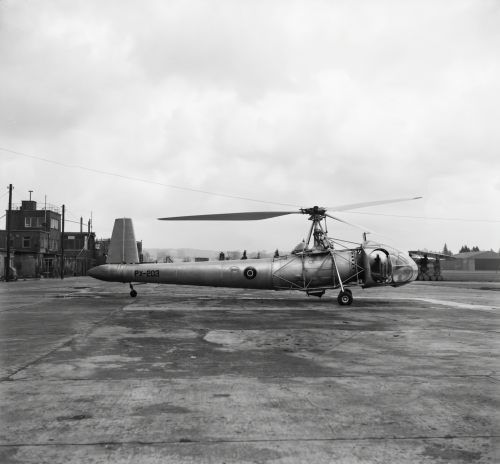
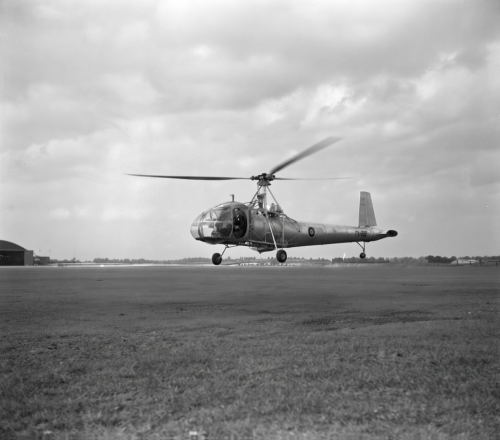
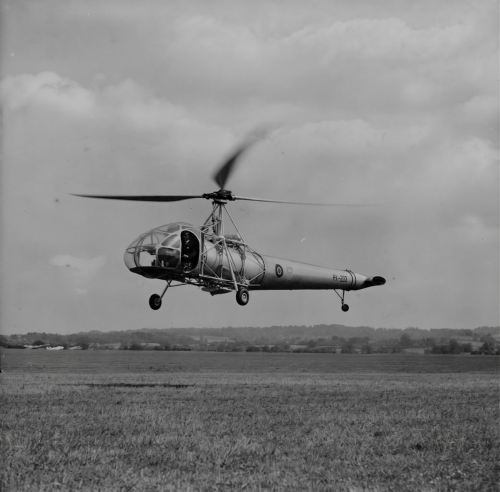
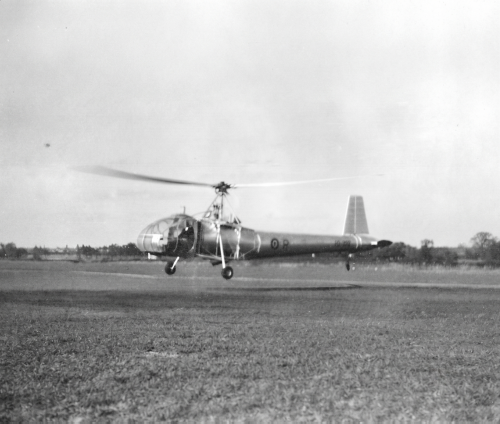
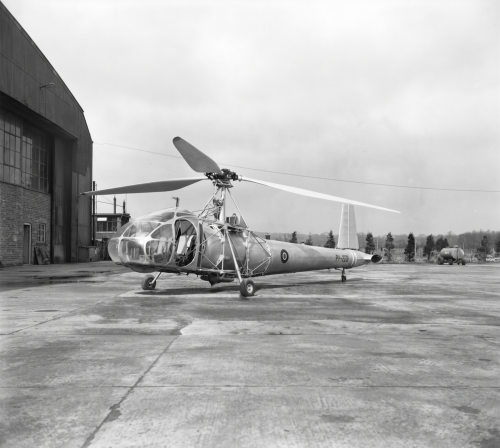
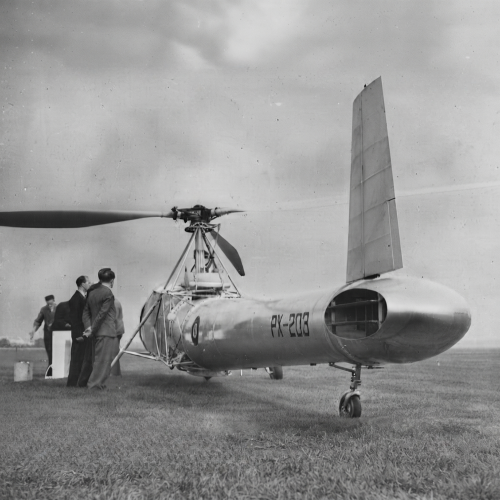
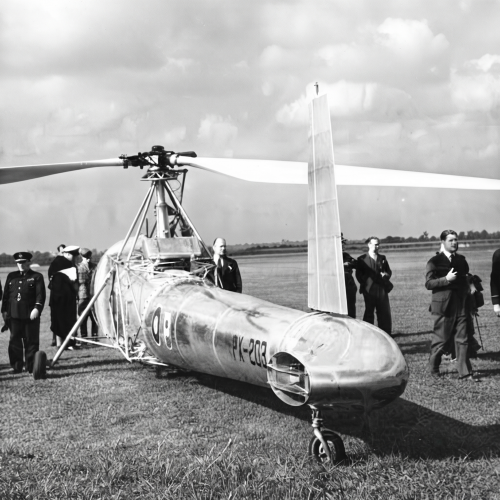
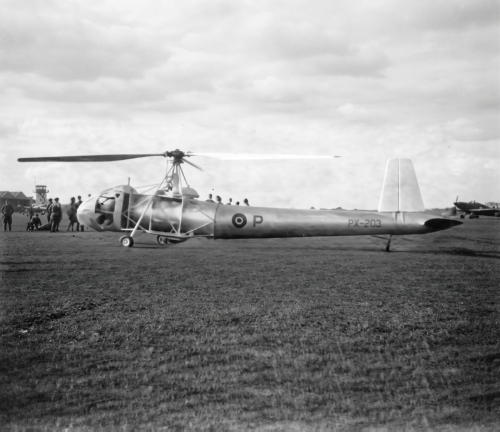
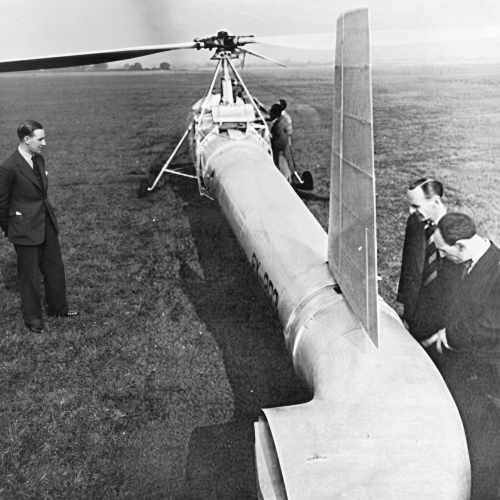
The Cierva W.9 was a British experimental helicopter developed during the final years of the Second World War, representing one of the most unconventional rotary‑wing research programmes undertaken by the United Kingdom.
Conceived to test radical alternatives to the emerging American helicopter paradigm, the W.9 embodied the Cierva Autogiro Company’s attempt to leapfrog conventional rotorcraft design by eliminating the tail rotor and automating collective pitch control.
Although only one prototype was built and the project ended abruptly after a crash, the W.9 contributed important insights to postwar British helicopter development.
Development and WWII Context
Origins in wartime helicopter research
By the early 1940s, helicopter development had accelerated due to wartime demand for vertical‑lift aircraft.
Germany fielded the Flettner Fl 282, while the United States advanced the Sikorsky R‑4, the first mass‑produced helicopter.
Britain, lacking an indigenous helicopter industry, relied heavily on the Cierva Autogiro Company—founded in 1926 and known for its successful prewar autogyros—to explore rotary‑wing concepts.
In 1943, the British Air Ministry issued Specification E.16/43, calling for an experimental helicopter to investigate alternatives to the Sikorsky control system.
The specification revived the nearly dormant Cierva Autogiro Company, backed by investor G & J Weir Ltd., and tasked it with developing a research aircraft that could validate James G. Weir’s belief that a powered tilting‑hub rotor with automatic collective pitch and jet‑efflux torque control could outperform conventional designs.
Prototype construction
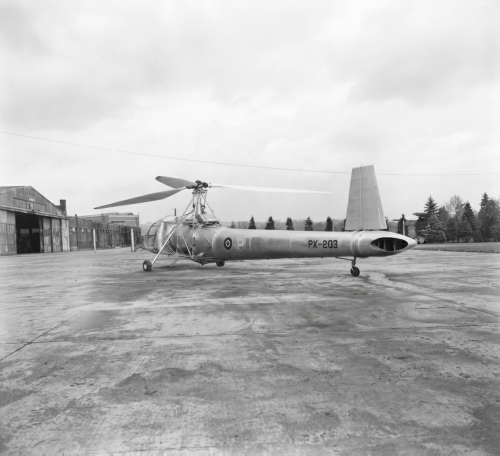
The W.9 prototype, serial PX203, was completed late in 1944.
Initial ground tests revealed severe control‑phasing problems caused by pitch‑flap coupling, delaying flight trials until 1945.
The aircraft remained classified, and although its first flight likely occurred in late 1944 or early 1945, its public debut did not occur until 22 June 1946 at Southampton Airport—nearly two years after completion.
Design Philosophy and Technical Innovations
Rotor system and control concept
The W.9’s most ambitious feature was its tilting‑hub main rotor, driven by a shaft‑powered hydraulic system that allowed automatic collective pitch control through rotor‑speed variation.
This system aimed to reduce pilot workload and improve safety by eliminating manual collective pitch inputs.
Later in testing, manual collective control was added to improve hover precision and autorotation landing capability.
The rotor itself was a three‑bladed, 36‑ft (10.97 m) diameter assembly mounted on a rotating gimbal (cardanic) suspension, part of James Weir’s “Aerodynamically Stabilised Rotor” (ASR) concept.
The W.9 was also the first helicopter to incorporate rotor torque measurement instrumentation, reflecting its role as a research platform rather than a utility aircraft.
Torque control without a tail rotor
Instead of a tail rotor, the W.9 used jet‑efflux torque compensation.
A variable‑pitch fan cooled the engine and forced heated air and exhaust gases through a hollow tailboom, exiting through a port‑side nozzle to counter main‑rotor torque.
Directional control was achieved by adjusting fan pitch via foot pedals.
This system was conceptually similar to later NOTAR (no‑tail‑rotor) technology but did not exploit the Coandă effect and ultimately proved inadequate, providing insufficient anti‑torque and poor yaw authority.
Fuselage and cockpit
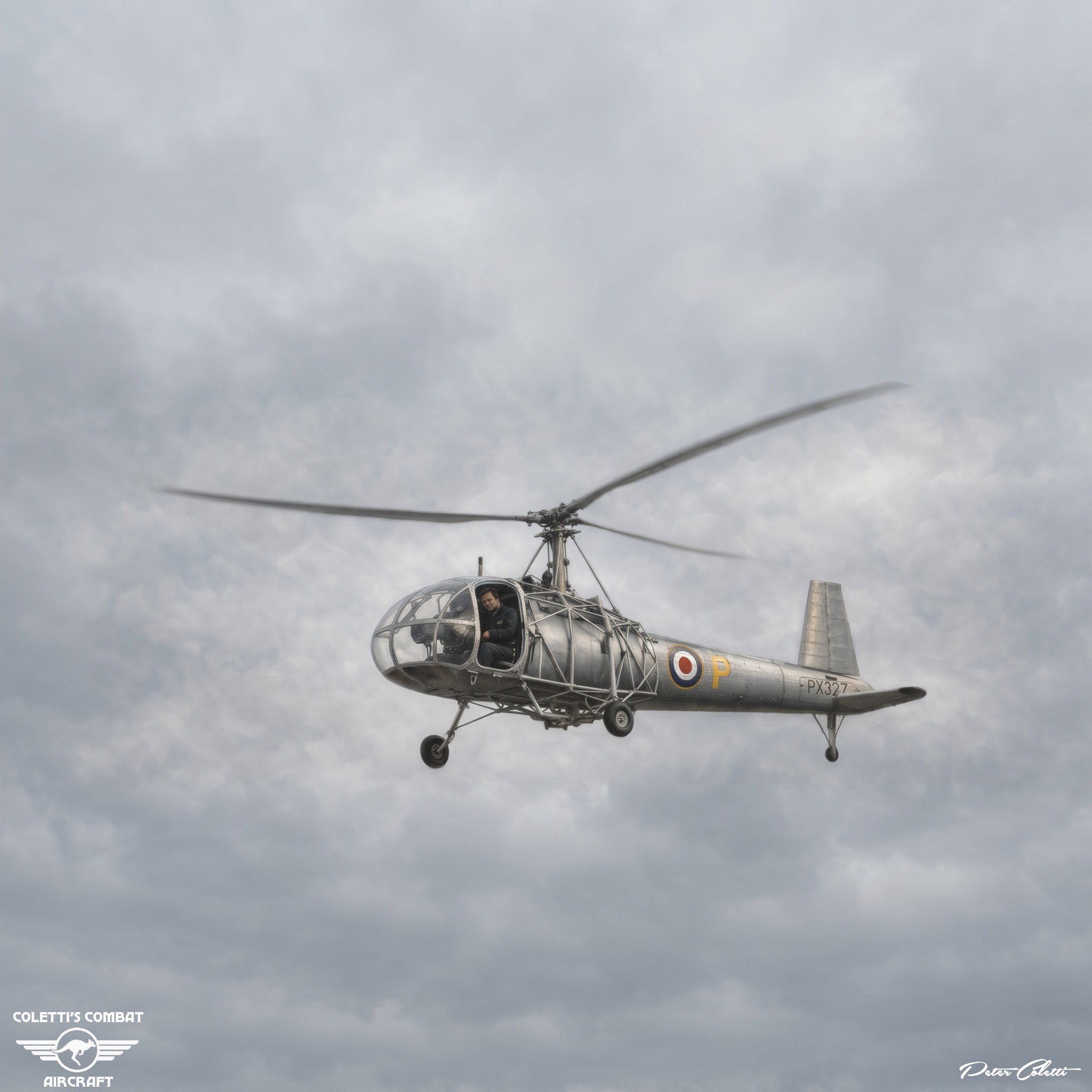
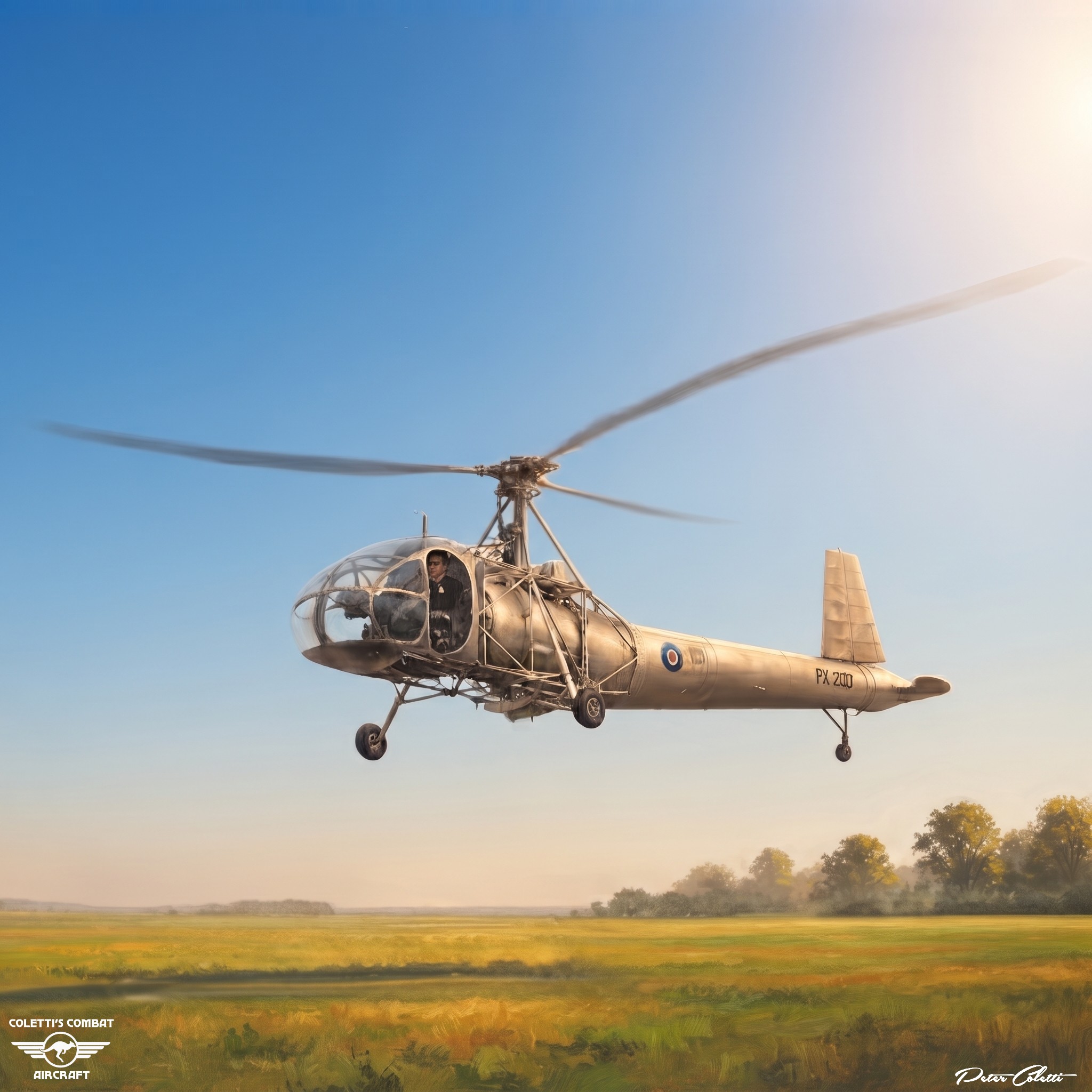
The W.9 featured a large, fully glazed, egg‑shaped cockpit for two crew members—an early example of the bulbous helicopter cabins that would become common in the 1950s.
The fuselage tapered into a long tail boom housing the jet‑efflux ducting.
A small horizontal stabiliser was mounted at the rear.
Powerplant
The aircraft was powered by a 205 hp de Havilland Gipsy Queen 31 (or Gipsy Queen Six Series II) inline piston engine, driving the main rotor and the cooling/torque‑control fan.
Gross weight was 2,647 lb (1,201 kg).
Performance and Flight Characteristics
The W.9 was never fully developed into an operational aircraft, and detailed performance data—such as maximum speed, range, and rate of climb—were not published. Available evidence suggests:
The automatic collective pitch system made vertical control imprecise until manual collective control was added.
The jet‑efflux anti‑torque system produced insufficient yaw control, limiting safe manoeuvring.
The aircraft’s rotor‑speed‑based collective control concept proved impractical for stable helicopter operation.
Despite these shortcomings, the W.9 successfully demonstrated hover, low‑speed flight, and public display manoeuvres in 1946.
Operational History and Cancellation
The W.9 remained a single‑prototype research aircraft.
After its public demonstrations in mid‑1946, testing continued until the aircraft was destroyed in an accident.
Sources differ slightly on the date:
Some accounts state the crash occurred in 1946, ending the programme.
Another source reports a crash on 20 January 1948, during take-off, causing irreparable structural damage.
Regardless of the exact date, the aircraft’s destruction terminated all further development.
Parts of the W.9’s rotor hub were later incorporated into the Cierva W.14 Skeeter prototype, which—after Cierva’s acquisition by Saunders‑Roe—eventually entered production in the 1950s as the Saunders‑Roe Skeeter, giving the W.9 indirect influence on Britain’s first successful light helicopter.
Variants
The Cierva W.9 had no variants.
Only one prototype (PX203) was built.
Significance
Although the Cierva W.9 was ultimately a technological dead end, it played a meaningful role in Britain’s wartime and postwar rotary‑wing experimentation.
Its exploration of:
tilting‑hub rotor control,
automatic collective pitch,
tail‑rotorless torque compensation,
and rotor torque measurement
provided valuable data for subsequent British helicopter designs.
The W.9 stands as a testament to the Cierva Autogiro Company’s willingness to pursue unconventional solutions at a time when helicopter technology was still in its infancy.