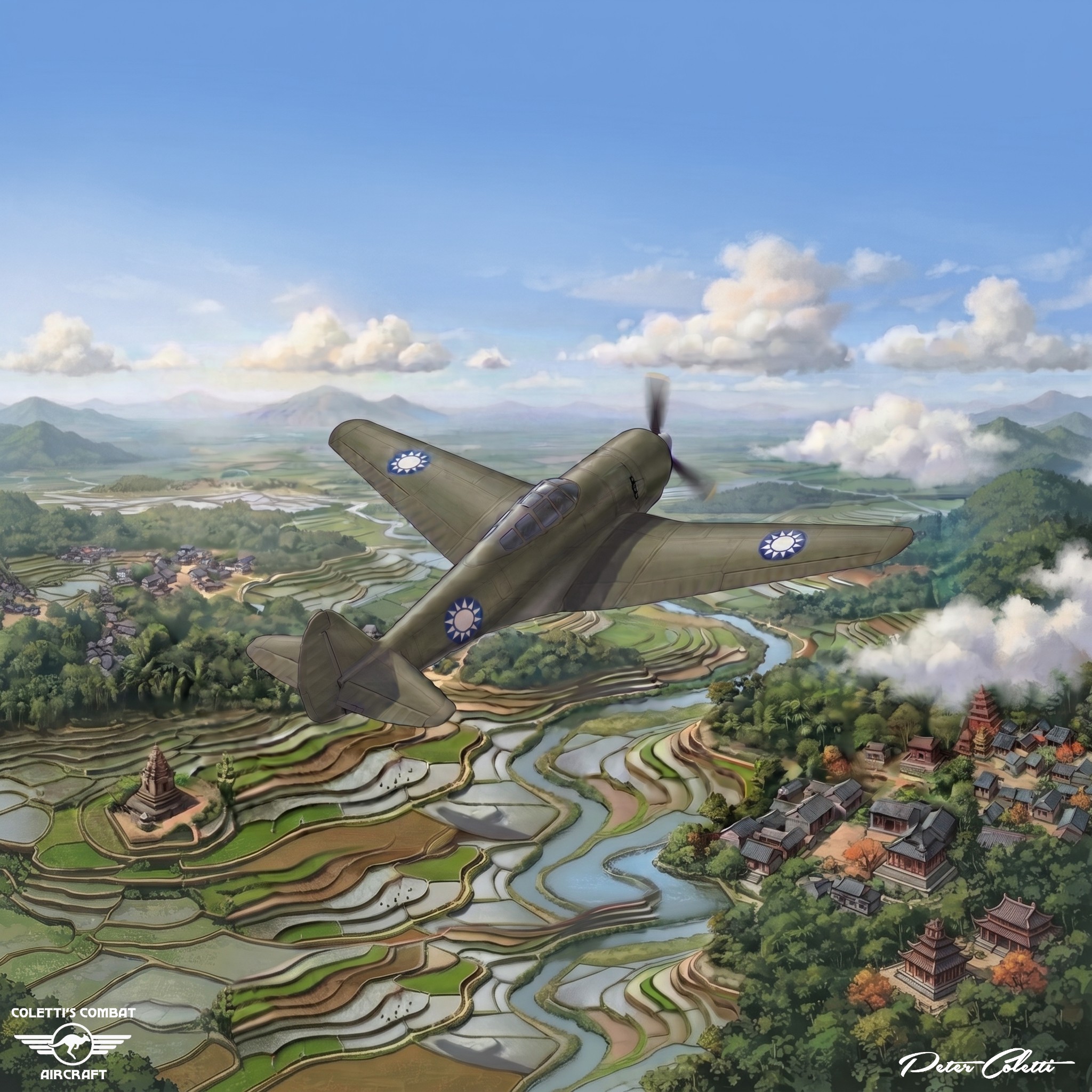
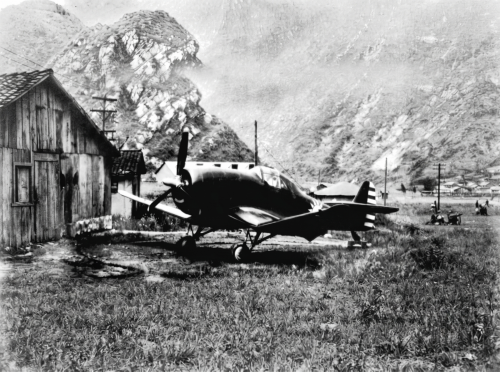
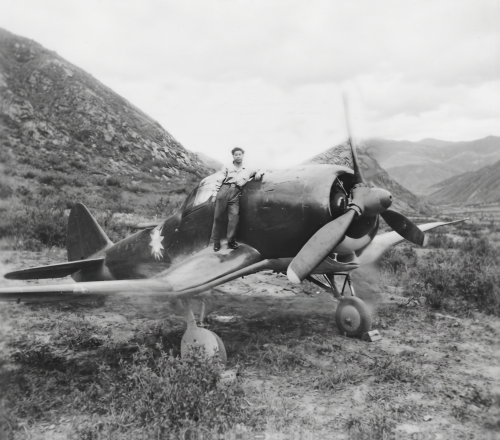
The Chu XP‑1 was one of the most unusual and ambitious indigenous fighter projects undertaken by the Republic of China during the Second Sino‑Japanese War.
Designed under extreme wartime constraints, the XP‑1 attempted to introduce a forward‑swept gull‑wing configuration—an unconventional aerodynamic approach that made it one of the most distinctive Chinese aircraft prototypes of the era.
Despite its promise, the XP‑1 never progressed beyond two prototypes, and the programme ended abruptly after the first aircraft crashed on its maiden flight.
Wartime Context
During the late 1930s and early 1940s, China faced overwhelming Japanese air superiority.
The Republic of China Air Force relied heavily on imported aircraft—primarily American types such as the Curtiss H‑81‑A3—and suffered from chronic shortages, logistical disruption, and industrial displacement caused by Japanese advances.
Indigenous aircraft development existed but was hampered by technical inferiority, insufficient funding, and limited manufacturing capability.
By 1942, Chinese aviation authorities recognised that reliance on foreign aid was unsustainable.
They initiated several domestic fighter programmes, including the XP‑0 and XP‑1 series, in hopes of fielding competitive homegrown fighters.
The XP‑1 was the more radical of these designs.
Development History
Origins
In early 1942, the Aeronautical Research Institute and the 1st Air Force Aircraft Manufacturing Factory (1st AFAMF) launched a programme to create an indigenous fighter capable of matching contemporary Japanese aircraft.
A small design team was assembled under Deputy Chief Engineer Constantine L. Zakhartchenko, an American‑Russian émigré and MIT‑trained aviation designer who had worked with the 1st AFAMF since 1935.
Design Requirements
Although most specifications are lost, surviving accounts indicate that the XP‑1 was required to reach at least 580 km/h (360 mph)—a competitive speed for early‑1940s fighters.
Prototyping
The XP‑1 endured a long and troublesome development period, ultimately producing two prototypes.
The first prototype crashed on its maiden flight, leading to the immediate cancellation of the programme.
Design and Technical Characteristics
Overall Configuration
The XP‑1 was defined by its forward‑swept gull‑wing layout—an extremely rare configuration for the era.
This design aimed to improve manoeuvrability and lift characteristics, though it also introduced structural challenges due to torsional loads on the wings.
Airframe
Due to wartime material shortages, Chinese aircraft designers often relied on mixed construction techniques.
While detailed XP‑1 structural data is scarce, the related XP‑0 programme used:
Welded steel‑tube fuselage
Plywood skinning
Wooden wings
These constraints likely influenced XP‑1 construction as well, though the XP‑1’s wing geometry was far more complex.
Powerplant
The exact engine used in the XP‑1 is not documented in surviving sources.
However, contemporary Chinese prototypes—including the XP‑0—used the Pratt & Whitney R‑1830 Twin Wasp, the most powerful engine available in quantity to Chinese industry at the time.
This suggests the XP‑1 may have been designed around a similar powerplant, though this remains an inference rather than a confirmed fact.
Performance Goals
Top speed requirement: 580 km/h (360 mph)
Other performance parameters are unknown due to the absence of surviving primary documentation.
Armament
No confirmed armament specifications survive.
However, Chinese fighter projects of the period typically aimed to mount the following:
2–4 × 20 mm cannons
Optional bomb or torpedo racks for fighter‑bomber roles
Flight Testing and Cancellation
Only two prototypes of the XP‑1 were completed.
The first prototype crashed during its maiden flight, and the programme was immediately terminated.
The second prototype never flew.
The crash ended what might have been China’s most aerodynamically innovative fighter project of the war.
The combination of:
limited industrial capability,
extreme wartime pressures,
An unconventional wing design and lack of resources for iterative testing made continuation impossible.
Variants
XP‑1 (Base Prototype)
Forward‑swept gull‑wing fighter prototype
Two units built
The first prototype crashed on maiden flight
Second prototype unflown
Historical Significance
The Chu XP‑1 stands out as the following:
One of the few forward‑swept wing fighters attempted during WWII, predating Western experiments by decades.
A symbol of China’s determination to develop domestic aviation capability despite overwhelming adversity.
A reminder of how wartime industrial disruption limited China’s ability to field indigenous designs.
Although it never entered service, the XP‑1 remains an important artefact of Chinese aviation history—an ambitious but ultimately doomed attempt to break free from reliance on foreign aircraft.
Conclusion
The Chu XP‑1 was an innovative but short‑lived Chinese fighter prototype developed during the darkest years of the Second Sino‑Japanese War.
Its forward‑swept gull‑wing design made it one of the most unconventional aircraft ever produced in China, but the combination of technical challenges and wartime constraints ensured that the project never progressed beyond two prototypes.
The XP‑1’s story illustrates both the ingenuity and the limitations of China’s wartime aviation industry.