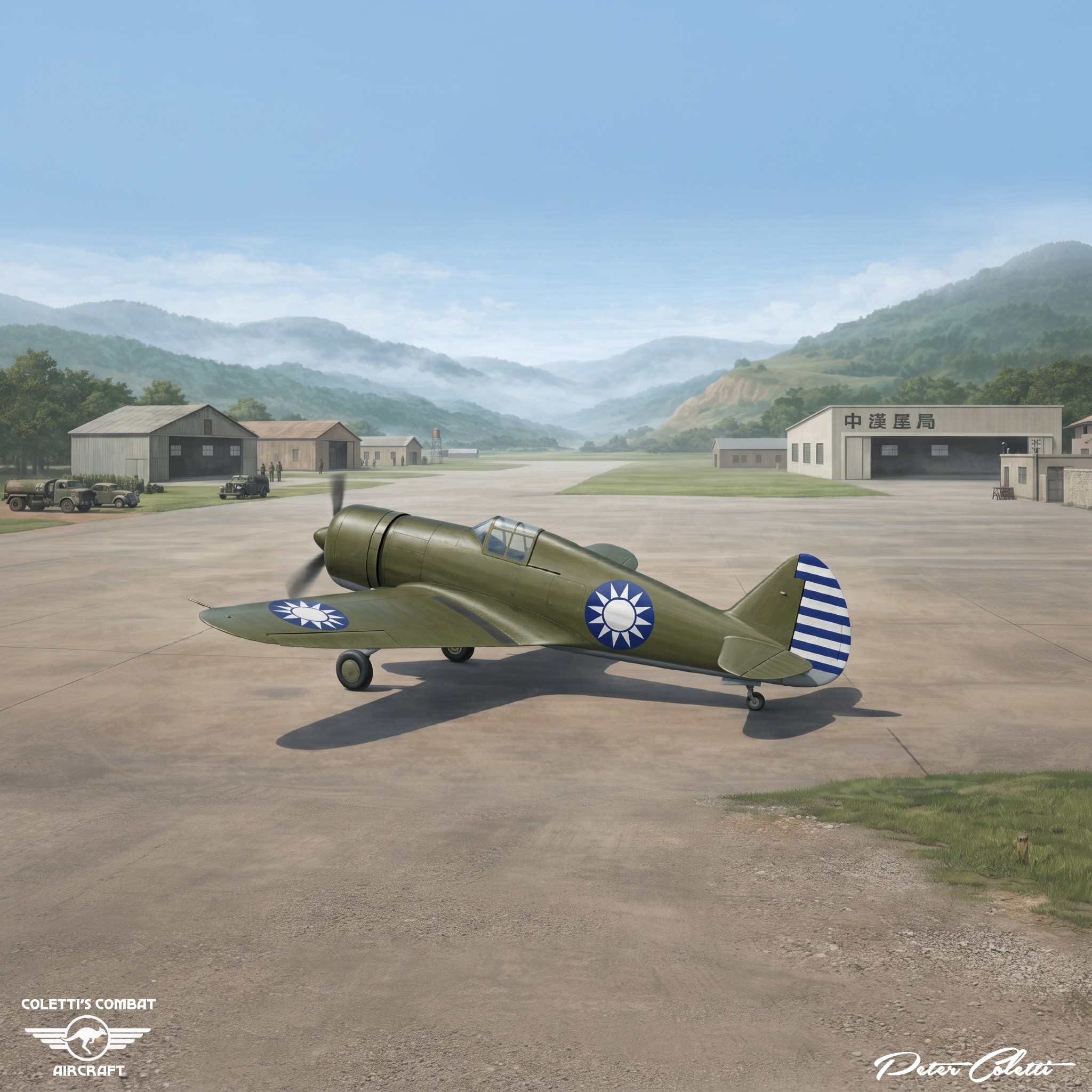
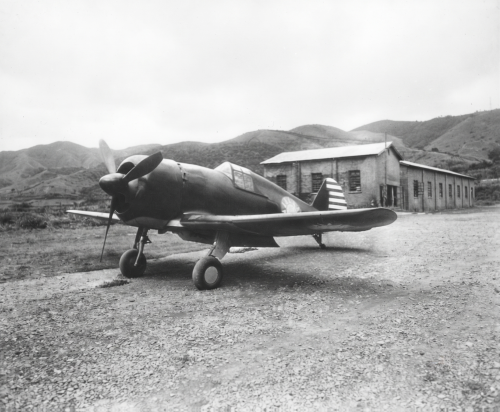
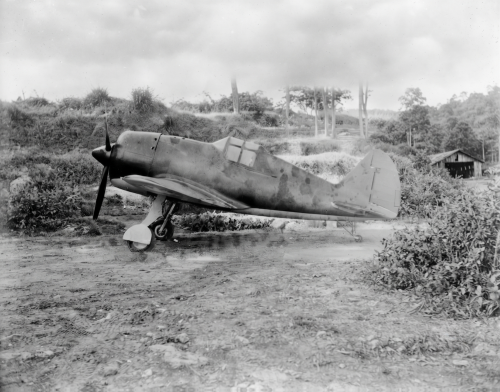
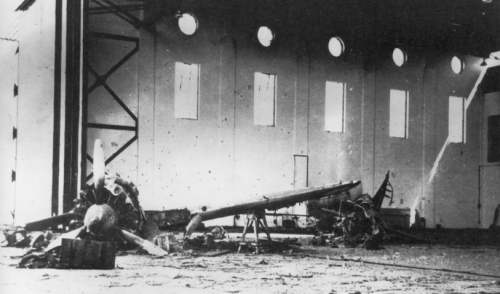
The CHU XP‑0 emerged from a 1938 U.S. Army Air Corps requirement for a compact, high‑altitude interceptor capable of rapid climb, short‑range defensive patrols, and operation from small forward airfields.
The Army Air Corps anticipated that any future conflict would involve fast, high‑flying reconnaissance aircraft and bombers, and it sought a lightweight fighter that could be produced quickly and in large numbers.
The design contract went to CHU Aeronautical Works, a small but ambitious manufacturer known for experimental propulsion concepts.
CHU proposed an unconventional single‑seat interceptor built around a new turbo‑supercharged inline engine and a tightly streamlined fuselage.
The project was designated XP‑0, with “P‑0” intended to mark a new category of ultra‑light pursuit aircraft.
Initial wind‑tunnel testing at Wright Field in early 1939 showed promise: the XP‑0’s fuselage generated unusually low drag, and its thin, semi‑elliptical wing offered excellent lift at altitude.
However, the aircraft’s compact size created engineering challenges, particularly in cooling, armament integration, and stability.
CHU persisted, producing two prototypes by mid‑1940.
The first XP‑0 flew on 12 August 1940, demonstrating exceptional climb performance but revealing serious handling issues at low speeds.
The second prototype incorporated enlarged tail surfaces and revised leading‑edge slats, improving stability enough for the Army Air Corps to authorise limited pre‑production testing.
Despite its flaws, the XP‑0 represented a bold attempt to create a “point‑defence interceptor” at a time when most U.S. fighters were trending larger and heavier.
Design Characteristics
Airframe
The XP‑0’s airframe was built around the principle of minimising frontal area.
The fuselage was a narrow, oval monocoque structure constructed from light alloy frames and stressed aluminium skin.
The cockpit sat high on the fuselage spine, giving the pilot excellent forward visibility but a limited downward view due to the deep fuselage sides.
The wing was a distinctive feature: a semi‑elliptical planform with a very thin airfoil optimised for high‑speed flight.
To compensate for the thin wing’s low internal volume, fuel was stored primarily in fuselage tanks, and the landing gear retracted inward into shallow bays that forced a narrow track—one of the aircraft’s persistent operational weaknesses.
Powerplant
The XP‑0 was powered by the CHU‑Raven XII, a 12‑cylinder inline engine rated at 1,150 hp at takeoff and up to 1,350 hp at altitude with its advanced turbo‑supercharger.
The turbo‑supercharger was mounted aft of the cockpit, fed by long exhaust ducts that contributed to the aircraft’s distinctive fuselage bulge behind the wing.
Cooling was handled by a belly-mounted radiator with a variable‑geometry intake.
While aerodynamically efficient, the system was prone to overheating during extended climbs or ground operations.
THE END OF THE XP-0
Cockpit and Systems
The cockpit was cramped but modern for its time, featuring the following:
A reflector gunsight
Oxygen system for high‑altitude interception
Basic radio equipment
A semi‑bucket seat with armour plating added in 1941
The XP‑0 lacked self‑sealing fuel tanks in its earliest configuration, though these were added in later prototypes.
Armament
Armament varied across prototypes, but the intended production configuration included:
2 × .50 cal. Browning machine guns in the upper cowling
2 × .30 cal. machine guns in the wings
The tight fuselage made ammunition storage limited, reducing sustained firing time compared to contemporary fighters like the P‑40 or P‑39.
Performance
Flight Characteristics
The XP‑0 excelled in vertical performance.
Its turbo‑supercharged engine allowed it to reach operational altitudes faster than most U.S. fighters of the era.
The first airframe, featuring the original small tailplane and fixed leading‑edge slats.
Demonstrated excellent climb but unstable low‑speed behaviour.
XP‑0A (Revised Prototype)
Incorporated enlarged tail surfaces, improved slats, and a redesigned radiator intake.
This version completed most of the Army Air Corps evaluation flights.
XP‑0B (Pre‑Production Proposal)
A proposed production model with:
Self‑sealing fuel tanks
Reinforced landing gear
Revised cockpit canopy
Increased ammunition capacity
The XP‑0B never flew; the design existed only as engineering drawings.
XP‑0C (High‑Altitude Concept)
A speculative variant intended to mount a two‑stage turbo‑supercharger and pressurised cockpit.
Cancelled before construction due to shifting wartime priorities.
Operational and WWII Context
Why the XP‑0 Was Not Adopted
By the time the XP‑0 reached advanced testing in late 1941, the U.S. entry into WWII had dramatically changed procurement priorities.
The Army Air Corps needed fighters that were the following:
Robust
Easy to maintain
Long‑ranged
Suitable for mass production
The XP‑0, while innovative, was:
Too small to carry adequate fuel or armament
Mechanically complex due to its turbo‑supercharger layout
Difficult to operate from rough forward airfields
Prone to ground‑handling accidents
Competing designs—particularly the P‑39 Airacobra, P‑40 Warhawk, and later the P‑47 Thunderbolt—offered more practical combat capability and industrial scalability.
Influence on Later Designs
Although the XP‑0 never entered production, its aerodynamic research contributed to later U.S. fighter development.
The Army Air Corps used data from the XP‑0’s wing and fuselage tests in refining high‑speed airfoil shapes and turbo‑supercharger integration for subsequent aircraft.
CHU Aeronautical Works continued to produce components and subassemblies during the war but never again attempted a complete fighter design.
Legacy
The CHU XP‑0 stands as a fascinating example of pre‑war American experimentation.
It embodied the belief that a small, fast, high‑climbing interceptor could counter future bomber threats.
While ultimately impractical, the XP‑0 demonstrated the ingenuity and ambition of smaller aircraft manufacturers during a period of rapid technological change.
Its legacy lies not in combat service but in the aerodynamic and engineering lessons it provided—lessons that helped shape the more successful fighters that defined American air power in WWII.