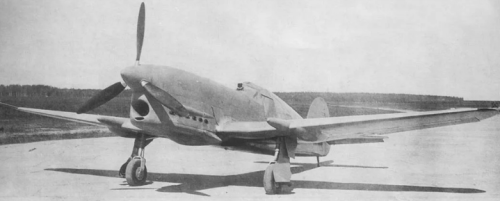
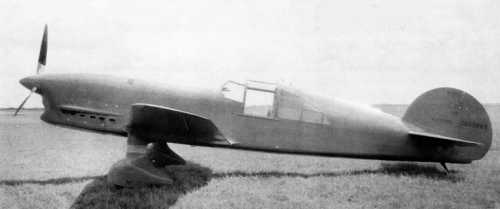
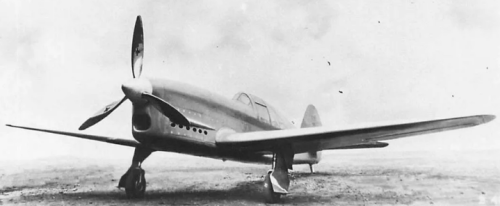
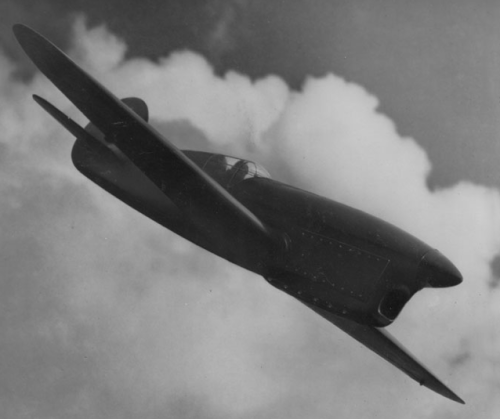
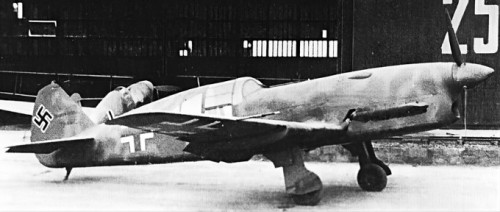
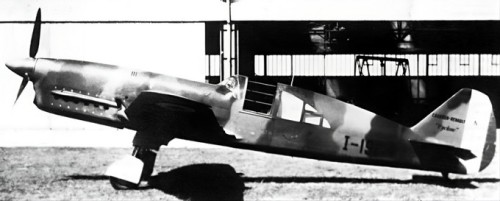
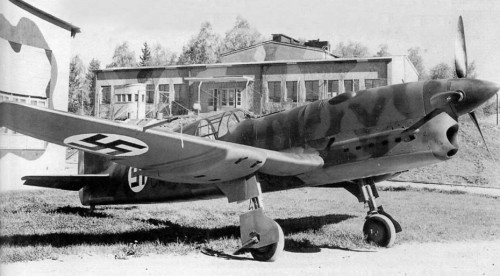
Production began in early 1940, but performance trials quickly revealed serious limitations.
The aircraft’s wooden construction restricted engine upgrades, resulting in poor climb rate and manoeuvrability.
Withdrawal
By February 1940, the C.714 was withdrawn from frontline service.
In March, the production order was reduced to 90 units due to unsatisfactory performance.
Finnish Deployment
Winter War Allocation
80 aircraft were earmarked for Finland, intended to be flown by French volunteer pilots.
However, only six were delivered before the armistice halted further shipments.
Operational Challenges
Finnish pilots found the aircraft unreliable and unsuitable for harsh conditions.
Issues included difficulty in starting, poor landing characteristics, and structural fragility.
The aircraft were grounded permanently by September 1940 and retired in 1941.
Polish Use in France
Groupe de Chasse I/145
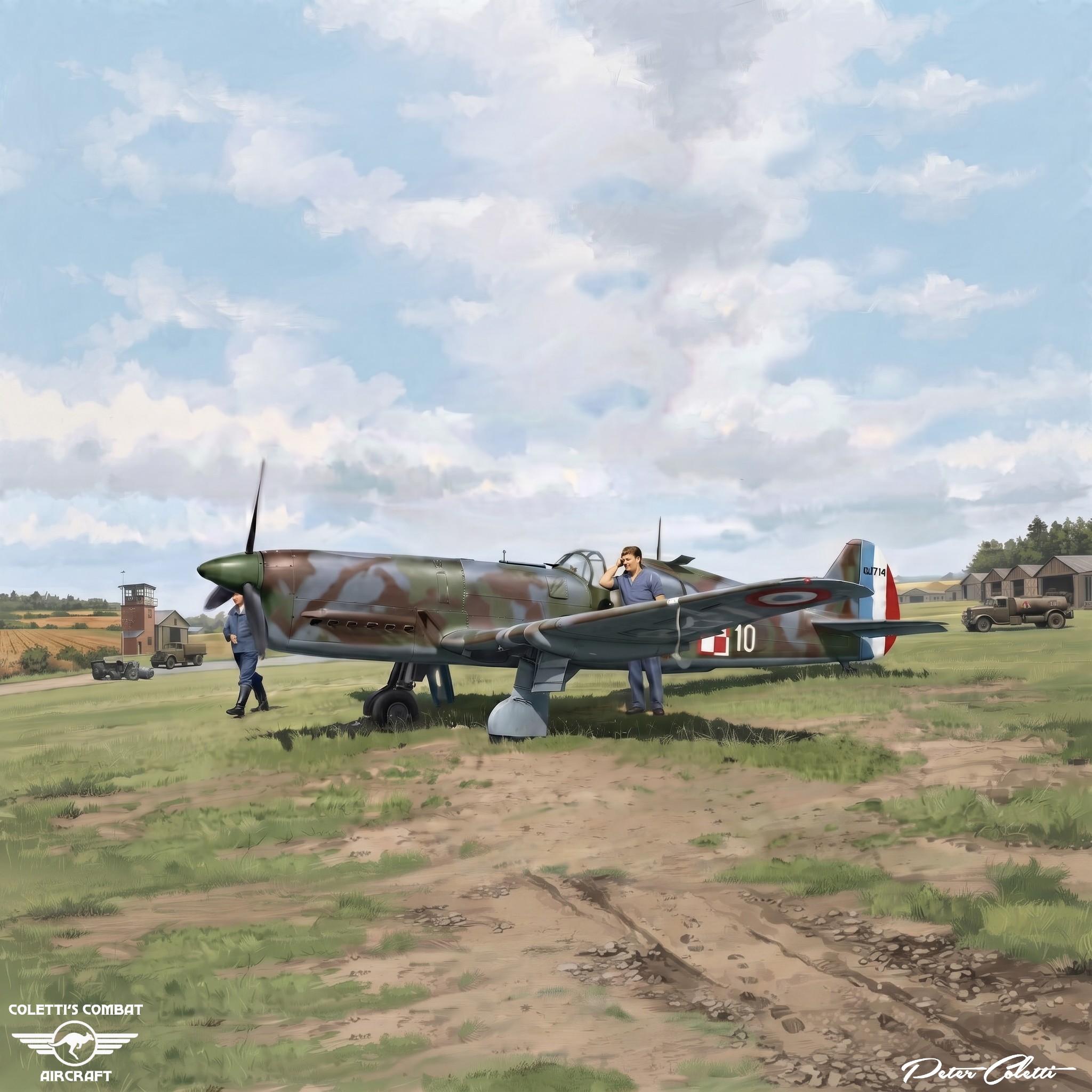
On 18 May 1940, 35 C.714s were assigned to Polish pilots stationed at Mions Airfield.
Despite being underpowered and outclassed by German fighters, Polish pilots continued flying them after the French ordered their withdrawal on 25 May.
Combat Record
Between 8 and 11 June 1940, Polish pilots achieved 12 confirmed and 3 unconfirmed kills, including Messerschmitt Bf 109s, Bf 110s, and Dornier Do 17 bombers.
However, losses were heavy: 9 aircraft in air combat and 9 destroyed on the ground.
Training Use
A Polish training squadron based in Bron near Lyon also operated the C.714.
While they did not record any kills, they successfully dispersed bombing raids without losing aircraft.
Production Summary
Total Built
Approximately 90–98 units were completed.
Conflicting sources cite varying totals, but only a fraction saw combat or operational deployment.
The Variants
Caudron C.710
Origins and Design Intent
In 1936, the French Air Ministry issued a specification for a lightweight, rapidly producible fighter to supplement existing aircraft without disrupting major production lines.
Caudron-Renault responded with the C.710, designed by Marcel Riffard, drawing heavily from the company’s racing aircraft lineage—particularly the Coupe Deutsch series.
The aircraft was intended to be economically built, relying on wooden construction to reduce cost and manufacturing time.
Technical Configuration
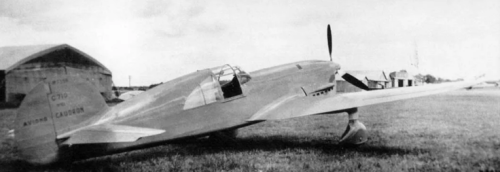
The C.710 was a single-seat, single-engine monoplane with a fixed, spatted undercarriage and a long, streamlined nose.
Powered by a Renault 12R-01 engine—essentially two Renault 6Q engines paired into a supercharged inverted V-12—producing 450 hp (336 kW).
Armament consisted of two 20 mm Hispano-Suiza HS.9 cannons, mounted in underwing pods with 60 rounds per gun.
The cockpit was positioned far aft, with a semi-circular vertical stabiliser and mid-mounted horizontal tailplanes.
First Flight and Performance
The prototype first flew on 18 July 1936, demonstrating a top speed of 455 km/h (283 mph) at 4,000 metres.
Despite its sleek appearance and respectable speed, the aircraft suffered from a poor rate of climb, which ultimately led to its rejection in favour of the Morane-Saulnier M.S.405.
Fate of the Prototype
The sole C.710 prototype was destroyed in a crash on 1 February 1938, ending its direct development path.
Caudron C.713
Design Evolution
The Caudron C.713 was a direct evolution of the earlier C.710 series, conceived to address aerodynamic and operational shortcomings identified during testing.
It retained the lightweight, wooden construction philosophy but introduced two key refinements:
Retractable landing gear, replacing the fixed spatted gear of the C.710.
A triangular vertical stabiliser, offering improved directional stability over the semi-circular fin of its predecessor.
First Flight and Configuration
The C.713 first flew on 15 December 1937, marking a significant step towards a more combat-ready configuration.
It was powered by the same Renault 12R-01 inverted V-12 engine, delivering approximately 450 hp (336 kW).
Armament remained consistent with the C.710: two 20 mm Hispano-Suiza HS.9 cannons mounted in underwing pods.
Technical Assessment
While the retractable gear and revised tail improved handling and speed marginally, the aircraft still suffered from:
Poor climb rate
Limited engine upgrade potential
Structural fragility due to wooden construction
These limitations ultimately led to the development of the Caudron C.714 Cyclone, which incorporated further refinements and entered limited production.
Caudron C.712
Concept and Purpose
The Caudron C.712 was conceived as a high-speed record aircraft, derived from the C.710 fighter prototype lineage.
Its primary goal was to break the world airspeed record, showcasing French engineering prowess and advancing aerodynamic research.
Design Configuration
The C.712 combined the fuselage of the C.710 with the wings of the Caudron C.580, a racing aircraft known for its low drag and high-speed potential.
It retained the sleek, elongated nose and rearward cockpit placement typical of the C.710 series.
The aircraft was powered by a Renault 613 engine, a modified version of the 12R-01, tuned to deliver 750 hp (560 kW)—a significant increase achieved through higher compression ratios and the use of 100-octane fuel.
Flight and Tragic End
The C.712 first flew on 24 December 1936, entering a brief but ambitious test programme.
On 29 April 1937, during a record attempt near Istres, France, the aircraft suffered a catastrophic engine failure mid-flight.
The pilot, Raymond Del Matti, successfully bailed out, but the aircraft was destroyed by fire.
The crash ended further development of the C.712, though its design lessons informed later Caudron prototypes.
Caudron C.714 Cyclone
Design Origins
The Caudron C.714 was the final evolution of the C.710 series, developed by Marcel Riffard at Caudron-Renault.
It retained the lightweight, all-wood construction of its predecessors, with structural reinforcements and a refined wing profile for improved performance.
The aircraft was designed as a low-cost, rapidly producible fighter, intended to supplement France’s frontline units without disrupting major production lines.
Configuration and Armament
The C.714 was a low-wing cantilever monoplane, featuring the following:
Retractable tailwheel landing gear
A Renault 12R-03 inverted V-12 engine producing 450 hp (336 kW)
Four 7.5 mm MAC 1934 machine guns, mounted in streamlined underwing pods due to the wing’s shallow profile
Control surfaces used light alloy frames with fabric covering, while the rest of the airframe was wood.
Production and Deployment
The prototype C.714.01 flew in summer 1938, and factory tests confirmed its performance estimates.
An initial order for 100 aircraft was placed in November 1938, with production beginning in summer 1939.
Approximately 90–100 units were completed before production was halted due to poor climb rate and combat performance.
Specifications
Crew
1
Length
8.63 m (28 ft 4 in)
Wingspan
8.97 m (29 ft 5 in)
Height
2.87 m (9 ft 5 in)
Wing area
12.5 m² (135 sq ft)
Empty weight
1,395 kg (3,075 lb)
Gross weight
1,880 kg (4,145 lb)
Powerplant
1 × Renault 12R-03 V-12 air-cooled inverted piston engine,
370 kW (500 hp)
Propellers
3-bladed variable-pitch propeller
Performance
Maximum speed
455 km/h (283 mph, 246 kn) at 4,000 m (13,000 ft)
467 km/h (290 mph; 252 kn) at 5,000 m (16,000 ft)
Range
900 km (560 mi, 490 nmi) at 320 km/h (200 mph; 170 kn)