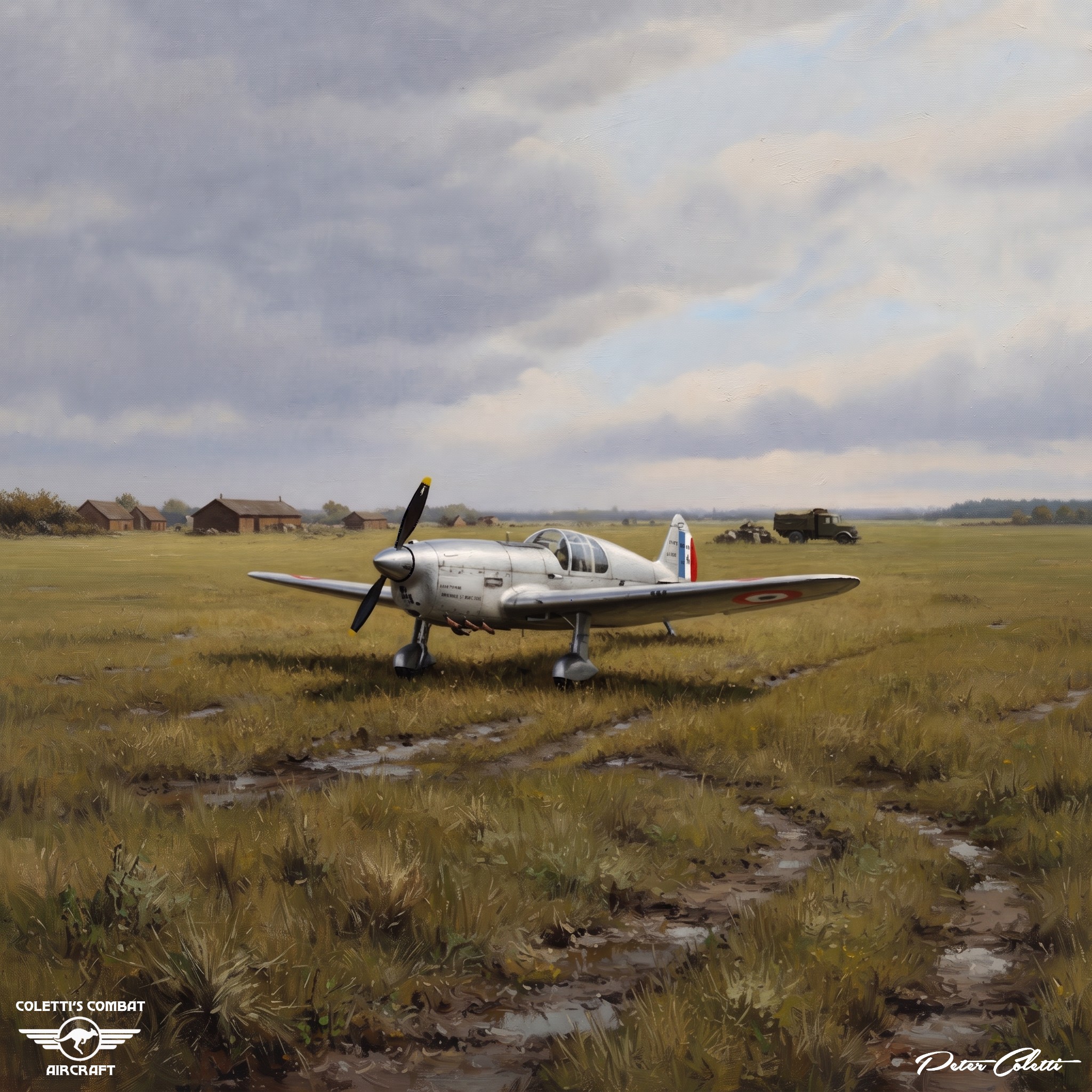
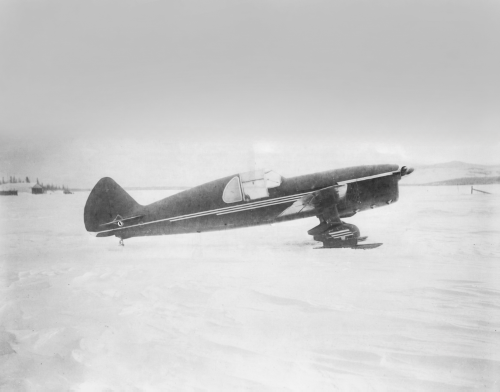
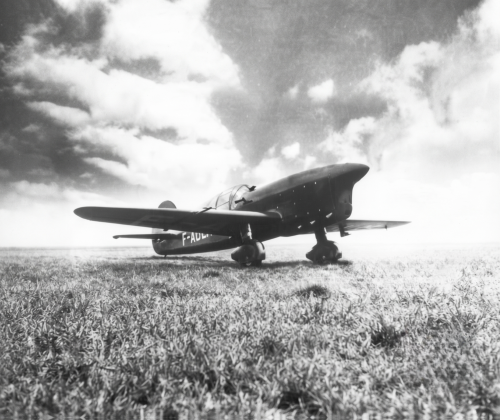
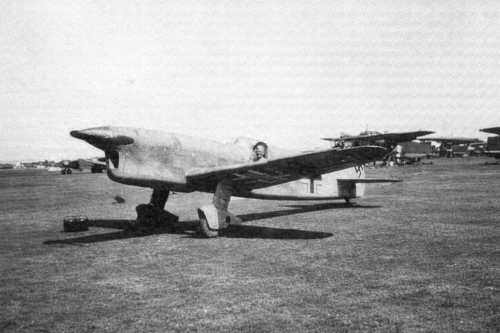
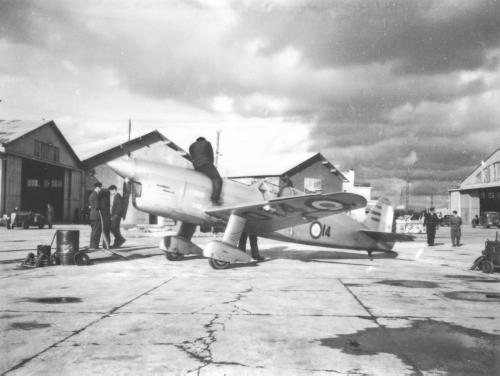
The Caudron C.690 emerged in the late 1930s as part of France’s effort to modernise pilot training in anticipation of a rapidly changing air‑combat environment.
Caudron, already well known for lightweight racers and trainers, sought to create an advanced trainer that could bridge the gap between basic flight instruction and the increasingly demanding handling characteristics of frontline fighters.
By 1936–1937, the French Air Ministry recognised that existing trainers were inadequate for preparing pilots to fly high‑performance monoplanes such as the Morane‑Saulnier MS.406 or the Dewoitine D.510.
Caudron responded with a series of sleek, low‑wing monoplanes built around its expertise in wooden construction and refined aerodynamics.
The C.690 was conceived as a purpose‑built advanced trainer, offering fighter‑like handling without the cost or complexity of a combat aircraft.
The prototype flew in the late 1930s and demonstrated excellent agility, smooth control response, and a level of performance that made it suitable for aerobatic and combat‑style training.
Although promising, the aircraft entered a crowded field of competing designs, and production remained limited.
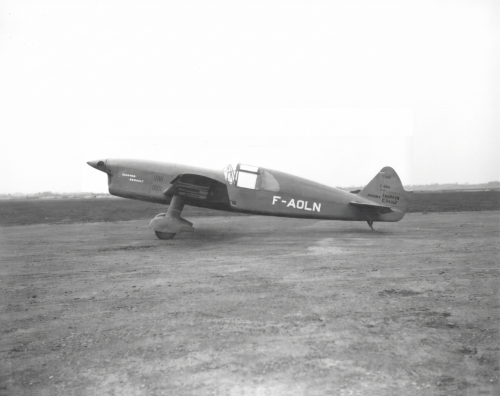
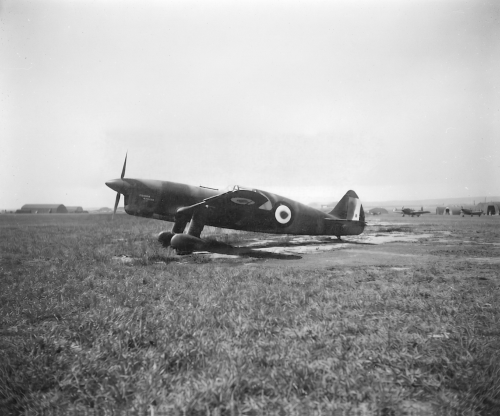
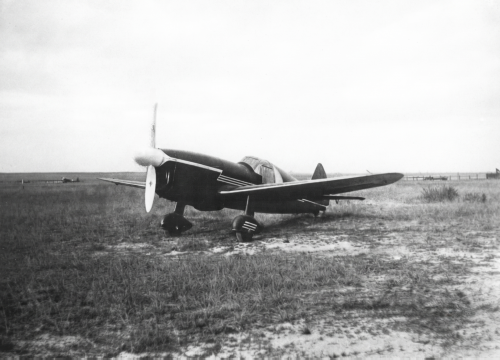
CAUDRON C.670 Prototype 2
Design Characteristics
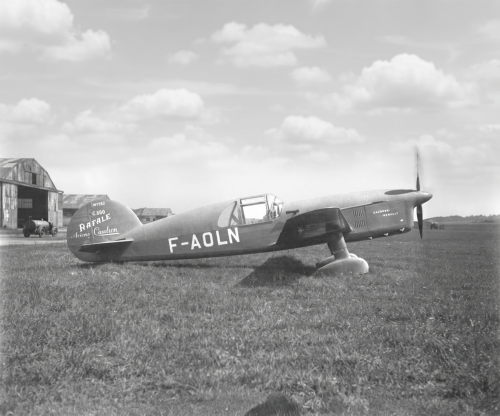
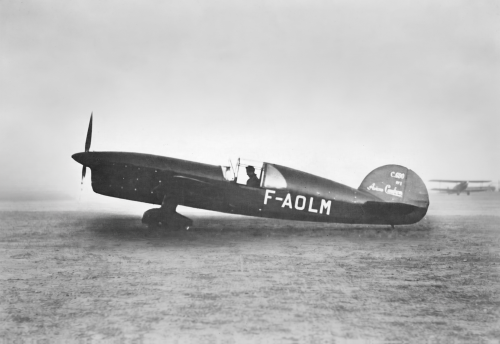
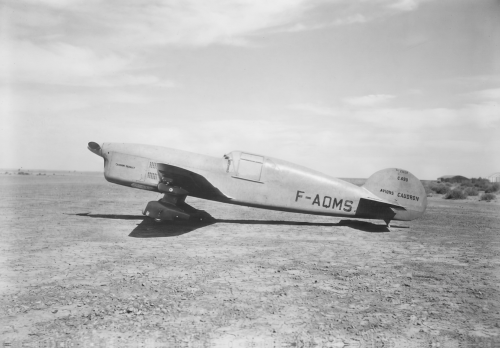
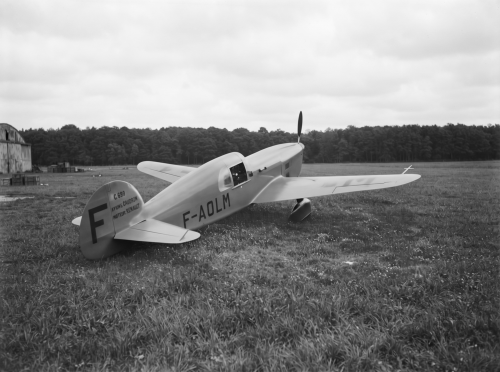
The Caudron C.690 was a single‑engine, low‑wing monoplane with a fully enclosed cockpit and fixed landing gear.
Its design reflected Caudron’s signature approach: lightweight wooden construction, aerodynamic refinement, and simplicity of maintenance.
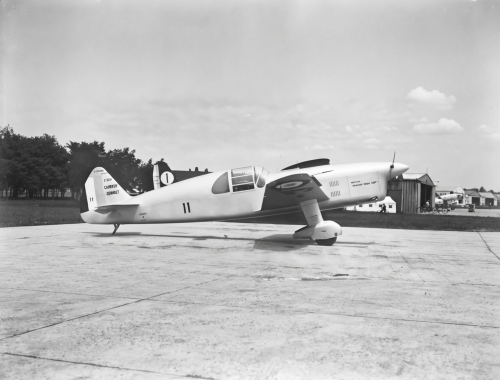
CAUDRON C.670 Manufactured by OKB‑301
Airframe
Construction: Primarily wood, with plywood skinning over a wooden frame.
This kept weight low and simplified manufacturing.
Wing: A low‑mounted cantilever wing with modest taper and rounded tips.
The wing was optimised for stability and responsive roll control.
Fuselage: Slender and aerodynamically clean, contributing to the aircraft’s relatively high speed for a trainer.
Cockpit: Enclosed canopy providing good visibility.
The aircraft was typically flown solo, though some variants allowed dual instruction.
Landing Gear: Fixed, faired main gear legs and a tailwheel.
The fixed gear reduced complexity and cost while maintaining acceptable performance.
Powerplant
The aircraft was powered by a Renault inline engine, consistent with Caudron’s close relationship with Renault for light aircraft propulsion.
The engine delivered enough power to give the C.690 fighter‑like responsiveness without overwhelming novice pilots.
Controls and Handling
Pilots praised the C.690 for the following:
Light, precise control inputs
Excellent roll rate
Predictable stall behaviour
Aerobatic capability suitable for combat manoeuvre training
These qualities made it an effective stepping‑stone between basic trainers and frontline fighters.
Performance
Exact figures varied slightly by sub‑variant, but typical performance characteristics included:
Maximum speed: Approximately 300 km/h class (varied by engine and configuration)
Cruise speed: Lower 200 km/h range
Range: Sufficient for training sorties, generally a few hundred kilometres
Service ceiling: Around 6,000–7,000 meters
Take-off and landing: Short‑field capability thanks to low weight and responsive controls
The aircraft’s performance placed it well above basic trainers and close to older generation fighters, making it ideal for advanced instruction.
Variants
The C.690 was part of a broader Caudron family of advanced trainers, and several related models shared similar design philosophies.
The main C.690 variants included the following:
C.690 Prototype
The initial aircraft used for evaluation and demonstration.
It established the basic configuration and performance envelope.
C.690 Production Variant
A small production run was completed for military training use.
These aircraft incorporated minor refinements based on prototype testing, including adjustments to cockpit layout and structural reinforcement.
Operational Use
Pre‑War Service
Before WWII, the C.690 served primarily in French military flying schools.
Its role was to prepare pilots for transition to frontline fighters by teaching the following:
High‑speed handling
Aerobatics
Combat manoeuvring
Advanced navigation and instrument flying
Its modern configuration made it one of the more capable advanced trainers available to French forces at the time.
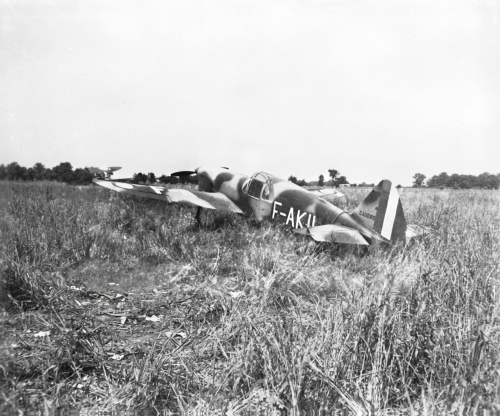
CAUDRON C.670 Manufactured by OKB‑301
WWII Context
When Germany invaded France in 1940, the C.690 was still in limited service.
Its small numbers and non‑combat role meant it had no significant impact on the fighting.
Most aircraft were either:
Destroyed on the ground during Luftwaffe attacks,
Evacuated and later abandoned,
Or captured and scrapped by occupying forces.
The type did not see combat use, nor was it adopted by the Luftwaffe for training, as Germany already had its own advanced trainers in large numbers.
Post‑War Fate
Due to its wooden construction and the destruction of French aviation infrastructure during the war, very few Caudron aircraft of any type survived.
The C.690 disappeared quickly from inventories, leaving only photographs, technical notes, and scattered documentation as evidence of its existence.
Significance
The Caudron C.690 represents an important transitional aircraft in French aviation history.
It embodied:
The shift from biplane to monoplane training doctrine,
Caudron’s mastery of lightweight wooden airframes,
France’s attempt to modernise pilot training before WWII.
Although overshadowed by wartime events and produced in small numbers, the C.690 stands as a refined and forward‑looking design that helped prepare French pilots for the demands of modern air combat.