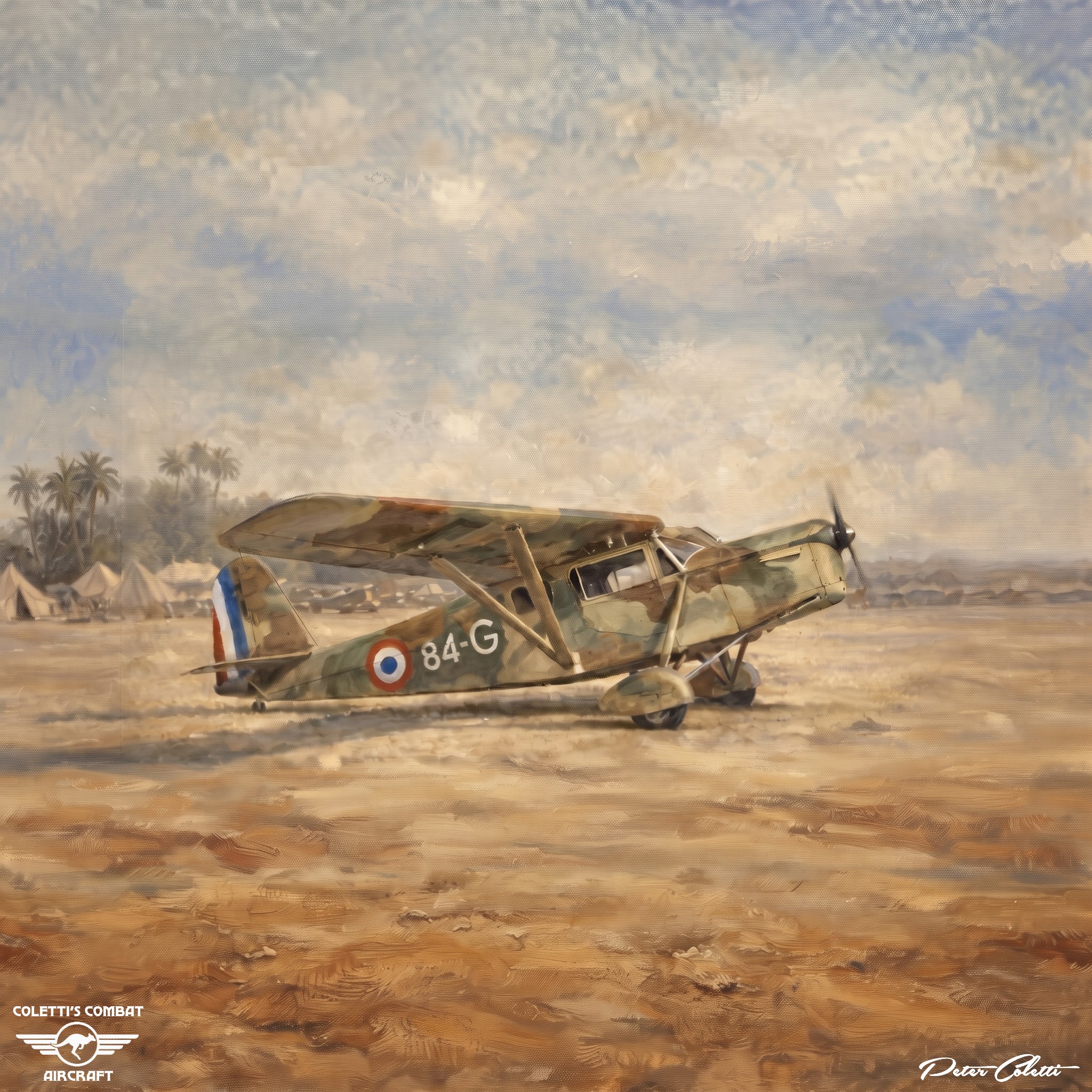
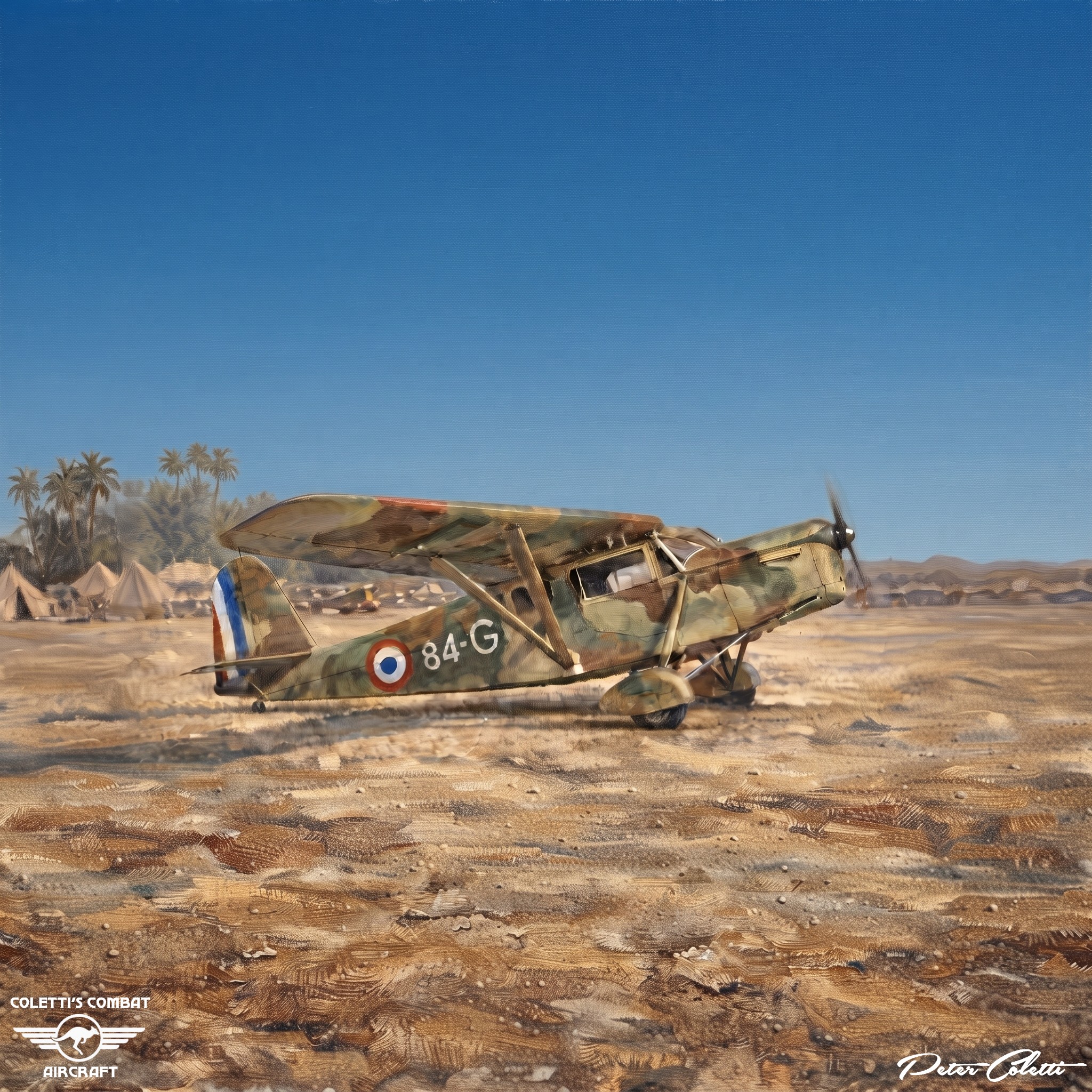
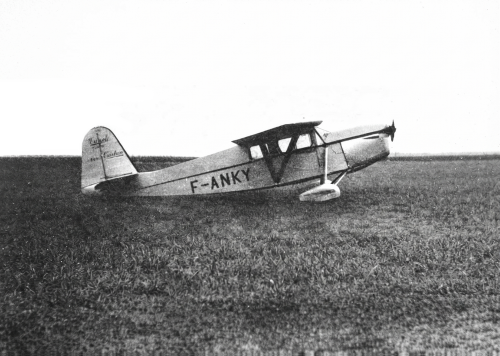
The Caudron C.480 Frégate emerged in the mid‑1930s as part of Caudron’s continuing effort to refine light touring and utility aircraft for both private and governmental use.
Its lineage traces directly to the earlier Caudron C.280 Phalène, a successful high‑wing cabin monoplane that had become a staple of French civil aviation.
By 1935, Caudron sought to modernise the concept with improved ergonomics, better visibility for the pilot, and more efficient aerodynamics.
The prototype of the C.480 was completed and flown in 1935, representing a thoughtful evolution rather than a radical redesign.
The most significant change was the reconfiguration of the cabin layout: whereas the C.280 placed the pilot and passengers together, the C.480 adopted a single‑pilot forward cockpit with two passengers seated side‑by‑side behind.
This arrangement improved pilot visibility and control while offering a more comfortable cabin for passengers—an important selling point for touring aircraft of the era.
The aircraft was designed during a period of rapid expansion in French general aviation, with Caudron—by then under the influence of Renault—pushing for standardised, reliable light aircraft that could serve aero clubs, private owners, and government agencies.
Design Characteristics
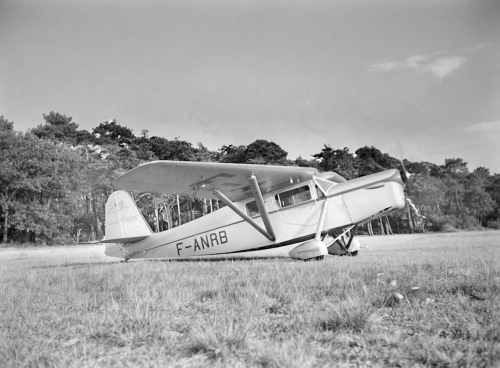
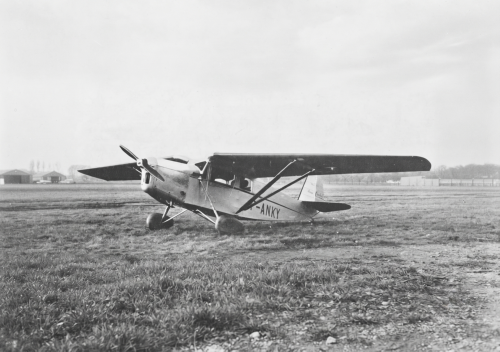
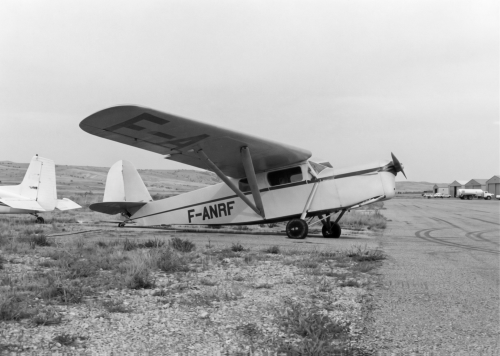
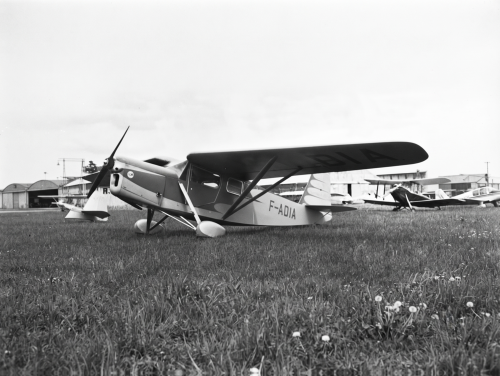
The C.480 Frégate was a high-wing, strut-braced monoplane, typical of Caudron’s light aircraft philosophy.
Its wing featured a tapered leading edge and straight trailing edge, giving it a clean aerodynamic profile while maintaining structural simplicity.
The wing was supported by V‑shaped struts, a hallmark of Caudron’s designs, providing rigidity without excessive weight.
The fuselage was of mixed construction, optimised for lightness and ease of maintenance.
The forward cockpit was enclosed, offering good visibility and weather protection.
Behind the pilot, the passenger compartment provided seating for two, making the aircraft suitable for touring, liaison duties, or basic transport.
The landing gear was fixed and conventional, with a tailwheel robust enough for grass airfields common in 1930s France.
Powerplant and Performance
The C.480 was powered by a Renault 4Pei inline piston engine producing 140 hp, a reliable and widely used powerplant in Caudron’s light aircraft range.
This engine gave the aircraft respectable performance for its class:
Maximum speed: 210 km/h
Cruising speed: 185 km/h
Range: 1000 km
Service ceiling: 4500 m
Empty weight: 618 kg
Maximum take-off weight: 1050 kg
Crew: 1 pilot
Capacity: up to 2 passengers
These figures placed the C.480 among the more capable French light aircraft of the decade, offering long range and efficient cruising suitable for cross-country flights, liaison missions, and training.
Production and Civil Use
A total of 27 aircraft were built, making the C.480 a modest but meaningful part of Caudron’s pre‑war output.
Most were delivered to private owners, aero clubs, and small commercial operators.
The aircraft’s reliability and ease of handling made it popular for touring, pilot training, and general utility roles.
Military Requisition and WWII Context
With the outbreak of the Second World War in 1939, France urgently required additional light aircraft for liaison, communications, and training.
As part of this mobilisation, 20 C.480s were requisitioned by the French authorities and transferred to the Armée de l’Air.
In military service, the C.480’s strengths—long range, good visibility, and simple maintenance—made it suitable for:
Liaison flights between airbases
Courier and dispatch duties
Light transport of personnel
Training and proficiency flying
After the fall of France in 1940, surviving aircraft were absorbed into various roles under German occupation.
Some C.480s were photographed in Luftwaffe markings, indicating their continued use as utility aircraft by German forces.
This was not unusual: the Luftwaffe frequently employed captured French light aircraft for non‑combat duties, especially when spare parts and maintenance expertise were readily available.
Variants
The primary production version is generally referred to as the C.480 Frégate, though some documentation lists a C.418 designation in performance tables.
This appears to be a typographical or archival inconsistency rather than a distinct variant, as the specifications match those of the C.480.
No major structural variants are known, though individual aircraft may have differed slightly in equipment or interior layout depending on civil or military requirements.
Operational Legacy
The Caudron C.480 Frégate occupies a niche but meaningful place in French aviation history.
It represents:
The culmination of Caudron’s pre‑war light touring aircraft line
A practical, efficient design that served both civilian and military operators
A type that bridged the gap between France’s vibrant 1930s aero‑club culture and the demands of wartime mobilization
Although produced in small numbers, the C.480 exemplifies the design philosophy of Caudron and Renault during the period: lightweight, aerodynamically clean, and powered by reliable engines that made their aircraft accessible to a wide range of pilots.
Its wartime service—first with France, then in limited roles under German occupation—adds a final chapter to its story, illustrating how even modest civilian aircraft could become part of the broader tapestry of WWII aviation.