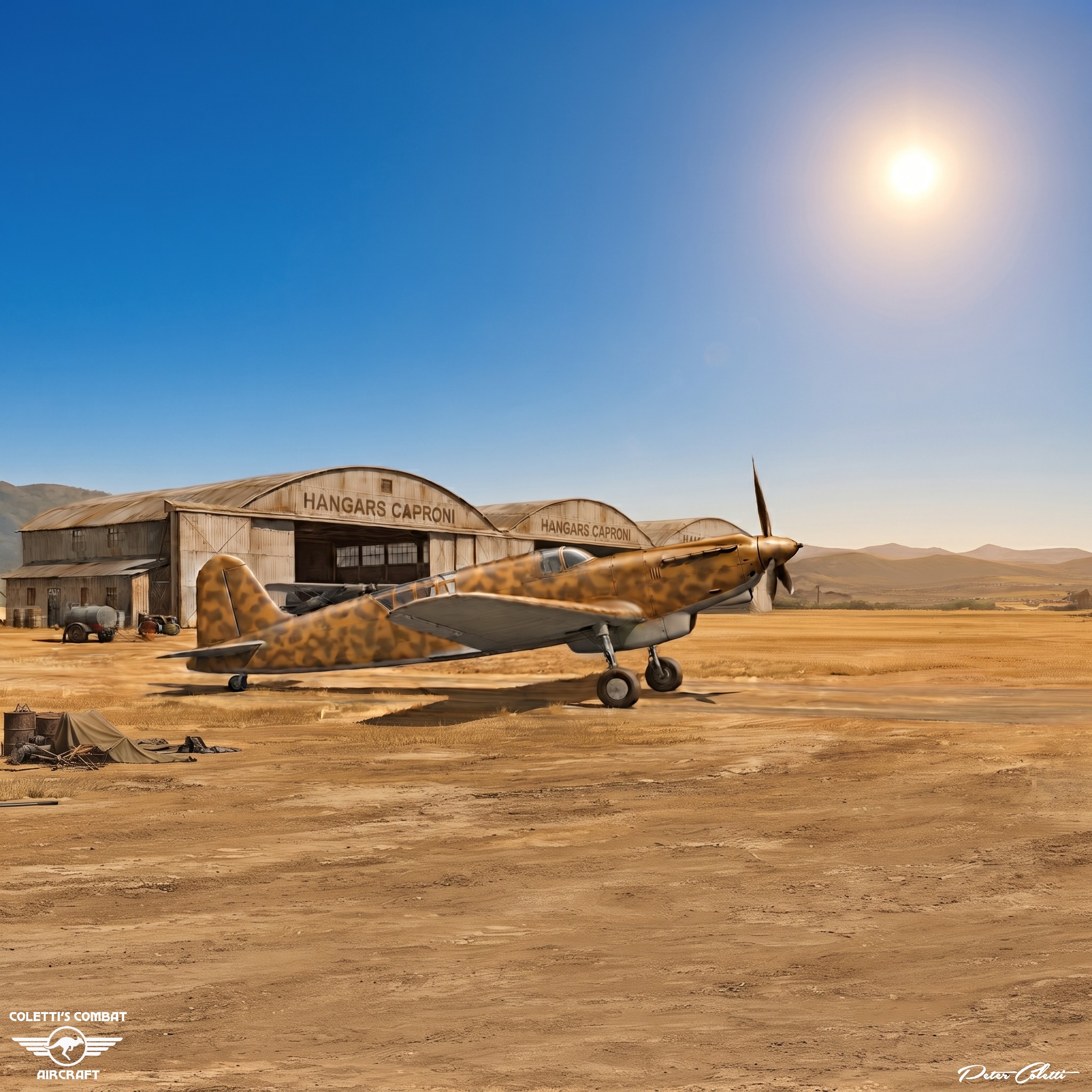
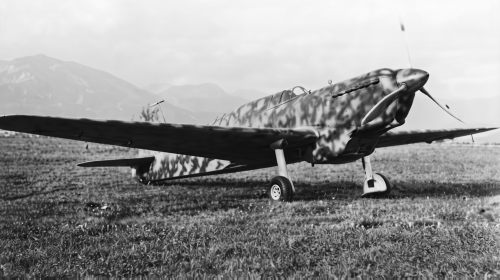
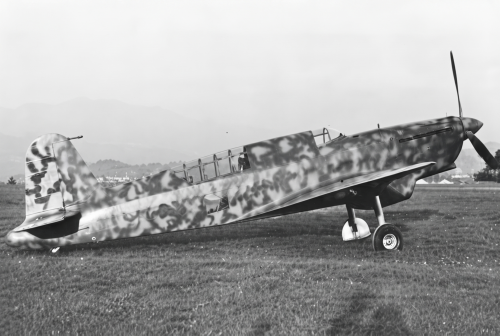
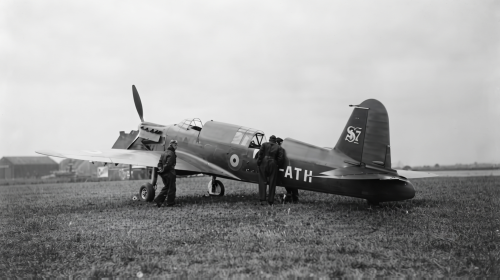
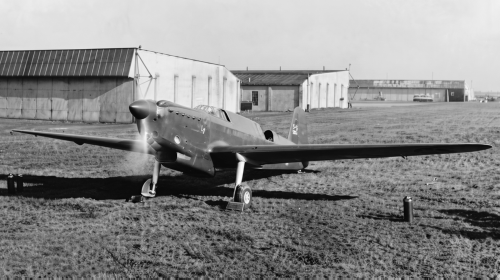
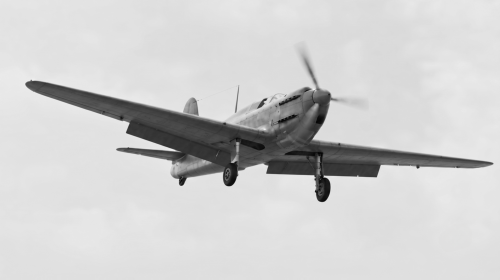
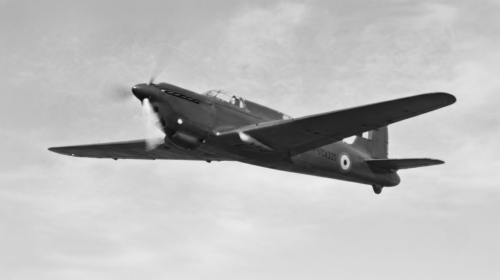
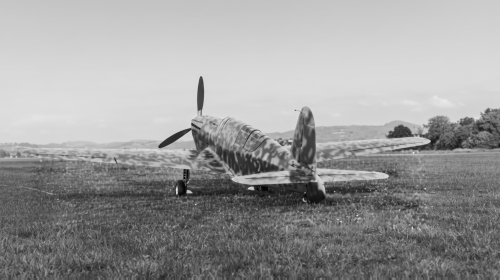
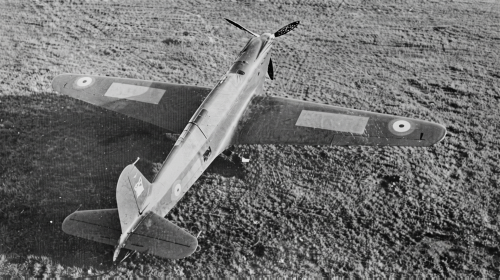
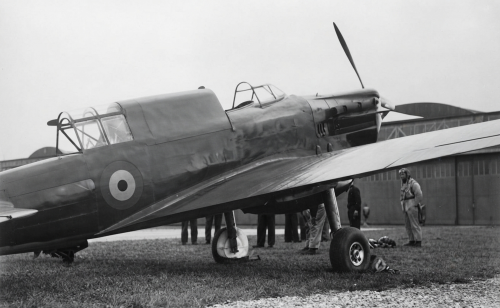
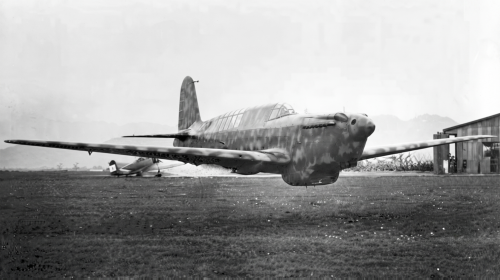
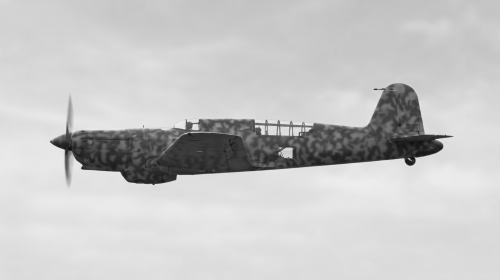
The Caproni Ca.335 Maestrale emerged from a late‑1930s intersection of Italian aircraft design ambitions and Belgian military modernisation needs.
In October 1937, the Belgian aircraft manufacturer SABCA (Société Anonyme Belge de Constructions Aéronautiques) entered a marketing agreement with Italy’s Caproni to distribute several Caproni military aircraft in selected markets, including the Ca.135, Ca.310, and Ca.312 (designated SABCA S.45bis, S.46, and S.48, respectively).
Belgium’s air force still operated Fairey Fox biplanes as two-seat fighters and reconnaissance aircraft—machines that were clearly obsolete by the late 1930s.
As part of the Caproni–SABCA agreement, Caproni was tasked with designing a modern replacement.
Chief Engineer Cesare Pallavicino, already known for the Caproni A.P.1 attack aircraft, was assigned to create this new type.
The resulting design—Caproni Ca.335 Maestrale was intended to be built under licence in Belgium as the SABCA S.47.
Development History
Italian Prototype Phase
The Ca.335 prototype was constructed at Caproni’s Ponte San Pietro factory.
It achieved its maiden flight on 16 February 1939, demonstrating the aerodynamic promise of Pallavicino’s low‑wing monoplane concept.
After initial Italian testing, the aircraft was dismantled and shipped by rail to Brussels, where SABCA reassembled it.
Its first Belgian flight occurred on 19 September 1939, just weeks after the outbreak of WWII.
Belgian Evaluation and Licensing
Belgian test flights were successful enough that SABCA purchased a manufacturing licence, redesignating the aircraft SABCA S.47.
Demonstrations were conducted for Belgian Ministry of Defence officials and representatives of other nations.
Belgian authorities expressed interest in 24 aircraft, but SABCA’s production lines were already occupied with:
41 Breguet 693s for Belgium and France
10 Koolhoven F.K.58s for France
These commitments delayed any formal order.
The War Intervenes
On 14 March 1940, the prototype suffered minor damage during a demonstration for the French Armée de l’Air at Orléans.
Before repairs and production planning could advance, the German invasion of Belgium in May 1940 ended all prospects for series manufacture.
Only one Ca.335/S.47 was ever built.
Design and Construction
Airframe Structure
The Ca.335 was a low-wing cantilever monoplane of mixed construction:
Fuselage: steel‑tube structure with metal skin
Wings: wood and fabric construction
This hybrid approach balanced durability, weight savings, and manufacturing practicality—typical of late‑1930s Italian aircraft engineering.
Undercarriage
The aircraft featured a hydraulically actuated retractable tailwheel undercarriage:
Main wheels retracted rearwards into the wings
The tailwheel is retracted into the fuselage
Crew Arrangement
The Ca.335 carried two crew members in widely separated cockpits:
Pilot (forward)
Observer/gunner (rear)
This arrangement reflected its dual role as a fighter‑bomber and reconnaissance aircraft.
Powerplant
The Belgian-intended version used an 860 hp Hispano‑Suiza 12Ycrs liquid‑cooled V‑12 engine.
This engine was widely used in European fighters of the era (e.g., Dewoitine D.520), giving the Ca.335 competitive performance potential.
Armament and Combat Role
Fixed Armament
1 × 20 mm Hispano‑Suiza HS.404 cannon firing through the propeller hub
2 × 7.7 mm Browning machine guns mounted in the wings
Defensive Armament
1 flexible 7.7 mm machine gun in the rear cockpit
Bomb Load
Internal bomb bay: 2 × 50 kg bombs
Underwing racks: up to 10 × 50 kg bombs
This made the Ca.335 a true fighter-bomber, capable of reconnaissance, light attack, and escort duties.
Performance Characteristics
Performance data (SABCA S.47 configuration):
Maximum speed: 311 mph at 13,780 ft
Service ceiling: 32,800 ft
Range: 978 miles
Endurance:
Fighter configuration: ~2 hours
Reconnaissance configuration: up to 4 hours 30 minutes
Climb Performance
6,560 ft in 3 min 30 sec
13,120 ft in 7 min 20 sec
19,680 ft in 12 min 20 sec
Weights
Empty weight: 4,950 lb
Fighter: 6,545 lb
Reconnaissance: 7,128 lb
Attack: 7,370 lb
Dimensions
Wingspan: 43 ft 3 in
Length: 34 ft 9 in
Height: 10 ft 6 in
Wing area: 254 sq ft
Variants
Ca.335 Maestrale (Italian prototype)
The original Italian‑built aircraft, powered by the Hispano‑Suiza engine and intended for Belgian evaluation.
Only one was produced.
SABCA S.47 (Belgian production version)
The licensed Belgian version, identical in design but intended for mass production.
No production aircraft were completed due to the German invasion.
The Ca.335 was part of a broader modernisation programme that was overtaken by events in May 1940.
Italian Export Strategy
Italy’s aircraft industry aggressively pursued foreign markets in the late 1930s.
The Ca.335 was one of several designs intended to boost Caproni’s international presence.
Technical Merit Without Operational Opportunity
The Ca.335’s performance—311 mph top speed, strong climb rate, and respectable bomb load—placed it among the more capable European two‑seat fighter‑bombers of its era.
Yet its potential was never realised due to wartime disruptions.
Influence on Later Caproni Designs
The Ca.355 dive bomber drew directly from Ca.335 structural and aerodynamic concepts, showing the design’s continued relevance within Caproni’s engineering lineage.
Summary The Caproni Ca.335 Maestrale was a promising, modern, two‑seat fighter‑bomber designed through Italian–Belgian collaboration.
It featured:
Mixed‑construction low‑wing monoplane design
Hispano‑Suiza 12Ycrs V‑12 engine
Strong armament, including a hub‑firing 20 mm cannon
Versatile bomb load and reconnaissance capability
Competitive performance for 1939
Despite successful testing, only one aircraft was ever built, and the project was terminated by the German invasion of Belgium.
The Ca.335 remains a fascinating “might‑have‑been” of pre‑WWII European aviation—technically sound and strategically relevant but overtaken by the rapid escalation of war.