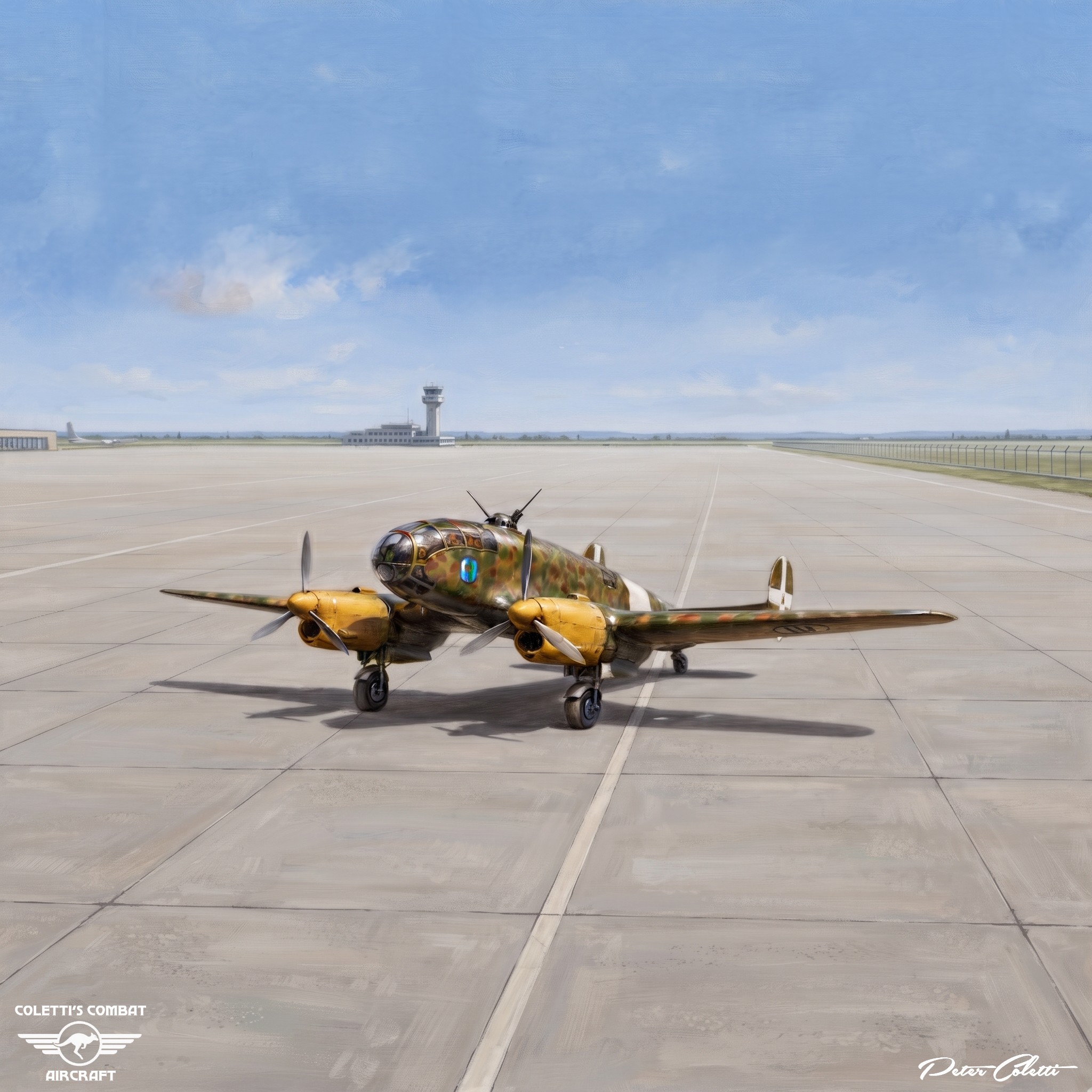
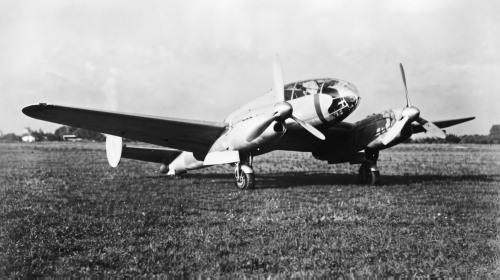
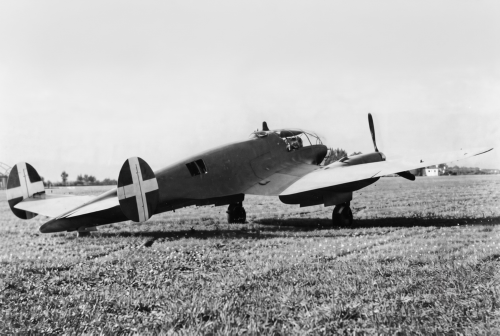
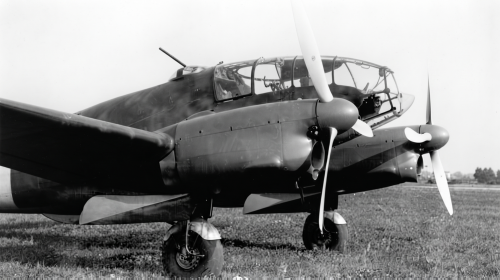
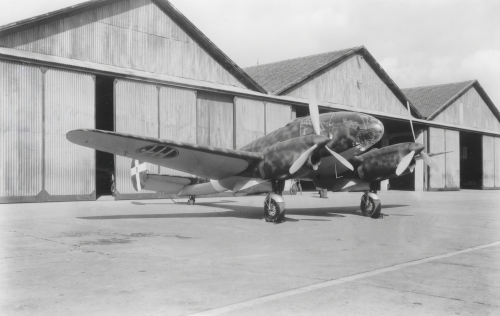
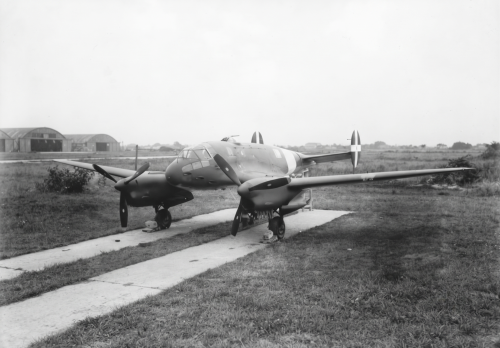
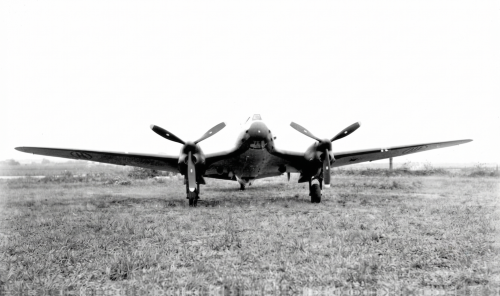
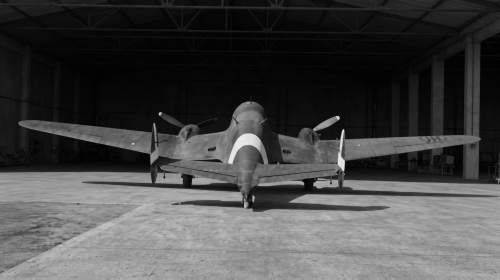
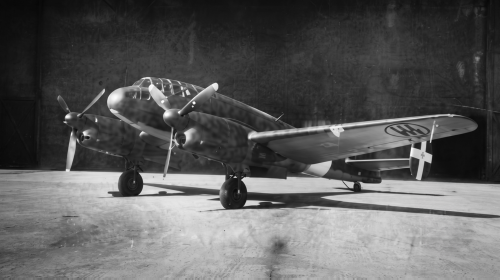
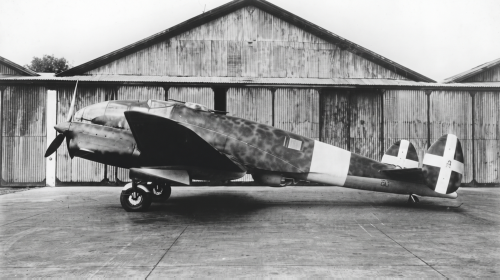
The Caproni Ca.331—later nicknamed Raffica (“Gust of Wind” or “Fire Burst”)—originated from a 1938 Italian Air Ministry requirement calling for a new tactical reconnaissance aircraft with combat capability.
The specification demanded an aircraft capable of performing armed observation, light bombing, and defensive combat, reflecting Italy’s desire to modernise its reconnaissance fleet before large‑scale conflict engulfed Europe.
Design responsibility fell to Ing. Cesare Pallavacino of Caproni Bergamaschi, a subsidiary of the Caproni industrial group.
Pallavacino pursued an unusually advanced design for Italian industry at the time: a fully all‑metal, twin‑engine, low‑wing monoplane with stressed‑skin duralumin construction.
This represented a significant departure from earlier Caproni mixed‑construction aircraft.
The initial prototype was designated Ca.331 O.A. (Osservazione Area)—also called Ca.331A—and was completed in October 1938, though its first flight would not occur until 1940.
Airframe and Structural Design
The Ca.331’s airframe incorporated several distinctive features:
All‑metal stressed‑skin construction using duralumin on fuselage and wings.
Inverted gull‑wing configuration, improving aerodynamic efficiency and landing gear geometry.
Unstepped cockpit and fully glazed nose, optimised for observation and bombing accuracy.
Internal bomb bay capable of carrying up to 1,000 kg of bombs, plus four external racks.
The aircraft’s clean aerodynamic lines and modern construction impressed both Italian and German evaluators, who noted its advanced engineering relative to contemporary Italian reconnaissance aircraft.
Powerplant and Systems
Engines
The Ca.331 O.A. prototype used the following:
Two Isotta‑Fraschini Delta RC.40 inverted V‑12 engines
Rated at 574 kW (770 hp) each
Propeller issues initially hampered performance.
The original Piaggio propellers proved inadequate, but replacement with Alfa Romeo‑built propellers in 1941 significantly improved performance, reportedly exceeding expectations.
Armament
The Ca.331 O.A. carried the following:
Four 12.7 mm Breda‑SAFAT machine guns
Two fixed forward‑firing guns in wing roots
One dorsal turret gun
One ventral gun
Bomb load: up to 1,000 kg internally plus external racks
This armament made the Ca.331 unusually well‑armed for a reconnaissance aircraft, aligning with Italy’s desire for multi‑role capability.
Flight Testing and Performance
First Flight
The Ca.331 O.A. prototype first flew on 31 August 1940 at Ponte San Pietro, piloted by Ettore Wengi.
Performance Results
Official tests at Guidonia Montecelio in 1941 yielded excellent performance, including the following:
Maximum speed: ~505 km/h
Service ceiling: ~8,092 m
Range: ~1,600 km
Maximum take-off weight: 6,800 kg
These figures placed the Ca.331 among the fastest and most capable twin‑engine reconnaissance aircraft of its era.
German evaluators at Rechlin were reportedly impressed—more so than the Italians—and even Werner Mölders and Hermann Göring praised the aircraft’s handling and performance during demonstrations.
Failure to Enter Production
Despite strong test results, the Regia Aeronautica declined to issue a production order.
Reasons likely included:
Industrial bottlenecks in Italy’s aircraft manufacturing sector
Competing priorities for bomber and fighter production
Limited resources for introducing new airframes during wartime
Conservative procurement culture within the Italian Air Ministry
Germany also declined to order the aircraft despite favourable evaluations.
Thus, the Ca.331 remained a promising but unrealised design.
Key features: glazed nose, reconnaissance equipment, and Delta RC.40 engines.
Ca.331 C.N. / Ca.331B
Role: Night fighter prototype
Ordered: May 1942
First flight: Summer 1942
Built: Two ordered, one completed
Key changes:
Two Isotta‑Fraschini Delta IV supercharged engines (840 hp)
Heavy nose armament:
Four 20 mm Mauser MG 151 cannon
Two 12.7 mm Breda‑SAFAT machine guns
Retained dorsal and ventral defensive guns
Same bomb load capability as O.A. variant
Performance remained similar to the O.A. prototype, with a top speed around 505 km/h.
Other Proposed Variants
Some sources mention additional conceptual variants, but none progressed beyond planning.
Operational Fate and WWII Context
The Ca.331’s development occurred during a period of increasing strain on Italy’s aviation industry. By 1942–43:
Italy faced severe material shortages
Aircraft factories were disrupted by Allied bombing
The Regia Aeronautica prioritized existing, proven designs
Night‑fighter development shifted towards German imports and licensed production
In January 1943, the Ca.331 programme was officially scrapped.
After Italy’s armistice in September 1943, the single Ca.331 O.A. and two Ca.331 C.N. airframes (only one completed) were captured by German forces at Taliedo.
All were later scrapped in Germany, ending the aircraft’s brief existence.