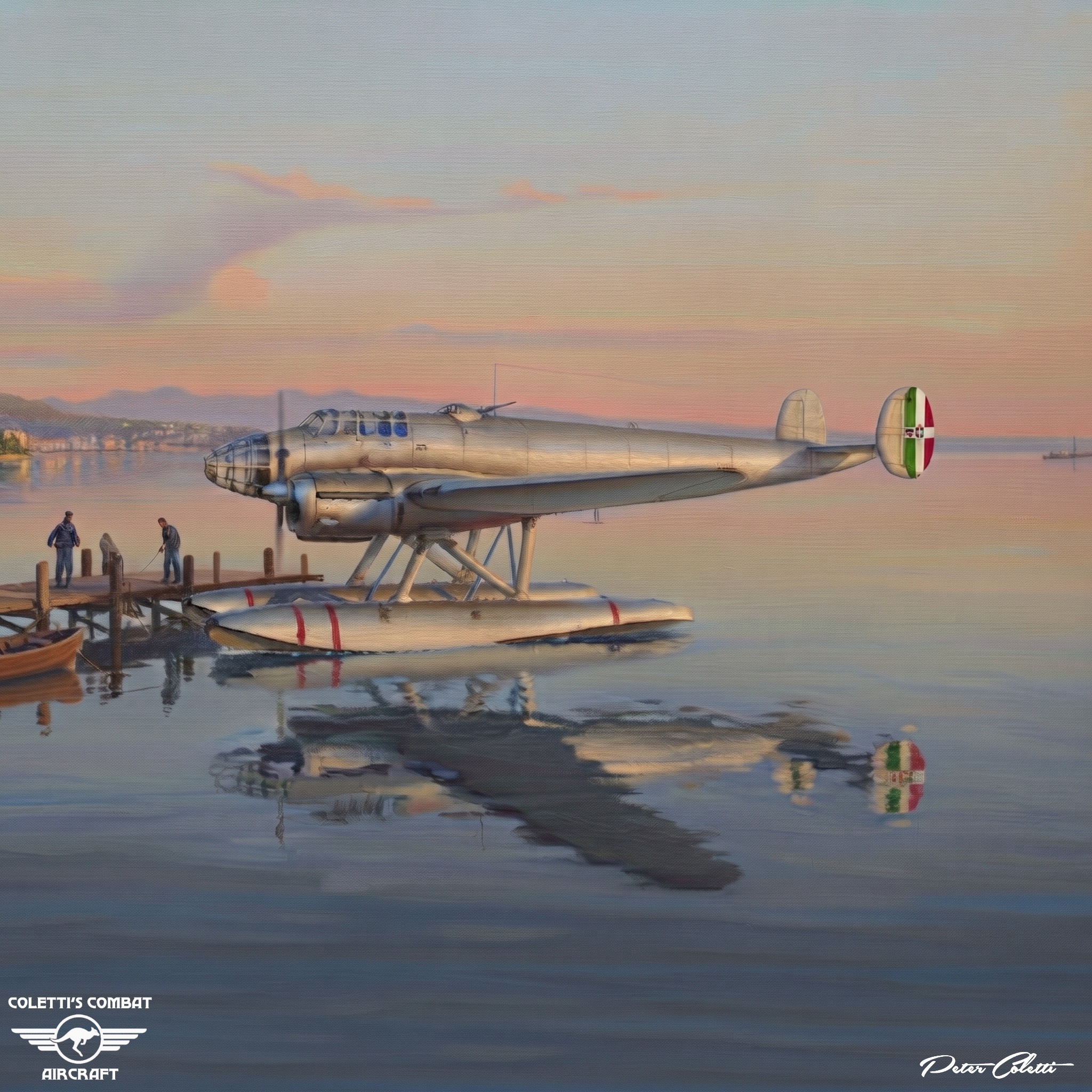
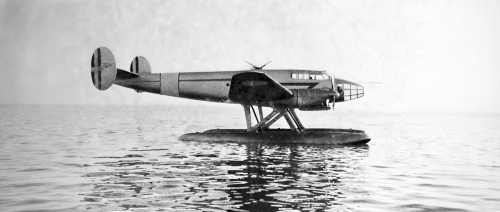
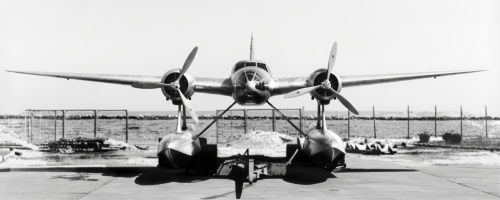
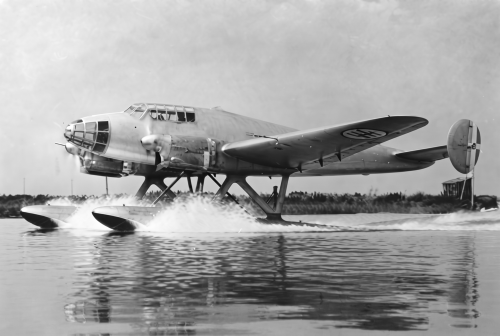
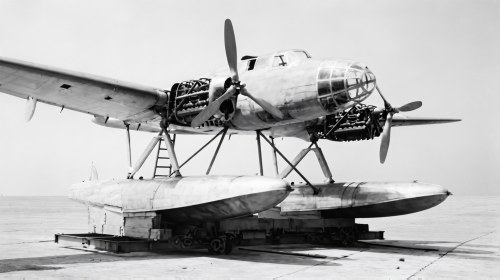
The CANT Z.515 was a twin‑engine monoplane floatplane conceived in Italy on the eve of the Second World War as a modern maritime reconnaissance and light bombing aircraft.
Designed by Filippo Zappata, it represented an attempt to replace the ageing CANT Z.501 Gabbiano flying boat and supplement the larger tri‑motor CANT Z.506 Airone.
Although promising on paper, the Z.515 ultimately fell victim to technical issues, shifting procurement priorities, and wartime industrial disruption, resulting in only limited production and no meaningful operational service.
Origins and Development
The 1937 Requirement
In 1937, the Regia Marina and Regia Aeronautica issued a requirement for a floatplane (not a flying boat) capable of maritime reconnaissance, patrol, and light bombing.
The aircraft was expected to be smaller and lighter than the established Z.506 and to replace the obsolescent Z.501.
The mission profile included reconnaissance, anti‑submarine warfare, and coastal patrol.
Zappata’s Design Approach
Filippo Zappata initially attempted to adapt his CANT Z.1018 Leone twin‑engine bomber design into a seaplane derivative designated Z.514.
The Z.514 flew on 9 October 1939, but it suffered from numerous flaws: a narrow fuselage that could not accommodate defensive armament, tailplane vibration, poor cockpit visibility, unjustified crew layout, mechanical unreliability, and insufficient space for required modifications.
As a result, the Regia Aeronautica rejected the Z.514.
Zappata then reworked the concept into a new aircraft—the CANT Z.515—retaining the twin‑engine, low‑wing configuration but redesigning the fuselage, adding floats, and refining the aerodynamics.
The Z.515 was ready by 1939, though some sources place its first flight in July 1940.
Competition and Procurement
The Z.515 competed against the Fiat CR.14 floatplane.
Fiat’s design won by a narrow margin, and the Regia Aeronautica initially selected it for production.
However, once the CR.14 entered service in 1941, significant issues emerged, prompting the Air Force to reconsider the Z.515.
An order for 64 aircraft from CANT and 50 from Aeronautica Sicula was approved in 1941.
Despite this, only ten to fifteen aircraft were completed, depending on the source.
Production was further disrupted after Italy’s 1943 armistice.
The Montfalcone factory fell under German control, and only two aircraft from a renewed batch of fifteen were delivered before the facility was destroyed in three RAF raids in 1944.
The Z.515 never reached operational deployment.
Technical Description and Design Features
Airframe
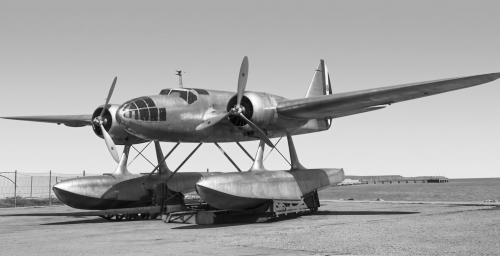
The Z.515 was a cantilever low‑wing monoplane with straight‑tapered wings, noticeable dihedral, and rounded tips.
Flaps were located inboard of the ailerons.
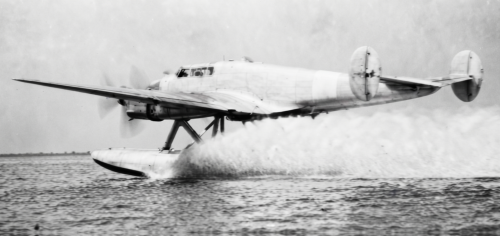
The tailplane sat atop the fuselage with greater dihedral than the wings and featured endplate fins, forming an H‑tail arrangement.
The vertical surfaces were nearly elliptical, split between fin and unbalanced rudder.
Floats and Undercarriage
The aircraft used two long, single‑stepped floats, attached via rearward‑sloping N‑form struts connected to the wing engine mounts.
Additional inverted‑V struts braced the floats laterally to the fuselage underside.
This arrangement provided stability on water while keeping structural weight moderate.
Crew and Cockpit
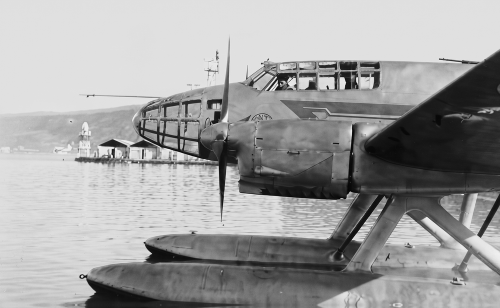
The lower nose was fully glazed, providing excellent downward and forward visibility for reconnaissance.
The cockpit was positioned largely ahead of the wing leading edge, improving sightlines compared to the problematic Z.514.
A low dorsal turret was mounted at mid‑chord, supplemented by three manually operated machine‑gun positions.
Powerplant
The Z.515 was powered by two Isotta‑Fraschini Delta III R.C.40 inverted V‑12 liquid‑cooled engines, each producing 560 kW (750 hp).
The engines were mounted well forward of the wing’s leading edge, with streamlined fairings extending aft beneath the wing.
Armament and Payload
1 × 12.7 mm machine gun in a rotating dorsal turret
3 × 7.7 mm hand‑controlled machine guns
Up to 600 kg (1,320 lb) of bombs carried internally or externally
This armament made the Z.515 suitable for light bombing, anti‑submarine patrol, and defensive engagements typical of maritime reconnaissance aircraft.
Performance
According to contemporary Italian aircraft data:
Maximum speed: 383 km/h (238 mph)
Cruise speed: ~310 km/h (190 mph)
Range: 1,770–1,800 km (1,100 mi)
Gross weight: 8,482 kg (18,700 lb)
Wingspan: 22.50 m
Length: 16.04 m
Wing area: 63.10 m²
These figures placed the Z.515 among the faster floatplanes of its era, though its performance was ultimately overshadowed by reliability concerns and production delays.
Variants
The Z.515 did not progress far enough to produce true operational variants
However, two categories can be inferred:
Prototype / pre‑production aircraft: Approximately 10–15 built, with minor differences in equipment and structural refinement.
Projected production model: The 1941 order for 114 aircraft (64 + 50) represented the intended standard configuration, but this version never entered full production.
No specialised subvariants (e.g., torpedo bomber, ASW‑optimised model) were developed.
Operational and WWII Context
Although designed for wartime service, the Z.515 never became operational.
Several factors contributed:
Competition and shifting priorities: The Fiat CR.14 was initially preferred, delaying Z.515 adoption.
Technical issues: The lineage from the flawed Z.514 meant persistent concerns about reliability and structural vibration.
Industrial disruption: Italy’s 1943 armistice and subsequent German occupation halted production.
The destruction of the Montfalcone factory in 1944 ended any remaining prospects.
Changing strategic needs: As the war progressed, Italy increasingly relied on existing aircraft types and German support rather than introducing new floatplane designs.
Thus, the Z.515 remained an interesting but unrealised aircraft—representative of late‑1930s Italian seaplane design but ultimately a footnote in WWII aviation history.
Summary
The CANT Z.515 was a promising maritime reconnaissance floatplane whose development was shaped by Italy’s pre‑war modernisation efforts and derailed by technical shortcomings and wartime upheaval.
With only a handful built and none entering service, it stands today as a rare and largely forgotten example of Filippo Zappata’s design work – an aircraft that might have filled an important niche had circumstances allowed.