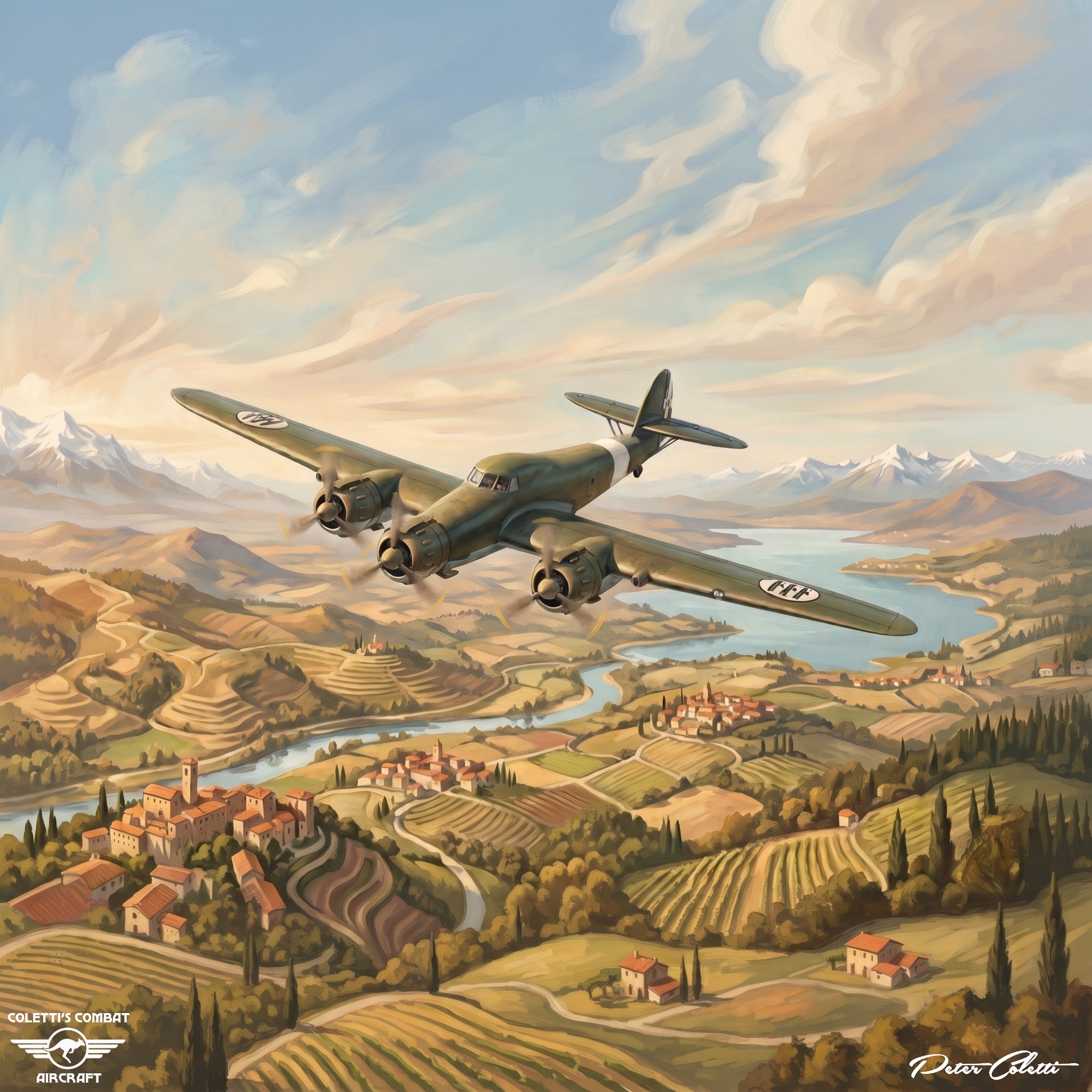
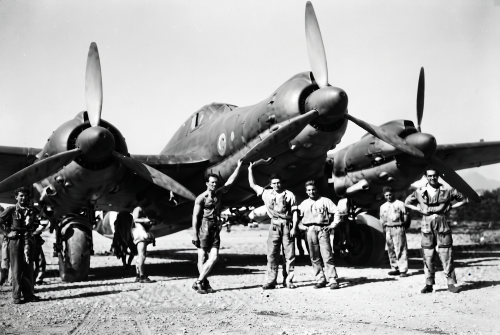
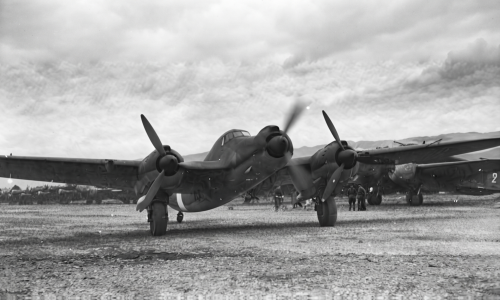
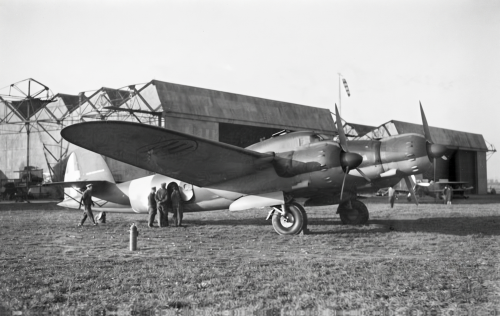
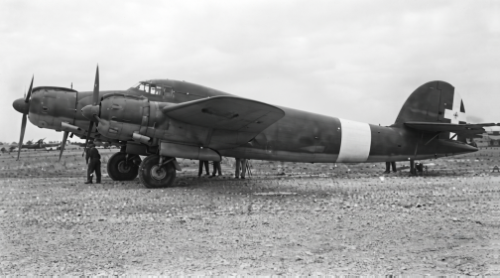
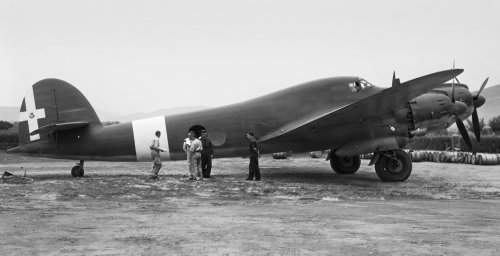
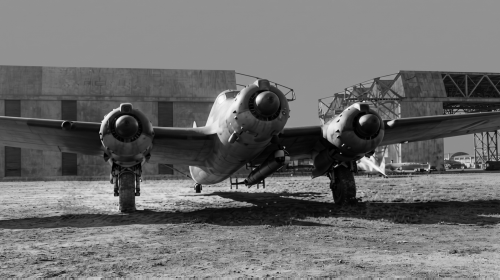
The CANT Z.1015 was a unique Italian three‑engined high‑speed transport and experimental aircraft developed in the late 1930s by Filippo Zappata for Cantieri Riuniti dell’Adriatico (CRDA).
Conceived originally as a fast postal aircraft, it became instead a specialised liaison and training platform within the Regia Aeronautica.
Only a single prototype was built, yet the aircraft remains notable as an example of Zappata’s continuous refinement of multi‑engine monoplane design and as a technical offshoot of the better‑known CANT Z.1007 series.
Development
Work on the Z.1015 began in 1938, during a period when Italy sought rapid long‑range transports for postal and liaison duties.
Zappata, already responsible for the Z.506 and Z.1007 families, designed the Z.1015 as a streamlined, three‑engined monoplane with performance superior to existing transports.
Construction followed CRDA’s established practice of mixed wood and metal materials, emphasising aerodynamic cleanliness and weight efficiency.
The prototype was completed at Monfalcone and made its first flight on 20 January 1939.
Although intended for civil postal service, the aircraft was never adopted for that role.
As Italy’s strategic priorities shifted towards military readiness, the Regia Aeronautica took over the sole example.
It was subsequently used for torpedo‑bomber crew training and for experimental torpedo‑drop trials, reflecting Italy’s growing emphasis on maritime strike capability in the Mediterranean.
Design
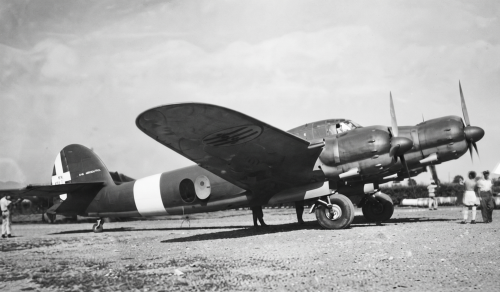
The Z.1015 was a low‑wing monoplane with retractable landing gear and a conventional tail unit.
Its structure followed Zappata’s characteristic approach: a wooden wing and fuselage with carefully faired surfaces to reduce drag.
The three‑engine layout was typical of Italian medium aircraft of the era, providing both redundancy and high cruising speed.
The aircraft featured a crew of four and a clean, narrow fuselage optimised for speed rather than payload.
The cockpit was fully enclosed, and the landing gear retracted into the wing and fuselage to minimise drag.
The wing planform and tail surfaces were closely related to those of the Z.1007bis, though refined for higher speed and lighter overall load.
Dimensions were substantial for a fast transport: a wingspan of 24.80 metres,
a length of 17.80 metres,
a height of 5.20 metres,
and a wing area of 75 square metres.
Empty weight was approximately 9,000 kilograms, with a maximum takeoff weight of 12,890 kilograms.
Powerplant
The prototype was initially fitted with three Alfa Romeo 135 RC.32 radial engines, rated at 800 horsepower each.
During development, these were replaced with more powerful Piaggio P.XII engines, rated around 1,350 horsepower in the RC.45 configuration.
Some sources list a 1,500-horsepower rating for the P.XII R.C.35, reflecting different altitude-rating standards.
Each engine drove a three‑bladed, variable‑pitch Piaggio‑D’Ascanio propeller.
The combination of three high‑power radials and a streamlined airframe gave the Z.1015 performance figures that were exceptional for an Italian transport aircraft of the period.
Performance
The Z.1015 achieved a maximum speed of approximately 563 kilometres per hour at 4,500 metres altitude, placing it among the fastest Italian multi‑engine aircraft of its time.
Cruising speed was around 480 kilometres per hour.
The range was roughly 2,980 kilometres, suitable for long‑distance postal or liaison missions.
Service ceiling and climb rate were not recorded in surviving documentation.
Operational Use and Wartime Context
Although designed as a civil aircraft, the Z.1015’s operational life was shaped entirely by the approach and outbreak of the Second World War.
The Regia Aeronautica employed the aircraft primarily as a trainer for crews destined for torpedo‑bomber units.
Italy’s naval air arm relied heavily on torpedo bombers such as the Savoia‑Marchetti SM.79 and the CANT Z.1007bis, and the Z.1015 provided a fast, stable platform for familiarisation and procedural training.
The aircraft also participated in early torpedo‑drop trials, helping refine delivery techniques and equipment.
Its speed and handling made it a suitable experimental platform, though its single‑prototype status limited its broader utility.
It likely performed liaison and transport duties as well, but documentation of such missions is sparse.
The aircraft never entered mass production.
Italy’s industrial capacity and wartime priorities favoured established designs, and the Z.1015 remained an experimental offshoot rather than a fully developed type.
Variants
No variants of the CANT Z.1015 were produced.
The sole prototype underwent engine changes during testing, but no structural or role‑specific derivatives were built.
Technical Summary
Type: High‑speed postal aircraft; later liaison and torpedo‑bomber trainer
Engines: Three Piaggio P.XII radial engines, approx. 1,350 hp each
Maximum speed: 563 km/h
Cruising speed: 480 km/h
Range: 2,980 km
Wingspan: 24.80 m
Length: 17.80 m
Height: 5.20 m
Wing area: 75 m²
Empty weight: 9,000 kg
Maximum take-off weight: 12,890 kg
Assessment
The CANT Z.1015 stands as a rare example of Italian pre‑war aeronautical ambition.
Although it never fulfilled its intended postal role and never entered production, it demonstrated advanced aerodynamic design and high performance for its era.
Its contribution to torpedo‑bomber training and experimentation gave it a modest but meaningful place in Italy’s wartime aviation development.
As a single‑prototype aircraft, it remains a technical curiosity and a testament to Filippo Zappata’s continual pursuit of speed and efficiency in multi‑engine aircraft design.