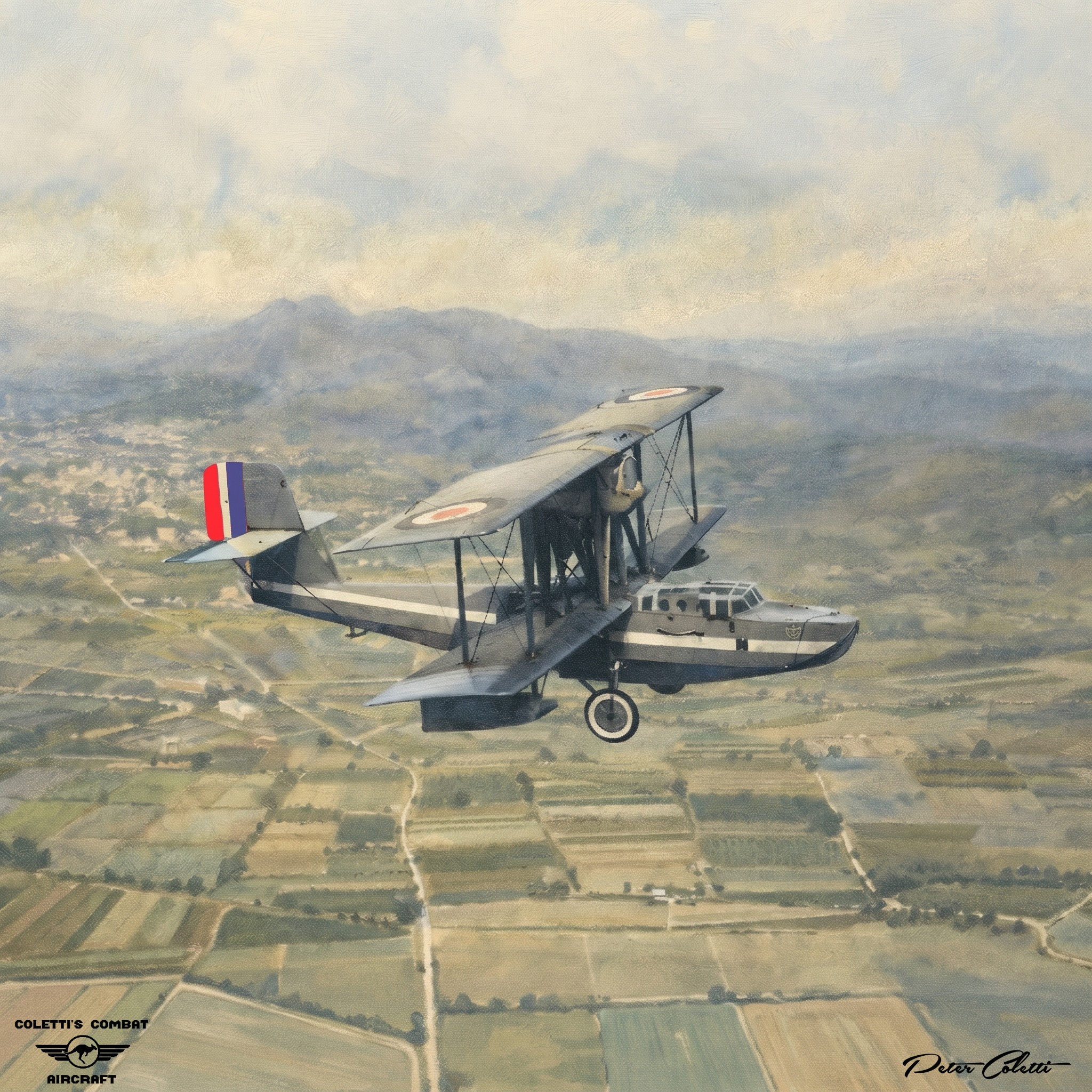
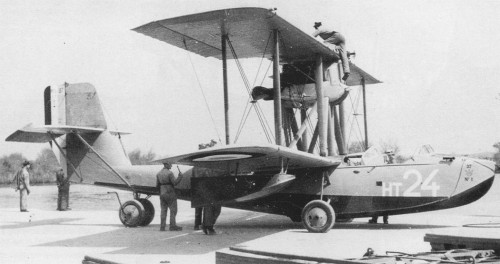
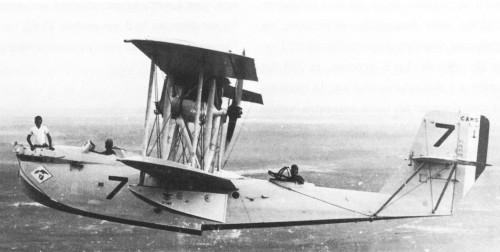
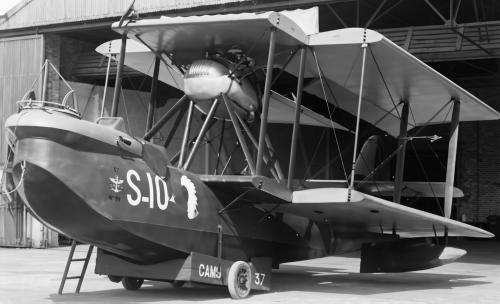
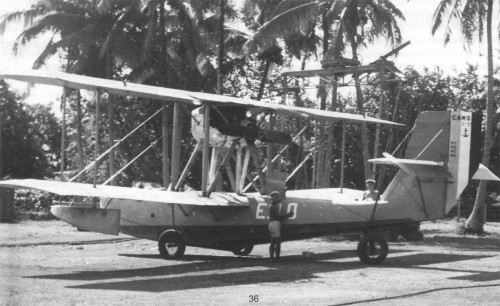
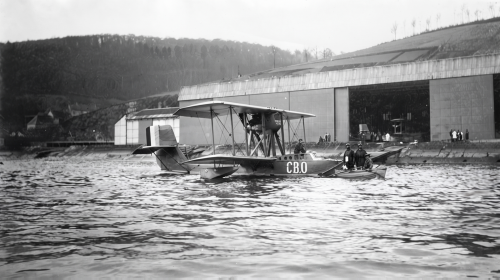
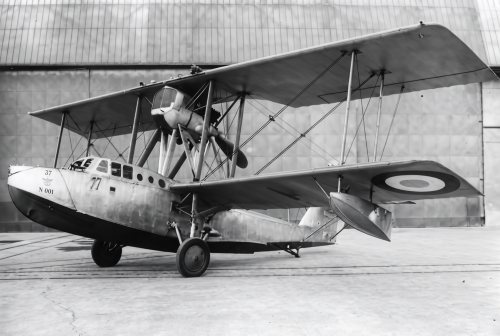
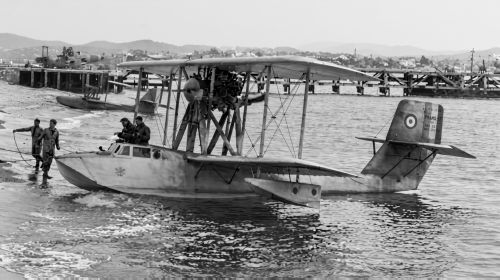
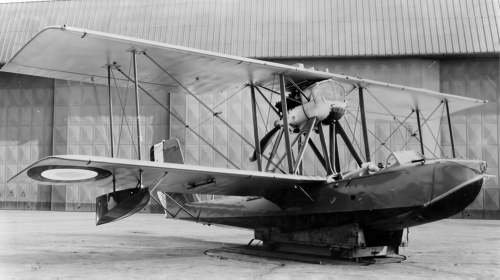
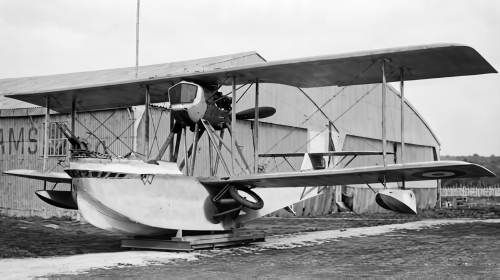
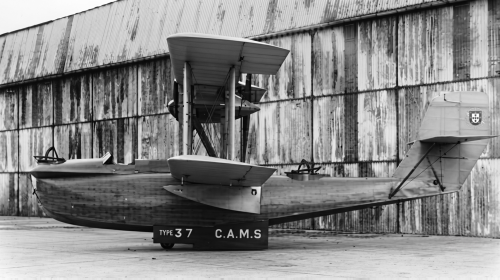
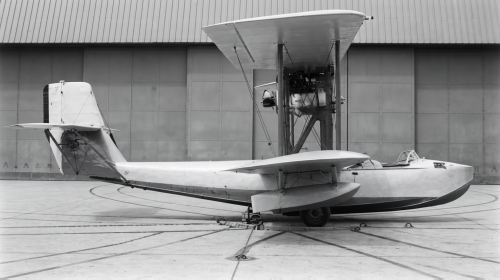
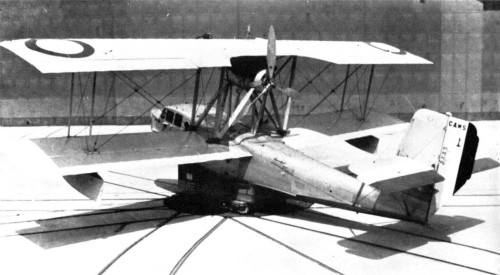
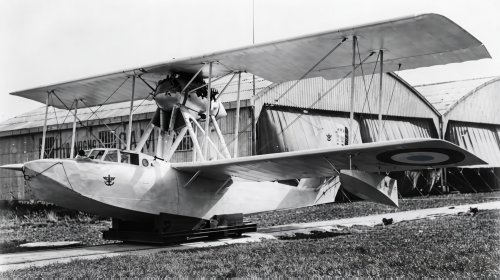
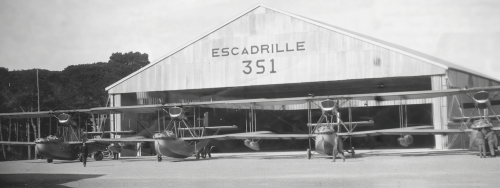
The CAMS 37 emerged from France’s interwar effort to modernise its naval aviation with versatile flying boats capable of reconnaissance, liaison, and shipborne utility roles.
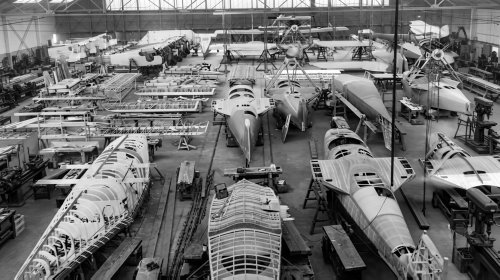
Designed in 1925 by Maurice Hurel of Chantiers Aéro-Maritimes de la Seine (CAMS), the aircraft was conceived as a compact, rugged, and easily maintained seaplane for coastal bases and naval vessels.
The prototype, designated CAMS 37 R3b, first flew at Sartroville in 1926.
Its designation—R3b, “shipborne three‑seat reconnaissance aircraft”—captured the French Navy’s intent: a small flying boat that could operate from cruisers, battleships, and shore stations with minimal infrastructure.
A second prototype, CAMS 37A, introduced a more powerful Lorraine 12EH engine (450 hp), a four‑bladed propeller, and amphibious landing gear, significantly expanding operational flexibility.
The French Navy quickly ordered 15 CAMS 37A amphibians before the end of 1926, and Portugal soon followed with an order for seven aircraft powered by Hispano‑Suiza 12Gb engines of similar output.
By late 1926 and into 1927, CAMS began developing specialised variants, including long‑range, civilian, and liaison versions.
The most famous derivative, the CAMS 37GR, completed a 22,620 km flight around Africa between 12 October 1926 and 9 March 1927, demonstrating the design’s endurance and reliability.
After its record flight, the 37GR served as a liaison aircraft at the Saint‑Raphaël naval air base.
Design Characteristics
Airframe and Structure
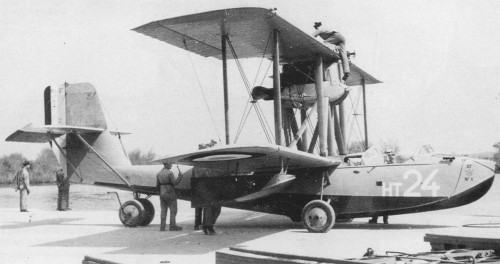
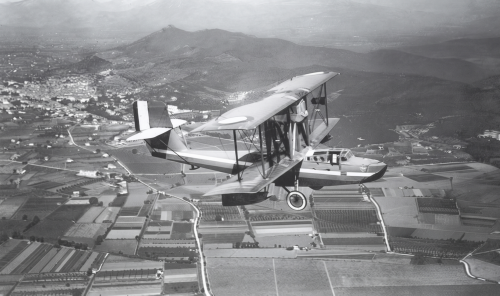
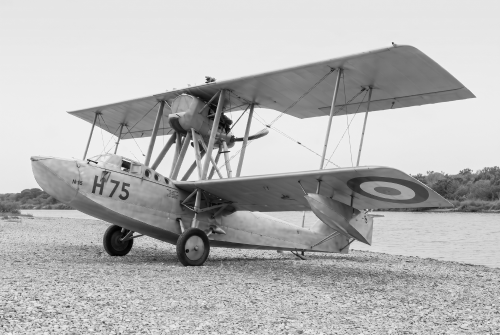
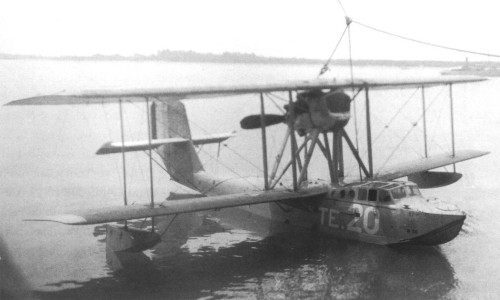
The CAMS 37 was a wooden biplane flying boat, typical of mid‑1920s French naval aviation.
Its hull was built with a single step (redan), except for later metal‑hulled variants that used two steps.
The aircraft featured:
Two‑bay biplane wings with struts and wire bracing
A central pusher engine mounted between the wings
A boat‑type fuselage with open or enclosed cockpits depending on the variant
Optional amphibious landing gear on certain models (37A, 37.6, 37.7, 37.9)
The pusher configuration improved forward visibility for reconnaissance and reduced spray ingestion during water operations.
Powerplant
Most variants used a Lorraine 12‑series liquid‑cooled V or W engine, typically producing 400–450 hp.
Portuguese aircraft used Hispano‑Suiza 12Gb engines of similar power.
Crew and Equipment
Depending on the variant, the CAMS 37 carried three to four crew members:
Pilot
Observer/navigator
Radio operator
Gunner (in armed versions)
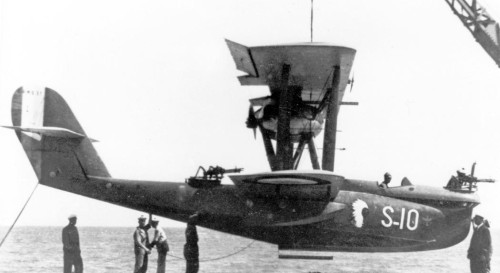
Armament typically included two to four 7.7 mm machine guns and up to 300 kg of bombs, though many variants were unarmed liaison or training aircraft.
Performance (Representative: CAMS 37.2)
Wingspan: 14.50 m
Length: 11.43 m
Height: 4.20 m
Wing area: 59.9 m²
Empty weight: 2,170 kg
Max takeoff weight: 3,000 kg
Engine: Lorraine 12Ed, 450 hp
Max speed: 185 km/h
Cruise speed: 148 km/h
Range: 1,200 km
Service ceiling: 3,500 m
Crew: 3
Armament: 2–4 × 7.7 mm MG + 300 kg bombs
These figures reflect a modest but adequate performance envelope for coastal patrol, training, and liaison duties.
Operational Service (1927–1939)
French Navy Adoption
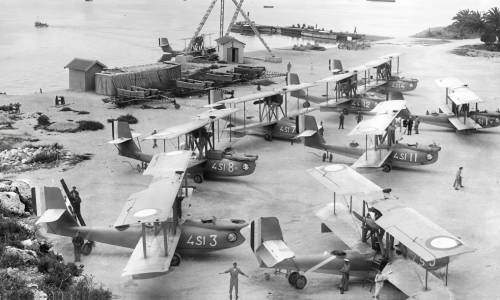
The CAMS 37A entered service with several French naval squadrons, including: 2S1, 3S1, 4S1
Aircraft operated from:
Cruiser Tourville (from 1929)
Battleship Edgar Quinet (1930)
Later transferred to aircraft carrier Béarn (1930)
The type also served in Indochina, where Escadrille du Donnai operated CAMS 37Lia and 37.2 aircraft before being transferred to the Armée de l’Air as Indochina Squadron No. 5.
By the mid‑1930s, frontline units began replacing CAMS 37s with larger or more modern aircraft such as the CAMS 55 and Gourdou‑Leseurre GL.812, but production of CAMS 37 variants continued at Saint‑Denis for training and auxiliary roles.
Global Use
Portugal operated seven CAMS 37A aircraft.
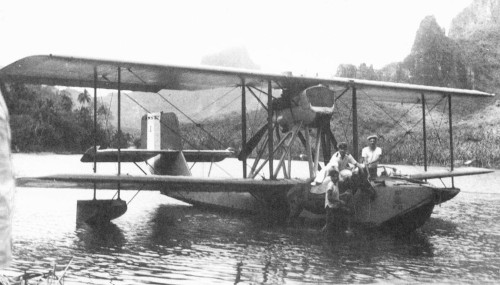
Tahiti (French Pacific forces) used at least one CAMS 37.il until January 1941.
Indochina retained aircraft into 1942.
World War II Context (1939–1942)
By the outbreak of WWII, the CAMS 37 was obsolete, yet it remained in service due to shortages of modern French naval aircraft.
Its roles were limited to:
Coastal patrol
Training
Liaison duties
Secondary reconnaissance
During mobilisation, two new squadrons were formed using CAMS 37 aircraft:
2S2 at Rochefort-sur-Mer & 2S4 at Lanvéoc
These units operated CAMS 37.il training flying boats for coastal patrols.
2S4 transitioned to landplanes in early 1940, while 2S2 continued flying CAMS 37s until disbanded in August 1940.
One aircraft in Tahiti joined the Free French forces in July 1940 and flew until early 1941.
Another aircraft reportedly remained in service in Indochina until 1942, making it one of the last operational CAMS 37s.
Captured examples of the CAMS 37E were photographed in German hands during the occupation of France, though they were not used operationally.
Variant Overview
The CAMS 37 family was unusually diverse, reflecting its modular design and the French Navy’s evolving needs.
All variants shared the same basic layout and engine type unless noted.
Major Production Variants
CAMS 37 Original Prototype
CAMS 37A — Main production amphibian; 110 built
CAMS 37.2 — Three‑seat reconnaissance flying boat; ~50 built
CAMS 37E / 37.11 — Four‑seat training flying boat; 110 built
CAMS 37Lia / 37.6 — Liaison aircraft with enclosed cabin
CAMS 37.9 — Four‑seat amphibious transport with metal hull and two redans
Specialised or Limited‑Production Variants
CAMS 37bis — Metal‑hulled catapult test aircraft
CAMS 37C — Civilian version with enclosed cabin and Lorraine 12Gb engine
CAMS 37GR — Long‑range “Grand Raid” version; 1 built
CAMS 37.7 — Liaison amphibian with hydraulically retractable wheels
CAMS 37.10 — Catapult test aircraft; 2 built
CAMS 37.12 — Civil amphibian (similar to 37C)
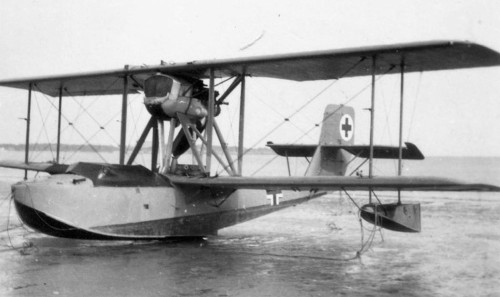
CAMS 37.13 — Ambulance aircraft with metal fuselage
This breadth of variants illustrates how the CAMS 37 served as a flexible platform for experimentation and niche roles during a period of rapid naval aviation development.
Legacy
The CAMS 37 was never a cutting‑edge aircraft, but it was a workhorse of French naval aviation for more than a decade.
Its longevity stemmed from:
Simple wooden construction
Reliable Lorraine engines
Amphibious capability
Adaptability to many roles
Ease of maintenance in remote colonial stations
By the early 1940s, it was thoroughly outdated, yet it remained in service because France lacked modern replacements and because the aircraft continued to perform low‑intensity duties adequately.
The CAMS 37 thus represents the transitional era between WWI‑style flying boats and the more advanced metal seaplanes of the late 1930s.
Its long service life, global deployments, and numerous variants make it a significant aircraft in the history of French maritime aviation.