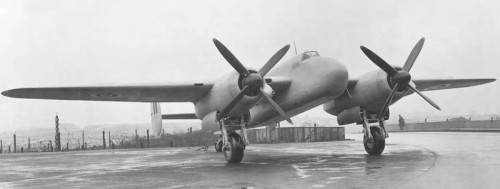
The Bristol Buckingham emerged from a turbulent period in British bomber development.
By 1939, the Air Ministry had already recognised that the Bristol Blenheim—once cutting‑edge—was rapidly becoming obsolete in the face of modern fighters and heavier enemy defences.
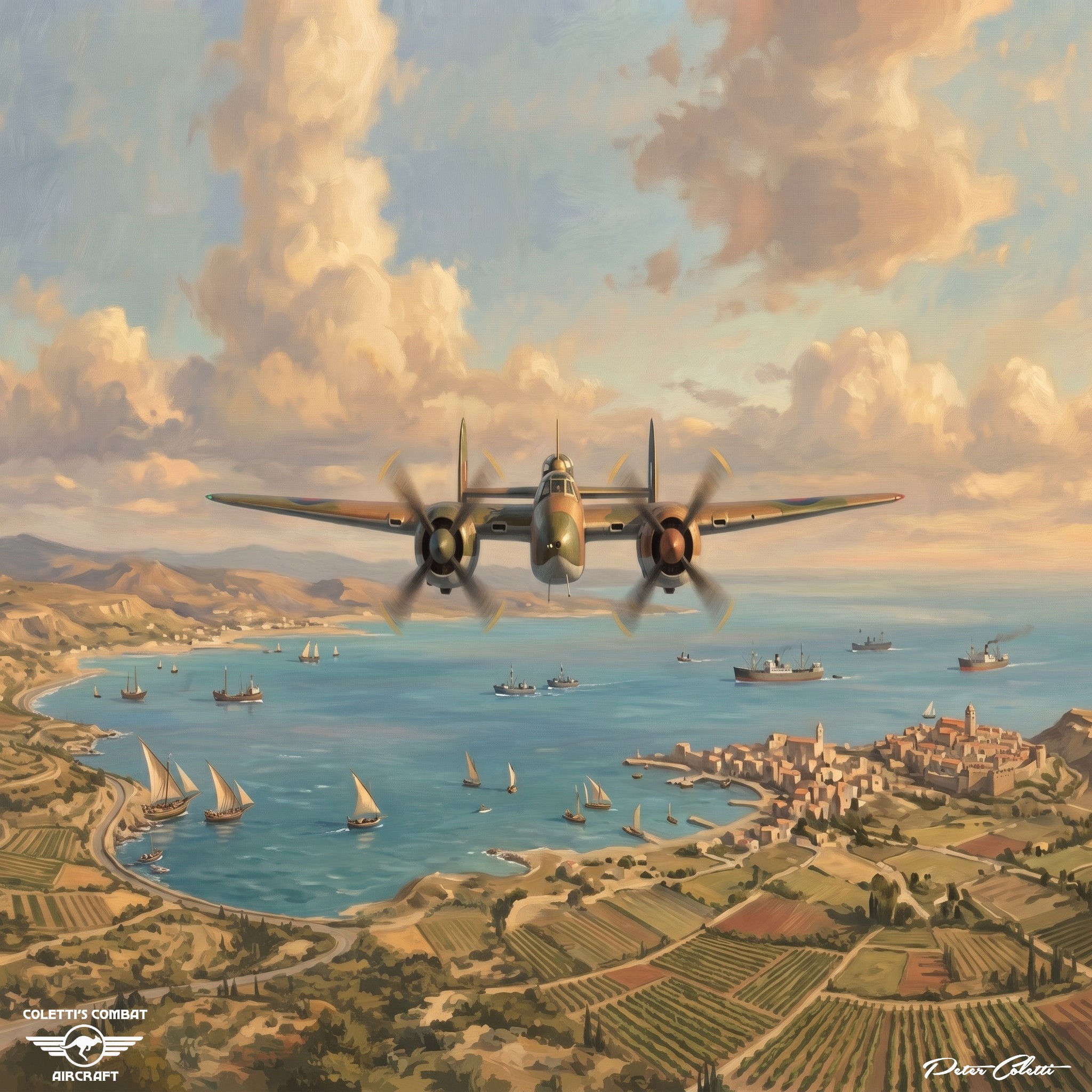
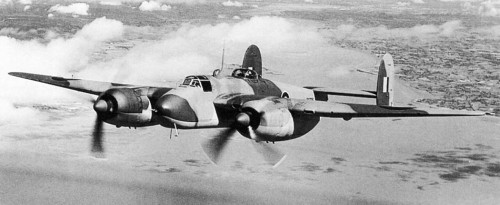
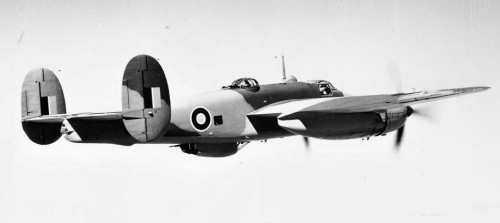
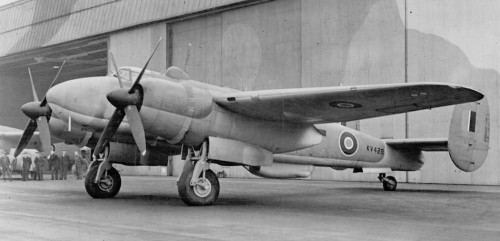
Bristol Buckingham Prototype 1
The first combat encounters of the war made the need for a replacement “extremely urgent’’.
Bristol had anticipated this requirement.
In January 1939, its designers proposed a three‑seat bomber derived from the Bristol 156 fighter, which would soon enter production as the Beaufighter.
Although initially rejected, the Air Ministry later issued a formal requirement for a new medium bomber and explicitly encouraged the reuse of Beaufighter components to accelerate development—instantly making Bristol the favoured contender when Specification B.7/40 was circulated in early 1940.
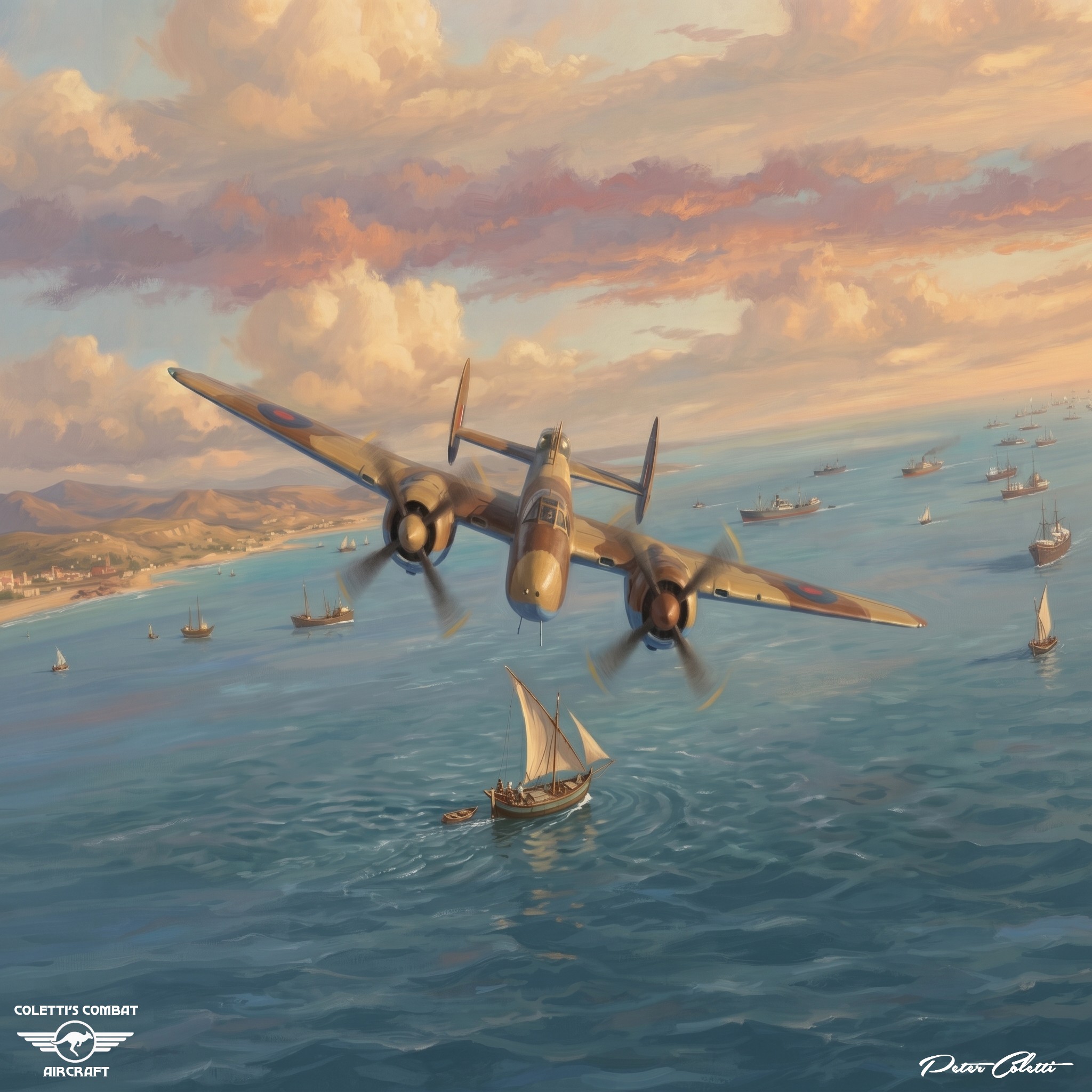
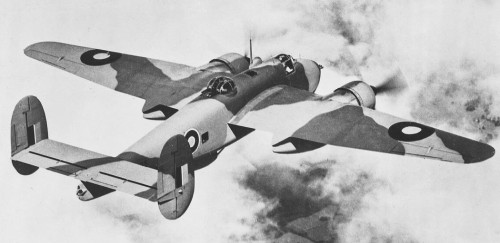
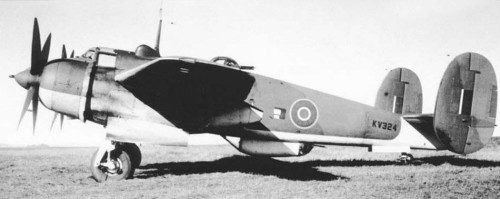
Bristol Buckingham Prototype 2
Early Design Evolution: Type 161 and Type 162
Bristol responded by reworking its Type 161, a two‑seat Beaufighter‑type aircraft intended for Hercules or Merlin engines.
The concept featured four machine guns in an upper turret and two fixed guns in the nose, with a bomb load of 1,815 kg and an estimated top speed of 475 km/h.
The Air Ministry informally dubbed it the “Bobomber”, though Bristol preferred “Beaumont”.
This design became Type 162, but by early 1941, its performance no longer surpassed the American Douglas Boston, which had entered RAF service.
As a result, the Air Ministry replaced B.7/40 with a more demanding specification, B.2/41, forcing Bristol to redesign the aircraft yet again.
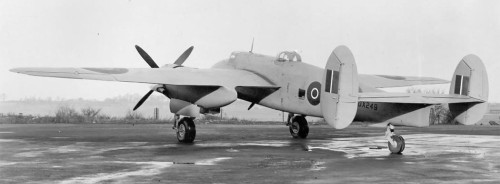
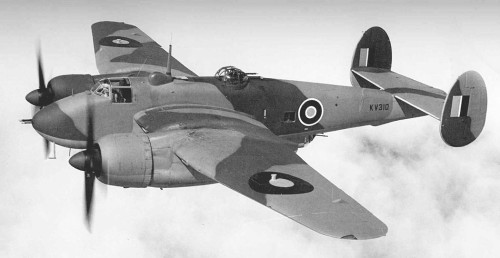
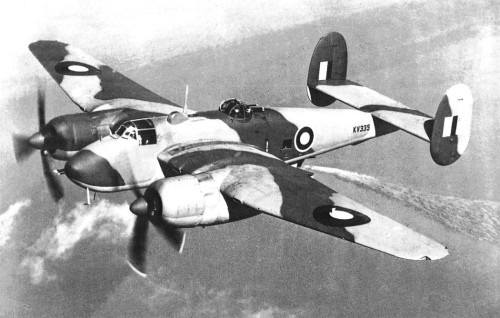
Bristol Buckingham B.I
Shift to Centaurus Power and Final Concept
Under the leadership of L. Fries, Bristol abandoned the Beaufighter lineage entirely and adopted the powerful Bristol Centaurus radial engine.
This change erased the last resemblance to the earlier fighter‑derived concepts.
The revised aircraft retained the 1,815 kg bomb load but expanded the crew to three, later four, and added ventral defensive guns.
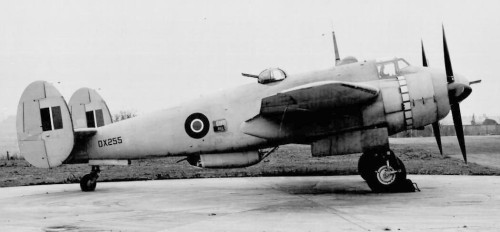
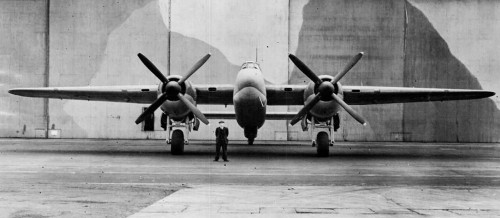
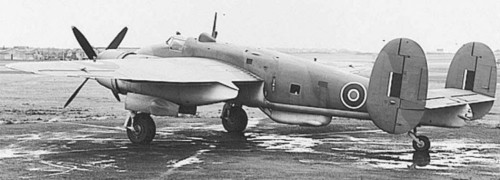
Bristol Buckingham B.I
With 900 kg of bombs, the projected range was 1,610 km at 483 km/h, and the maximum speed was estimated at 595 km/h—ambitious figures for a medium bomber in 1941.
By mid‑1941, Buckingham was considered a high‑priority project capable of replacing the Blenheim, Boston, and Mitchell in RAF service.
Production plans envisioned 400 aircraft, with the possibility of 800 more, and a monthly output of 60 bombers by 1944.
However, the RAF’s strategic needs were shifting rapidly.
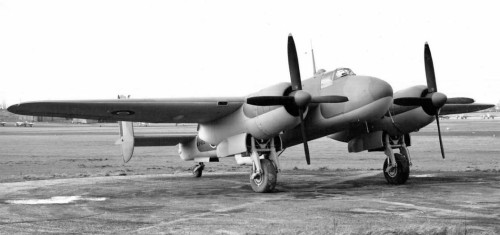
Bristol Buckingham C.I
Changing Requirements and Declining Relevance
As the war progressed, the versatile and highly successful de Havilland Mosquito increasingly took over roles originally intended for Buckingham—daylight high‑speed bombing, torpedo attack, and even dive‑bombing.
By late 1941, Buckingham’s planned roles were being transferred to the Mosquito, and its production ceiling was cut back to 400 aircraft.
The Air Ministry also demanded greater range, forcing increases in take-off weight to 15,436 kg, then 16,344 kg, and expanding the crew to four.
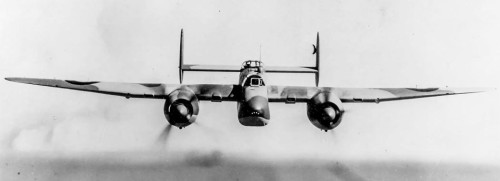
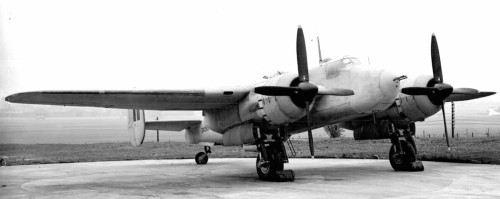
Bristol Buckingham B.1
A further revision on 16 March 1942 set new targets:
571 km/h at 6,100 m,
2,574 km range with 900 kg of bombs,
strengthened nose armament using the Bristol B.14 mount.
The B.14 system proved impossible to complete, and the offensive armament was replaced with four fixed forward‑firing guns controlled by the pilot.
Additional guns were mounted in the dorsal turret and ventral nacelle.
Bristol Buckingham B.I
Prototypes and Flight Testing
The first prototype flew on 4 February 1943 at Filton, still unarmed.
Three prototypes used Centaurus IV engines rated at 2,400 hp, while the first production aircraft—flying on 12 February 1944—used Centaurus VII/XI engines of similar power but lower altitude performance.
Production assembly was established at Filton with extensive subcontracting to accelerate output, but ironically this infrastructure was completed just as Bomber Command lost interest in the type.
Buckingham no longer offered advantages over the Mosquito, and its defensive armament was inferior to the American Mitchell III, already in RAF daylight bomber service.
Bristol Buckingham B.I
Operational Fate and Limited Use
Only 119 Buckinghams were built.
Fewer than half were delivered as bombers; the remainder were completed as transports (Buckingham C.I.).
Even these saw little use—many were scrapped after only a few hours of flight or brief storage in technical supply units.
The last surviving Buckingham aircraft was used until 1950 as a ground test bench.
The last surviving Buckingham served as a ground test airframe until 1950.
Technical Overview (Buckingham B.I.)
Dimensions
Wingspan: 21.89 m
Length: 14.27 m
Height: 5.33 m
Wing area: 65.77 m²
Bristol Buckingham Prototype 2
Weights
Empty: 10,905 kg
Normal take-off: 16,779 kg
Maximum take-off: 17,259 kg
Bristol Buckingham C.1
Powerplant
2 × Bristol Centaurus VII/XI, 2,520–2,555 hp each
Performance
Maximum speed: 531 km/h
Cruise speed: 459 km/h
Ferry range: 5,118 km
Operational range: 3,585 km
Rate of climb: 522 m/min
Service ceiling: 7,625 m
Crew: 4
Bristol Buckingham B.1
Armament
10 × 7.7 mm Browning machine guns:
4 fixed forward‑firing
4 in ventral nacelle
2 in dorsal turret
Bomb load: up to 1,814 kg
Variants
Buckingham B.I.
The main bomber version, equipped with Centaurus VII/XI engines and full defensive armament.
Intended for high‑speed daylight operations but never used in combat.
Buckingham C.I.
Transport conversion of the bomber airframe.
Most production aircraft were completed or later modified to this configuration due to the RAF’s lack of interest in the bomber role.
Bristol Buckingham Prototype 1
Assessment and Historical Significance
The Bristol Buckingham is a classic example of a promising aircraft overtaken by rapid wartime technological and strategic shifts.
Designed to be a fast, heavily armed medium bomber, it was repeatedly redesigned to meet evolving Air Ministry specifications.
By the time it reached production, the mosquito had already proven itself superior in speed, versatility, and operational effectiveness.
Buckingham’s limited production, lack of combat service, and rapid disposal reflect the RAF’s pragmatic wartime prioritisation.
Yet the aircraft remains historically significant as a major Bristol project that illustrates the challenges of designing medium bombers during a period of unprecedented innovation and shifting doctrine.