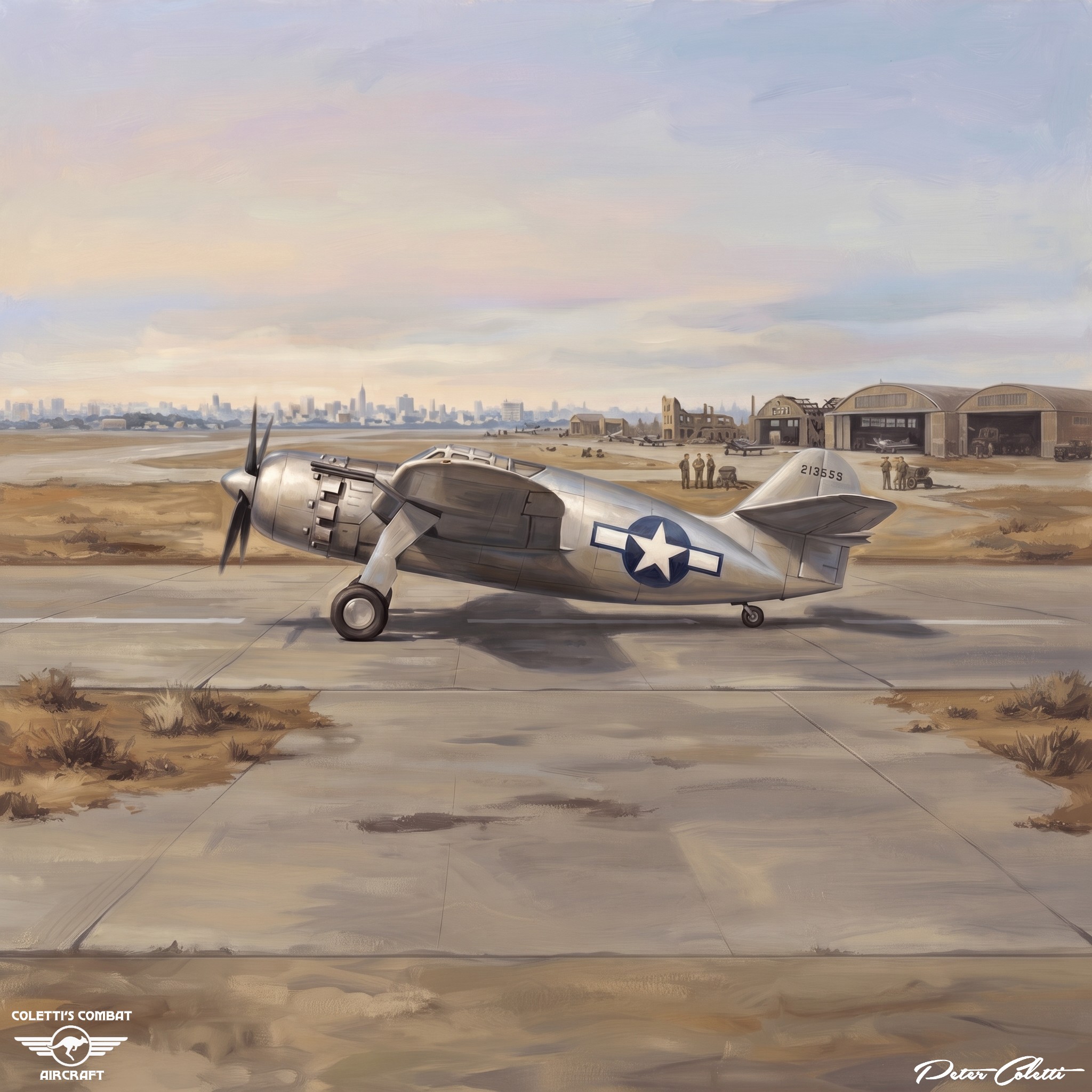
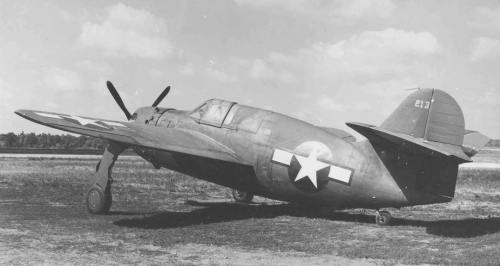
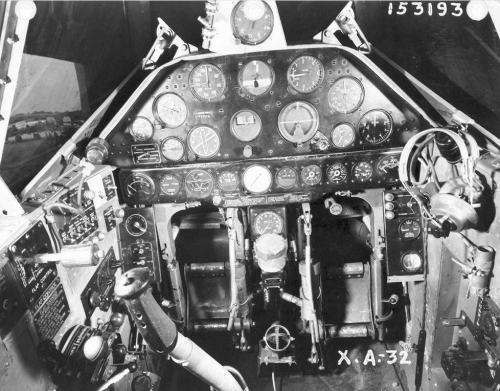
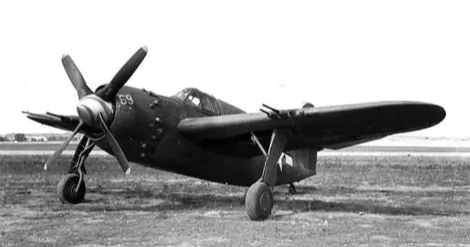
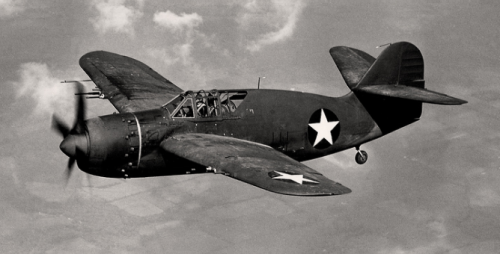
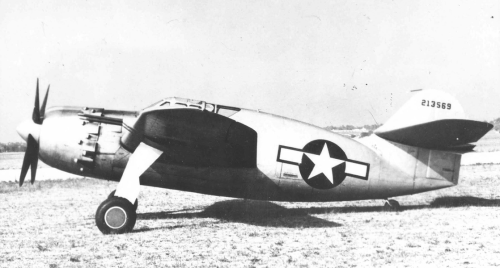
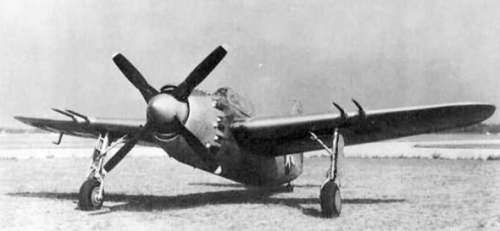
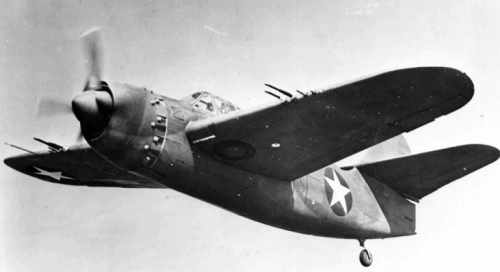
The Brewster XA‑32 was a U.S. Army Air Forces single‑seat attack and dive‑bomber prototype whose troubled development, severe performance shortcomings, and late arrival doomed it to cancellation – making it one of the most conspicuous failures of American WWII aircraft design.
Origins and Strategic Context (1940–1941)
The XA‑32 originated from the U.S. Army’s response to early‑war analyses of the German Junkers Ju 87 Stuka.
Reports in 1940 emphasised the Stuka’s precision and tactical value in Blitzkrieg, despite its vulnerability to fighters.
The army sought a heavily armoured, single‑seat dive bomber that eliminated the rear gunner and could survive air‑to‑air combat through protection rather than defensive crew positions.
On 6 September 1941, the army issued a formal requirement for such an aircraft.
Brewster Aeronautical Corporation—already struggling with management and production delays—won the contract to build the prototype.
Design and Development (1941–1943)
Concept and Airframe
Designed between 1941 and 1942, the XA‑32 was an all‑metal, mid‑wing monoplane with an internal bomb bay.
Its fuselage was notably bulbous due to the bomb bay and poor aerodynamic detailing, resulting in excessive drag and numerous external bumps and protuberances.
Key structural features included:
Mid-set monoplane wings with split dive flaps
Forward‑set cockpit
Conventional tail unit (with a redesigned vertical fin by 1943)
Retractable landing gear
Heavy internal armour for low‑level attack survivability
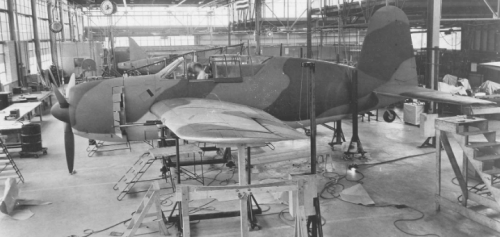
Brewster XA-32 mock-up
Powerplant and Systems
The prototype used a Pratt & Whitney R‑2800 18‑cylinder radial engine producing 2,100 hp, driving a four‑bladed Curtiss propeller.
Engineers later attempted to fit the 3,000 hp R‑4360 Wasp Major, but this did not resolve the aircraft’s fundamental issues.
Dimensions and Weight
Length: 40.7 ft
Height: 11.3 ft
Wingspan: 45.1 ft
Wing area: 425 sq ft
Empty weight: ~13,000–13,500 lb (similar to the twin‑engine A‑20 Havoc)
Gross weight: 16,000 lb
Maximum take-off weight: 20,000 lb
The aircraft’s massive overweight condition was its most crippling flaw, making it underpowered even with the R‑2800.
Design Flaws
Several notorious issues emerged:
Exhaust stacks around the cowling produced blinding flashes during night flight; backfires engulfed the nose in flame.
Severe drag from poor surface detailing.
Buffeting at high speed due to disturbed airflow.
Chronic delays and management failures at Brewster.
Flight Testing and Performance (1943)
The first prototype flew on 22 May 1943, nearly two years late.
Almost every performance metric fell short:
Speed and Handling
Max speed (clean): 279 mph (far below expectations of 330+ mph)
Max speed (light test config): 311 mph at 10,000 ft
Cruise speed (combat‑equipped): < 200 mph
Severe buffeting at top speed
Adequate handling only when unloaded
Range and Ceiling
Combat range: ~500 miles
Ferry range: 960 miles
Service ceiling: 26,000 ft
Rate of climb: 1,754 ft/min
These figures were unacceptable for a frontline attack aircraft in 1943, especially as fighter‑bombers like the P‑47 and A‑36 were already proving far more capable.
Armament and Combat Role
The XA‑32 was intended as a heavily armed close‑support aircraft combining a bomber‑level payload with fighter‑like strafing power.
Planned Armament
8 × 0.50 in Browning machine guns or
4 × 20 mm cannons (fitted on the XA‑32A prototype)
Bomb Load
Internal bomb bay: 1 × 1,000 lb bomb
Underwing racks: 2 × 1,000 lb bombs
Total payload: 3,000 lb
Despite impressive theoretical firepower, the aircraft’s inability to carry these loads without catastrophic performance loss made it operationally useless.
Variants
XA‑32 (Prototype #1)
R‑2800 engine
Full armament planned but not fully installed during early tests
Severe performance deficiencies
First flight: 22 May 1943
XA‑32A (Prototype #2)
Reduced armament (ultimately fitted with 4 × 20 mm cannons)
Minor refinements but no meaningful performance improvement
Still overweight and underpowered
Failed to meet Army requirements
No production aircraft were built.
WWII Context and Program Cancellation
By the time the XA‑32 flew, the U.S. was deeply engaged in WWII, and aircraft technology had advanced rapidly.
Fighter‑bombers like the Republic P‑47 Thunderbolt and North American A‑36 were already proving effective in the dive‑bombing and ground‑attack roles the XA‑32 was meant to fill.
The XA‑32s:
Late arrival
Poor performance
Dangerous handling
Brewster’s worsening management crisis led the Army Air Forces to cancel the programme in 1944.
The failure of the XA‑32 contributed directly to the collapse of Brewster Aeronautical Corporation, which was dismantled in 1946 after years of mismanagement.
Summary Assessment
The Brewster XA‑32 stands as a case study in how mismanagement, poor engineering execution, and shifting wartime priorities can doom even a conceptually sound aircraft.
Although designed to emulate the Stuka’s precision while adding American firepower and armour, it emerged overweight, underpowered, aerodynamically flawed, and years too late to matter.
It remains one of WWII’s most infamous American aircraft failures—an ambitious idea undone by its own manufacturer.