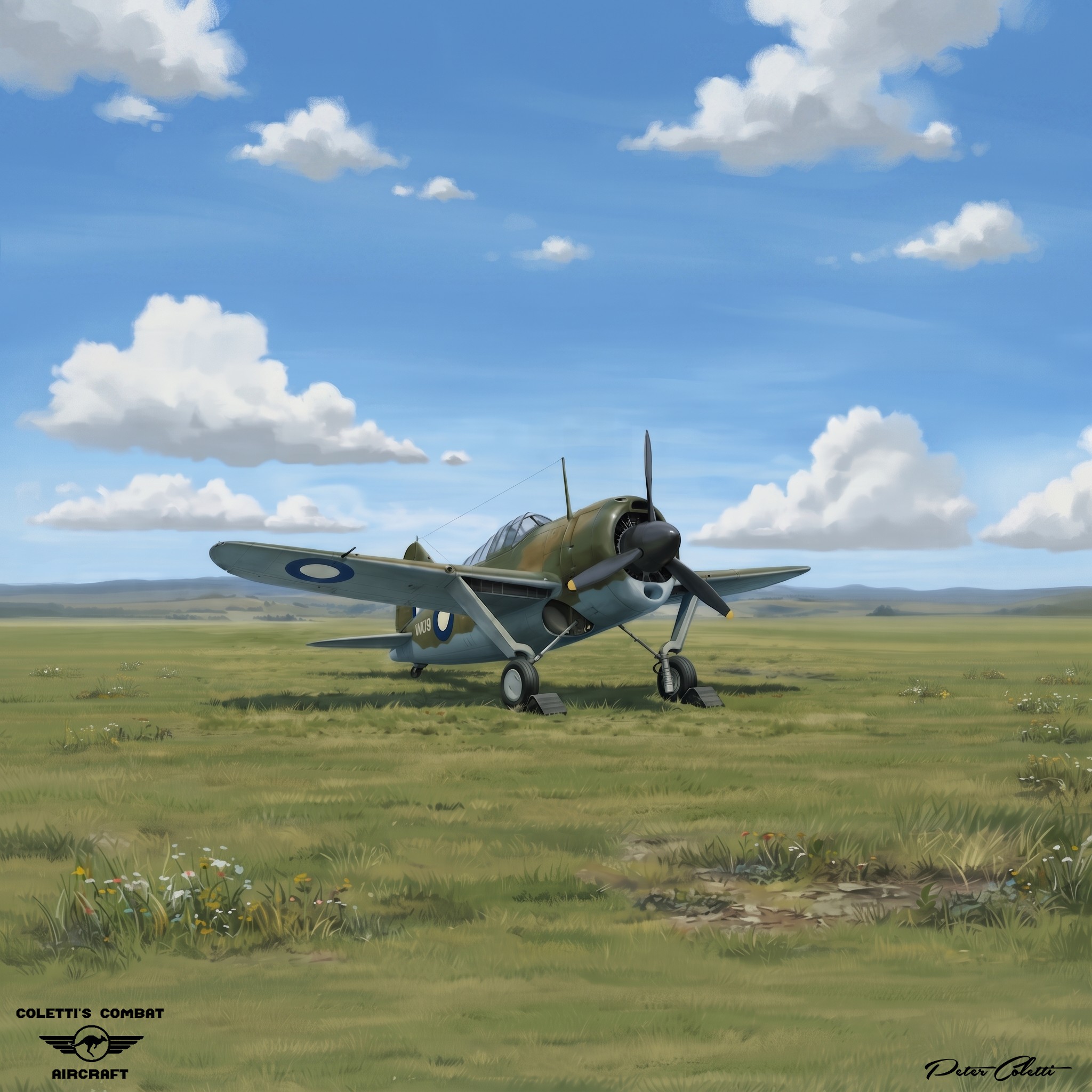
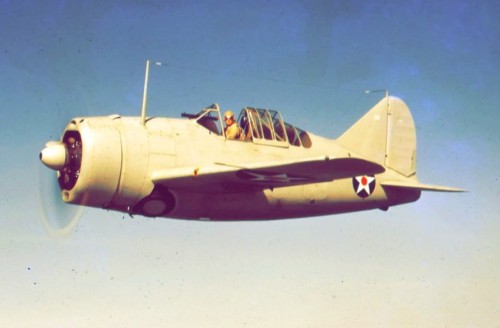
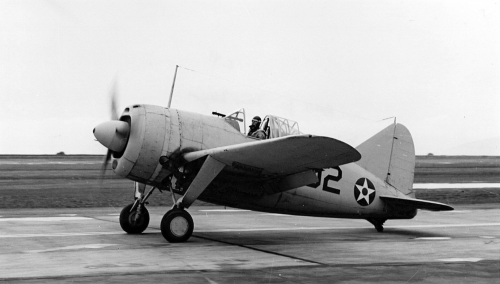
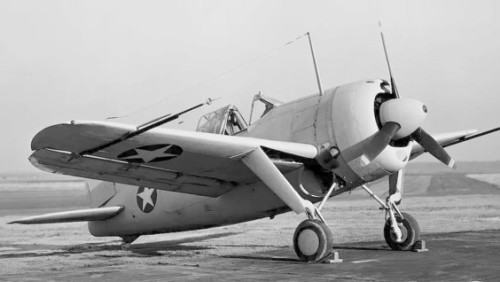
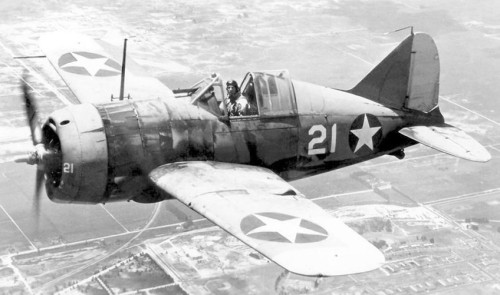
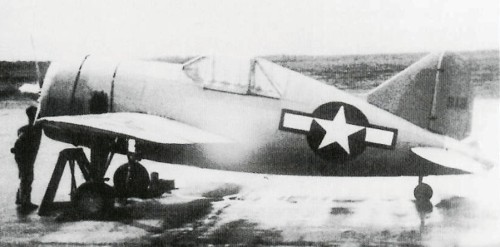
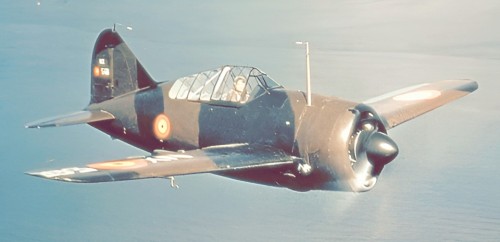
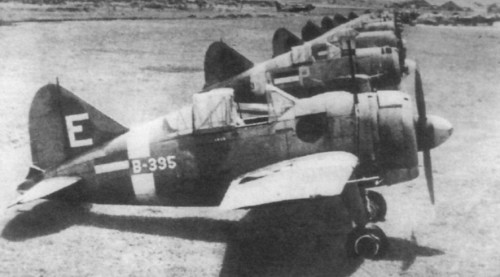
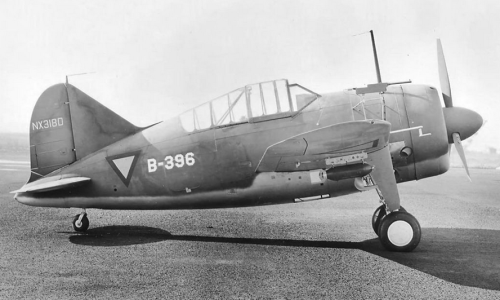
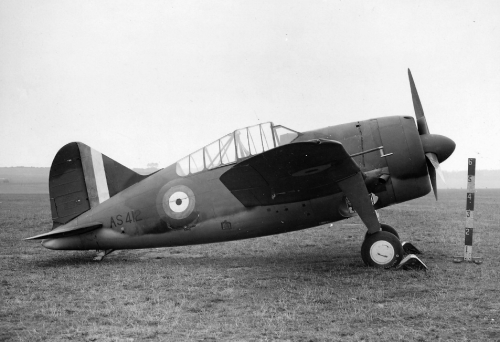
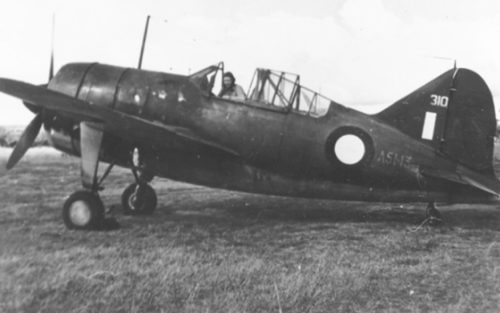
The Brewster F2A Buffalo was the first monoplane fighter to enter service with the U.S. Navy, designed by the Brewster Aeronautical Corporation in the late 1930s.
Though initially promising, its combat record varied dramatically across theatres and operators.
U.S. Navy and Marine Corps Service
Introduction & Deployment
The F2A won a 1939 competition against the Grumman F4F Wildcat, becoming the Navy’s first monoplane carrier fighter.
It featured an enclosed cockpit, retractable landing gear, and arrestor hook.
Variants
Three main variants served the Navy—F2A-1, F2A-2, and F2A-3. The F2A-3, with increased weight and reduced performance, was the final and least effective version.
Battle of Midway (June 1942)
The F2A-3 saw combat with Marine Corps squadrons.
Pilots found it inferior to the Japanese Mitsubishi A6M Zero, calling it a “flying coffin”.
The Buffalo’s poor performance led to its rapid withdrawal from frontline service.
Finnish Air Force
B-239 Variant
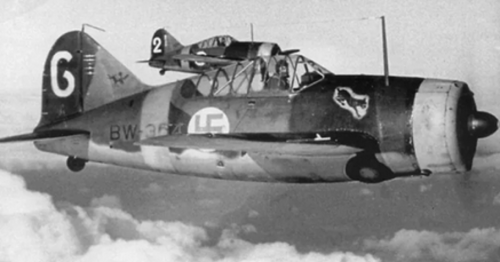
Finland received 44 de-navalised F2A-1s (designated B-239) during the Winter War and Continuation War.
Combat Effectiveness
Finnish pilots achieved remarkable success against Soviet aircraft.
During the Continuation War (1941–1944), Buffalos claimed a kill ratio of 32:1, producing 36 aces.
The aircraft’s manoeuvrability and ruggedness suited Finland’s tactical needs.
Retirement
Finland retired the Buffalo in 1948, making it the last operator of the type.
British Commonwealth in Malaya
B-339E Variant
Britain received buffaloes originally ordered by Belgium and France.
These were deployed in Malaya and Singapore.
Combat Performance
Against Japanese A6M Zeros and Ki-43 Oscars, the Buffalo suffered heavy losses.
Attempts to lighten the aircraft by reducing fuel and armament had minimal impact.
Pilots struggled with poor climb rates and agility compared to Japanese fighters.
Dutch East Indies
B-339C/D Variants
The Netherlands deployed buffalos in the Dutch East Indies.
Tactical Adjustments
Dutch forces reduced fuel and ammunition loads to improve manoeuvrability.
Variants
XF2A-1
Prototype
First flown
December 1937
Purpose
Evaluation prototype for the U.S. Navy’s first monoplane carrier fighter.
Features
All-metal construction, enclosed cockpit, retractable landing gear, and tailhook.
Powered by a Wright R-1820-22 Cyclone engine.
Outcome
Demonstrated superior performance to biplane contemporaries, leading to production orders.
F2A-1 – Initial Production Model
Engine
Wright R-1820-34 Cyclone (950 hp)
Armament
Two .50 cal. machine guns in the nose; provision for two .30 cal. wing guns.
Production
11 built
Notable Features
Lightweight airframe, good climb rate, and manoeuvrability.
Operational Use
Limited service with the U.S. Navy; most were diverted to Finland as B-239s due to rapid obsolescence.
F2A-2 – Enhanced Naval Fighter
Engine
Wright R-1820-40 Cyclone (1,200 hp)
Armament
Four .50 cal. machine guns (two nose-mounted, two wing-mounted)
Production
43 built
Upgrades
Improved engine, propeller, and structural reinforcements.
Deployment
Used by Navy and Marine Corps squadrons; saw limited combat before being replaced by the F4F Wildcat
F2A-3 – Final U.S. Navy Variant
Engine
Wright R-1820-40 Cyclone (1,200 hp)
Armament
Four .50 cal. machine guns;
provision for two 100 lb (45 kg) underwing bombs
Production
108 built
Modifications
Enlarged fuel tank for extended range
Heavier armour and self-sealing fuel tanks
Increased weight severely degraded performance.
Combat Use
Deployed at Midway with VMF-221; suffered catastrophic losses against Japanese Zeros.
Widely criticised by pilots.
XF2A-4 – Experimental Conversion
Origin
One F2A-3 converted for testing
Purpose
Evaluation of further modifications; no production followed.
B-239 – Finnish Export Variant
Base Model
F2A-1
Engine
Wright R-1820-G5 Cyclone (950 hp)
Armament
Four .50 cal machine guns
Production
44 built
Modifications
Naval equipment was removed; a lighter airframe improved agility.
Combat Record
Exceptional success in the Continuation War;
Finnish aces achieved a kill ratio of 32:1.
Operated until 1948.
B-339B – Belgian Order
Base Model
F2A-1 derivative
Engine
Wright R-1820-G5 Cyclone
Armament
Four .50 cal machine guns
Production
40 built
Delivery
Only two reached Belgium before the German invasion.
remainder diverted to Britain’s Fleet Air Arm.
Use
British units used them for training and secondary roles.
B-339C – Dutch East Indies Variant
Engine
Wright GR-1820-G105 Cyclone (1,000 hp)
Armament
Four .50 cal machine guns
Production
24 built
Modifications
Tailhook removed; optimised for land-based operations.
Combat Use
Engaged Japanese aircraft in early 1942;
suffered heavy losses despite tactical adjustments.
B-339D – Upgraded Dutch Variant
Engine
Wright R-1820-40 Cyclone (1,200 hp)
Armament
Four .50 cal machine guns
Production
48 built (47 delivered)
Enhancements
Improved engine and minor structural changes.
Combat Use
Deployed in Java and Sumatra; overwhelmed by superior Japanese fighters.
B-339E / Buffalo Mk I – RAF / Commonwealth Variant
Base Model
F2A-2 derivative
Engine
Wright GR-1820-G105 Cyclone (1,000 hp)
Armament
Four .50 cal machine guns
Production
170 built
Operators
Royal Air Force, Royal Australian Air Force, Royal New Zealand Air Force
Combat Use
Malaya and Singapore campaigns;
poor performance against Zeros and Oscars.
High attrition led to withdrawal.
B-339-23 / B-439 – Final Export Variant.
Base Model
F2A-3 derivative
Engine
Wright GR-1820-G205A Cyclone (1,200 hp)
Armament
Four .50 cal machine guns
Production
20 built
Deployment
17 were sent to the RAAF; some were used by the USAAF in training roles.
Notes
Heaviest Buffalo variant; performance degraded due to weight and tropical conditions.