The Gyroplane Laboratoire emerged from a long arc of experimentation by Louis Breguet, one of France’s most innovative aeronautical engineers.
Breguet had briefly explored rotorcraft as early as 1909, but the technological limitations of the era pushed him towards fixed‑wing aircraft for the next two decades.
By the late 1920s, however, the global aviation community was revisiting vertical‑lift concepts, and Breguet returned to the challenge with renewed focus.
In 1929, he announced a series of patents addressing rotorcraft stabilisation—one of the central engineering obstacles preventing practical helicopter flight.
These patents laid the groundwork for a more systematic development effort.
In 1931, Breguet formed the Syndicat d’Études de Gyroplane (“Syndicate for Gyroplane Studies”), appointing René Dorand as technical director.
Their shared goal was ambitious: to build a fully controllable, stable, and practical helicopter prototype capable of sustained flight.
The resulting aircraft, the Gyroplane Laboratoire, would become one of the most important pre‑WWII rotorcraft experiments in Europe.
Design Philosophy and Structural Configuration
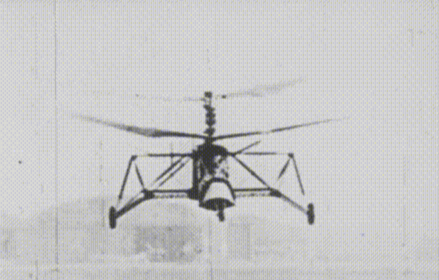
The Gyroplane Laboratoire was conceived as a pure research aircraft, a flying testbed intended to validate the aerodynamic and mechanical principles Breguet and Dorand believed essential for a workable helicopter.
Its structure reflected this experimental purpose.
Airframe and Layout
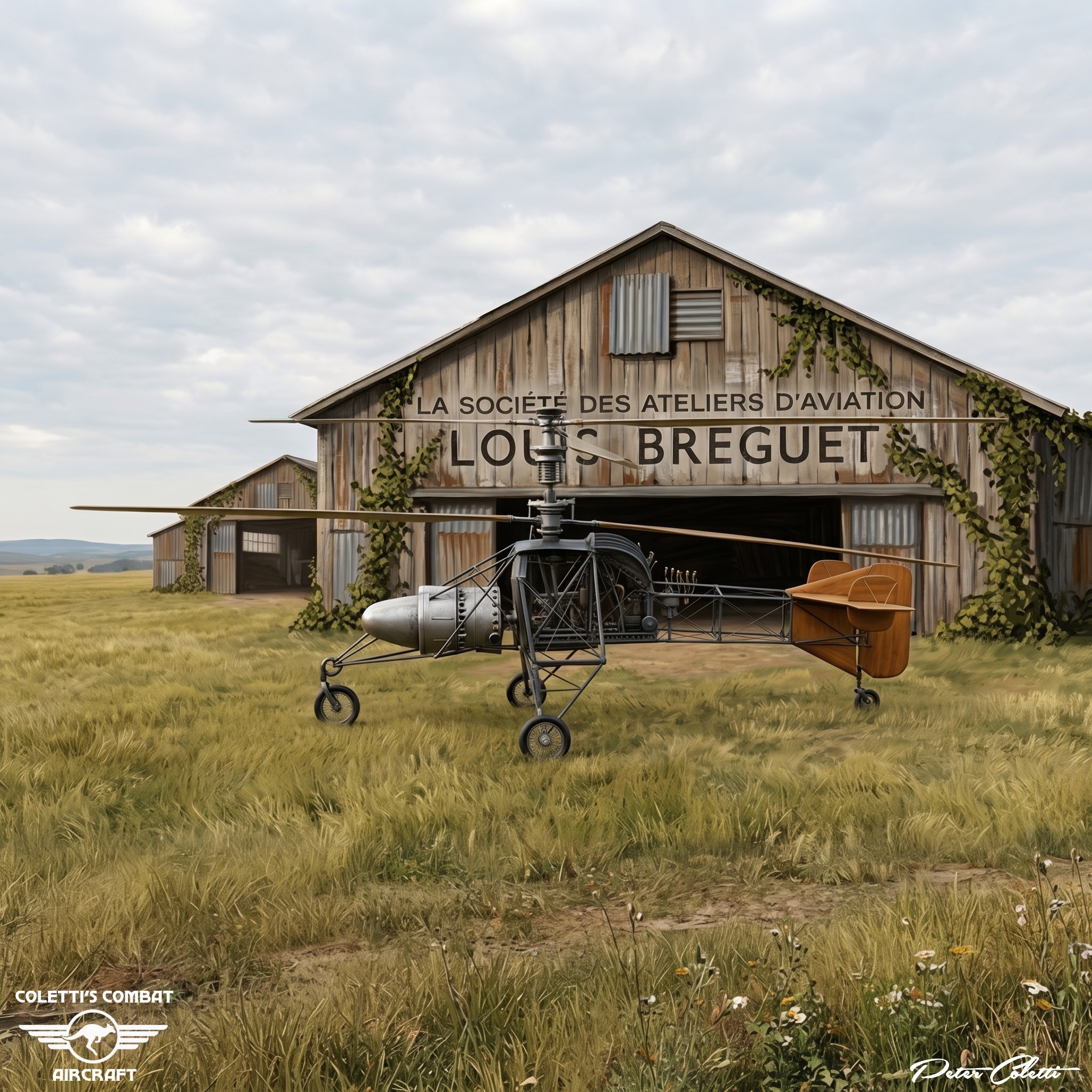
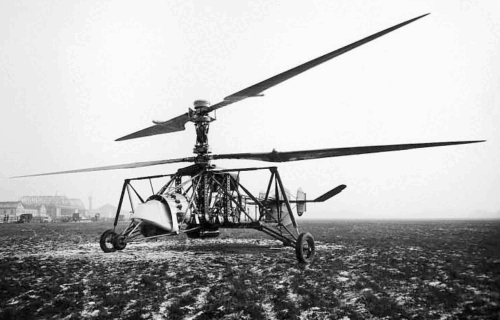
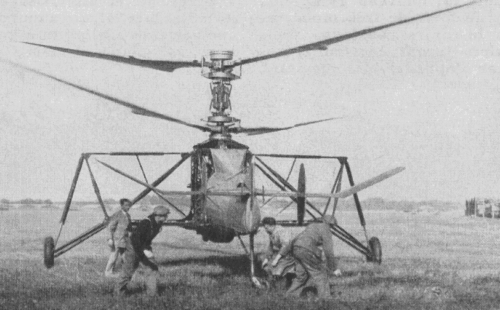
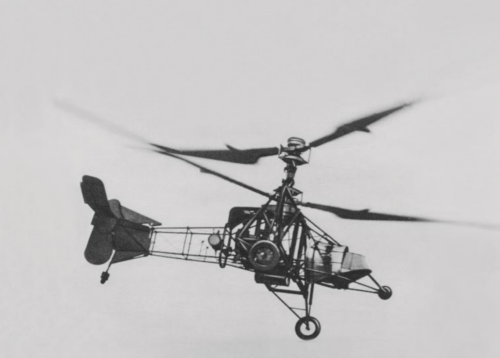
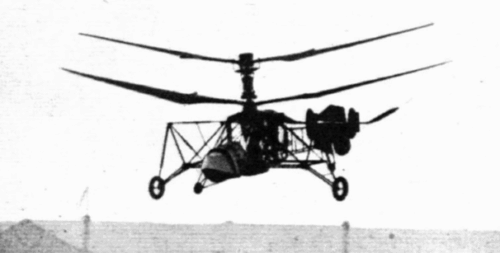
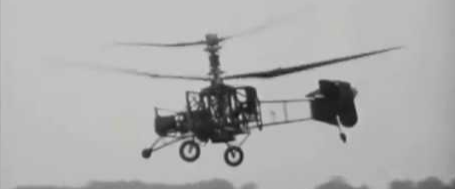
The aircraft used an open steel‑tube framework, exposing its mechanical components for easy access and modification.
Within this skeletal fuselage sat the pilot, the engine, the fuel tank, and the control linkages.
A conventional tail assembly with plywood surfaces provided directional stability, though the coaxial rotor system eliminated the need for a tail rotor.
The landing gear was a tailwheel configuration, with main wheels mounted on outriggers and a small nose wheel added to prevent forward tipping during landing—an issue early rotorcraft frequently encountered.
Powerplant
The Gyroplane Laboratoire was powered by a 240 hp Hispano radial engine (later data lists a Hispano‑Suiza 8F V‑8 water‑cooled engine rated at 302 hp).
This engine drove the aircraft’s most distinctive feature: two large, coaxial, contra-rotating rotors.
Coaxial Rotor System
The coaxial arrangement was chosen to solve the fundamental helicopter problem of torque reaction.
By spinning two rotors in opposite directions, the torque of one cancelled the torque of the other, eliminating the need for a tail rotor and simplifying control.
Each rotor had two metal blades, shaped like arrows, and incorporated both:
Collective pitch control (for climb and descent)
Cyclic pitch control (for pitch and roll manoeuvring)
This made the Gyroplane Laboratoire one of the earliest helicopters to feature fully articulated, cyclic‑and‑collective‑controlled rotors, a major step towards modern helicopter design.
Development, Testing, and Flight Achievements
Construction and Ground Trials
The prototype was completed in 1933, after which it underwent extensive ground testing.
Early trials included tethered runs and rotor‑system evaluations.
An accident during these tests delayed flight trials but did not halt development.
First Flight
The Gyroplane Laboratoire achieved its first free flight on 26 June 1935, piloted by Maurice Claisse.
This milestone placed France among the few nations actively flying experimental helicopters during the mid‑1930s.
Record‑Setting Performance
Once airborne, the aircraft quickly demonstrated impressive capabilities for its era.
Claisse set several recognised records:
14 December 1935 – Closed‑circuit flight with 500 m diameter
26 September 1936 – Altitude record of 158 m
24 November 1936 – Endurance record: 1 hour 2 minutes 50 seconds, covering 44 km at 44.7 km/h
The aircraft’s maximum speed reached 120 km/h, a notable achievement for a coaxial helicopter of the period.
These flights demonstrated that the coaxial system was not only viable but also capable of stable, controlled, sustained flight—an important validation of Breguet and Dorand’s design philosophy.
Although the Gyroplane Laboratoire was technologically advanced, its achievements were soon overshadowed by the Focke‑Wulf Fw 61, which first flew in 1936 and demonstrated superior performance and manoeuvrability.
Nevertheless, the French prototype remained a crucial stepping stone in coaxial‑rotor development, influencing later European rotorcraft research.
World War II Context and Programme Termination
Pre‑War Research Environment
By the late 1930s, Breguet and Dorand continued refining the aircraft, conducting further experiments to improve rotor efficiency, control responsiveness, and structural robustness.
France’s aviation industry was increasingly strained by geopolitical tensions, but the Gyroplane Laboratoire remained an active research platform.
Hard Landing and Halted Development
In June 1939, the aircraft suffered a hard landing that caused significant damage.
Repairs were considered, but the outbreak of World War II soon afterwards forced the suspension of all nonessential experimental programmes.
Helicopter development in France effectively ceased as resources shifted to conventional military aircraft.
Destruction During the War
The sole Gyroplane Laboratoire prototype was ultimately destroyed in 1943 during an Allied air attack on the Villacoublay airfield, where it had been stored.
Its loss ended one of Europe’s earliest and most promising coaxial‑helicopter research efforts.
Legacy
Although overshadowed by German and later American rotorcraft, the Breguet‑Dorand Gyroplane Laboratoire remains historically significant for several reasons:
It was one of the first helicopters to achieve controlled, sustained flight using a coaxial rotor system.
It validated cyclic and collective pitch control in a coaxial configuration.
It demonstrated that coaxial helicopters could achieve practical speeds, endurance, and stability.
It influenced post‑war French rotorcraft research and contributed to the broader evolution of helicopter technology.
Today, the Gyroplane Laboratoire is remembered as a pioneering experiment—an aircraft that helped define the engineering principles of modern vertical flight.