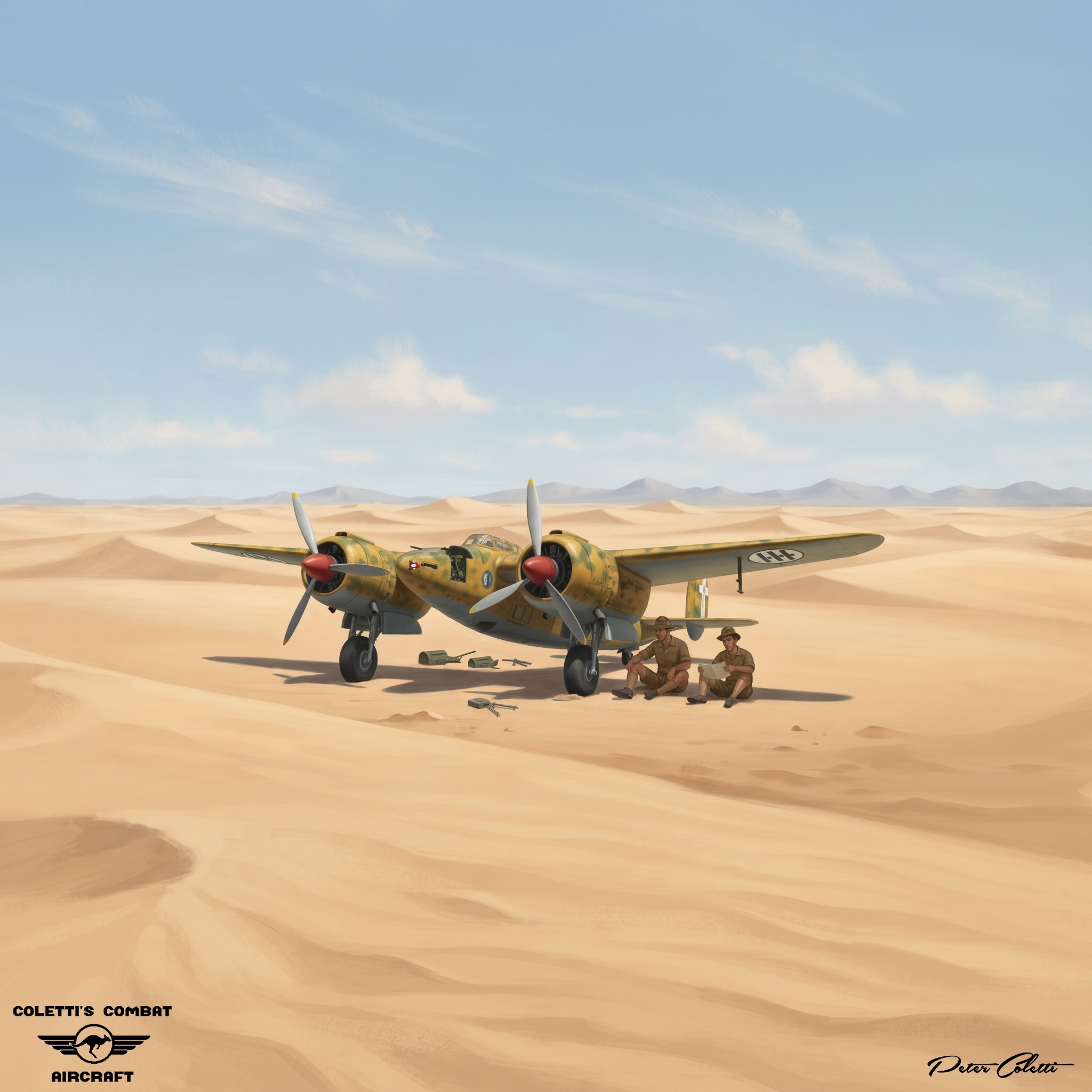
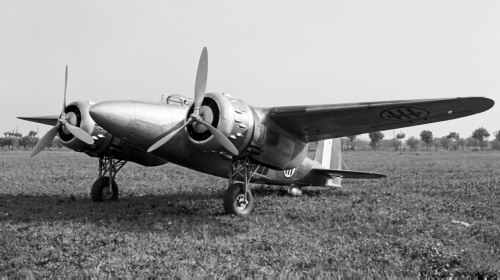
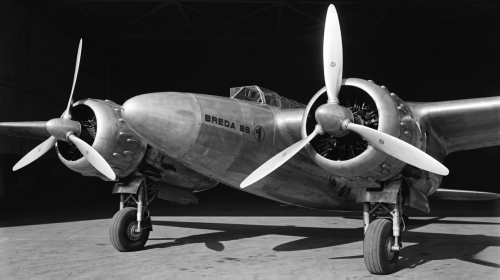
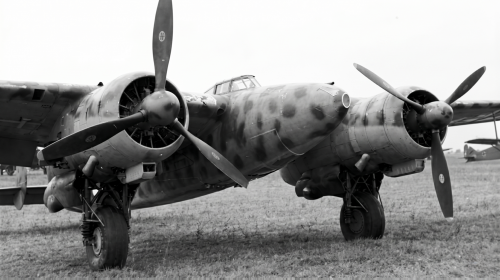
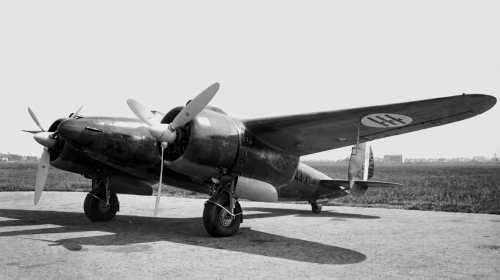
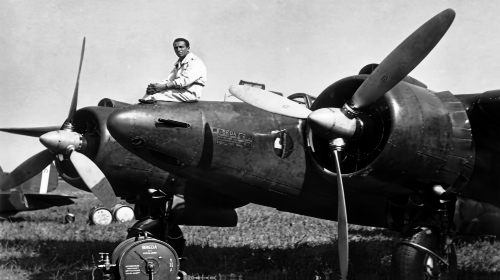
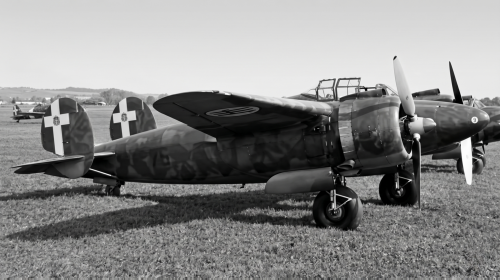
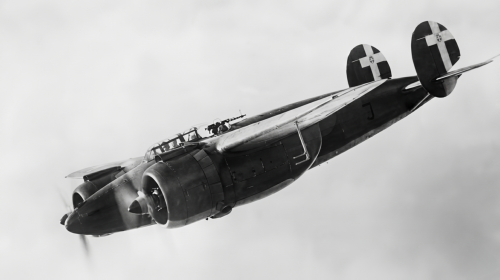
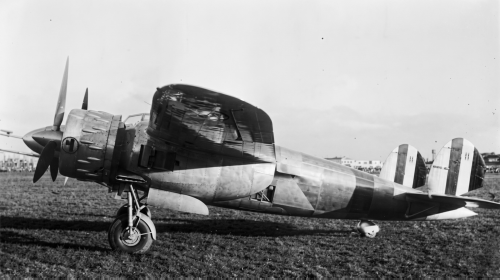
The Breda Ba.88 Lince (“Lynx”) is one of those aircraft where the story is more interesting than the machine’s success—because it became famous first as a record-breaker and then as one of the most notorious failures to see combat service in the Second World War.
Designed as a fast, twin‑engine multi‑role attacker for the Regia Aeronautica, it combined sleek lines, retractable landing gear, and impressive early performance with a fundamentally flawed structural and weight concept that doomed it once it was turned into a real combat aircraft.
Origins and development
In January 1936, the Italian Air Ministry issued a requirement for a new twin‑engine, multi‑purpose aircraft.
It was to act as a heavy fighter, bomber, and reconnaissance platform—broadly comparable to contemporary European concepts like the Bréguet 690 series or the Fokker G.I.
The specification was ambitious:
Top speed: at least about 470 km/h (around 290 mph), with some documents and later summaries quoting a desired maximum of roughly 530 km/h (330 mph), faster than any aircraft then in service or planned in Italy.
Armament: either two to four 12.7 mm heavy machine guns or a mix of machine guns and 20 mm cannon.
Range: about 2,000km (1,200 mi).
Climb: to 6,000m in roughly nine minutes.
Several Italian firms responded, including IMAM, Fiat, Bonomi, and others, but Breda’s proposal—designated Ba.88 and developed by Antonio Parano and Giuseppe Panzeri—looked the most advanced on paper and was selected for prototype construction.
The design drew on the earlier, unbuilt Ba.75, sharing its general fuselage and tail concepts but now in a twin‑engine, high‑speed form.
The first prototype, M.M.302, was completed quickly and flew in October 1936.
Early tests revealed that the aircraft was heavy and would be sensitive to weight growth, but its aerodynamic cleanliness and power gave it excellent speed.
Record‑breaking promise
In 1937 the prototype was transferred to the Guidonia test centre for official trials.
With careful preparation and a light test configuration, the Ba.88 set several world speed records over closed circuits while carrying payloads.
In April 1937, over a 100 km course, the Ba.88 achieved an average speed of about 518km/h (322mph); later, over 1,000 km, it averaged around 476km/h (295mph).
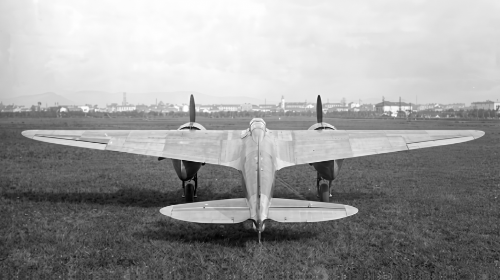
These performances, later improved with more powerful Piaggio P.XI engines and a revised twin‑fin tail, were widely publicised by the Fascist regime as proof of Italian aeronautical prowess.
On the strength of these record flights and the apparent ability to meet or exceed the Air Ministry’s speed requirement, the Ba.88 was ordered into production as a fast attack and heavy fighter aircraft.
The problem was that the record‑setting machine was essentially a stripped‑down demonstrator, not a fully equipped combat aircraft.
Design and technical characteristics
General configuration
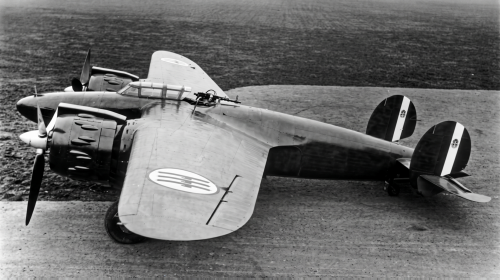
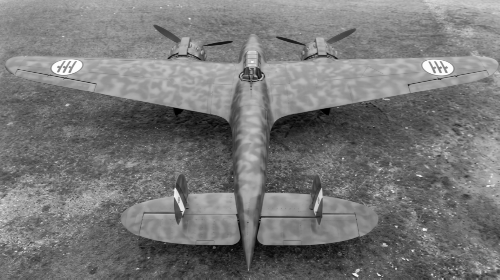
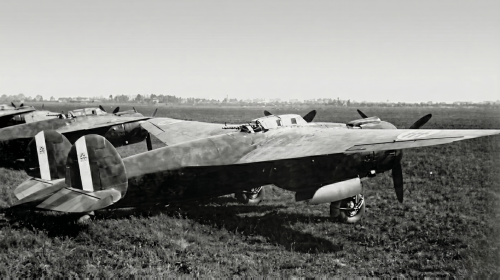
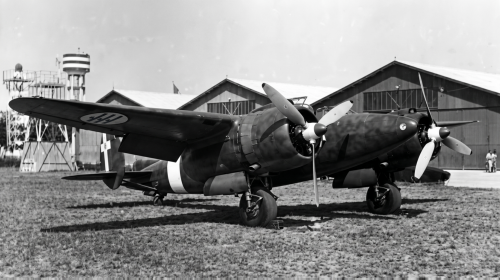
The Ba.88 was an all‑metal, twin‑engine, two‑seat monoplane with a high‑mounted wing and retractable tailwheel undercarriage—quite advanced for a mid‑1930s Italian design, where fixed gear and mixed construction were still common.
Crew: two (pilot and rear gunner/observer).
Role as intended: heavy fighter, ground‑attack aircraft, and reconnaissance platform.
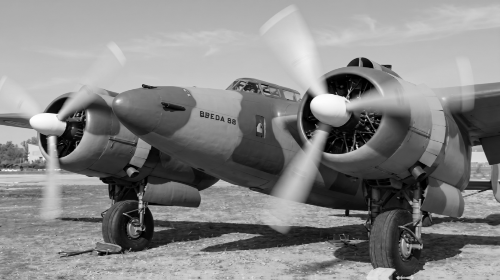
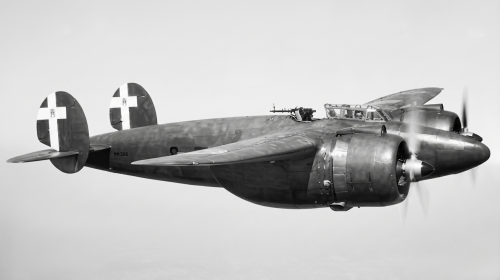
Layout: twin radial engines in wing‑mounted nacelles, with the main landing gear retracting into the nacelles and a retractable tailwheel.
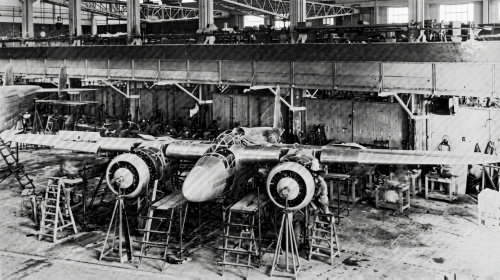
Fuselage and structure The most distinctive structural feature was the so‑called “concentric” fuselage: a steel‑tube internal framework covered by a smooth metal skin.
This gave a very slim, streamlined fuselage with good strength, but it was structurally complex and heavy compared with emerging stressed‑skin monocoque designs in other countries.
The internal bracing and tube framework consumed space and added weight.
The narrow fuselage cross‑section left little room for an internal bomb bay, forcing bombs to be carried semi‑externally in recesses or racks that protruded into the airstream.
This compromised the aircraft’s aerodynamic cleanliness once it was configured for combat.
Wings and fuel system
The all-metal wings had two main spars (longerons) and housed the following:
The engine nacelles.
The main landing gear.
Most of the fuel tanks are twelve self‑sealing tanks with a total capacity of about 1,586 litres (419 US gallons).
Self‑sealing tanks were the only real protection; the Ba.88 lacked armour for the crew or vital components in its early form, reflecting pre‑war Italian doctrine that prioritised speed and agility over protection.
Powerplant and propellers
Production Ba.88s were powered by two Piaggio P.XI air‑cooled radial engines, each of roughly 1,000 hp, driving three‑blade, constant‑speed Breda propellers of about 3.2 m diameter.
On paper, this powerplant combination, married to the sleek airframe, promised very high performance.
In practice, the engines were heavily loaded, and once the aircraft gained weight in service configuration, the power‑to‑weight ratio and wing loading became problematic.
Undercarriage
All three landing gear units—two main legs and the tailwheel—were fully retractable, which was still unusual for many aircraft when the Ba.88 was conceived.
This contributed to the clean lines and record‑breaking speeds of the prototype.
Armament and bomb load
The intended armament evolved, but the basic concept included:
Forward‑firing guns: typically, two or more 12.7 mm Breda‑SAFAT machine guns in the nose.
Some proposals and documents mention the possibility of 20 mm cannon, but operational Ba.88s generally carried heavy machine guns.
Defensive armament: a single 7.7 mm or 12.7 mm machine gun in the rear cockpit on a flexible mount.
Bomb load: up to roughly 1,000 kg in theory, but in practice often much less, carried in semi‑external recesses or underwing racks due to the cramped fuselage.
The combination of heavy structure, full fuel, and weapons pushed the aircraft’s weight far beyond what the original aerodynamic concept could comfortably support.
Testing, evaluation, and the weight problem
Once the Ba.88 was tested in a realistic military configuration—with full armament, radio, equipment, and operational fuel loads—its performance collapsed.
Several issues emerged:
Excessive wing loading: The heavy structure and added equipment made the aircraft sluggish and difficult to manoeuvre.
Take-off and landing runs were long, and climb performance was poor.
Instability and handling: With the twin‑fin tail and heavy loading, pilots reported instability and unpleasant handling characteristics, especially at low speeds and in turns.
Loss of speed: The record‑breaking speeds could not be reproduced in service trim.
The Ba.88’s maximum speed dropped to the point where it was no longer competitive with contemporary fighters or even some bombers.
Despite these findings, the combination of political pressure, propaganda value, and the lack of alternative Italian designs in the same category meant that the Ba.88 was pushed into production and limited service rather than being cancelled outright.
Production and variants
Production run
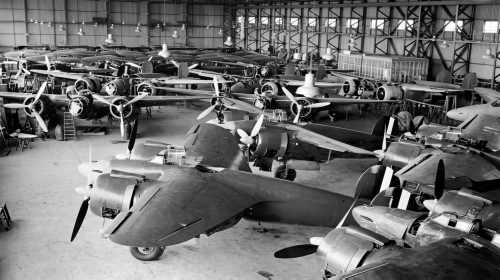
Between 1936 and 1940, around 149 Ba.88s were built (sources vary slightly, sometimes giving a range of 148–155).
Production was undertaken by Breda and, in some cases, by other Italian firms under licence.
The aircraft were delivered to the Regia Aeronautica beginning in 1939, just as Europe slid into war.
Main variants
While the Ba.88 never developed a long list of distinct subtypes, a few identifiable variants and modifications existed:
The Ba.88 prototype (M.M.302): The original single‑fin prototype used for record attempts, later modified with more powerful engines and a twin‑fin tail.
Ba.88 production model: Twin‑fin tail, Piaggio P.XI engines, nose armament of heavy machine guns, rear defensive gun, and semi‑external bomb racks.
This is the standard aircraft that saw limited operational use.
Ba.88M (modified): Later in the war, some Ba.88s were experimentally lightened and re‑engined (or re‑equipped) in an attempt to salvage performance, sometimes referred to as Ba.88M.
These efforts did not fundamentally solve the design’s weight and structural issues and did not lead to a successful operational subtype.
Because the type was such a disappointment, development energy shifted to other aircraft rather than creating a full family of Ba.88 derivatives.
Operational history and WWII context
Entry into service
The Ba.88 entered service with the Regia Aeronautica around 1939, just before Italy’s entry into the Second World War.
It was assigned to units intended for ground‑attack and long‑range fighter‑bomber roles, particularly in the Mediterranean and North African theatres. Early operations
The aircraft’s first real test came after Italy declared war in June 1940.
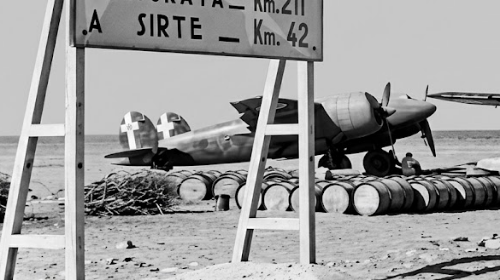
Ba.88s were deployed to Sardinia and North Africa for operations against French and later British targets.
Missions included:
Attacks on Corsican airfields and ports during the brief Italian campaign against France in June 1940.
Ground‑attack sorties in Libya and Egypt against British positions and airfields.
In these operations, the Ba.88’s shortcomings became painfully obvious.
In the hot, dusty conditions of North Africa, with full fuel and bomb loads, the aircraft often struggled to take off at all.
When they did get airborne, climb and manoeuvrability were so poor that they were highly vulnerable to enemy fighters and anti-aircraft fire.
Withdrawal from frontline use
By late 1940 and into 1941, the Regia Aeronautica had effectively lost confidence in the Ba.88.
Units reported that the aircraft could not perform its intended role safely or effectively.
Many Ba.88s were grounded, stripped of useful equipment, and left unused.
Some airframes were then employed in a rather ironic secondary role: they were set up as decoys on airfields—parked, sometimes partially buried or fixed in place—to mislead enemy reconnaissance and draw attacks away from more valuable aircraft.
By 1941 the Ba.88 was officially retired from operational service.
In a war where many aircraft types were rapidly improved or adapted, the Ba.88 stands out for how quickly it went from propaganda showpiece to obsolete dead‑end.
Assessment and legacy
The Ba.88 is often cited as “perhaps the most remarkable failure of any operational aircraft to see service in World War II”.
Several factors explain this harsh verdict:
Concept vs. reality: The design was optimised for speed records and propaganda, not for the messy realities of combat loads, rough airfields, and harsh climates.
Structural philosophy: The concentric steel‑tube fuselage was strong but heavy and space‑inefficient, exactly the opposite of what a multi‑role combat aircraft needed as armaments and equipment grew.
Doctrinal mismatch: Italian doctrine initially emphasised speed and offensive spirit over protection and robustness.
The Ba.88 embodied this mindset, but by the time it reached service, air combat had already shifted towards more heavily armed and protected aircraft.
Industrial and political pressure: Once the Ba.88 had been trumpeted as a symbol of Italian aviation, cancelling it became politically difficult.
Production continued even after serious flaws were known, consuming resources that might have gone into more promising designs.
For historians and enthusiasts, the Ba.88 is a cautionary tale about the dangers of designing to meet headline performance figures rather than balanced operational requirements.
It also illustrates how propaganda can lock a flawed design into service long after its weaknesses are clear.
Technical summary (Ba.88 in service form)
Exact figures vary slightly by source and configuration, but a representative set of data for the Ba.88 is:
Type: Twin‑engine ground‑attack / heavy fighter aircraft.
Crew: 2.
Engines: 2 × Piaggio P.XI radial engines, about 1,000 hp each.
Structure: All‑metal, high‑wing monoplane; steel‑tube “concentric” fuselage with metal skin; retractable main and tail landing gear.
Fuel: 12 self‑sealing tanks in the wings and centre section, totalling around 1,586 L.
Armament (typical):
Nose: multiple 12.7 mm Breda‑SAFAT machine guns.
Rear cockpit: flexible machine gun.
Bombs: semi‑external bomb load, nominally up to about 1,000 kg but often less in practice.
In performance terms, the service Ba.88 fell far short of its prototype’s records; speeds dropped, the climb suffered, and handling degraded to the point that the aircraft was effectively unusable in the demanding conditions of WWII.