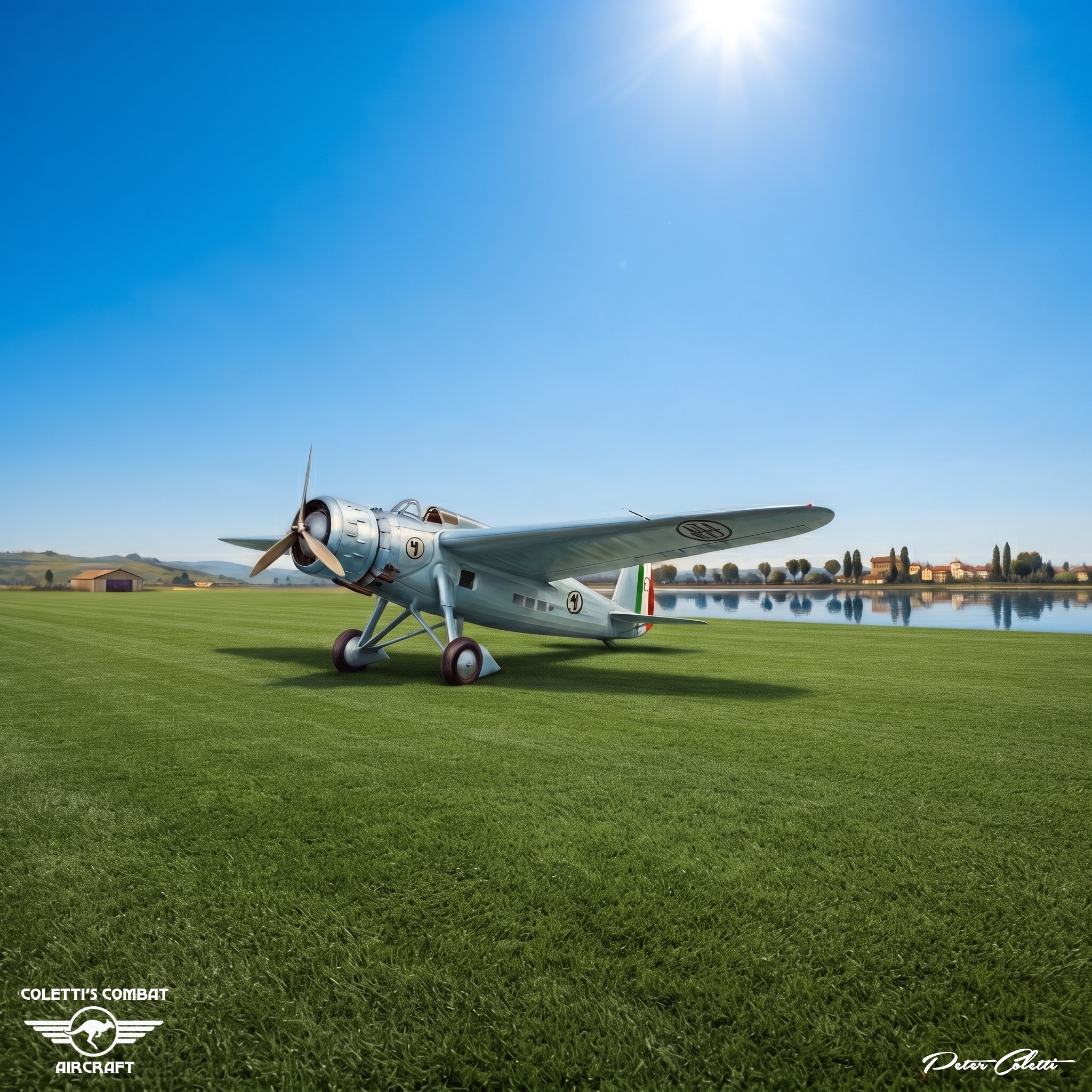
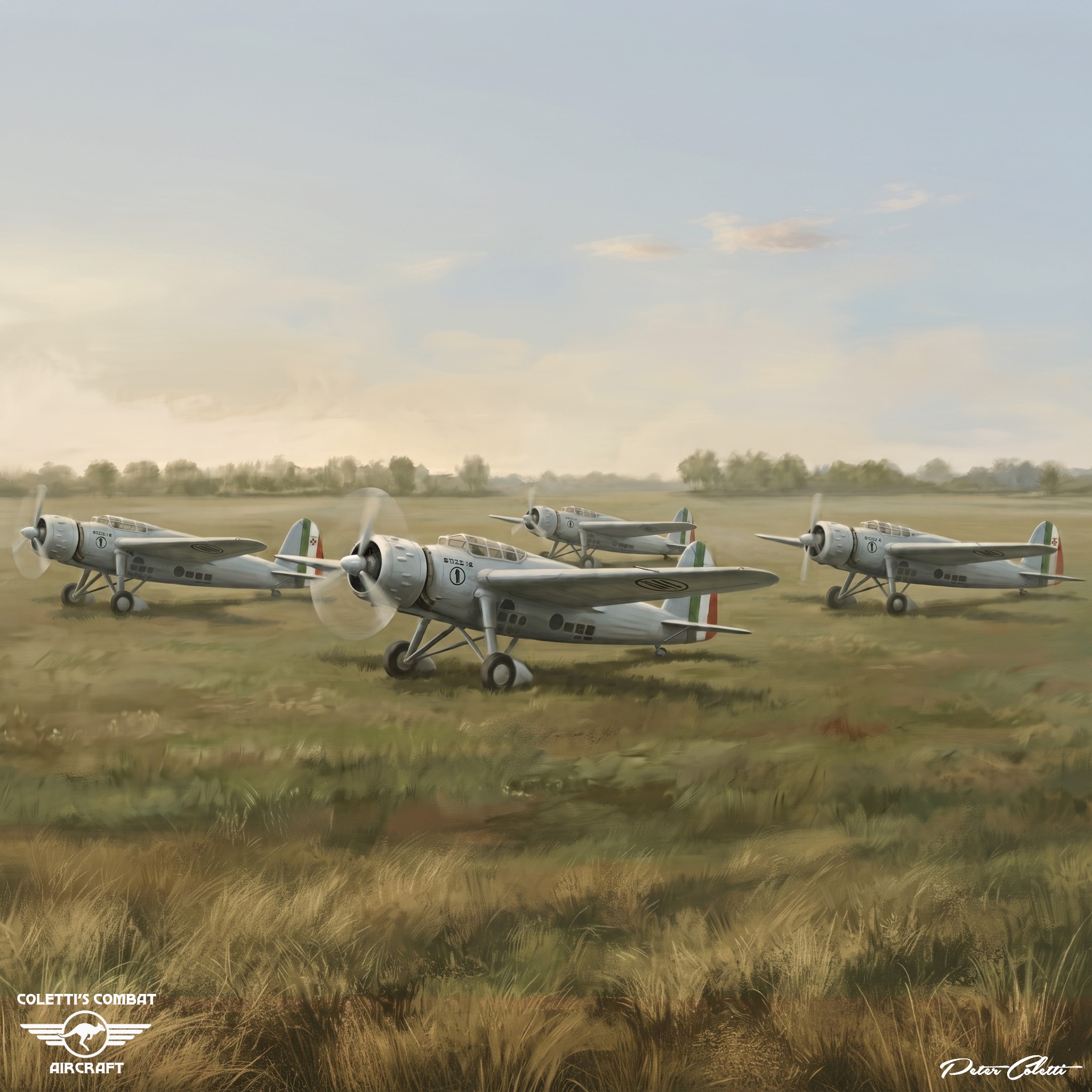
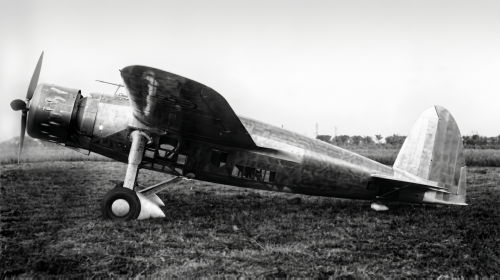
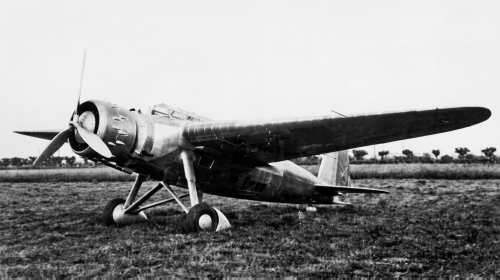
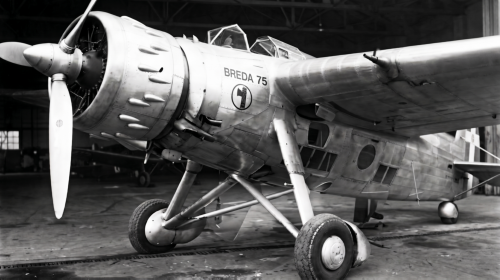
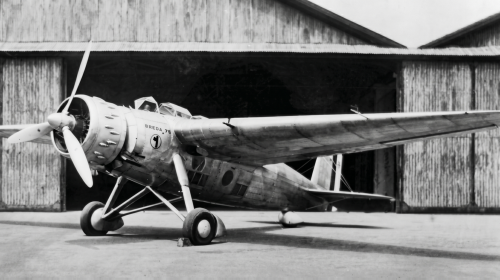
The Breda Ba.75 emerged in the late 1930s as part of Italy’s ongoing effort to modernise its tactical aviation forces.
By this time, the Regia Aeronautica had already fielded the Breda Ba.65, a single‑engine ground‑attack aircraft that saw extensive service in the Spanish Civil War.
Although the Ba.65 demonstrated some strengths, its operational record also revealed shortcomings—particularly in visibility, handling, and adaptability to reconnaissance roles.
Breda’s design bureau responded by proposing a more specialised, two‑seat aircraft that could combine tactical reconnaissance, battlefield observation, and light attack capabilities in a single platform.
This concept aligned with contemporary Italian doctrine, which emphasised flexible, multi‑role aircraft for colonial policing and close support.
The resulting design, designated Ba.75, was completed in 1939 and built as a single prototype.
It represented an evolutionary step from the Ba.65, sharing some structural lineage but incorporating significant changes in configuration and mission equipment.
The aircraft made its first and only flight in 1939.
Despite initial interest, the Ba.75 never progressed beyond the prototype stage.
Shifting priorities, industrial limitations, and the rapid onset of World War II prevented further development.
Design Characteristics
Airframe and Layout
The Ba.75 was a mid‑wing cantilever monoplane, a departure from the Ba.65’s low‑wing configuration.
This change improved downward visibility and provided a more stable platform for reconnaissance work.
The aircraft featured fixed tailwheel landing gear, a simpler and more rugged solution than retractable gear, reflecting its intended use on rough forward airstrips.
One of the most distinctive features was the extensive glazing on the underside and lower fuselage, allowing the observer to monitor ground activity directly beneath the aircraft.
This design element made the Ba.75 particularly suited for artillery spotting, battlefield surveillance, and border patrol duties.
The crew of two—a pilot and an observer/gunner—sat in tandem, with the rear crewman responsible for reconnaissance tasks and defensive armament.
Powerplant
The aircraft was powered by a 900 hp (670 kW) Isotta‑Fraschini K.14 radial engine.
This was a 14‑cylinder, air‑cooled powerplant widely used in Italian medium aircraft of the period.
While not exceptionally powerful, it offered reliability and adequate performance for the Ba.75’s intended low‑to‑medium‑altitude mission profile.
Construction
The Ba.75 followed typical Italian construction practices of the era:
Metal monocoque fuselage
Metal‑framed wings, likely with fabric‑covered control surfaces
Fixed landing gear with aerodynamic fairings
The emphasis was on durability and ease of maintenance rather than cutting‑edge aerodynamic refinement.
Performance
According to available test data, the Ba.75 achieved the following:
Maximum speed: 375 km/h (233 mph)
Cruise speed: 300 km/h (190 mph)
Range: 1,700 km (1,100 mi)
Crew: 2
Wingspan: 15.60 m
Length: 11.30 m
Height: 3.10 m
These figures placed the Ba.75 in the performance bracket of contemporary tactical reconnaissance aircraft.
Its long range was particularly notable, making it suitable for extended patrols over North Africa or the Mediterranean.
Armament and Mission Equipment
The Ba.75 carried a modest but functional armament suite:
Two 12.7 mm Breda‑SAFAT machine guns mounted in the wings or fuselage for forward‑firing attack runs.
Aircraft of this class typically also carried a flexible rear gun for defence; however, no such weapon is listed in the surviving specifications.
The aircraft’s primary “weapon”, however, was its observation capability.
The glazed lower fuselage allowed the observer to perform the following:
Battlefield reconnaissance
Artillery spotting
Border surveillance
Naval or coastal patrol
This made the Ba.75 a hybrid between a light attack aircraft and a dedicated observation platform.
Operational Context and WWII Relevance
The Ba.75’s development coincided with a period of rapid change in military aviation.
By 1939, the Regia Aeronautica was preparing for large‑scale conflict, and its procurement priorities shifted towards fighters, bombers, and proven attack aircraft already in production.
Several factors contributed to the Ba.75’s cancellation:
Industrial strain — Italy lacked the manufacturing capacity to introduce yet another specialised aircraft type.
Doctrinal uncertainty — The Regia Aeronautica increasingly favoured faster, more heavily armed aircraft for ground attack, such as the Ba.65 and, later, the Ba.88.
Technological obsolescence — Fixed landing gear and moderate performance made the Ba.75 appear outdated compared to emerging designs.
War priorities — With Italy entering WWII in 1940, resources were diverted to aircraft already in service.
As a result, the Ba.75 remained a one‑off prototype, never deployed operationally and never entering serial production.
Variants
No variants of the Ba.75 were produced.
The sole prototype represented the entire type.
Assessment and Legacy
Although the Breda Ba.75 never entered service, it represents an interesting transitional design in Italian aviation history.
It attempted to merge reconnaissance and ground‑attack roles at a time when air forces worldwide were experimenting with multirole concepts.
Its key contributions include the following:
Demonstrating the value of enhanced downward visibility for tactical reconnaissance
Exploring a two‑seat configuration for combined observation and attack
Providing a developmental link between the Ba.65 and later Breda projects
Ultimately, the Ba.75’s failure to progress reflected broader challenges within Italy’s aviation industry—limited resources, shifting priorities, and the difficulty of fielding specialised aircraft in wartime.