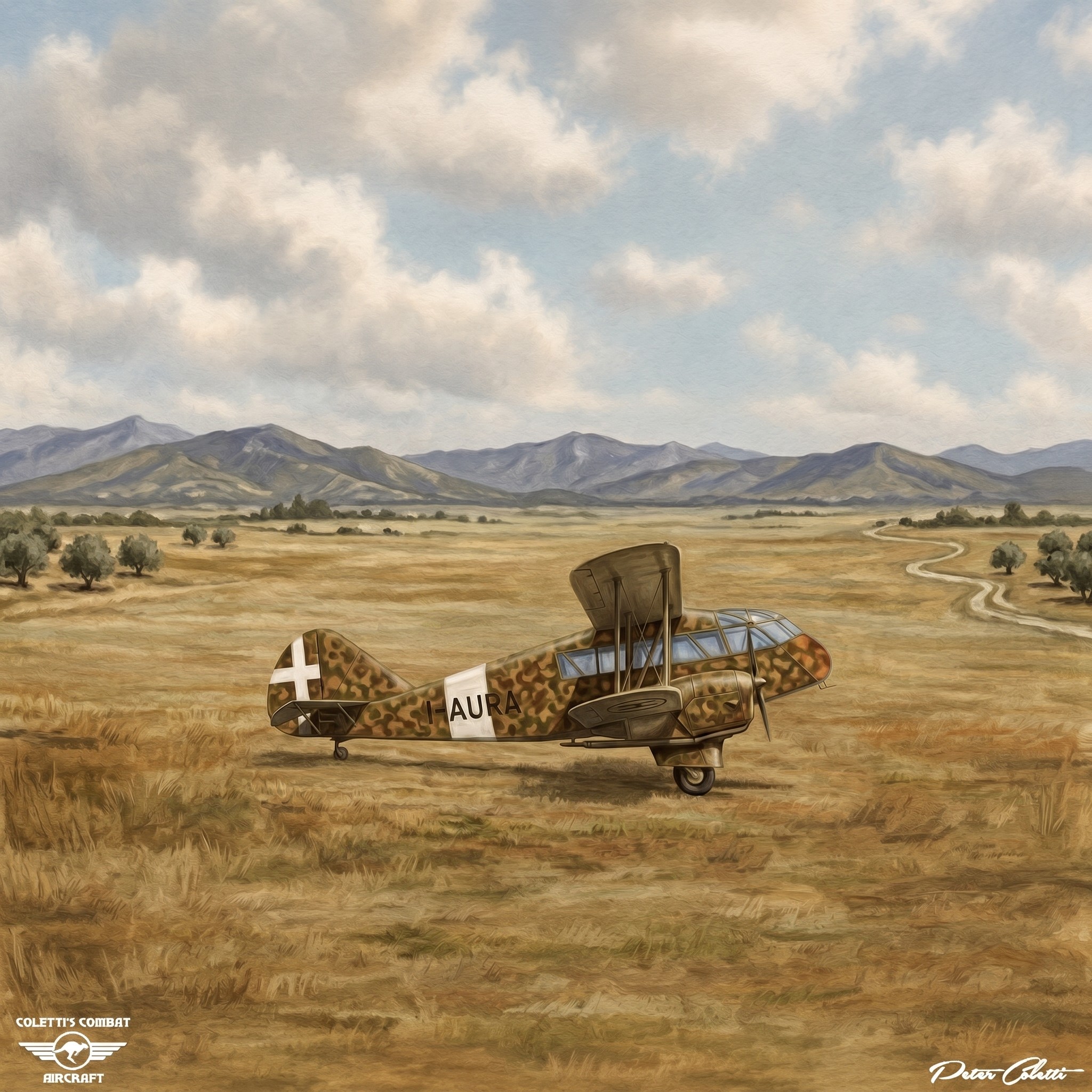
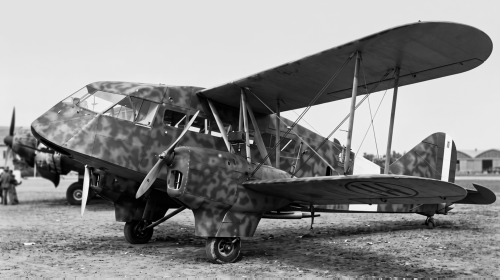
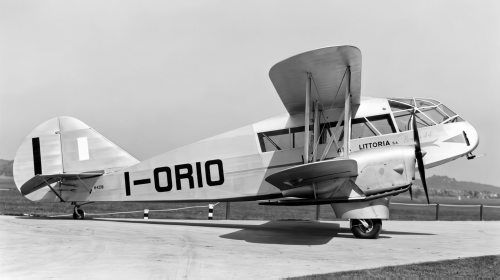
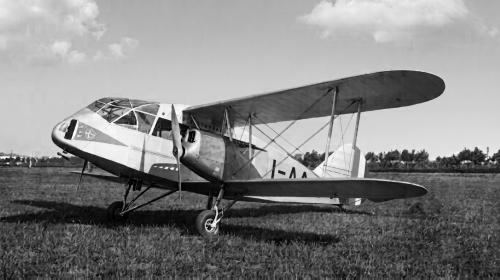
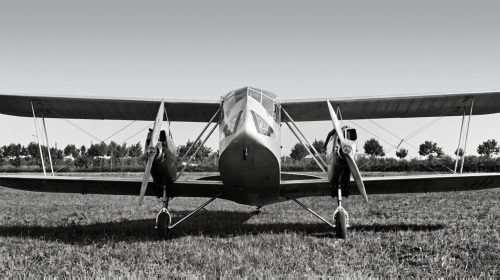
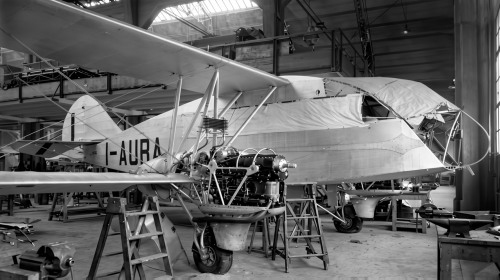
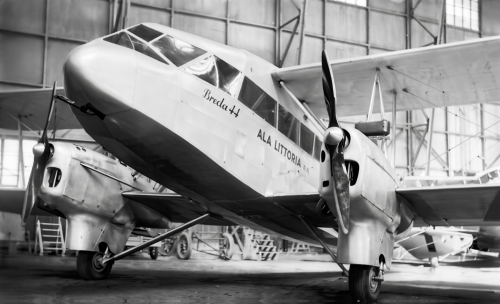
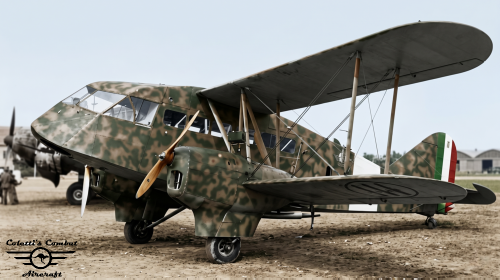
The Breda Ba.44 was an Italian light airliner of the mid‑1930s, created at a time when European airlines were expanding short‑haul passenger services and looking for economical, twin‑engined machines with good reliability and modest operating costs.
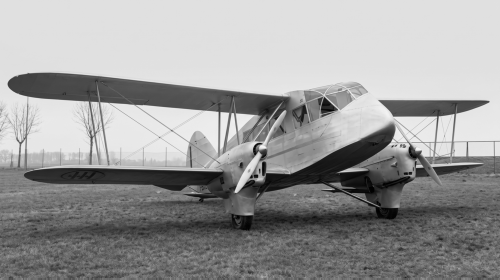
Rather than starting from a clean sheet, Società Italiana Ernesto Breda chose to base the aircraft on the successful British de Havilland DH.89 Dragon Rapide, for which Breda acquired a manufacturing licence.
The Dragon Rapide was already well-proven as a compact, twin-engined biplane airliner, and Breda’s strategy was to adapt the design to Italian production methods and local operating needs.
The resulting Ba.44 retained the essential configuration and many structural features of the Dragon Rapide but incorporated changes in the cockpit layout, tail design, and, initially, in the choice of engines.
The prototype Ba.44 flew in 1934.
Only six were built, reflecting the limited size of the Italian regional airliner market and the growing emphasis on larger, more capable transports.
Nonetheless, the Ba.44 carved out a niche as a short‑range passenger and utility aircraft for both civil and military operators.
Design and construction
Overall configuration
The Ba.44 was a twin‑engine, wooden biplane airliner with the following:
Two‑bay biplane wings of unequal span
Fixed, faired main undercarriage with a tailwheel
Enclosed cockpit for a single pilot
Cabin for up to nine passengers
Its layout mirrored the Dragon Rapide: compact, relatively light, and optimised for short‑haul routes from modest airfields.
Structure and materials
Fuselage:
A wooden box‑girder structure with internal plywood panelling and fabric covering on the outside.
This construction was robust yet relatively easy to repair and well suited to Breda’s woodworking capabilities.
Wings:
Wooden spars and ribs, fabric‑covered, with slight taper and stagger similar to the Dragon Rapide.
The biplane arrangement provided good lift at low speeds and stable handling, at the cost of drag and ultimate speed.
Tail unit:
Conventional tailplane and fin, with fabric‑covered control surfaces.
Breda modified the empennage compared with the British original, refining the shape and structure to match Italian manufacturing practice and possibly to improve stability.
Cockpit and cabin
Cockpit:
A single‑pilot cockpit with improved visibility and instrumentation tailored to Italian airline and military requirements.
Breda redesigned the cockpit compared with the Dragon Rapide, including changes to glazing and layout.
Cabin:
Seating for nine passengers, with side windows and basic comfort features.
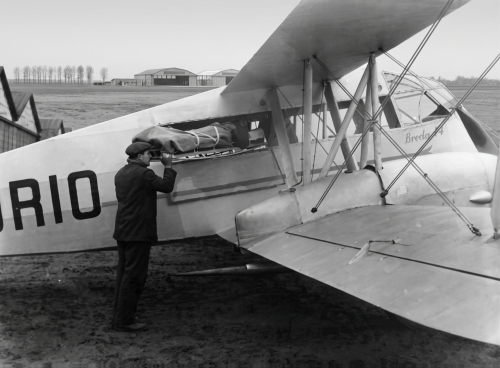
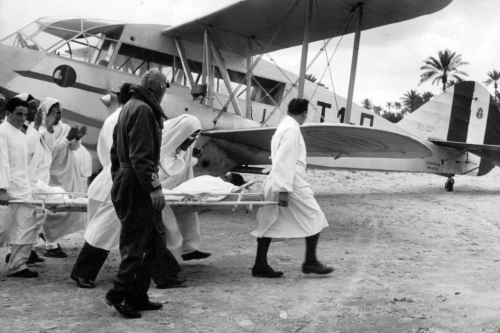
The cabin could be reconfigured for air ambulance or VIP transport, allowing stretchers, additional equipment, or more luxurious seating.
Powerplant and performance
Engines
The prototype Ba.44 initially used locally produced Colombo S.63 engines, reflecting Breda’s desire to rely on Italian powerplants.
However, in production aircraft, the company reverted to the same engines as the Dragon Rapide:
2 × de Havilland Gipsy Six inverted inline engines
Power output around 185 hp each
This gave the Ba.44 broadly similar performance to its British parent, while simplifying maintenance and parts supply for operators already familiar with de Havilland engines.
Performance (typical figures)
Maximum speed: about 248 km/h
Range: about 860 km
Service ceiling: around 5,800 m
Crew: 1 pilot
Passenger capacity: up to 9
These numbers placed the Ba.44 firmly in the light airliner category—adequate for regional routes, liaison flights, and utility transport, but not intended for long‑range or high‑speed operations.
Operational history
Civil use in Italy
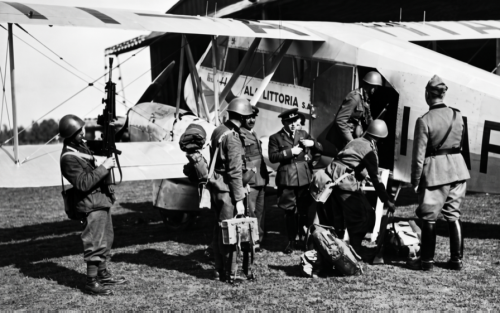
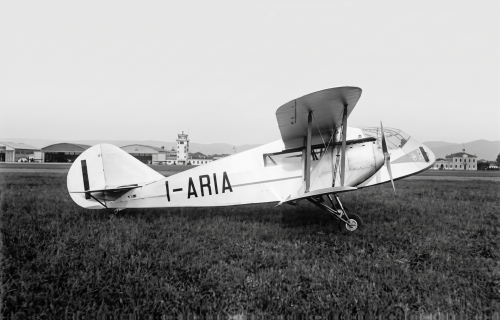
The main civil operator was Ala Littoria, Italy’s national airline, which acquired four Ba.44s.
They were used primarily on Albanian routes and other short‑haul services where passenger loads were modest and airfields relatively basic.
The aircraft’s short‑field capability, forgiving handling, and twin‑engine safety made it attractive for these missions.
Military use in Italy
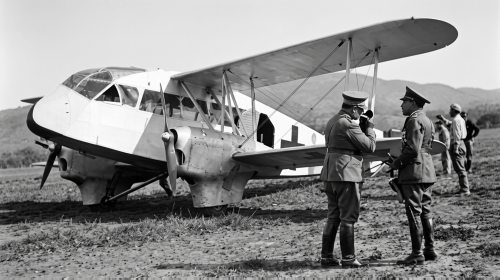
The prototype Ba.44 was sold to the Regia Aeronautica (Italian Royal Air Force), which employed it as a VIP transport and air ambulance in Libya.
Its performance in these roles impressed the air force, leading to the impressment of the civil Ba.44s in 1936.
Once taken over, they were used for the following:
VIP and staff transport
Air ambulance duties
General liaison and communications flights
The Ba.44s saw service not only in North Africa but also in Italian campaigns in Albania, Greece, and Yugoslavia, operating mostly behind the front lines.
Paraguayan service
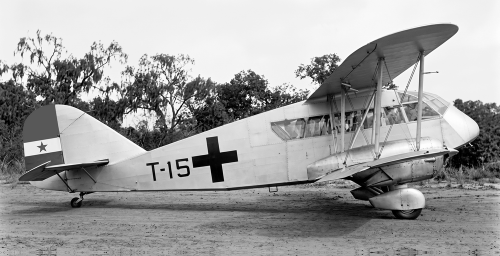
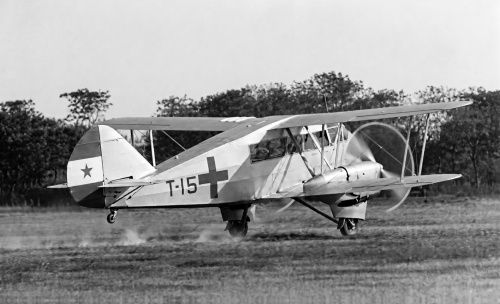
One Ba.44 was purchased by the government of Paraguay for its military aviation in 1933.
It served as an air ambulance and transport during the Chaco War, providing vital medical evacuation and liaison capability in a theatre with limited infrastructure.
After the war, this aircraft was transferred to Líneas Aéreas de Transporte Nacional (LATN), the first Paraguayan airline, and continued in civil service until it was withdrawn in 1947.
This extended career illustrates the Ba.44’s durability and utility in austere conditions.
Variants and conversions
Because only six Ba.44s were built, formal variant designations were limited, but several distinct configurations can be identified:
Standard Ba.44 airliner:
Nine‑passenger cabin, twin Gipsy Six engines, used by Ala Littoria and later impressed by the Regia Aeronautica.
VIP/air ambulance configuration:
Modified interior with stretcher mounts, medical equipment, or more comfortable seating for high‑ranking passengers.
The Libyan‑based prototype and the Paraguayan aircraft both operated in these roles.
Military liaison/utility configuration:
The cabin is adapted for staff transport, communications equipment, and light cargo and is used in Italian campaigns across the Mediterranean and Balkans.
No major structural variants or armed versions are known, the Ba.44 remained essentially a civil airliner adapted for military support tasks.
World War II context and legacy
By the time World War II was fully underway, the Ba.44 was already somewhat dated.
Newer, faster, often all‑metal transports were entering service, and the small fleet of Ba.44s could only play a supporting role.
Their contribution was mainly the following:
Rear‑area transport and liaison
Medical evacuation
VIP and staff movement
In these roles, the Ba.44’s reliability and twin‑engine safety were more important than speed or payload.
As the war progressed and attrition, wear, and logistical difficulties mounted, the remaining aircraft were gradually withdrawn or lost, and none are known to survive today.
Historically, the Ba.44 is significant as:
An Italian licence‑built derivative of the de Havilland Dragon Rapide
A bridge between British light airliner design and Italian operational needs
A small but notable participant in both European and South American aviation history, including the Chaco War