The Breda Ba.25 emerged in the early 1930s, a period when the Regia Aeronautica was rapidly expanding and standardising its training infrastructure.
Italy’s air arm needed a modern, reliable, and economical basic trainer to replace an assortment of ageing biplanes inherited from the 1920s.
The Milan‑based manufacturer Società Italiana Ernesto Breda—already experienced with military aircraft—responded with a design that emphasised ruggedness, simplicity, and forgiving handling.
The prototype flew in 1931, demonstrating excellent stability and low‑speed controllability.
These qualities were precisely what the Italian Air Ministry sought for the first stage of pilot training.
After evaluation, the Ba.25 was ordered into mass production and quickly became the standard basic trainer of the Regia Aeronautica throughout the 1930s.
The aircraft’s success was not limited to Italy.
Breda marketed the Ba.25 abroad, and several nations—including Austria, Belgium, Bolivia, China, and Paraguay—acquired examples either directly or through licensed production.
Its adaptability and low operating cost made it attractive to air forces with limited budgets or developing aviation programmes.
Design Philosophy and Construction
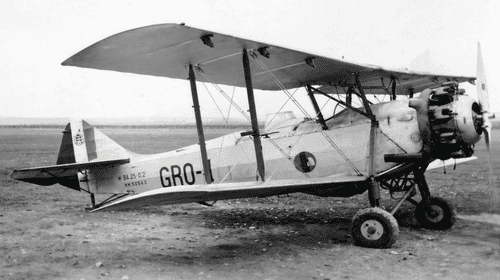
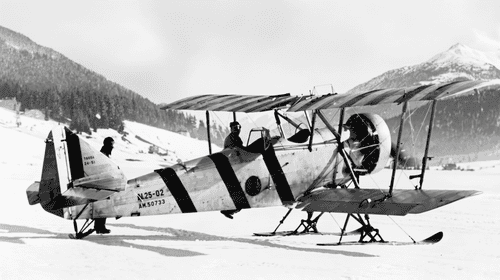
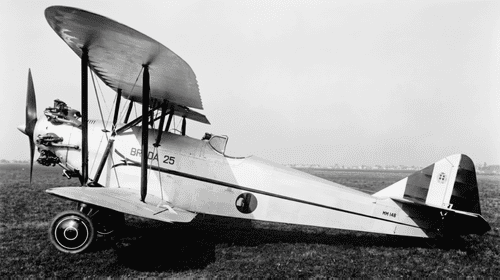
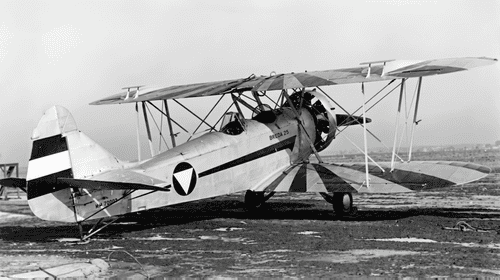
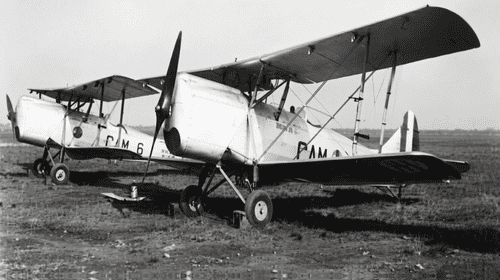
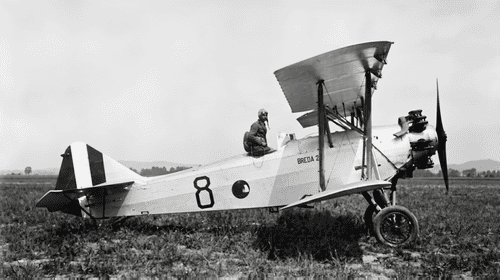
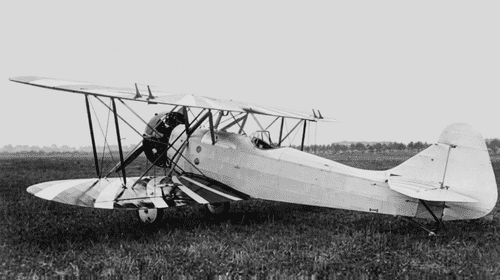
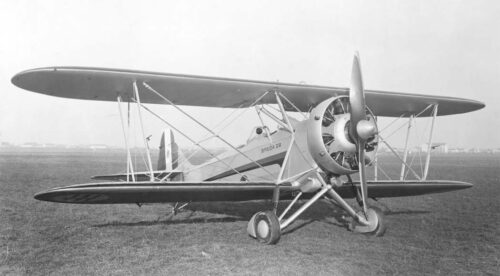
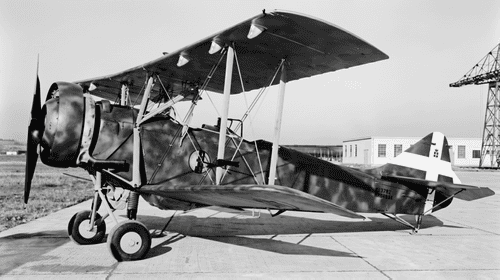
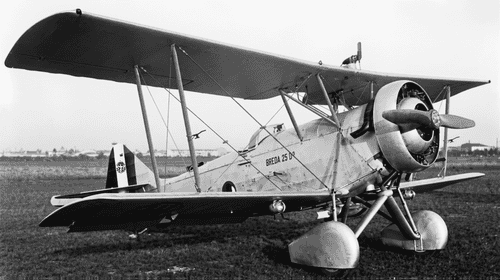
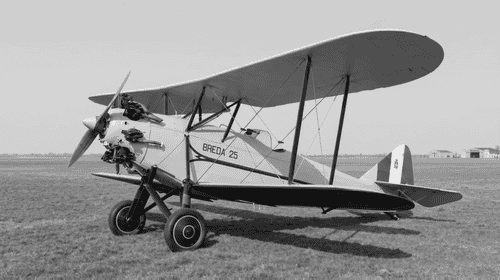
The Ba.25 was a two-seat, single-engine biplane with a conventional layout.
Its design reflected the transitional era between wood‑and‑fabric aircraft and more modern metal monoplanes, combining traditional materials with robust engineering.
Airframe
Structure: Mixed construction.
The fuselage used a welded steel‑tube framework with fabric covering, providing durability and ease of repair.
Wings: Two‑bay biplane wings of wooden construction, fabric‑covered, with slight stagger and equal span.
Ailerons were fitted only to the lower wings on most versions.
Landing Gear: Fixed, wide‑track undercarriage with a tail skid or tailwheel depending on the variant.
The gear was designed to withstand rough training airfields.
Cockpit Arrangement
The Ba.25 featured tandem open cockpits, each equipped with flight controls.
The instructor typically occupied the rear seat.
The open cockpit configuration was considered ideal for early training, giving students a clear sense of airflow, attitude, and aircraft response.
Powerplant
The aircraft was designed to accept a variety of engines, which became one of its defining characteristics.
Most Italian examples used Alfa Romeo‑built radial engines, but export versions often carried different powerplants to suit local preferences or licensing agreements.
Common engines included:
Alfa Romeo Lynx (125–200 hp range)
Isotta‑Fraschini Asso 200
Piaggio P.VII radial engines in later or specialised variants
This flexibility allowed the Ba.25 to remain in production for nearly a decade.
Flight Characteristics and Performance
The Ba.25 was engineered to be stable, predictable, and forgiving, making it suitable for novice pilots.
Typical performance (varied by engine):
Maximum speed: ~180–200 km/h
Cruise speed: ~150 km/h
Range: ~500 km
Service ceiling: ~5,000 m
Take-off and landing distances: Short, suitable for small training fields
The aircraft’s biplane configuration provided generous lift and benign stall behaviour.
Instructors praised its ability to perform basic aerobatics—loops, rolls, and spins—without excessive demands on the student.
Its rugged landing gear tolerated hard landings, an essential trait for a primary trainer.
Variants
The Ba.25 families grew into a surprisingly diverse set of subtypes, reflecting its adaptability.
Ba.25 (Standard Trainer)
The baseline model used for most Regia Aeronautica training units.
Powered typically by the Alfa Romeo Lynx.
Ba.25/Lynx
A designation used for aircraft specifically fitted with the Alfa Romeo Lynx radial engine.
Ba.25/Asso
Fitted with the Isotta‑Fraschini Asso inline engine.
This variant had a more streamlined nose profile.
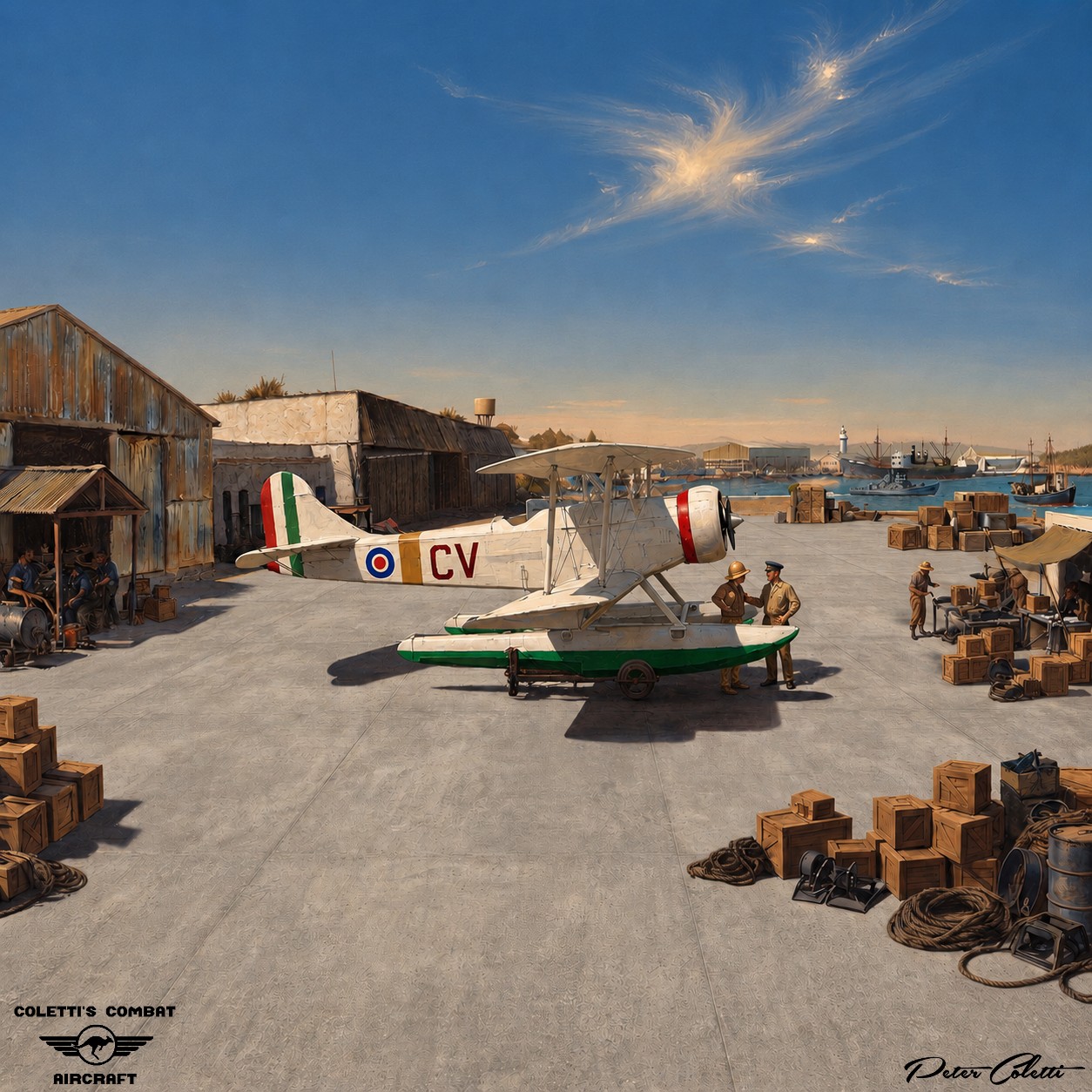
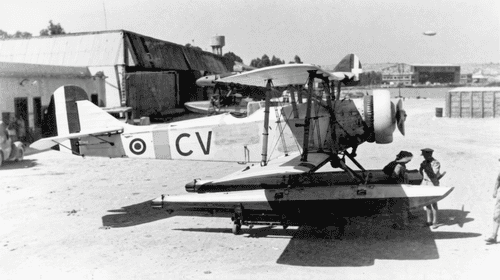
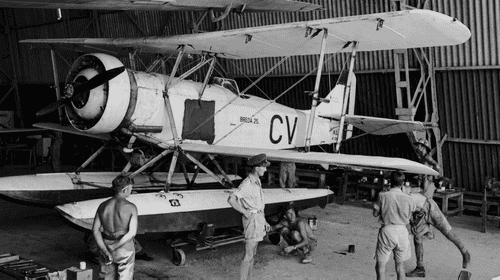
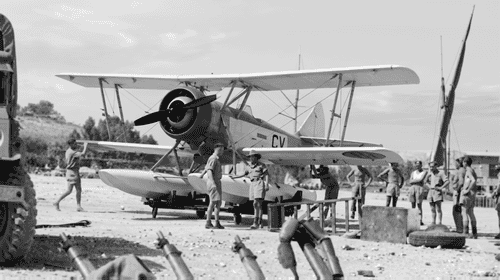
Ba.25/Idro
A floatplane version equipped with twin floats for seaplane training.
Used by Italian naval aviation and exported to countries with maritime training needs.
Ba.25 Ridotto
A single‑seat version used for aerobatic training and advanced handling practice.
Ba.28
A refined derivative with improved aerodynamics and more powerful engines.
Although similar in appearance, it represented a modernisation effort and was exported in small numbers.
Export Variants
Several nations ordered customised versions with locally preferred engines or equipment.
China, for example, operated Ba.25s with non‑Italian power plants.
Operational Use and WWII Context
By the outbreak of World War II, the Ba.25 was already somewhat outdated compared to emerging monoplane trainers.
However, its reliability and low cost ensured it remained in widespread service.
In the Regia Aeronautica
Used primarily for basic flight training, including take-off/landing practice, navigation, and elementary aerobatics.
Served in flying schools across Italy, including the major training centres at Foggia, Lecce, and Grottaglie.
Continued in service throughout the war, though gradually supplemented by more modern trainers like the Breda Ba.39 and the Nardi FN.305.
In Foreign Service
China used Ba.25s during the Sino‑Japanese conflict for training and liaison duties.
South American operators employed them for pilot instruction and occasionally for secondary roles such as courier flights.
Austria and Belgium used the type until their air forces were absorbed or disrupted by wartime events.
Survivability and Legacy
The Ba.25 was not intended for combat and saw no frontline action.
Its contribution lay in the thousands of pilots it trained.
Many Italian WWII aviators—fighter, bomber, and reconnaissance—began their flying careers in a biplane. 25.
After the war, surviving aircraft were used briefly by civilian flying clubs or scrapped as surplus.
A small number have been preserved in museums, representing an important chapter in Italy’s aviation heritage.
Significance
The Breda Ba.25 stands as one of the most produced and widely used Italian training aircraft of the interwar period.
Its combination of:
structural simplicity
low operating cost
flexible engine options
forgiving flight characteristics
made it a cornerstone of Italian pilot training for more than a decade.
While overshadowed by more advanced trainers by the late 1930s, its role in shaping the Regia Aeronautica’s wartime pilot corps was substantial.