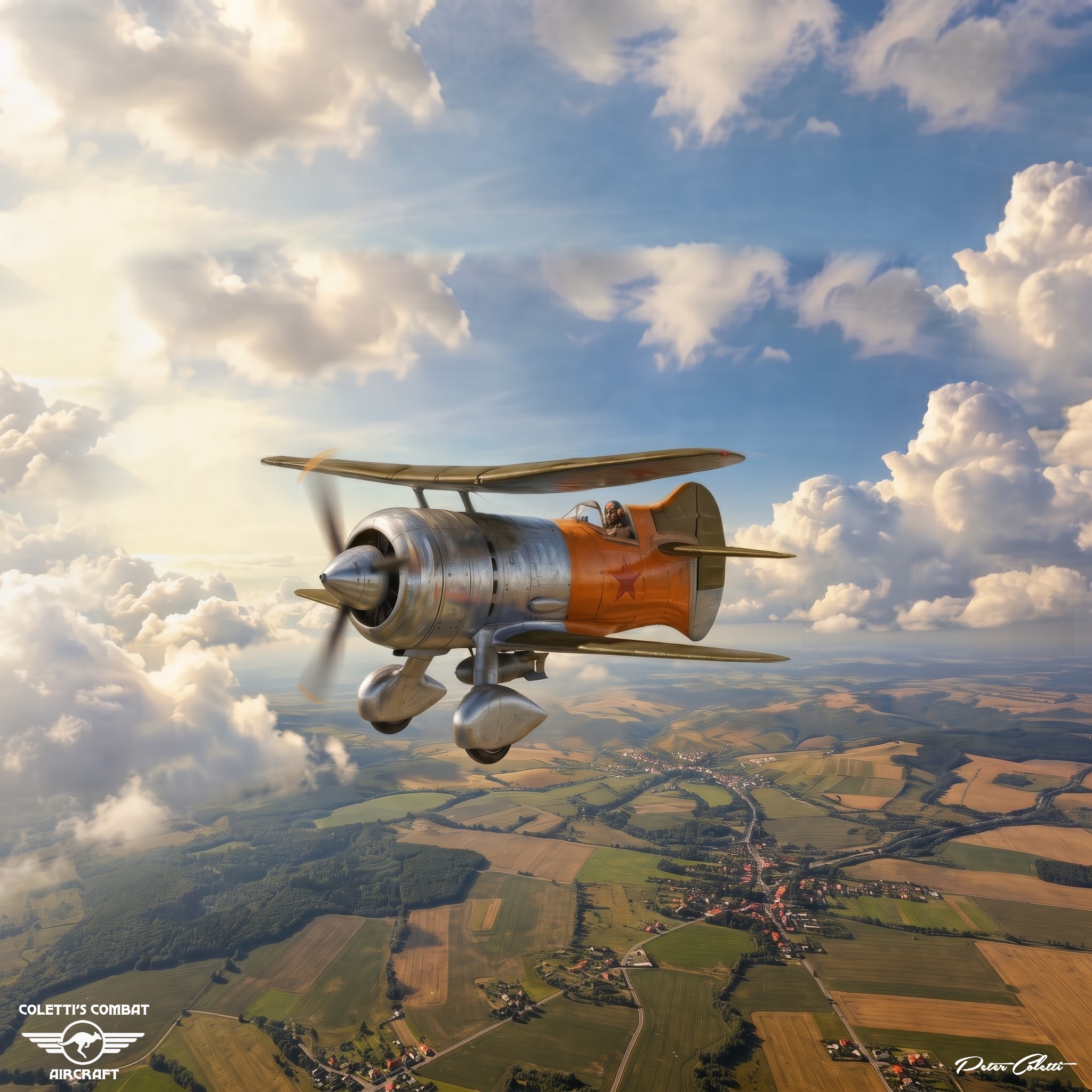
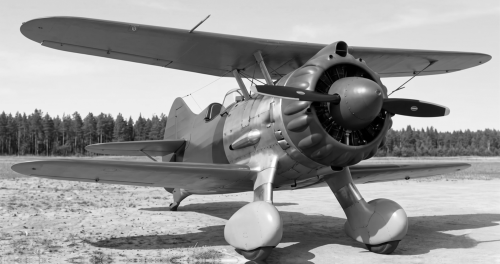
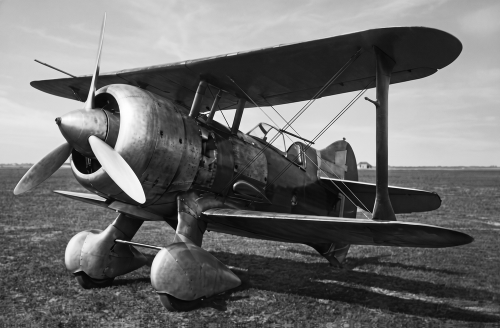
The Borovkov‑Florov I‑207 emerged from a transitional moment in Soviet fighter design.
In 1935, two young designers at GAZ‑21 in Gorky, Aleksei A. Borovkov and Ilya F. Florov, began work on a compact, high‑performance biplane fighter intended to push the configuration to its absolute limits.
Both men had worked on the Polikarpov I‑16, and they carried forward its philosophy of minimal size, high power, and aerodynamic cleanliness into their new project.
Borovkov-Florov-I-207-2-M-63
Their first prototype, designated No. 7211 (Izdeliye 7, Zavod 21, Samolyet 1), was conceived as the smallest practical airframe wrapped around the most powerful engine available: the 850 hp Mikulin M‑85, a licensed Gnome‑Rhône 14‑cylinder radial.
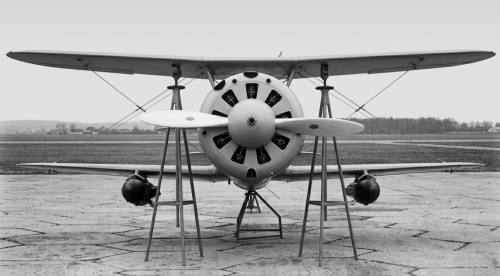
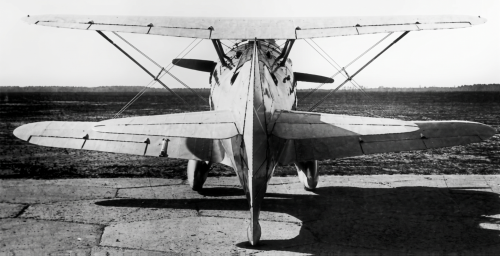
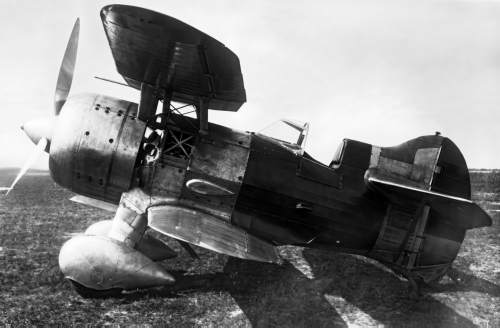
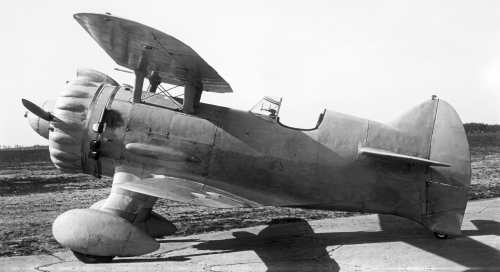
The aircraft was a sleek, fully cantilever biplane with a clean upper wing centre section supported by streamlined canopy struts.
The No. 7211 was a sleek biplane with fully cantilever outer wings, the upper centre section being supported by four cabane struts.
The prototype first flew on 1 June 1937 but suffered an engine failure on take-off and crashed, ending the life of the initial airframe before meaningful testing could begin.
Undeterred, Borovkov and Florov refined the design.
Borovkov-Florov-I-207-2-M-63
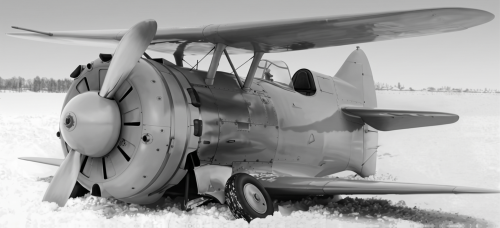
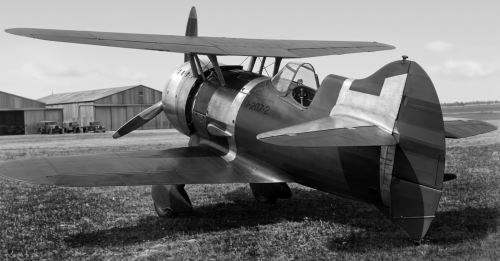
The first production‑standard prototype adopted the 900 hp Shvetsov M‑62, a Soviet‑built Wright Cyclone derivative, and retained an open cockpit, fixed landing gear, and four ShKAS machine guns in the forward fuselage.
This aircraft flew in April 1939, demonstrating the viability of the concept and leading to further improvements.
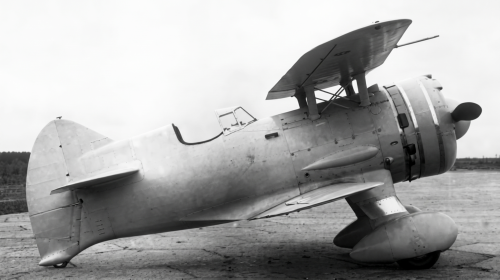
A second prototype followed shortly afterwards, this time powered by the 1,000 hp Shvetsov M‑63.
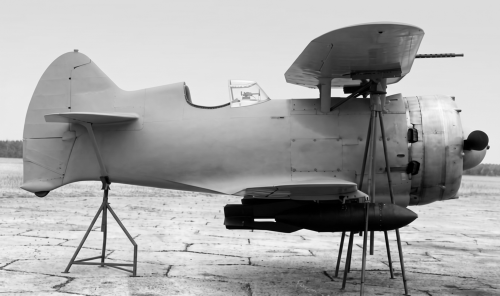
Its lower wings were strengthened to carry either two FAB‑250 bombs or Merkulov DM‑4 ramjets, the latter intended to provide a dramatic boost in climb rate during take-off.
Borovkov-Florov-I-207-2-M-63
Flight tests in late April or early May 1939 showed impressive performance for a biplane: 416 km/h at 5,000 m and a climb rate of 18 m/s immediately after take-off.
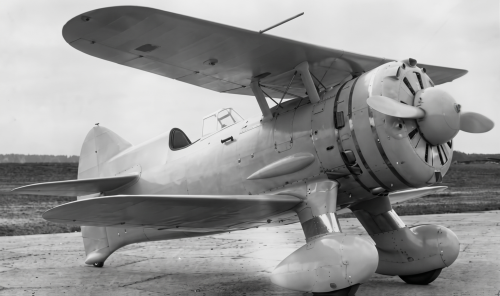
One of the later prototypes introduced a retractable landing gear system that rotated 90 degrees to lie flat under the fuselage, improving top speed by approximately 32.5 km/h (20 mph) compared to the fixed‑gear version.
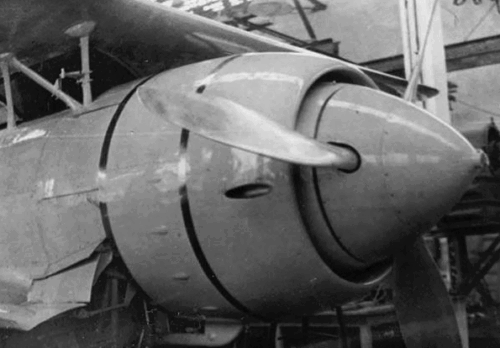
A fourth prototype incorporated a fully enclosed cockpit, a refined M‑63 installation with a geared drive, and a large spinner that gave the aircraft a distinctive dart‑like appearance.
Despite these advances, the I‑207 never entered production.
Although performance was strong for a biplane, the Soviet Union was already shifting decisively towards monoplane fighters.
All development ceased with the German invasion in June 1941, as design bureaux were redirected to urgent wartime priorities.
Borovkov-Florov I-207-1
Design and Technical Characteristics
The I‑207 represented the final evolution of the Soviet high‑performance biplane fighter.
Its design philosophy emphasised the following:
Compact Airframe
The aircraft was extremely small, with a length of 6.35 m and a wingspan of 7.0 m, minimising drag and structural weight.
Aerodynamic Refinement
Fully cantilever wings without external bracing.
Streamlined cabane struts.
Smooth engine cowlings tailored to each radial engine variant.
Optional retractable landing gear on later prototypes.
Borovkov-Florov 7211
Powerplant
The primary production‑standard engine was the Shvetsov M‑62, producing 900 hp.
Later prototypes used the 1,000 hp M‑63, with some incorporating a geared drive for improved propeller efficiency.
Armament
All versions carried four 7.62 mm ShKAS machine guns concentrated in the forward fuselage, providing a high rate of fire for the era.
Optional Auxiliary Propulsion
The I‑207/M‑63 variant could mount Merkulov DM‑4 ramjets under the lower wings, an experimental attempt to improve climb performance during combat take-off runs.
Borovkov-Florov-I-207-2-M-63
Performance (I‑207 with M‑62)
Maximum speed: 436 km/h (271 mph)
Range: 700 km
Service ceiling: 9,150 m
Rate of climb: 13.44 m/s
These figures placed the I‑207 among the fastest biplane fighters ever built, rivalling or surpassing contemporary designs such as the Polikarpov I‑153.
Variants
Prototype No. 7211
First airframe, powered by the M‑85.
Crashed on its maiden take-off due to engine failure.
I‑207 (M‑62)
Four prototypes and pre‑production aircraft.
Fixed landing gear, open cockpit, four ShKAS guns.
I‑207/M‑63
Three aircraft with the more powerful M‑63 engine.
Strengthened wings for bombs or DM‑4 ramjets.
One aircraft fitted with retractable landing gear.
Enclosed‑Cockpit Variant
Featured a geared M‑63 and a large spinner.
Represented the most aerodynamically refined version of the design.
Borovkov-Florov I-207-1
Operational Context and WWII Relevance
The I‑207 was developed during a period when the Soviet Union was rapidly transitioning from biplane to monoplane fighters.
By the late 1930s, designs such as the I‑16, MiG‑1, LaGG‑1, and Yak‑1 were already in development or entering service.
Although the I‑207 demonstrated excellent performance for a biplane, it could not match the long‑term potential of monoplane designs.
There are unconfirmed reports that two I‑207s saw combat during the Winter War against Finland, but no reliable evidence supports this claim, and it remains part of the aircraft’s uncertain lore rather than its documented history.
When Germany invaded the Soviet Union in June 1941, all experimental fighter programmes not directly contributing to immediate war needs were halted.
The I‑207, already overshadowed by monoplane fighters, was quietly abandoned as the Soviet aviation industry focused on mass‑producing frontline designs such as the Yak‑1, LaGG‑3, and MiG‑3.
Borovkov-Florov 7211
Assessment and Legacy
The Borovkov‑Florov I‑207 stands as one of the last serious attempts to produce a first‑rate biplane fighter in the Soviet Union.
Its combination of high power‑to‑weight ratio, clean aerodynamics, experimental propulsion concepts, and compact structural design made it an impressive technical achievement.
Yet it was ultimately a design out of time.
By the late 1930s, the biplane configuration had reached its developmental ceiling, while monoplane fighters offered far greater potential for speed, climb, and armament.
Only five to eight I‑207s were built in total, depending on the source.
None survived into the postwar era, and the aircraft remains a fascinating but little‑known footnote in Soviet aviation history—an elegant, high‑performance biplane conceived just as the world was leaving biplanes behind.