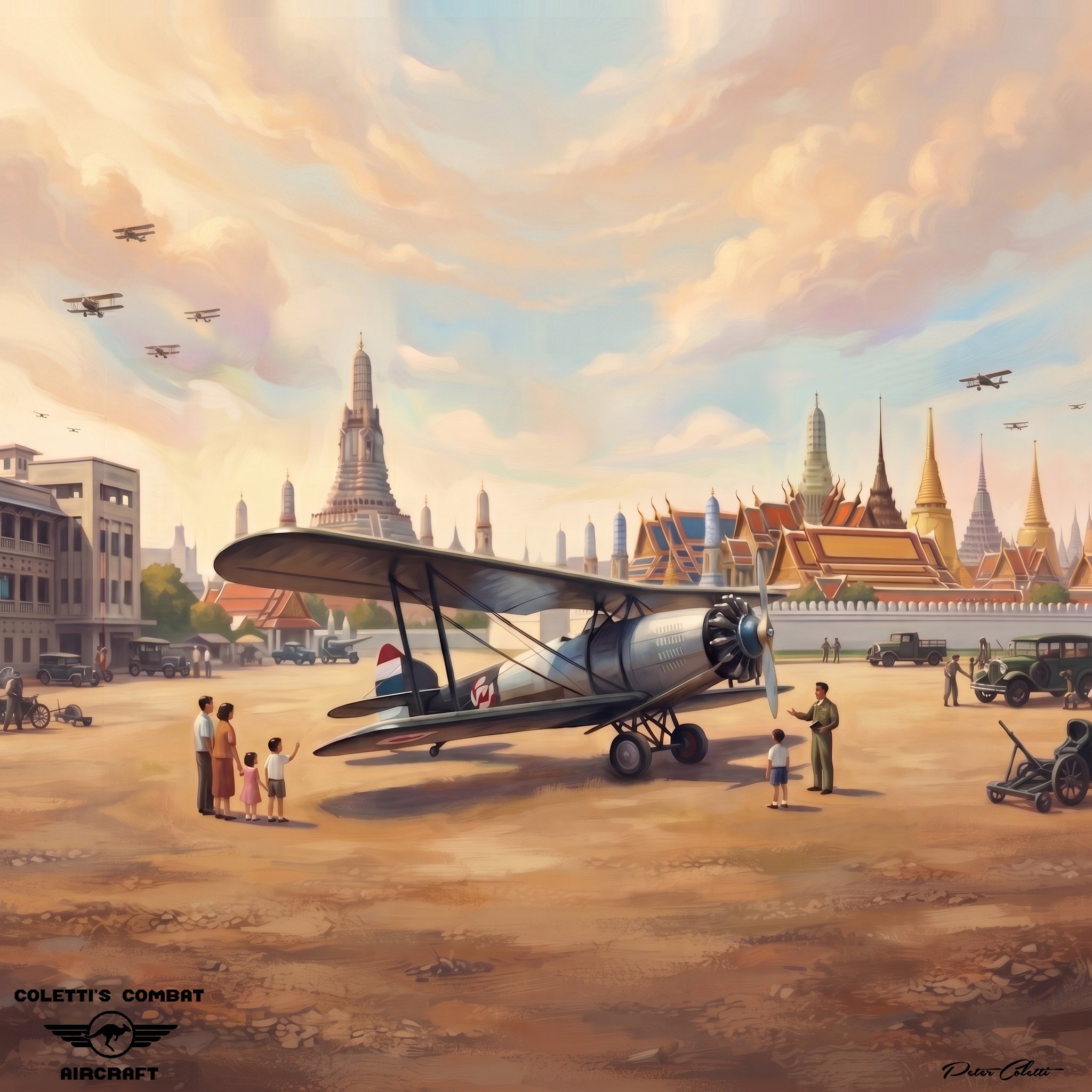
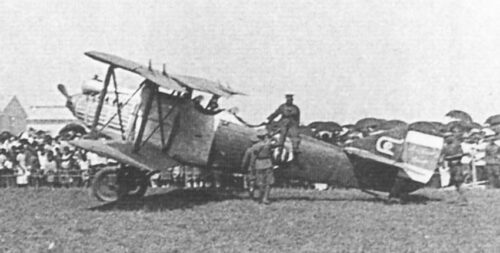
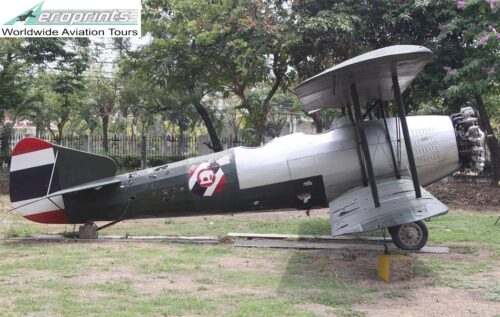
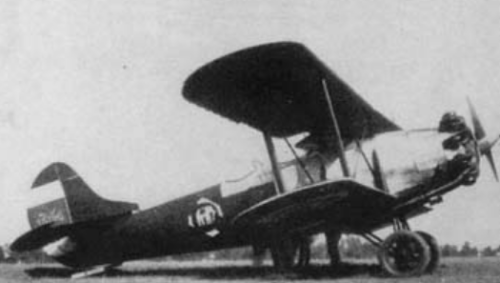
The Boripatra emerged in the mid‑1920s as Siam (modern Thailand) sought to modernise its small but ambitious air arm.
At the time, the Royal Siamese Air Service relied heavily on the Breguet 14, which was being licence‑built domestically as the B.Th.1 and powered by surplus French Renault engines.
When the price of Renault engines unexpectedly rose in 1927, Siamese planners recognised that their dependence on foreign powerplants threatened both operational readiness and long‑term self‑sufficiency.
This triggered a search for alternative engines and, more importantly, an opportunity to design a new indigenous aircraft that could serve as both an engine testbed and a potential successor to the Breguet 14.
Responsibility for the new design—designated B.Th.2—fell to Major Luang Vejayanrangsrit (Munee Mahasantana), assistant director of the Aeronautical Workshops and later commander of the Royal Siamese Air Force.
His task was to create a modern light bomber that could be built in Siam, use a variety of engines, and demonstrate the technical maturity of the kingdom’s aeronautical industry.
Design Philosophy and Construction
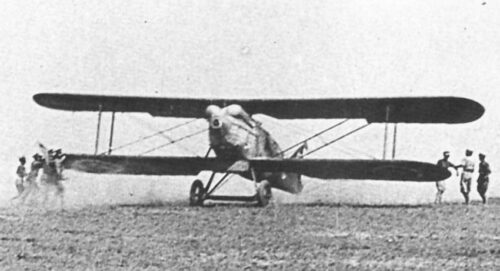
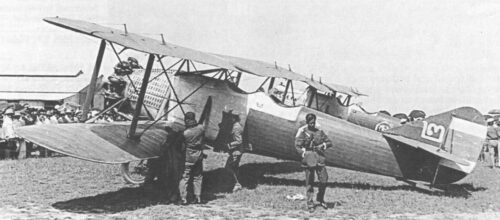
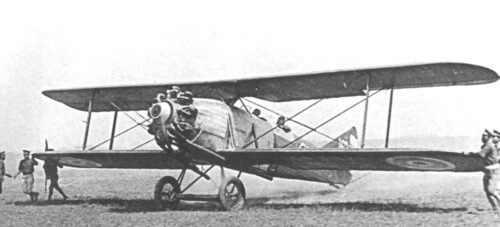
The Boripatra was conceived as a conventional single‑bay biplane, but its construction reflected a thoughtful blend of imported technology and local materials.
The fuselage used a steel‑tube structure, with metal panels covering the forward section and fabric covering the rear fuselage.
The wings were built from locally sourced wood, fabric‑covered and designed for ease of manufacture and repair in Siam’s workshops.
The first prototype was powered by a 450 hp Bristol Jupiter VI radial engine, and construction began on 5 April 1927.
The aircraft made its maiden flight on 23 June 1927, a remarkably short development cycle that demonstrated the competence of the Aeronautical Workshops.
Shortly afterwards, King Prajadhipok personally named the aircraft Boripatra in honour of his half‑brother, Prince Paribatra Sukhumbandhu, then Minister of Defence.
Engine Flexibility and Performance
One of the Boripatra’s defining characteristics was its adaptability to multiple engines.
After the Jupiter‑powered prototype, a second aircraft flew with a 660 hp BMW VI V‑12, offering significantly greater power and demonstrating the airframe’s flexibility.
Other examples reportedly flew with Curtiss D‑12 engines and possibly the Pratt & Whitney Wasp, reflecting Siam’s desire to evaluate a broad range of foreign powerplants.
In performance terms, the Boripatra outclassed the Breguet 14 it was intended to replace, offering higher speed and improved overall capability.
However, the sudden drop in Renault engine prices removed the economic incentive to retire the Breguet fleet, and the Boripatra remained a limited‑production type, with fewer than twelve aircraft built.
Operational Service and Long‑Distance Flights
Although produced in small numbers, the Boripatra played a symbolic and diplomatic role.
In December 1929, three aircraft departed on a goodwill mission to British India.
One crashed shortly after departure, but the remaining two reached Rangoon on 24 December and Calcutta on 28 December.
A second aircraft was lost en route to Allahabad, but the third successfully continued to Delhi, completing the mission and demonstrating Siam’s growing aviation capability to regional powers.
A later mission to Hanoi in French Indochina (1930–31) was more successful and helped strengthen regional ties while showcasing Siam’s domestic aircraft industry.
By the mid‑1930s, the Boripatra was replaced by the Vought Corsair, though at least one example remained in existence as late as then.
B.Th.2 — Later redesignation emphasising its bomber role, though eventually aligned with B.ThO.1 in classification.
These designations also highlight the Boripatra’s place in the lineage of Siamese‑built aircraft.
Legacy and WWII Context
Although the Boripatra never saw combat and was largely retired before the outbreak of the Second World War, its significance lies in its pioneering role.
It was the first Thai‑designed aircraft, a symbol of national technological aspiration, and a stepping stone towards later domestic aviation efforts.
By the time WWII reached South-east Asia, the Boripatra was long obsolete, overshadowed by modern monoplane fighters and bombers.
Yet its development had helped establish the technical foundations and institutional confidence that later supported Thailand’s wartime aviation activities and postwar aeronautical ambitions.
Replicas and Preservation
Two full‑scale replicas of the Boripatra are displayed at the Royal Thai Air Force Museum in Bangkok, preserving the memory of this landmark aircraft for future generations.