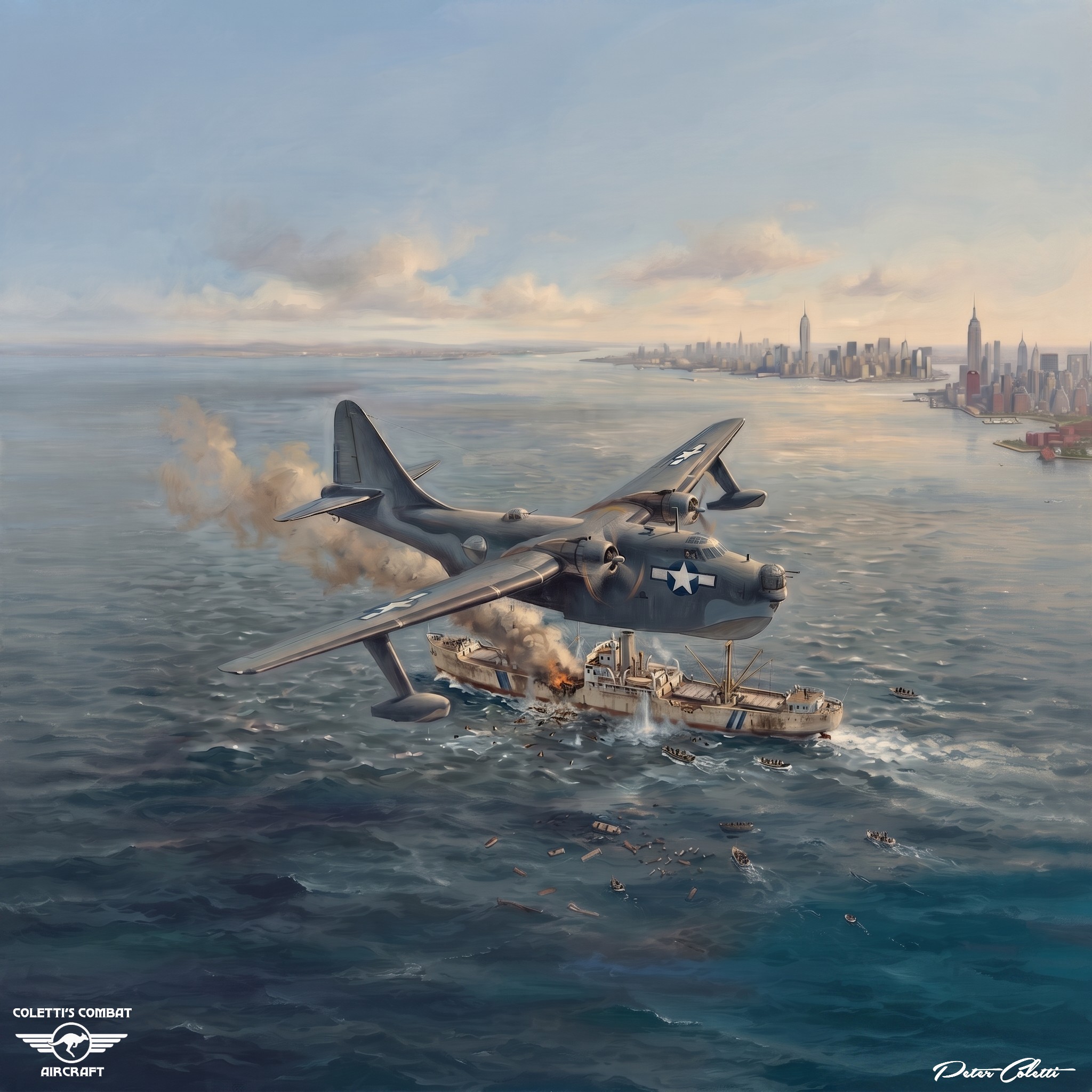
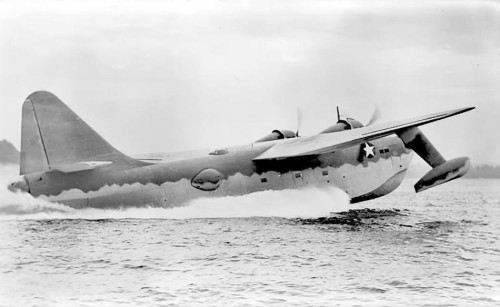
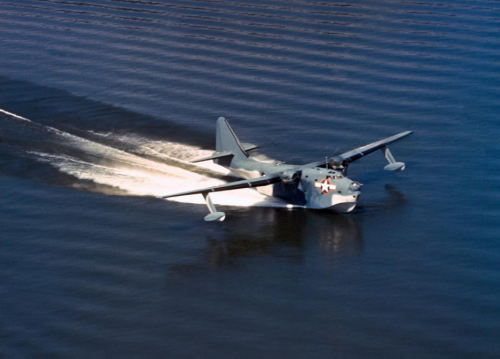
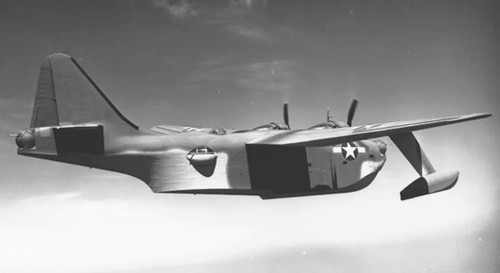
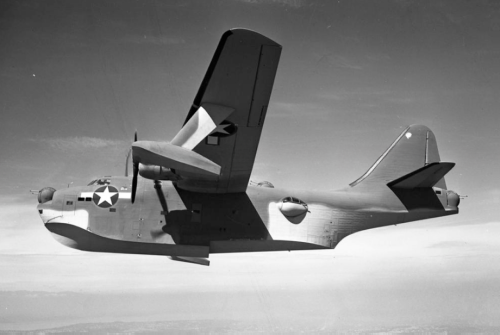
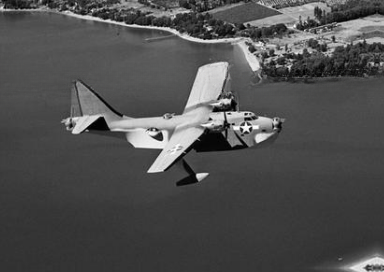
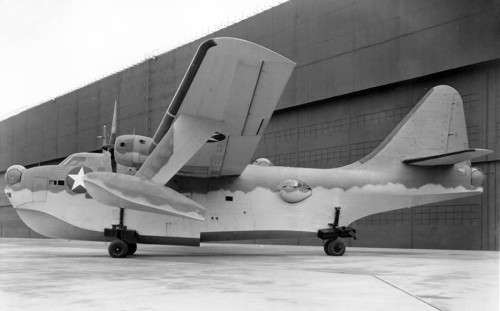
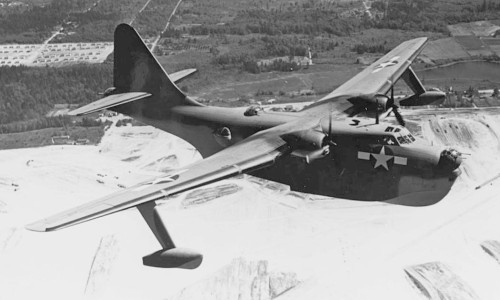
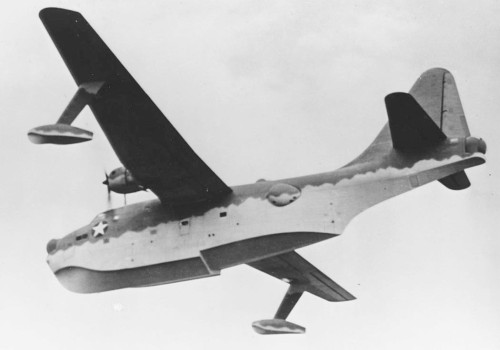
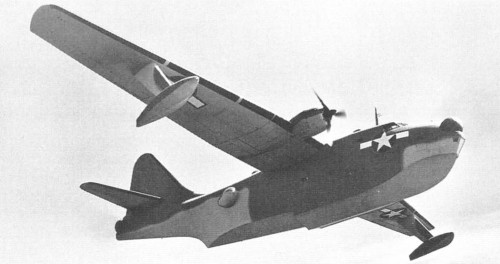
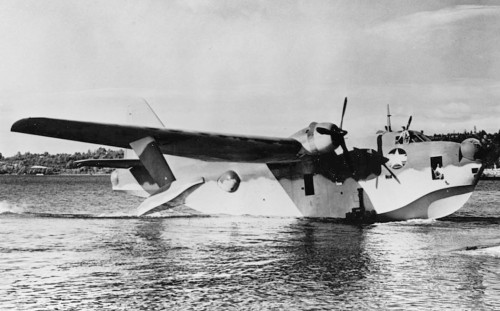
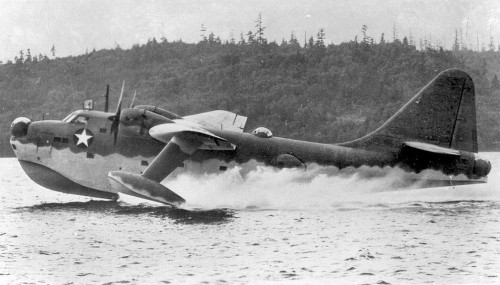
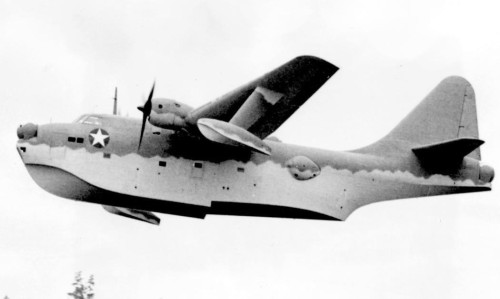
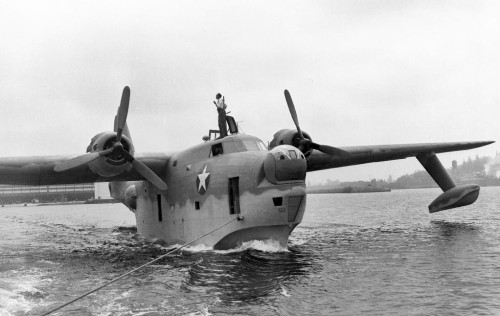
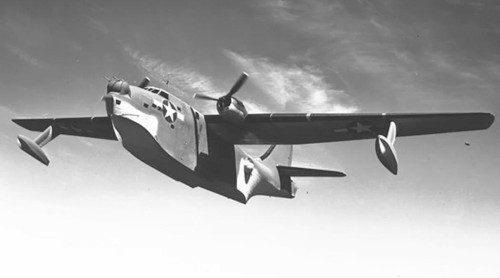
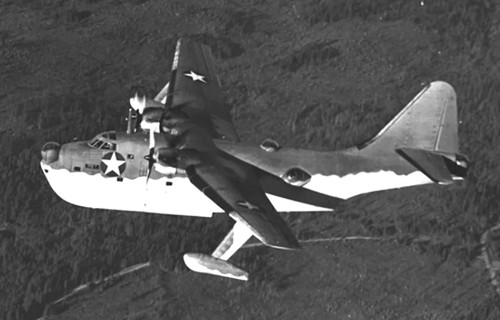
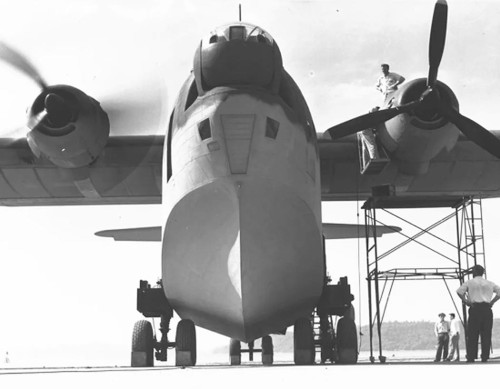
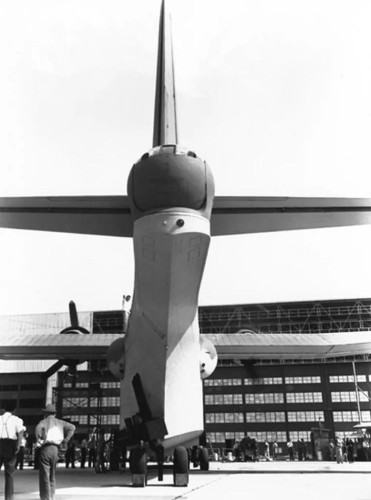
The Boeing XPBB‑1 Sea Ranger emerged from a pre‑WWII U.S. Navy requirement for a very long‑range maritime patrol bomber capable of covering the vast Pacific and countering the growing threat of German U‑boats and Japanese naval forces.
As early as June 1940, the Navy sought an aircraft with unprecedented endurance, heavy armament, and the ability to operate far from land bases.
Boeing, already experienced with large flying boats such as the Boeing 314 Clipper, was selected to develop the new design.
A contract for 57 aircraft was awarded on 29 June 1940.
This aircraft would become the first Boeing design in the Patrol Bomber (PB) category, designated PBB‑1, with the prototype known as XPBB‑1.
The Navy’s strategic thinking at the time emphasised long‑range seaplanes as the backbone of oceanic patrol—an approach that would shift dramatically once land‑based bombers proved more practical in the Pacific War.
Development and Production
Factory Construction and Logistics
To build the enormous aircraft, Boeing constructed a new lakeside factory at Renton, Washington, on Navy‑owned land along Lake Washington.
The waterfront location allowed direct launching of seaplanes.
Although the Renton plant was intended for full production, the prototype was largely built in Seattle and moved to Renton only for final assembly.
Prototype Completion and Flight Testing
The XPBB‑1 prototype—unofficially nicknamed “The Lone Ranger”—made its first flight on 9 July 1942.
Early testing demonstrated excellent flying qualities and performance that met or exceeded Navy specifications.
Programme Cancellation
Despite promising results, the programme was abruptly cancelled.
The U.S. War Department shifted priorities towards land‑based bombers such as the B‑29 Superfortress, and Boeing’s production capacity was urgently needed for that programme.
The entire PBB‑1 order was cancelled, and only one prototype was ever completed.
The Renton plant was subsequently transferred to the Army and became a major B‑29 production site.
The sole XPBB‑1 never entered operational service and was retired in 1947.
Design and Engineering
The XPBB‑1 was the largest twin‑engine flying boat of WWII, an engineering achievement made possible by advanced aerodynamic and structural techniques derived from Boeing’s work on the XB‑29 and Model 314.
Propellers: Three‑bladed Curtiss Electric constant‑speed units
Despite its massive size and mission profile, the XPBB‑1 relied on only two engines—an unusual choice that reflected Boeing’s confidence in aerodynamic efficiency and the R‑3350’s power.
Fuel System and Range Innovations
The aircraft featured:
Main fuel tanks for standard long‑range patrol
Auxiliary tanks (1,710 gal outer; 1,565 gal inner) intended for overload missions
A proposed catapult‑launch system using large barges to enable take-off at extreme weights for theoretical ranges up to 11,000 miles (17,700 km)—a concept never tested.
Armament and Mission Equipment
Defensive Armament
The XPBB‑1 carried five powered turrets with .50‑calibre Browning M2 machine guns:
Nose turret (2 guns)
Dorsal turret (2 guns)
Tail turret (2 guns)
Two waist positions (1 gun each)
Offensive Armament
Up to 20,000 lb of bombs in ten internal bomb bays (five per wing centre section)
Alternatively, two Mk.13 or Mk.15 torpedoes mounted under the wing centre section
This bomb load exceeded that of some contemporary land-based heavy bombers.
Performance Characteristics
Dimensions
Wingspan: 139 ft 8½ in (42.59 m)
Length: 94 ft 9 in (28.88 m)
Height: ~34 ft 1–2 in (10.40–10.41 m)
Wing area: 1,826 sq ft
Weights
Empty: 41,531 lb
Normal gross: 62,006 lb
Maximum take-off: 101,130 lb
Performance
Maximum speed: 216–228 mph (sources vary slightly)
Cruise speed: 158 mph
Service ceiling: 18,900–22,400 ft
Normal range: 4,245 miles
Maximum range: 6,300 miles (with auxiliary tanks)
Maximum endurance: up to 72 hours
These figures made the XPBB‑1 one of the longest‑range aircraft of its era.
Operational History and WWII Context
Although conceived as a major component of the Navy’s long‑range patrol strategy, the XPBB‑1 never entered operational service.
By the time it flew in 1942, wartime experience had demonstrated that land‑based bombers—operating from newly captured Pacific islands—were more effective and easier to support than large flying boats.
The Navy shifted resources accordingly.
The XPBB‑1:
Never flew a combat mission
Was used only for testing and evaluation
Was eventually mothballed and scrapped after the war
Its cancellation freed Boeing to focus on the B‑29 programme, which had far greater strategic impact.
Variants
There were no true variants of the XPBB‑1, as only one prototype was built.
Planned production aircraft would have been designated PBB‑1, but none were completed.
Legacy and Assessment
The Boeing XPBB‑1 Sea Ranger stands as the following:
A technically advanced flying boat with exceptional range and payload
A victim of shifting wartime priorities
A demonstration of Boeing’s ability to scale up seaplane design
A precursor to Renton’s later role in mass‑producing the B‑29, C‑135, and 707 families
Although it never saw combat, the XPBB‑1 remains a fascinating “what‑if” aircraft—an ambitious design that represented the peak of U.S. flying‑boat bomber development before the concept was overtaken by land‑based aviation.