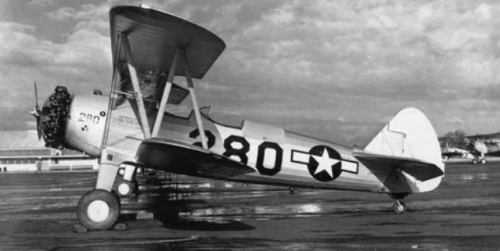
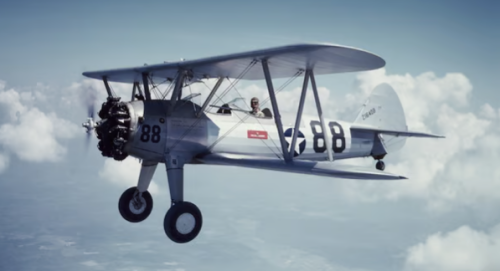
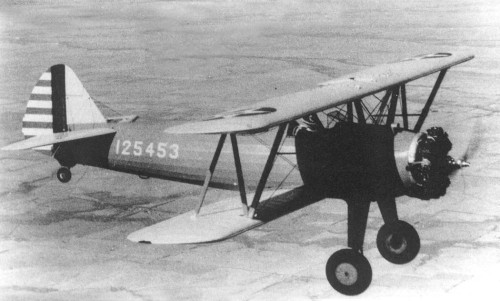
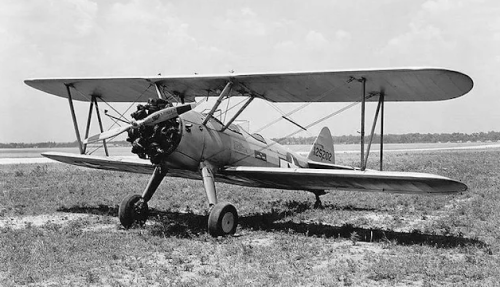
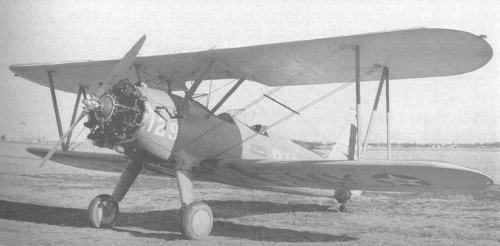
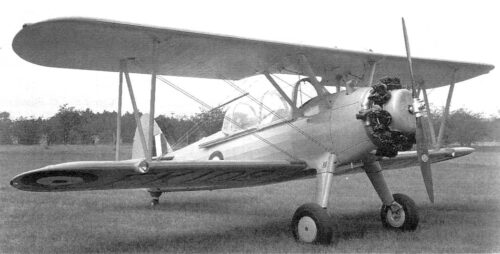
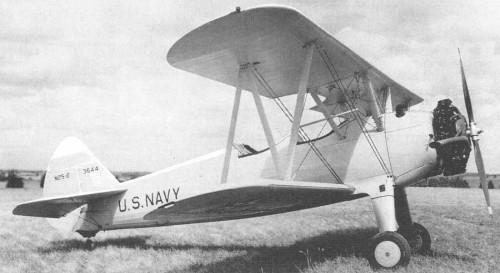
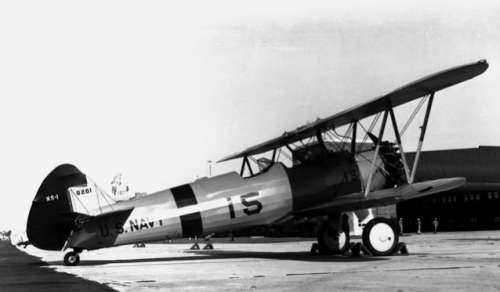
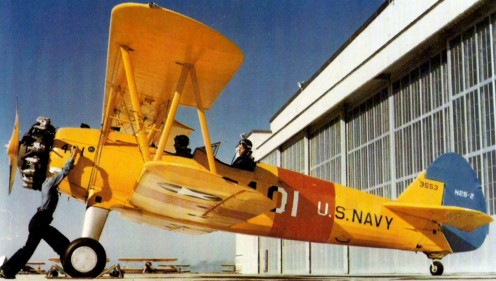
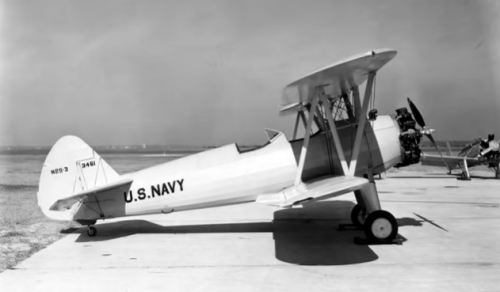
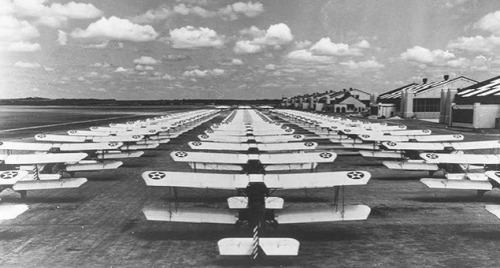
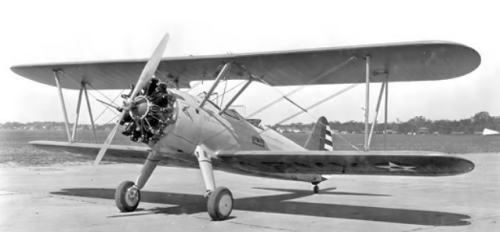
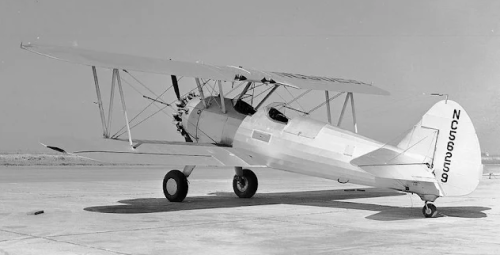
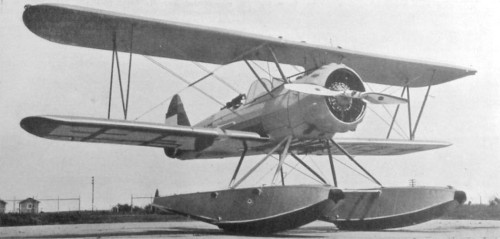
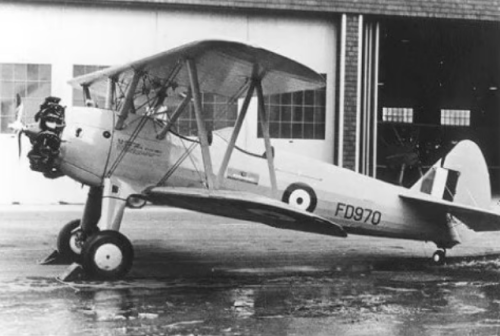
The aircraft that would become the Boeing–Stearman Kaydet began life in the early 1930s, when the Stearman Aircraft Company of Wichita, Kansas, sought to produce a modern primary trainer for the U.S. military.
Work began in 1933, funded entirely from the company’s own resources.
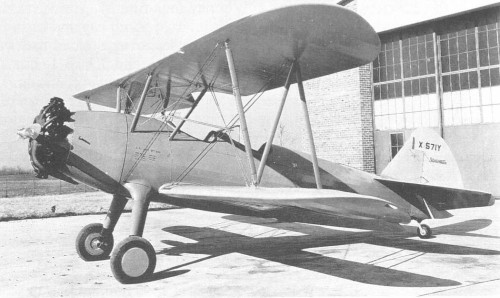
The prototype, designated Stearman X‑70, flew successfully in December 1933.
In 1934, Stearman submitted the X‑70 to a U.S. Army Air Corps competition for a new primary trainer.
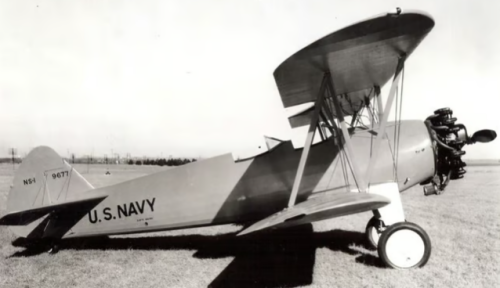
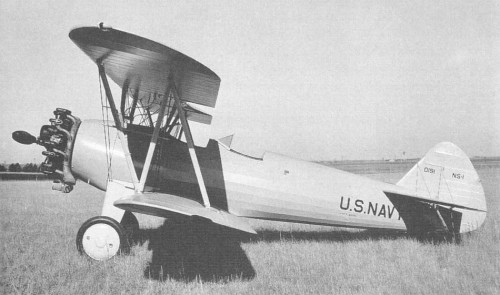
However, the U.S. Navy became the first customer, ordering 61 aircraft in early 1935 under the designation NS‑1 (Stearman Model 70).
These Navy aircraft used surplus 225‑hp Wright J‑5 (R‑790‑8) radial engines, prompting Stearman to designate the Navy version Model 73.
Meanwhile, the U.S. Army continued its evaluation of the X‑70.
After lengthy trials—prolonged largely because of the Army’s limited pre‑war budget and its need to select the best possible trainer—Stearman finally received an order in early 1936 for 26 aircraft, designated PT‑13 (Primary Trainer 13).
These aircraft were powered by the 215‑hp Lycoming R‑680‑5 and became the first members of what would evolve into the Stearman Model 75 family.
In 1939, Stearman Aircraft Company was formally absorbed into Boeing, and the aircraft was redesignated Boeing Model 75, though the name “Stearman” remained in common use throughout the war.
The later nickname “Kaydet” originated in Canada and spread informally among Allied users.
Airframe and Structural Design
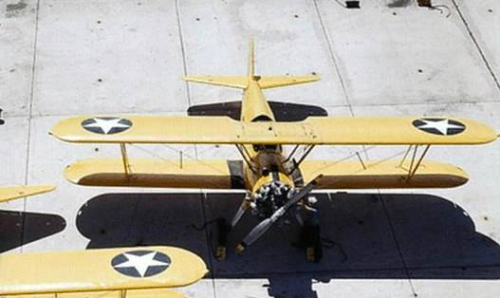
The Kaydet was a two‑seat, single‑bay biplane of mixed construction.
Its wings were built of wood with fabric covering, while the fuselage consisted of welded steel tubing, also largely fabric‑covered.
This combination produced a rugged, easily repairable aircraft ideal for the rigours of primary flight training.
The fixed tailwheel undercarriage featured carefully faired main‑gear struts with spring‑oil shock absorbers, reducing drag and improving durability on rough training fields.
The aircraft’s powerplant varied widely across production, reflecting both improvements and wartime engine shortages.
Production continued until early 1945, with more than 10,000 aircraft built—one of the largest totals for any trainer in aviation history.
Performance Characteristics (PT‑13A)
Wingspan: 9.80 m
Length: 7.63 m
Height: 2.79 m
Wing area: 27.9 m²
Empty weight: 878 kg
Max takeoff weight: 1232 kg
Engine: 1 × Lycoming R‑680‑7, 220 hp
Maximum speed: 201 km/h
Cruise speed: 167 km/h
Range: 724 km
Service ceiling: 4270 m
Crew: 2 (student and instructor)
These modest performance figures were ideal for a primary trainer: stable, forgiving, and slow enough to allow novice pilots to make mistakes safely.
Variants and Evolution
The Kaydet family expanded into numerous variants, driven by engine availability, service requirements, and specialised training needs.
U.S. Army Air Corps / U.S. Army Air Forces Variants
PT‑13 (1936)
The first production army version had a Lycoming R‑680‑5 engine.
PT‑13A (1937)
92 aircraft with improved instrumentation and the R‑680‑7 engine (220 hp).
PT‑13B (1941)
255 aircraft with R‑680‑11 engines and minor equipment changes.
PT‑13C
Six PT‑13A aircraft modified for night and instrument (“blind”) flying.
PT‑17 (1940)
PT‑13A airframe fitted with Continental R‑670‑5 (220 hp).
3519 built, making it one of the most numerous variants.
PT‑17A / PT‑17B
PT‑17A: 18 aircraft modified for instrument training.
PT‑17B: 3 aircraft fitted with crop‑dusting equipment—an early sign of the Kaydet’s post‑war agricultural career.
PT‑18 / PT‑18A
PT‑18: 150 aircraft using Jacobs R‑755‑7 (225 hp).
PT‑18A: 6 aircraft adapted for instrument training.
PT‑27
300 aircraft were supplied under Lend‑Lease to the Royal Canadian Air Force, equipped with enclosed canopies, cockpit heaters, and instrument‑flight capability for cold‑weather training.
U.S. Navy Variants (N2S Series)
NS‑1 (Model 70)
First Navy order: 61 aircraft with Wright J‑5 engines.
N2S‑1
250 aircraft with Continental R‑670‑14 engines.
N2S‑2
125 aircraft with Lycoming R‑680‑8 engines.
N2S‑3
1875 aircraft with Continental R‑670‑4 engines—one of the Navy’s most numerous versions.
N2S‑4
577 aircraft, largely equivalent to Army PT‑17s, transferred to the Navy.
N2S‑5 / PT‑13D (1942)
A unified Army–Navy trainer combining the PT‑13A airframe with the Lycoming R‑680‑17 engine.
Army: 318 PT‑13D
Navy: 1450 N2S‑5
This was the first time both services adopted essentially the same primary trainer design.
Operational Role and WWII Context
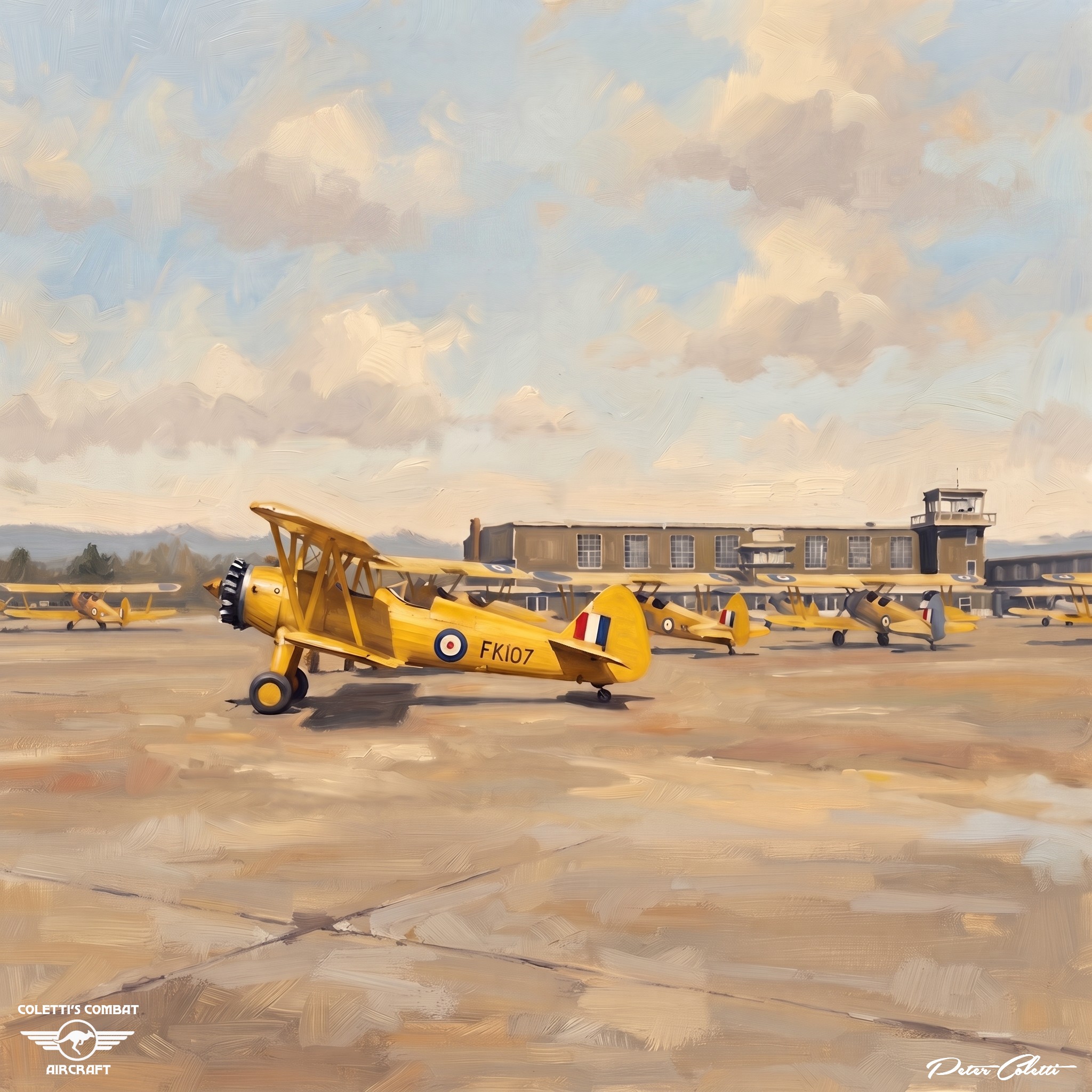
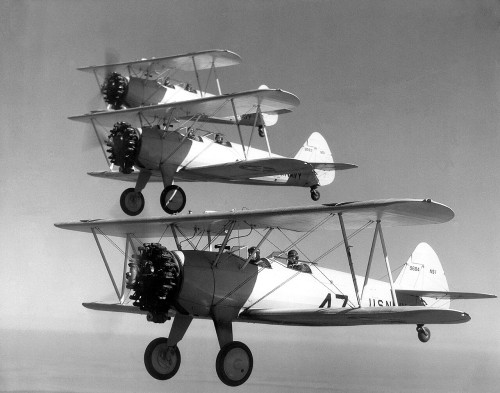
By the outbreak of World War II, the Kaydet had become the standard primary trainer for both the U.S. Army Air Forces and the U.S. Navy.
Its docile handling, structural toughness, and low operating cost made it ideal for the first stage of pilot training.
During the massive wartime expansion of U.S. air power, thousands of American and Allied pilots began their flying careers in a Kaydet.
The aircraft’s open cockpits exposed students to wind, noise, and the physical sensations of flight—considered essential for building “airmanship” before progressing to more advanced trainers.
The Kaydet also served in the British Commonwealth Air Training Plan via Canadian PT‑27s, which featured enclosed cockpits and cold‑weather adaptations suitable for Canadian winters.
By 1945, with jet propulsion emerging and wartime training needs declining, the Kaydet’s military career wound down.
Thousands were declared surplus and sold to civilians.
Many became crop dusters, aerobatic aircraft, or sport flyers, thanks to their robust structure and forgiving flight characteristics.
Today, the Kaydet remains a beloved classic, frequently seen at airshows, in vintage flight schools, and in aerobatic displays, a testament to its enduring design and historical significance.
Legacy
The Boeing–Stearman Kaydet stands as one of the most iconic training aircraft in aviation history.
Its combination of simplicity, durability, and excellent handling made it the backbone of American primary flight training during the most intense aviation buildup the world had ever seen.
More than 10,000 pilots earned their wings in a Kaydet, and thousands of the aircraft survived into postwar civilian life—an extraordinary legacy for a 1930s biplane.