By the mid‑1930s, Pan American Airways had reached the limits of its existing long‑range flying boats—the Sikorsky S‑42 and the Martin M‑130.
Neither could cross the Atlantic with a full commercial payload, a capability Pan Am president Juan Trippe considered essential for establishing true intercontinental air travel.
In early 1936, Pan Am issued a demanding specification for a next‑generation transoceanic flying boat capable of carrying substantial passenger and mail loads across the Atlantic nonstop or with minimal stops.
Several manufacturers responded, but Boeing’s proposal—designated Model 314—was selected for its combination of range, payload, and aerodynamic refinement.
A contract for six aircraft was signed in June 1936, with an option for six more.
Although the first delivery slipped more than a year behind schedule, the resulting aircraft would become the most capable and luxurious flying boat of the pre‑war era.
Design Philosophy and Structural Features
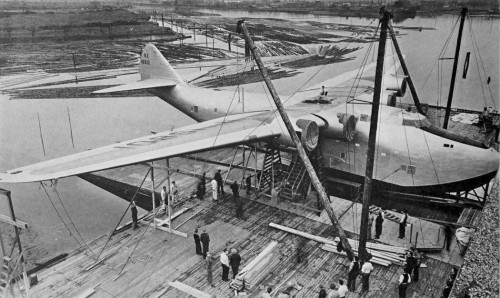
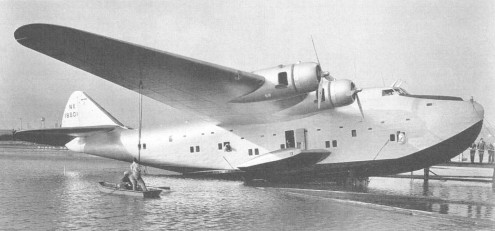
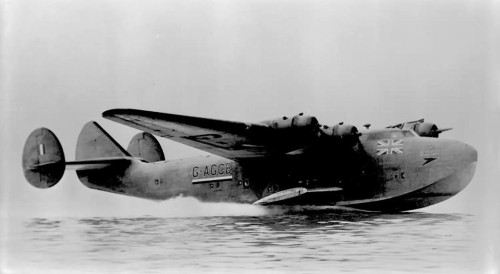
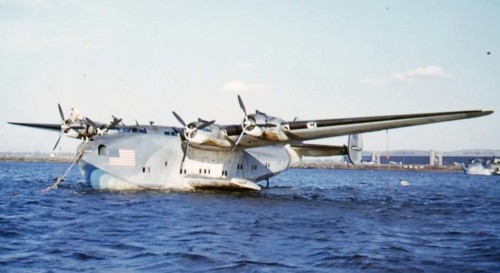
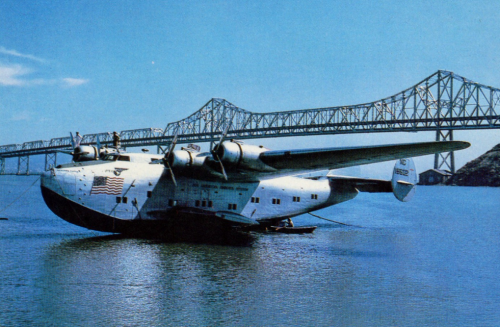
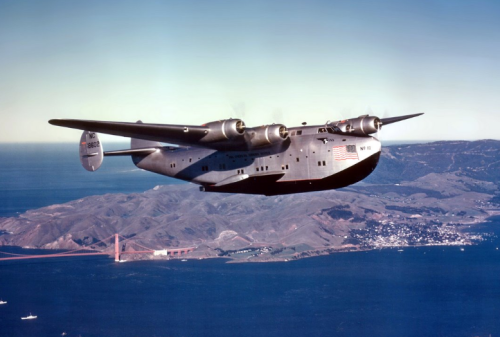
The Boeing 314 was conceived as the largest flying boat of its time, a fully cantilevered, all‑metal monocoque hull mated to a high‑mounted wing derived from the experimental Boeing XB‑15 bomber.
The hull was made taller and narrower than earlier designs to reduce drag and eliminate the need for a pylon‑mounted wing, which had been used on earlier flying boats to keep the engines clear of spray.
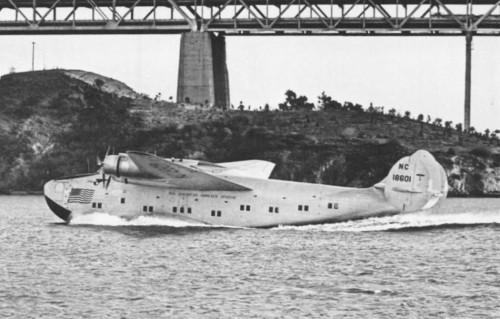
The redesigned single‑step hull improved hydrodynamic performance and reduced aerodynamic drag by roughly one‑third compared to the Sikorsky S‑42.
Wing and Engine Installation
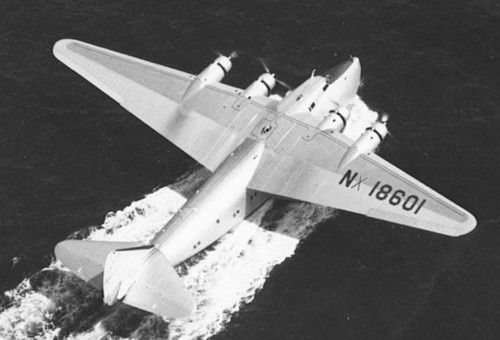
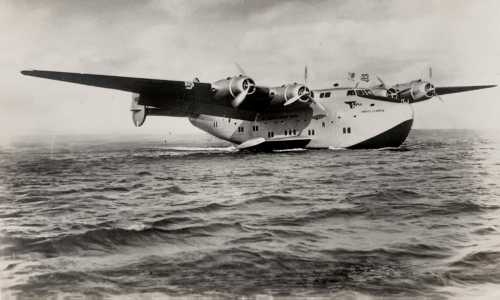
The enormous wing—46.33 m (152 ft) in span—housed four Wright GR‑2600 “Double Cyclone” 14‑cylinder radial engines, each producing 1,200 hp in the original B‑314 configuration.
The wing also contained a unique crawl‑through access tunnel, allowing the flight engineer to reach each engine in flight for minor repairs or adjustments.
Pan Am engineers reportedly performed more than 400 in‑flight engine servicing operations between 1939 and 1941, a testament to both the aircraft’s complexity and its operational demands.
Stability and Tail Evolution
Initial flight tests in 1938 revealed inadequate directional stability.
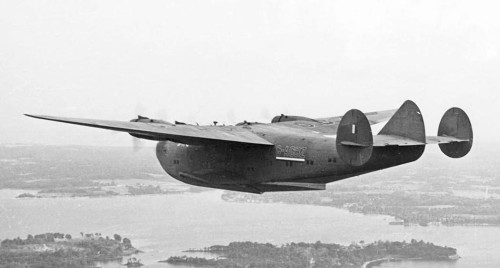
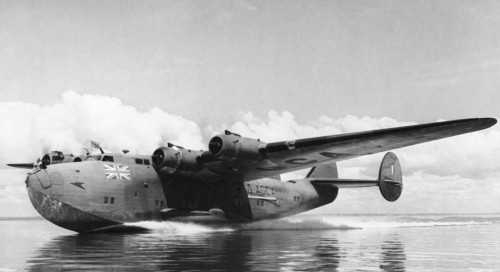
The prototype’s single fin was replaced first with a twin‑fin arrangement and finally with the definitive triple‑fin tail, which provided the necessary control authority both in the air and during water operations.
This three‑fin silhouette became one of the aircraft’s most recognisable features.
Float and Hull Innovations
Instead of traditional wingtip floats, the 314 used retractable “sea wing” sponsons, which provided lateral stability on the water and additional lift in flight. These sponsons also served as passenger entry platforms during dockside operations.
Passenger Accommodation and Crew
The Boeing 314 was designed as a luxury ocean liner of the air.
Depending on the configuration, it carried the following:
40 passengers on long‑range transatlantic night flights (with sleeping berths)
Up to 74 passengers in daytime seating arrangements
The interior included seven passenger compartments, a dining salon, dressing rooms, and even a honeymoon suite in the tail.
The crew complement was unusually large—typically 10 personnel, including two pilots, a navigator, a radio operator, a flight engineer, and multiple stewards.
Early Pan Am practice even included a non‑flying “commander” who supervised the crew, though this role was later eliminated.
Performance Characteristics
Boeing 314 (initial version)
Engines: 4 × Wright GR‑2600, 1,200 hp each
Wingspan:46.33 m
Length:32.31 m
Empty weight:22,801 kg
Normal takeoff weight:37,421 kg
Cruise speed: ~295 km/h
Maximum speed:~311 km/h
Range:~5,633 km
Ceiling:~4,085 m
Crew:up to 10
Payload:up to 74 passengers
Although not fast by later standards, the 314’s combination of range and payload made it the most capable long‑range commercial aircraft in the world at the time of its introduction.
Operational Debut and Pre‑War Service
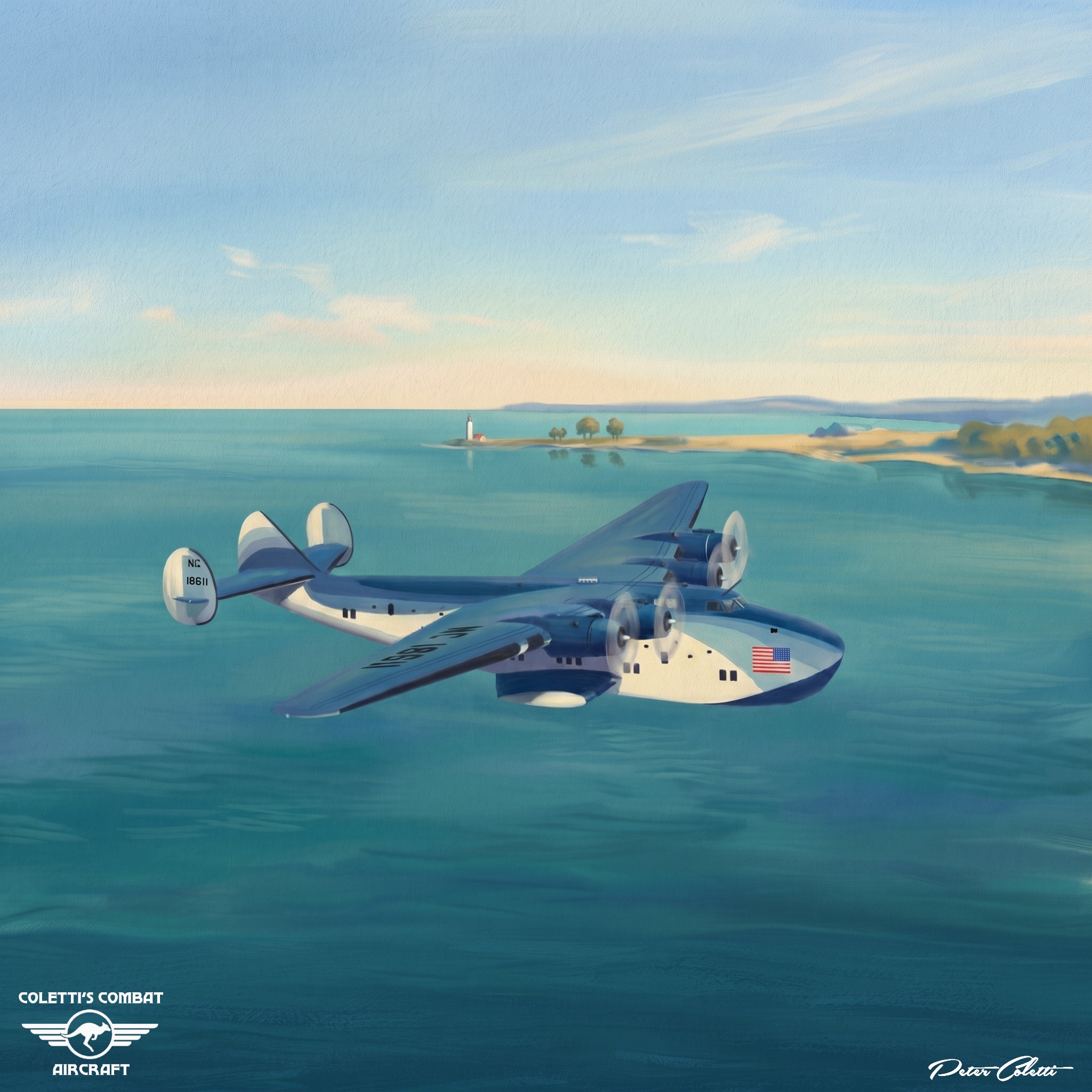
The first production aircraft, Honolulu Clipper (NC18601), was delivered in January 1939.
Six aircraft of the initial batch entered service that year, inaugurating Pan Am’s transpacific and, crucially, first regular transatlantic passenger services.
Trans-Pacific Routes
The first two Clippers were assigned to the Pacific route from San Francisco to Hong Kong, a six‑day journey with 60 hours of flying time.
Pan Am also reopened its South Pacific service to New Zealand in August 1939, using the new aircraft to replace the earlier S‑42B lost in 1938.
Transatlantic Breakthrough
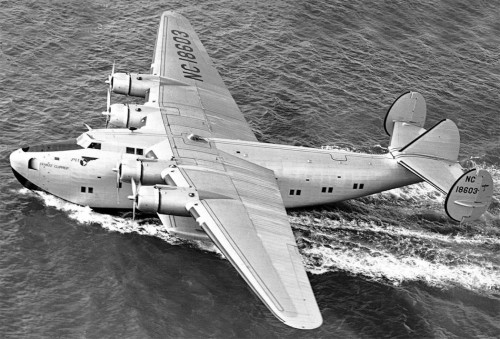
The Yankee Clipper (NC 18603) made the first technical transatlantic crossing in March 1939 and soon after began scheduled mail and passenger services.
By mid‑1939, Pan Am was operating both northern and southern Atlantic routes, with weekly schedules linking New York to Lisbon, Marseille, and Southampton.
A one‑way ticket cost $375—a luxury price equivalent to roughly $9,600 today.
The Boeing 314A Variant
In September 1939, Pan Am ordered six improved aircraft designated Model 314A.
These featured:
More powerful 1,600 hp Wright GR‑2600‑A2 engines
Increased fuel capacity (23,440 L vs. 19,300 L)
Higher payload and seating for up to 77 passengers
Extended range and improved performance under heavy load
The first 314A flew in March 1941.
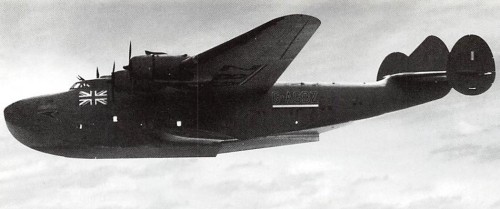
Although all six were intended for Pan Am, the U.S. government diverted the first three to Britain’s BOAC to support wartime transatlantic communications.
World War II Service
Early Wartime Adjustments
With the outbreak of war in Europe in September 1939, Pan Am curtailed its northern Atlantic route to Foynes, Ireland, and its southern route to Lisbon—both neutral ports.
By October, northern operations ceased entirely.
New routes were opened to West Africa and South America to maintain global connectivity.
The Pacific Clipper’s Round‑the‑World Escape
When Japan attacked Pearl Harbour on 7 December 1941, Pacific Clipper (NC18609) was in New Zealand.
Rather than risk the now hostile Pacific, Pan Am ordered the aircraft to return to the U.S. by flying westward around the world—a 55,520 km odyssey through Australia, the Dutch East Indies, India, Arabia, Africa, and Brazil before reaching New York in January 1942.
This became one of the most celebrated flights in aviation history.
Military Requisition
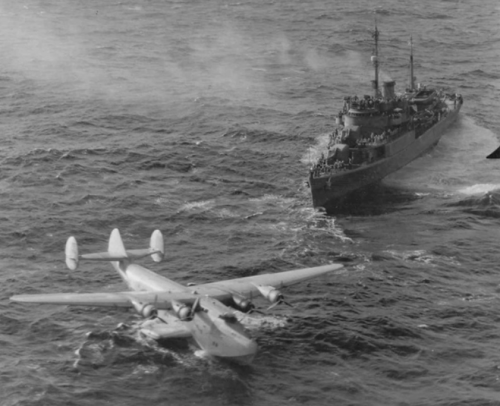
In early 1942, all Boeing 314s were requisitioned by the U.S. military:
Four aircraft became C‑98 transports under the Army Transport Command
The remainder were operated by the U.S. Navy’s Naval Air Transport Service (NATS).
All retained civilian crews from Pan Am but were repainted in naval grey‑blue camouflage.
The Army soon transferred its C‑98s to the Navy, which proved better equipped to operate large flying boats.
High‑Level Transport
The Clippers became strategic VIP transports.
They carried more than 84,000 passengers during the war, including senior military leaders and heads of state.
President Franklin D. Roosevelt travelled aboard the Dixie Clipper (NC18605) to the Casablanca Conference in January 1943.
Losses
Only one aircraft was lost during wartime operations:
The Yankee Clipper (NC18603) crashed during landing at Lisbon on 22 February 1943, killing 25 of 39 aboard.
Legacy
The Boeing 314 Clipper represented the pinnacle of flying-boat airliner design.
It was the first aircraft to make routine intercontinental passenger service a reality, bridging oceans with unprecedented comfort and reliability.
Although its operational life was short—overtaken by the rise of long-range landplanes—the 314 remains an icon of the golden age of aviation, symbolising both technological ambition and the romance of early transoceanic flight.