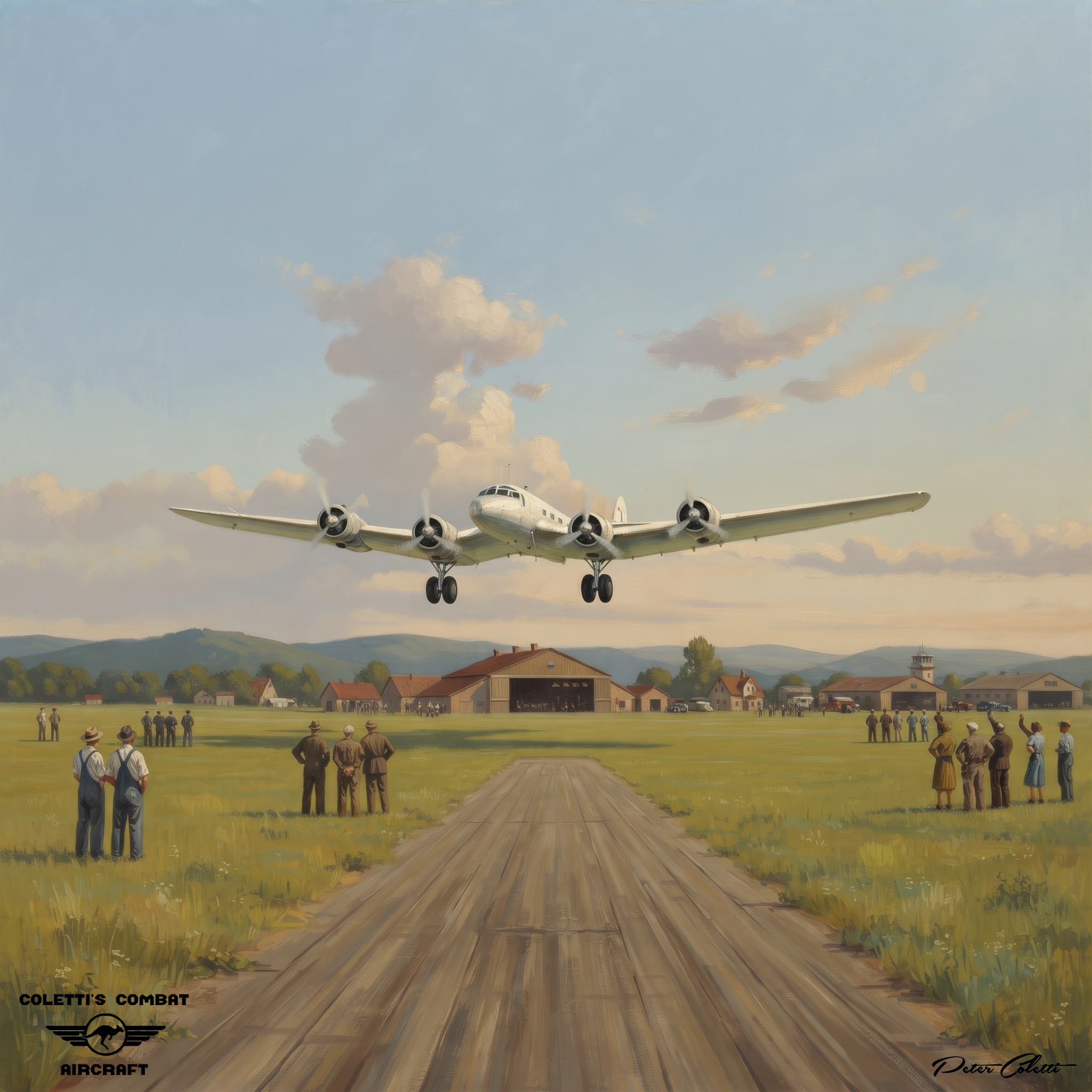
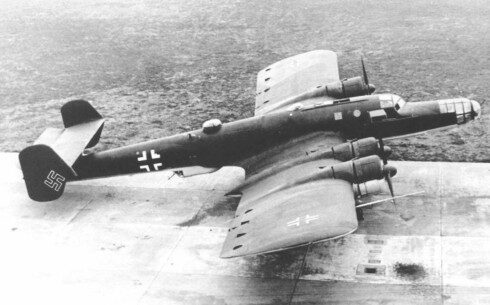
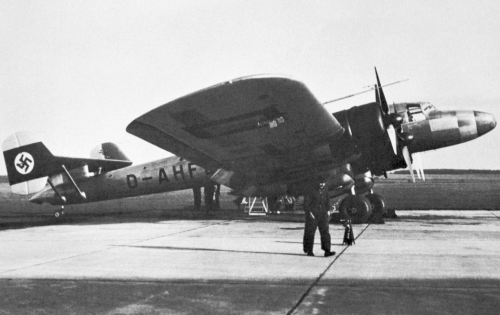
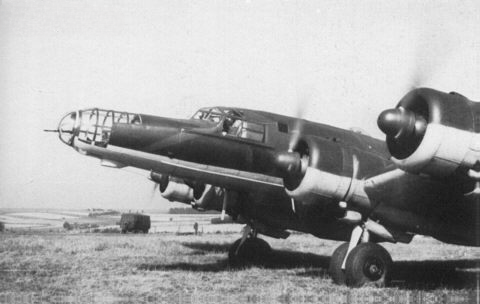
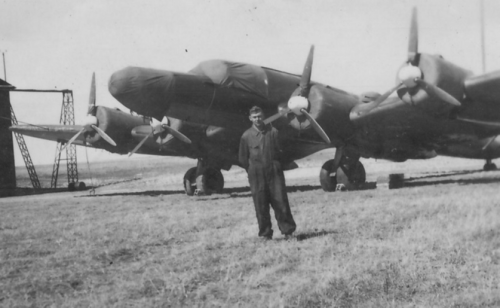
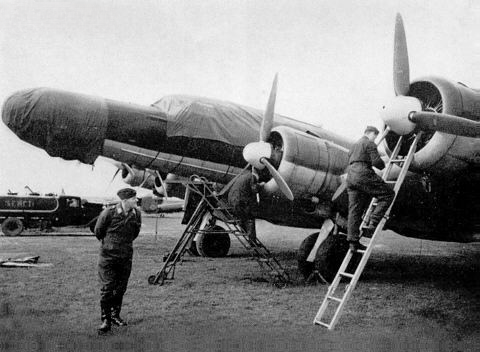
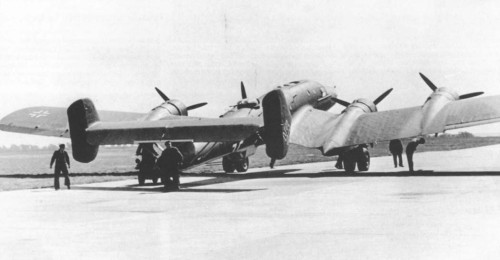
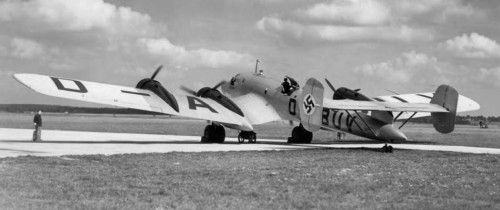
The Blohm & Voss BV 142 (originally designated Ha 142) is one of those aircraft that sit on the margins of World War II history—built in tiny numbers, born from a civil ambition that the war abruptly derailed, and then pushed into military service where they never quite found their place.
Origins and development
From shipyard to aircraft design
Blohm & Voss background:
Blohm & Voss was primarily a shipbuilding company, but in the interwar period it expanded into aviation through its subsidiary Hamburger Flugzeugbau (hence the early “Ha” designation).
By the mid‑1930s, Germany’s push for long‑range air routes and prestige projects—especially transatlantic mail and passenger services—created a niche for large, long‑range aircraft.
The Ha 139 seaplane: Before the BV 142, Blohm & Voss developed the Ha 139, a four‑engined transatlantic mail seaplane with twin floats and an inverted gull wing.
Only three Ha 139s were built, but they demonstrated good range and endurance over water, making them attractive as a basis for a landplane derivative.
Lufthansa’s long‑range mail requirement
Civil requirement:
Deutsche Luft Hansa, the German national airline, wanted a long‑range aircraft for transatlantic airmail.
The idea was to evolve the Ha 139 into a land‑based aircraft that could operate from conventional runways rather than water, simplifying operations and expanding route options.
This derivative became the Ha 142.
Design continuity:
From the outset, the design team aimed to reuse as much of the HA 139’s structure and systems as possible.
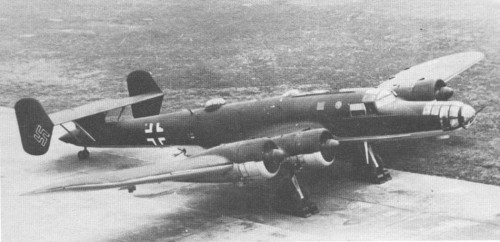
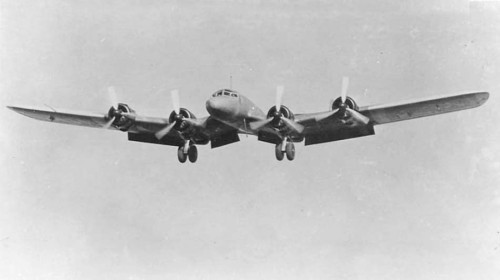
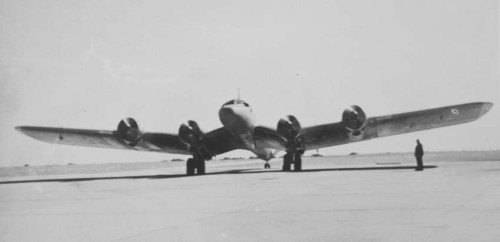
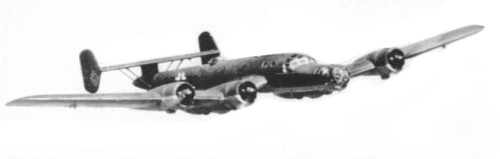
The Ha 142 retained the basic layout: four engines on an inverted gull wing, a high‑mounted tailplane with twin fins, and a long, relatively slender fuselage.
The major conceptual shift was replacing the floats with a retractable wheeled undercarriage.
Prototypes and designation change
Prototype sequence
Four prototypes were built:
Ha 142 V1 – first flight on 11 October 1938
V2, V3, and V4 – completed and flying by mid‑1939
During this period, the company’s aircraft designation changed from “Ha” (Hamburger Flugzeugbau) to “BV” (Blohm & Voss), so later references often call the type BV 142, even though the prototypes originated as the Ha 142.
Lufthansa evaluation:
All four prototypes were tested by Lufthansa in 1939.
Despite their range and technical interest, they did not impress airline officials enough to justify series production.
Handling, economics, and the rapid shift in political and military priorities all worked against the project.
No regular transatlantic airmail service was ever established with the Ha/BV 142.
Impact of war:
The outbreak of World War II in September 1939 effectively ended the aircraft’s civil prospects.
All four prototypes were returned to Blohm & Voss, and attention turned to possible military uses—particularly long‑range maritime reconnaissance and transport.
General configuration
Layout:
The BV 142 was a large, four‑engine, low‑wing monoplane with the following:
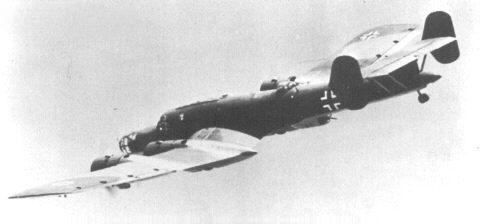
Inverted gull wing: inboard wing panels with anhedral, outboard panels with dihedral
High horizontal stabiliser: mounted atop the rear fuselage
Stepped cockpit: typical of the era, with good forward visibility
This configuration was inherited almost directly from the Ha 139 seaplane, minus the floats.
Wing structure
Cross‑girder main spar:
A distinctive Blohm & Voss feature was the large‑diameter tubular cross‑girder forming the main wing spar in the centre section.
This tube was internally divided into multiple compartments and also served as an integral fuel tank.
It provided both structural strength and efficient use of internal volume.
Construction and surfaces:
Centre wing section: metal‑skinned, housing the cross‑girder and engine nacelles
Outer wings: fabric‑covered to save weight
Flaps: six hydraulically operated flaps in the mid‑wing region, improving low‑speed handling and takeoff/landing performance
This combination of metal and fabric construction was typical of late‑1930s large aircraft, balancing strength, weight, and manufacturing complexity.
Fuselage and tail
Fuselage:
The fuselage was all metal with an approximately circular cross‑section, optimised for internal volume and pressurisation‑free long‑range operations.
It housed the cockpit, crew stations, mail or cargo space, and later, in military form, bomb stowage and additional equipment.
Tail unit:
Horizontal stabiliser: high‑mounted, giving good clearance from the wake of the wing and engines
Twin fins and rudders: improving stability and providing redundancy on a large aircraft
On the military conversions, the tail surfaces were enlarged to improve control and stability under heavier loads and with the added drag of defensive armament.
Undercarriage
Retractable taildragger:
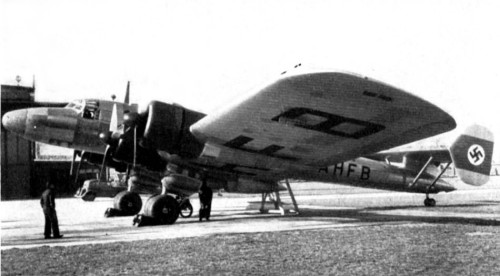
Main gear: dual‑wheel units retracting rearwards into the inboard engine nacelles
Tailwheel: fully retractable
Actuation: hydraulically operated extension and retraction
This undercarriage replaced the Ha 139’s twin floats and was central to transforming the design into a true landplane.
Powerplant and systems
Engines
BMW 132 radial engines:
The BV 142 used four BMW 132H nine‑cylinder air‑cooled radial engines, each producing around 880 hp.
These engines replaced the Junkers Jumo 205 diesels used on the Ha 139.
Characteristics:
Total power: roughly 3,500 hp combined
Advantages: robust, well‑proven, easier maintenance than liquid‑cooled engines
Role fit: adequate for long‑range cruise and maritime patrol, though not exceptional in speed
The choice of radials reflected a preference for reliability and simplicity over maximum performance, which suited the original mailplane concept.
Fuel and range
Fuel storage:
The main fuel supply was carried in the wing’s tubular cross‑girder and additional tanks, giving the aircraft substantial endurance.
Range:
Figures vary by source and configuration, but broadly:
Transport role: up to about 4,000 km (around 2,500 mi) in some accounts
Military patrol role: operational ranges on the order of 2,500–4,000 km, depending on load and mission profile
This long range was the BV 142’s primary asset and the reason it was considered for maritime reconnaissance and long-distance transport.
Crew and onboard systems
Crew complement:
The civil version typically carried a crew of about five; the military conversions increased this to around six to man additional stations and defensive armament.
Systems:
Hydraulic system: operating landing gear and flaps
Navigation and radio: upgraded significantly in the military versions for long‑range over‑water operations
Military equipment: bomb racks, sighting equipment, and additional communications gear in the reconnaissance variants
Performance
Exact performance figures differ slightly between sources and between civil and military configurations, but the BV 142 sat in the typical performance envelope for late‑1930s four‑engined long‑range aircraft.
Maximum speed: roughly in the 400–430 km/h range (around 250–270 mph) at altitude
Range: approximately 2,500–4,000 km, depending on load and role
Service ceiling: adequate for long‑range patrol but not exceptional compared to later wartime bombers
Payload: in transport configuration, up to about 30 fully equipped soldiers; in patrol configuration, a modest bomb load (around 400 kg / 880 lb) plus fuel and equipment
In practice, the aircraft’s performance was judged disappointing by the Luftwaffe, especially once more modern designs and dedicated maritime aircraft became available.
This contributed to its early withdrawal from service.
Variants and prototypes
Only four aircraft were built, all prototypes, but they can be distinguished by their roles and modifications.
Ha/BV 142 V1
Role: initial prototype, civil configuration
Features: basic Ha 142 layout, unarmed, configured for mail and cargo
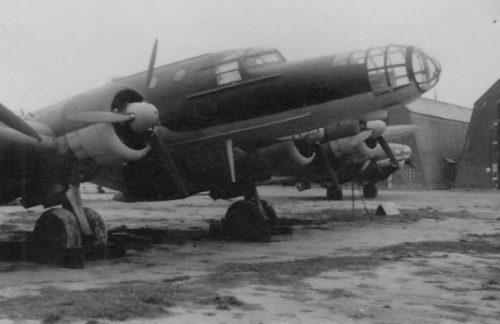
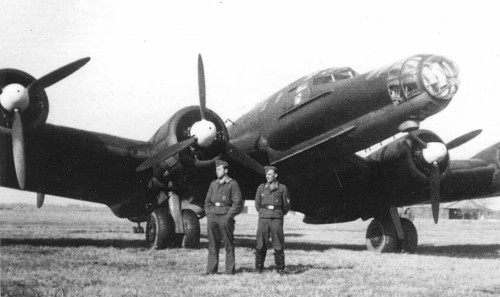
Later use: converted to maritime reconnaissance with a glazed nose, enlarged tail, and defensive armament, similar to V2/U1
Ha/BV 142 V2/V2/U1
Role: second prototype, later the main maritime patrol testbed
Conversion: redesignated BV 142 V2/U1 after modification
Changes:
Extended, heavily glazed nose for observer/navigator
Enlarged tail surfaces
Installation of defensive armament and bomb stowage
Full suite of military radio and navigation equipment
BV 142 V3 and V4
Role: primarily used as transports
Configuration: remained closer to the civil layout, without full reconnaissance conversion
Capacity: could carry about 30 fully equipped soldiers over long distances (up to roughly 4,000 km)
The ultimate fate of V3 and V4 is unknown; they likely ended their lives in secondary roles or were scrapped as the war progressed and spares and support became problematic.
Armament and military configuration
Defensive armament
On the converted reconnaissance versions (V1 and V2/U1), the BV 142 carried a typical Luftwaffe defensive layout for a large patrol aircraft:
Nose: 1 × 7.92 mm MG 15 machine gun in the glazed nose
Beam positions: 1 × MG 15 on each side of the rear fuselage
Dorsal turret: 1 × MG 15 in an electrically powered dorsal position
Ventral position: 1 × MG 15 in a ventral cupola
This gave the aircraft all‑round defensive coverage, though the total firepower was modest compared to later heavy bombers.
Offensive load
The BV 142’s offensive capability was limited:
Bomb load: about 400 kg (880 lb) of bombs, typically carried internally in the fuselage
Typical loads: combinations such as 4 × 220 lb or 8 × 110 lb bombs for anti‑shipping or general bombing tasks
This modest bomb load reflects its origin as a mailplane rather than a purpose‑built bomber.
Operational history and WWII context
Early war: from civil prototypes to military assets
Requisition and conversion:
With the outbreak of war, the Luftwaffe looked for any long‑range aircraft that could be adapted for reconnaissance and patrol.
The four Ha/BV 142 prototypes, already built and tested, were obvious candidates.
V1 and V2 were converted to maritime reconnaissance configuration; V3 and V4 were used as transports.
Maritime reconnaissance role
Deployment:
The converted BV 142 V1 and V2/U1 were assigned to a long‑range surveillance unit under Luftflotte III in France, operating over the Atlantic approaches.
Their tasks included:
Long‑range maritime reconnaissance
Shadowing Allied shipping
General overwater patrol and liaison missions
Performance in service:
Despite their range, the aircraft did not perform well operationally.
Issues likely included:
Marginal speed and climb compared to emerging Allied fighters
Limited defensive armament and modest bomb load
Maintenance and reliability challenges for a tiny, non‑standard fleet
As a result, both converted aircraft were withdrawn from service by around 1942 after relatively few missions.
Transport operations
Scandinavian campaigns
The unconverted V3 and V4 were used as transports during early war operations, notably the following:
Occupation of Denmark
Norwegian campaign
In these roles, they could carry about 30 fully equipped soldiers over long distances, making use of their range and internal volume.
They were operated by a special transport/combat unit (KGr.z.b.V. 105).
Later fate:
After these early campaigns, the aircraft saw only limited use.
By 1942, all four BV 142s had disappeared from front‑line service.
The exact end of V3 and V4 is undocumented, but they were almost certainly scrapped or cannibalised for parts as the Luftwaffe standardised on more common types.
Strategic and historical significance
A transitional, “orphan” design
The BV 142 is a classic example of an “orphan” aircraft:
Civil origins: designed for a peacetime transatlantic mail role that vanished with the onset of war
Limited production: only four prototypes, no series production
Non‑standard type: difficult to support logistically in wartime, with no commonality to larger fleets
Its story illustrates how quickly strategic priorities can shift, leaving technically interesting designs without a clear role.
Comparison with contemporary aircraft
In the broader WWII context:
Versus dedicated bombers (e.g., He 111 and Fw 200), the BV 142 lacked the refined performance, payload, and production backing of purpose‑built bombers and patrol aircraft.
Versus maritime patrol types (e.g., Fw 200 Condor), the Fw 200, though also adapted from a civil airliner, was produced in greater numbers and better integrated into Luftwaffe doctrine, overshadowing the BV 142.
The BV 142’s limited success reflects not just its own shortcomings but also the rapid evolution of aircraft design and operational doctrine in the early war years.
Legacy
The BV 142 left no direct descendants and did not influence postwar designs in any obvious way.
Its main legacy lies in the following:
Demonstrating Blohm & Voss’s willingness to experiment with structural concepts like the tubular wing spar
Highlighting the challenges of converting specialised civil aircraft into effective military platforms
Serving as a minor but telling case study in the Luftwaffe’s early‑war improvisations