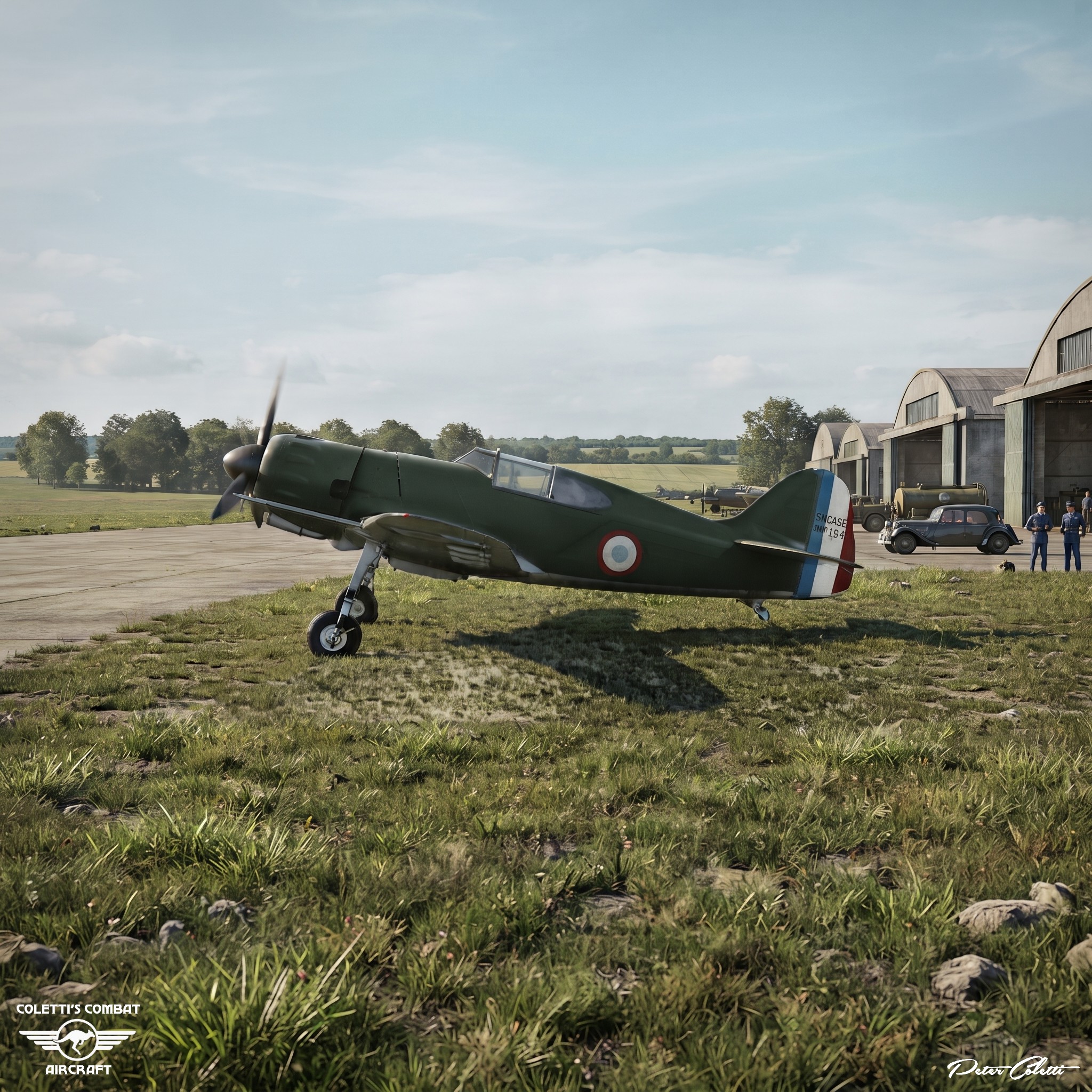
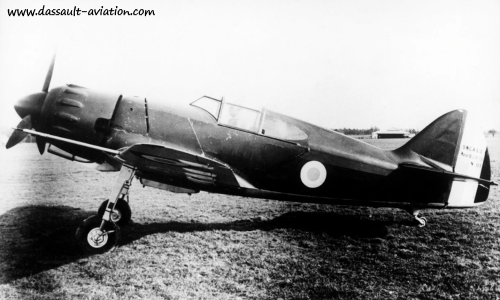
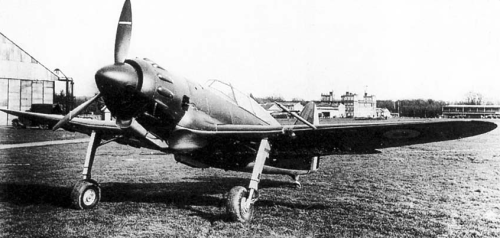
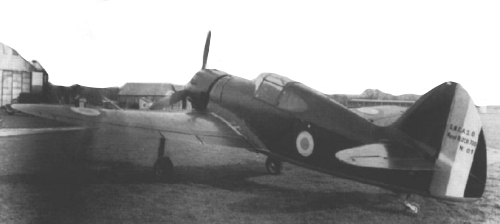
The Bloch MB.700 emerged from a very specific set of French pre‑war anxieties.
By the mid‑1930s, the French Air Ministry feared that in a major conflict, France might face shortages of strategic materials—particularly light alloys and high-grade steel.
As a hedge, the Ministry began encouraging designs that could be built from non‑strategic materials, especially tropical hardwoods, which France could import in quantity from its colonial empire.
This policy shift led to the A23 technical programme, issued on 12 January 1937, which called for a new class of lightweight C1 single‑seat fighters built largely of wood and powered by engines below the 900–1000 hp class used in mainstream fighters of the period.
The programme attracted the attention of André Herbemont, one of France’s most experienced fighter designers, responsible for SPAD fighters since 1918.
Working within the newly nationalised SNCASO (Société Nationale des Constructions Aéronautiques du Sud‑Ouest), Herbemont developed a compact, minimalist interceptor intended to be fast, economical, and easy to manufacture under wartime constraints.
The result was the Bloch MB.700.
Development History
Design and Construction
The MB.700 was built at the former Blériot Aéronautique works in Suresnes, which had been absorbed into SNCASO during the 1936 nationalisation wave.
The design embraced the A23 programme’s philosophy wholeheartedly:
All‑wood structure, including stressed‑skin working surfaces
Plywood‑covered forward fuselage, with fabric covering aft
Simple, compact airframe optimised for rapid production
Gnome‑Rhône 14M6 radial engine, delivering 700 hp at take‑off
The prototype, MB.700‑01, was transported by road to the Buc airfield, where it was reassembled and prepared for flight.
Flight Testing
The aircraft flew for the first time on 19 April 1940, piloted by Daniel Rastel.
The maiden flight lasted 16 minutes and reached 1,800 m.
A second flight on 13 May 1940, also with Rastel, lasted 50 minutes and reached 4,000 m.
Despite its modest power plant, the MB.700 achieved a maximum speed of 550 km/h, an impressive figure for a 700‑hp wooden fighter and a testament to Herbemont’s aerodynamic efficiency.
The prototype was unarmed, as was typical for early flight testing.
Fate of the Programme
The MB.700 had accumulated only about a dozen flight hours when the German advance reached the Paris region.
The Buc airfield was overrun, and the prototype was burned by German forces.
A second prototype, incorporating refinements such as a larger propeller and modified radiator, was under construction but never completed.
A proposed navalised derivative, the MB.720, remained on the drawing board only.
Airframe and Design Characteristics
Structural Philosophy
The MB.700 was conceived as a light interceptor, prioritising:
Low weight
Ease of manufacture
Use of non‑strategic materials
High speed from low power
Its all‑wood construction was not merely a cost‑saving measure but a strategic choice to ensure production resilience in wartime.
Fuselage and Wings
Forward fuselage: plywood monocoque
After fuselage: fabric‑covered wooden structure
Wing: wooden, stressed‑skin, low‑mounted, with provisions for wing‑mounted armament
Cooling: compact frontal installation with refined cowling
Propeller: two‑blade (prototype), with a larger unit planned for the second prototype
Cockpit and Pilot Environment
The cockpit was simple and utilitarian, reflecting the aircraft’s role as a lightweight interceptor.
The design philosophy emphasised minimalism, low cost, and ease of maintenance.
Performance
Despite its small size and modest power, the MB.700 delivered performance comparable to some contemporary fighters:
Maximum speed: 550 km/h at 4,000 m
Endurance: 2 hours
Loaded weight: 1,750 kg with four machine guns
1,850 kg with two cannons + two machine guns
Wing area: 12.4 m²
Dimensions:
Wingspan: 6.0 m
Length: 4.93 m
Height: 1.67 m
These figures placed the MB.700 among the fastest light fighters of its generation, especially notable given its wooden construction and low‑power engine.
Armament (Planned)
Although the prototype flew unarmed, the A23 programme required meaningful firepower.
The MB.700 was designed to accept two alternative armament configurations:
Heavy configuration
Two Hispano‑Suiza HS.404 20 mm cannons
Two MAC 1934 M39 7.5 mm machine guns
All mounted in the wings
Light configuration
Four 7.5 mm MAC 1934 M39 machine guns
Wing‑mounted
This flexibility would have allowed the MB.700 to serve as either a lightweight interceptor or a more heavily armed point‑defence fighter.
Variants and Proposed Derivatives
MB.700‑01
First prototype
Flew April–May 1940
Unarmed
Destroyed during German occupation of Buc airfield
MB.700‑02 (Unfinished)
Second prototype under construction
Planned improvements:
Larger propeller
Modified radiator
Never completed due to the collapse of France in June 1940
MB.720 (Projected Naval Version)
Proposed carrier‑capable derivative
Remained a paper project only
Would likely have included strengthened structure, arrestor gear, and naval equipment
Operational and Historical Significance
The MB.700 never reached operational service, but its significance lies in what it represents:
A forward‑thinking response to anticipated wartime material shortages
A demonstration of high‑performance wooden aircraft design
A glimpse into an alternative path French fighter development might have taken had the war not overtaken events
A symbol of the disruption caused by the rapid German advance in 1940, which halted numerous promising French aircraft programmes
Had it entered production, the MB.700 might have served as a fast, economical point‑defence fighter, complementing heavier frontline types such as the Dewoitine D.520.
Summary Assessment
The Bloch MB.700 was a compact, elegant, and surprisingly fast wooden interceptor created under the constraints of France’s pre‑war strategic planning.
Its performance during limited testing suggested real potential, but the collapse of France in 1940 ended the programme before it could mature.
Today, the MB.700 stands as one of the many “lost fighters” of 1940—promising designs cut short by the speed of events.