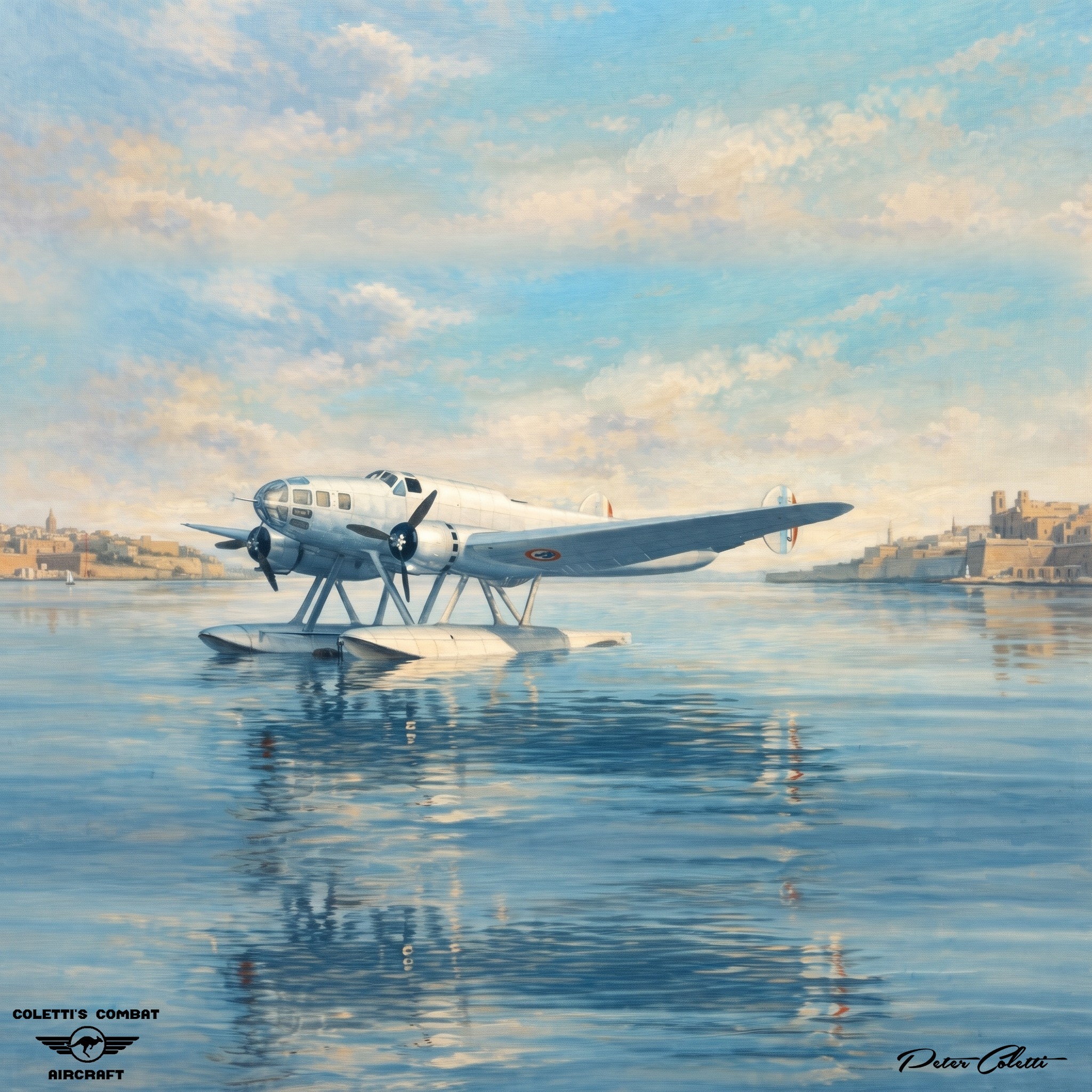
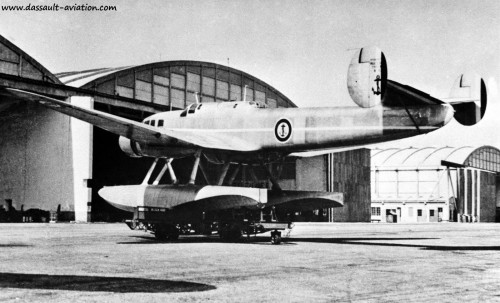
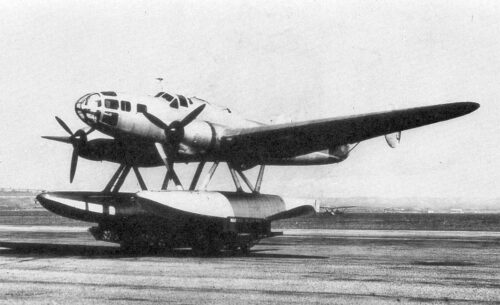
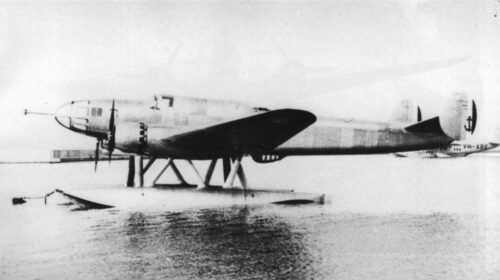
The Bloch MB.480 sits in that very French corner of aviation history where ambition, timing, and doctrine never quite line up.
It was modern, purposeful, and technically sound—yet it never got the chance to prove itself in service.
Origins and requirement
In the mid‑1930s, French naval aviation was trying to define its future.
The Aéronautique Navale still relied heavily on seaplanes and floatplanes for maritime reconnaissance, torpedo attack, and coastal defence, but the world was clearly moving towards faster, heavier, land‑based bombers.
Initial specification: In 1935, the Service Technique de l’Aéronautique (STAé) issued a requirement under the MT/CPT 9 programme for a multi-mission “combat scout” seaplane.
This aircraft was to perform bombing, torpedo attacks, and long‑range reconnaissance—essentially a maritime strike and patrol platform in one airframe.
Revised programme: The requirement was refined in March 1937, still aimed at a twin‑engine floatplane capable of torpedo‑bomber and reconnaissance duties for the French Navy.
Société des Avions Marcel Bloch—later to become Dassault—responded with a design that drew heavily on its existing bomber family.
The result was the MB.480, essentially a maritime, float‑equipped cousin of the Bloch MB.131 land‑based reconnaissance bomber.
In May 1937, the French Air Ministry ordered two prototypes of the MB.480 to compete with other designs (notably the SNCAC NC.410 and Loire‑Nieuport 10) for the torpedo‑bomber/reconnaissance floatplane role.
Design philosophy and configuration
General layout and structure
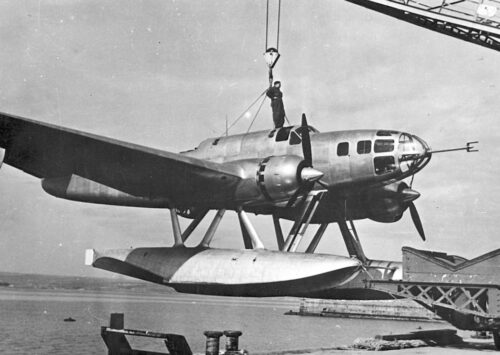
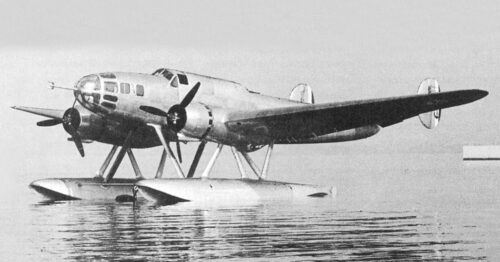
The MB.480 was a low-wing, twin-engined monoplane floatplane of all-metal construction.
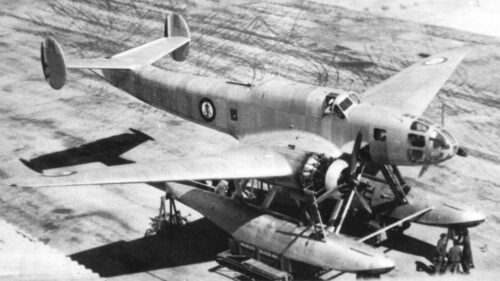
Its overall form clearly echoed the MB.131: a relatively deep fuselage, mid‑to‑low‑mounted wing, and twin‑fin tail, adapted for maritime operations with large twin floats.
Airframe:
All‑metal stressed‑skin construction, reflecting contemporary French bomber practice.
Low‑wing monoplane with moderate taper and a relatively large wing area to support heavy loads and waterborne operations.
Floats:
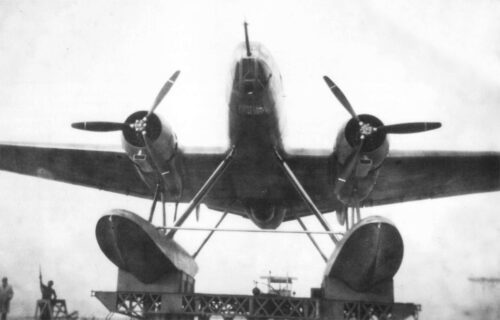
Twin main floats are mounted beneath the wing on robust struts, forming a catamaran‑like stance on the water.
The floats were designed to support long takeoff runs and rougher sea states, with internal compartmentalisation for buoyancy and damage tolerance.
The aircraft was intended to operate from sheltered coastal waters and naval bases, not from open ocean swells, but its float system and powerplant combination gave it respectable takeoff performance for its size.
Tail unit and spray issues
Early testing revealed a classic floatplane problem: water spray.
The original tailplane sat relatively low, and during takeoff runs the spray from the floats risked striking the horizontal tail, affecting control and durability.
To address this:
Tailplane raised: The horizontal tail was raised by about 30 cm to keep it clear of spray and improve aerodynamic effectiveness during the high‑angle‑of‑attack takeoff run.
Twin fins modified: Raising the tail reduced the dorsal gunner’s field of fire, so the twin fins were cropped to restore as much firing arc as possible for the dorsal cannon.
This compromise illustrates the constant trade‑off in maritime aircraft between seaworthiness and defensive coverage.
Powerplant and systems
Engines and propulsion
The MB.480 was powered by two Gnome‑Rhône 14N radial engines, a widely used French 14‑cylinder air‑cooled powerplant of the period.
Type: Gnome‑Rhône 14N‑02 and 14N‑03 (right‑ and left‑hand rotation, respectively).
Power: Approximately 1,060 hp (790 kW) each.
Counter‑rotating propellers reduced torque effects on takeoff and improved handling, especially important for a floatplane accelerating from water.
The engines drove three‑blade variable‑pitch propellers, giving the aircraft reasonable climb and cruise efficiency for its class.
Fuel and range
Fuel was carried in internal tanks within the wings and/or fuselage, with provision for auxiliary fuel tanks in the bomb bay when operating in long‑range reconnaissance mode.
Range: Sources differ slightly, but typical figures give about 650–1,000 km depending on load and power setting, with Dassault’s data sheet quoting 654 kmat 80% of maximum speed and an endurance around 1,000km.
This range was adequate for coastal patrol and strike missions in the Mediterranean or Atlantic approaches, though not exceptional compared to emerging land‑based bombers.
Crew, cockpit, and internal layout
The MB.480 carried a crew of five, typical for a multi-role maritime aircraft of its era.
A plausible crew arrangement, consistent with contemporary French practice and the documented armament positions, would be:
Pilot: Seated in the forward cockpit on the left, with good forward and lateral visibility for water operations and low‑level attack runs.
Navigator/bombardier: Positioned in the nose section, responsible for navigation, bomb aiming, and operating the forward machine gun.
Radio operator: Located in the mid‑fuselage, handling communications and possibly assisting with navigation.
Dorsal gunner: Manned the powered dorsal turret with the 20 mm cannon.
Ventral gunner/observer: Operated the ventral gun position and assisted with reconnaissance duties.
The fuselage likely included a bomb‑aiming position with glazing in the lower nose, as well as side windows for observation and navigation, echoing the MB.131 layout.
Armament and mission equipment
Defensive armament
The MB.480 was relatively well-armed for a floatplane, reflecting the French concern about fighter and patrol aircraft threats over coastal waters.
Nose: One 7.5 mm Darne machine gun in a flexible mounting.
Ventral: One 7.5 mm Darne machine gun in a ventral “bath” or gondola, providing coverage against low-rear attacks.
Dorsal: One 20 mm Hispano‑Suiza HS 404 cannon in a powered dorsal mounting, giving substantial firepower against attacking fighters.
This combination of light machine guns and a heavy cannon was quite potent for the late 1930s, especially on a seaplane.
Offensive load
The MB.480 was designed as a true multi-role maritime strike aircraft:
Bombs: Up to roughly 1,300kg of bombs in an internal bomb bay.
Torpedoes: Capability to carry two 670kg torpedoes, one under each side of the fuselage or in a suitable underwing/fuselage arrangement.
Auxiliary tanks: When configured for long‑range reconnaissance, the bomb bay could be used for additional fuel tanks instead of weapons.
This flexibility allowed the MB.480 to shift between patrol, anti-shipping strike, and bombing roles, depending on mission requirements.
Dimensions and performance
Dimensions
The MB.480’s principal dimensions were the following:
Wingspan: 23.50 m (77 ft 1 in)
Length: 19.10m (62ft 8in)
Height: 4.60 m (15 ft 1 in)
Wing area: 82.20 m² (884.8 ft²)
Weights
Empty weight: About 6,800–7,020kg (sources vary slightly).
Maximum gross weight: Around 10,000kg, with some data giving up to 12,000kgas maximum takeoff weight.
Performance
Performance figures differ slightly between sources, but they cluster in a consistent range:
Maximum speed: About 310–330km/h (193–205mph) at low to medium altitude.
Cruise speed: Around 280km/h (174mph).
Range: Approximately 650–1,000km, depending on load and power setting.
Service ceiling: Around 7,100m (23,300ft).
Takeoff run on water: About 130m under standard conditions.
For a large twin‑float seaplane, these figures were respectable but not outstanding.
The key issue was that land‑based bombers were already significantly faster.
Development and flight testing
Construction and first flights
The first MB.480 prototype was built at Bloch’s Courbevoie facility and then transported by rail to Marignane for final assembly.
First prototype:
Assembled at Marignane in 1938.
Made its maiden flight from Étang de Berre (Berre Lake) in the third week of June 1939, piloted by René Le Bail.
Second prototype:
Completed later and first flown in October 1939.
Initial trials appear to have been broadly successful.
The aircraft met its basic performance targets and demonstrated acceptable handling, though the tailplane spray issue required the modifications already described.
Evaluation and suspension
Despite the MB.480’s technical soundness, the strategic context shifted rapidly:
Outbreak of war: With the German invasion of Poland in September 1939, priorities changed.
On 9 September 1939, Bloch was instructed to suspend development trials of the MB.480.
Official cancellation: On 10 December 1939, the French authorities formally announced that no production orders would be placed for the MB.480 or its competing designs (SNCAC NC.410 and Loire‑Nieuport 10).
By then, the French Navy had decided that the torpedo‑bomber/reconnaissance role would be better filled by faster land‑based aircraft, particularly the Lioré et Olivier LeO 451, a sleek twin‑engined medium bomber already on order for the Armée de l’Air.
Operational fate and prototypes’ end
The MB.480 never entered operational service; its story ends with its two prototypes.
First prototype:
Continued to fly for test and evaluation until June 1940.
Destroyed on 23 June 1940 after colliding with a pier at Balaruc on Étang de Thau (Thau Lake).
Second prototype:
Placed into storage at Berre in July 1940.
Never flown again and eventually abandoned, its ultimate physical fate is undocumented but almost certainly scrapping or dereliction under Vichy or German oversight.
No MB.480 ever wore operational markings in combat service, and no production batch was started.
Comparison and WWII context
Doctrine shift: from water to land
The MB.480’s cancellation was less about its own shortcomings and more about a doctrinal pivot:
Land‑based bombers rising: Aircraft like the LeO 451 offered significantly higher speed and better survivability, and they could operate from established airfields rather than being tied to sheltered waters.
Vulnerability of floatplanes: By 1939–1940, large floatplanes were increasingly vulnerable to modern fighters and anti-aircraft fire.
Their lower speed and higher drag made them easier targets, especially in contested coastal zones.
The French Navy’s decision to abandon the MB.480 and its competitors in favour of landplanes mirrors similar shifts in other navies, where floatplane torpedo bombers gave way to carrier‑borne or land‑based strike aircraft.
Industrial and political timing
The MB.480 also suffered from timing:
Late first flight: Its maiden flight in June 1939 left almost no margin for refinement, production planning, or squadron integration before the war’s escalation.
Collapse of France: The German offensive in May–June 1940 shattered any remaining prospects for a niche type like the MB.480.
Industrial capacity and strategic focus shifted to survival, then to armistice constraints.
In another timeline—had it flown in 1937 and entered service by 1939—the MB.480 might have equipped a few coastal squadrons, patrolling the Atlantic or the Mediterranean.
Instead, it remained a prototype footnote.
Assessment and legacy
From a technical standpoint, the Bloch MB.480 was a competent, modern floatplane:
All‑metal construction, twin powerful radials, and a respectable bomb/torpedo load.
Strong defensive armament, including a 20 mm cannon in a powered dorsal mount.
Flexible mission profile: torpedo attack, level bombing, and maritime reconnaissance.
Its limitations were largely inherent to its category:
Lower speed and higher drag than contemporary land‑based bombers.
Operational dependence on suitable water bases.
Vulnerability in increasingly fighter‑dominated skies.
In the broader narrative of French aviation, the MB.480 is interesting for what it represents:
A transitional concept: It stands at the end of the line for large, purpose‑built torpedo‑bomber floatplanes in French service concepts.
A branch of the Bloch family tree: It shows how Marcel Bloch’s design office adapted a land‑based bomber lineage (MB.131) into a maritime floatplane, using common structures and systems.