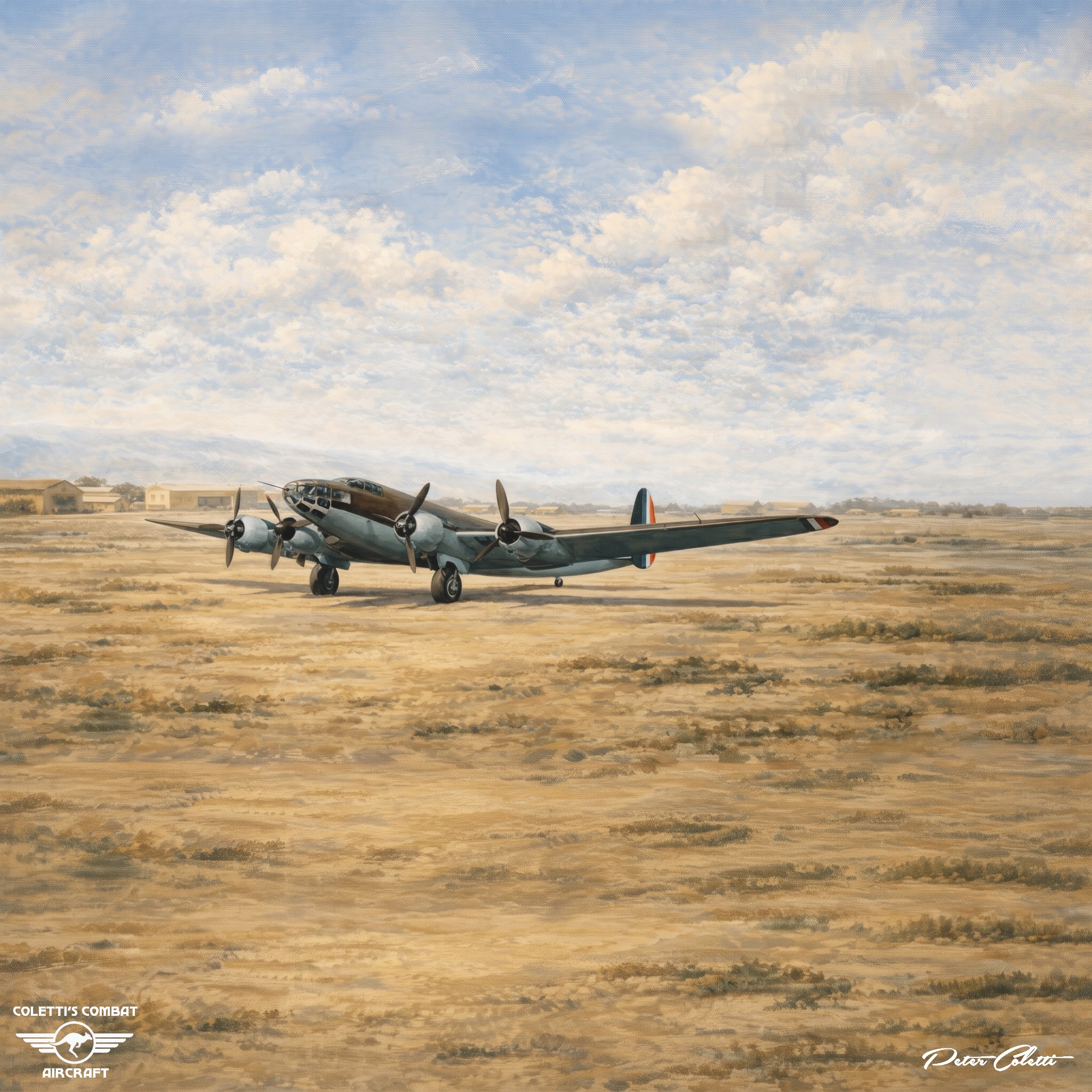
The Bloch MB.162 emerged from a late and ultimately unsuccessful French attempt to field a modern long‑range heavy bomber on the eve of the Second World War.
Although the French Air Force leadership publicly embraced Giulio Douhet’s doctrine of strategic airpower, France invested comparatively little in true four‑engine heavy bombers during the 1930s.
Budget constraints and an overconfidence in twin‑engine “multiplace de combat” aircraft—believed capable of reaching any strategic target from French bases—left the country without a modern heavy bomber force by 1939.
Bloch MB.162
The MB.162 was not conceived initially as a bomber at all.
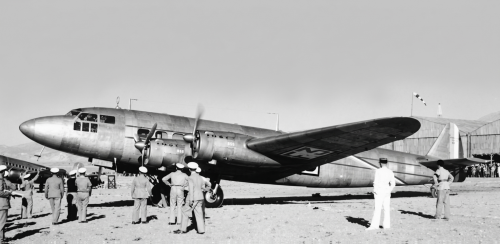
It was a derivative of the Bloch MB.160/161 long‑range civil transports developed for colonial routes.
The MB.160, ordered in 1936 for Air Afrique, was a 12‑seat transport powered by Hispano‑Suiza 12X engines.
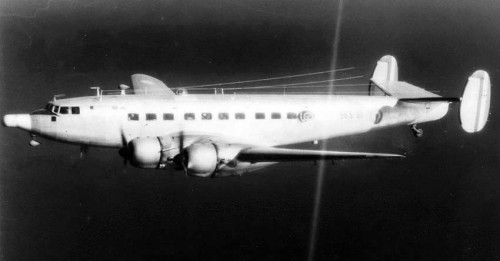
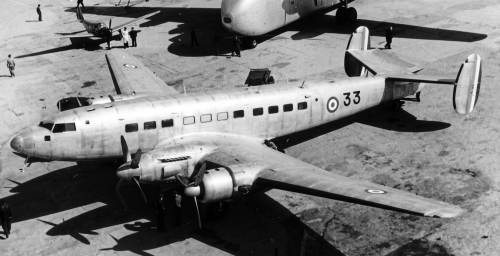
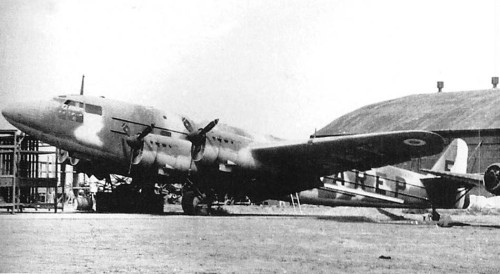
Its successor, the MB.161, introduced Gnome‑Rhône 14N radial engines, a lengthened wing, and a redesigned fuselage for 33 passengers.
These civil developments provided the structural and aerodynamic foundation for what would become the MB.162 bomber prototype.
Bloch MB.162
Conceptual Shift: From Long‑Range Transport to Heavy Bomber
The MB.162 “Raid” was initially designed as a high‑endurance mailplane capable of flights up to 7,000 km.
Its promising performance led designers to consider a militarised version, designated MB.162 B5, intended to serve as a long‑range heavy bomber with a five‑man crew.
On paper, the MB.162 B5 compared favourably with contemporary designs: slightly smaller than the Boeing YB‑17 but heavier, faster, and with formidable defensive armament centred on a 20 mm cannon—reflecting French preference for heavy-calibre defensive firepower at long range.
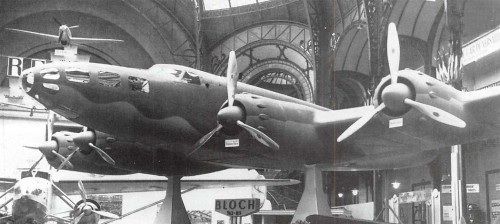
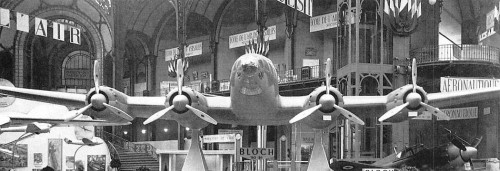
A full‑scale mock‑up was displayed at the 1938 Paris Air Show, but French authorities prioritised the civil MB.161, delaying bomber development until 1939.
By then, war was imminent and time was short.
Bloch MB.162
Design and Construction
Airframe
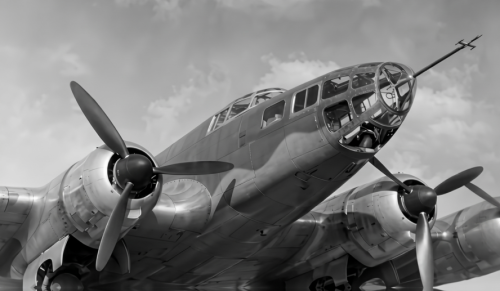
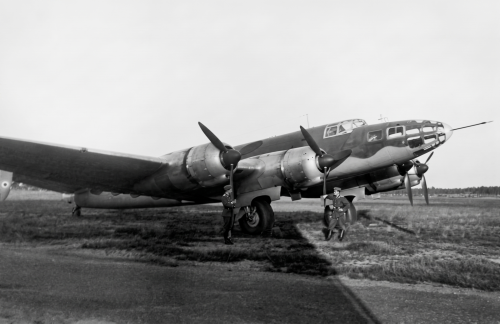
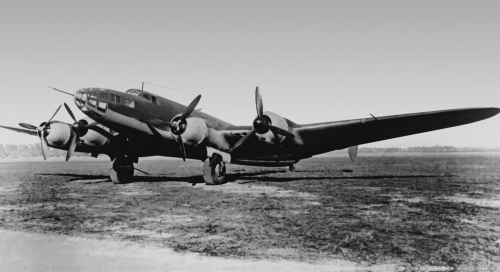
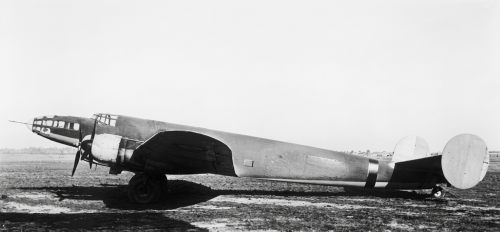
The MB.162 was a fully metal, four-engine monoplane with a clean aerodynamic layout and a high-aspect-ratio wing.
The wing used Bloch’s characteristic torsion‑box structure with two main spars braced by diagonal members.
It was built in four sections and skinned with vedal alloy sheets.
Eight fuel tanks between the spars held up to 6,500 litres of fuel, supporting long‑range operations.
The fuselage was a stressed‑skin monocoque of circular cross‑section, optimised for aerodynamic efficiency.
Crew accommodations included positions for two pilots, a navigator‑bombardier, a radio operator/gunner, and an upper gunner.
Landing Gear
The main landing gear retracted forward into the inner engine nacelles, partially enclosed by two‑piece doors.
The tailwheel was fixed.
Powerplant
The prototype MB.162‑01 used four Gnome‑Rhône 14N‑48 radial engines rated at 1,100 hp each, giving the aircraft a high maximum speed for its class.
Bloch MB.162
Armament
The bomber configuration included:
Two 20 mm Hispano‑Suiza HS‑404 cannons – One in a powered dorsal turret – One in a powered ventral position
Two 7.5 mm MAC 34 machine guns – One paired with the ventral cannon – One in the nose for the bombardier
Bomb load: up to 3,600 kg internally
This heavy defensive suite was advanced for a French bomber of the period and reflected a desire to engage attackers at greater distances.
Bloch MB.162
Flight Testing and Operational Fate
The prototype MB.162‑01 was completed at Villacoublay in spring 1940.
Its first flight occurred on 1 June 1940, just as German forces approached Paris.
The aircraft was hastily evacuated to Bordeaux, where it was captured intact after the French armistice.
Under German occupation, the SNCASO factory at Bordeaux was placed under the control of Focke‑Wulf.
German authorities ordered flight testing of the captured MB.162, which continued through 1942.
In 1943 the aircraft was transferred to Germany and assigned to the clandestine KG 200, specifically the 1st Staffel at Finow.
KG 200 specialised in long‑range covert operations, including infiltration, reconnaissance, and special missions.
The MB.162’s speed and range made it suitable for such tasks, though details of its missions remain unknown.
Its ultimate fate after 1944 is unrecorded.
No additional prototypes or production aircraft were completed.
Bloch MB.161
Performance (MB.162 B5 Prototype)
Wingspan: 28.40 m
Length: 22.16 m
Height: 3.75 m
Wing area: 107 m²
Empty weight: 11,050 kg
Normal takeoff weight: 18,779 kg
Engines: 4 × Gnome‑Rhône 14N‑48 (1,100 hp each)
Maximum speed: 485 km/h
Cruising speed: 350 km/h
Range: 2,400 km (bomber configuration)
Service ceiling: 9,000 m
Crew: 5
Armament: 2 × 7.5 mm MG, 2 × 20 mm cannon, up to 3,600 kg bombs
These figures placed the MB.162 among the fastest four‑engine aircraft in Europe at the time of its first flight.
Variants
MB.160
Original 12‑seat civil transport (1936)
Powered by Hispano‑Suiza 12X engines
Basis for later developments
MB.161
Enlarged, improved civil transport with Gnome‑Rhône 14N engines
Carried 33 passengers
Entered limited production postwar as the SE.161 Languedoc
MB.162 “Raid”
Long‑range mailplane concept
High‑endurance fuselage and wing refinements
Never completed in civil form
MB.162 B5
Heavy bomber prototype
Only one built (MB.162‑01)
Captured and used by the Luftwaffe
Bloch MB.160
Assessment and Historical Significance
The Bloch MB.162 represents one of the most intriguing “what‑if” aircraft of the French aviation industry.
Technically advanced, aerodynamically clean, and fast for its size, it could have provided France with a credible strategic bomber capability had development begun earlier.
Instead, delays, shifting priorities, and the rapid collapse of France in 1940 ensured that only a single prototype was completed.