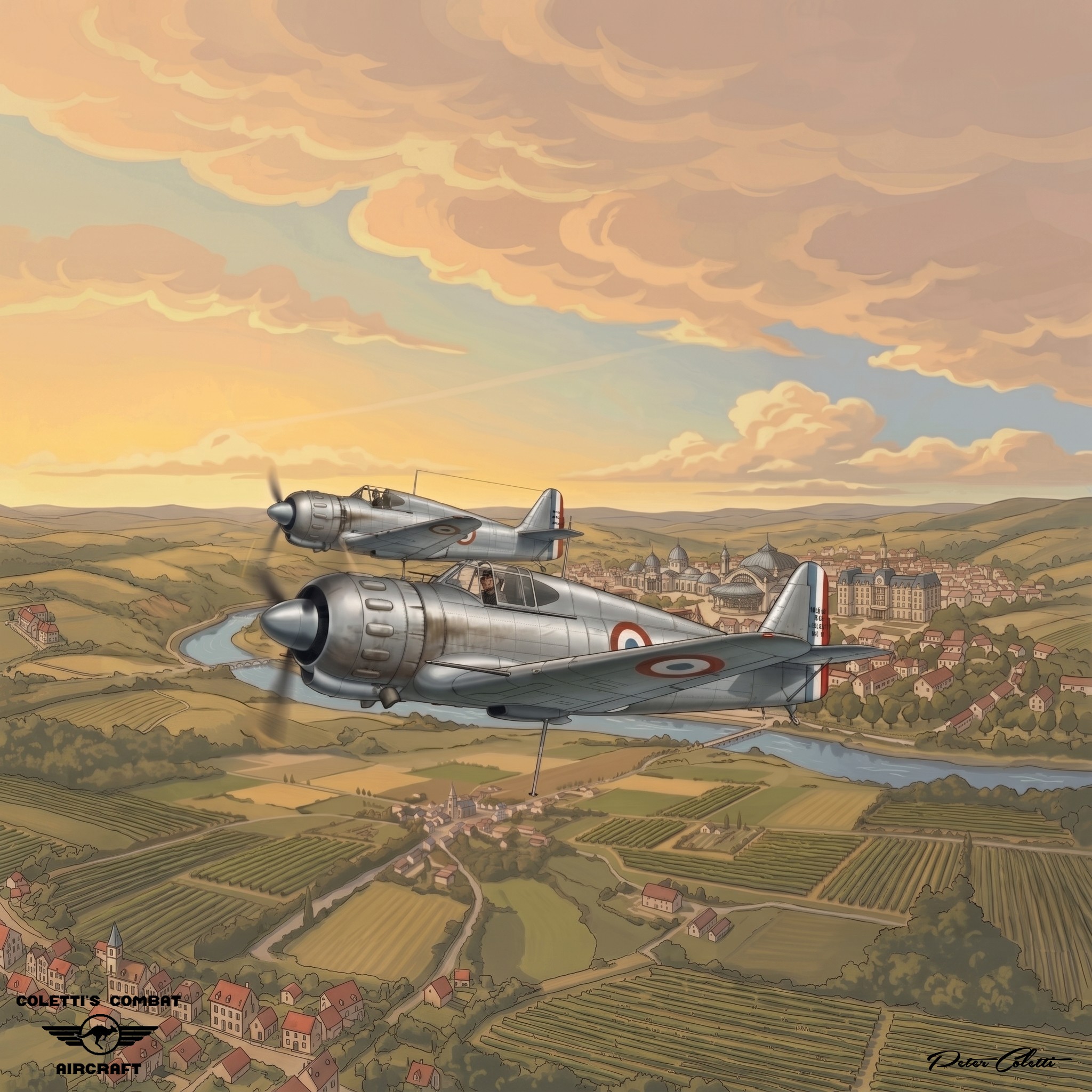
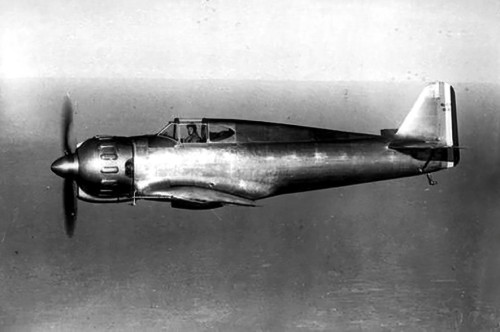
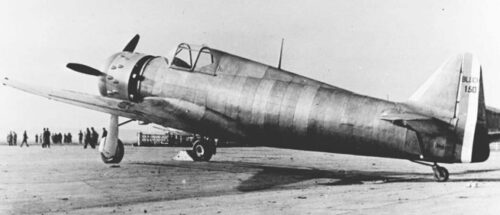
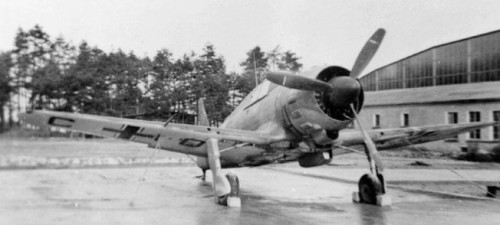
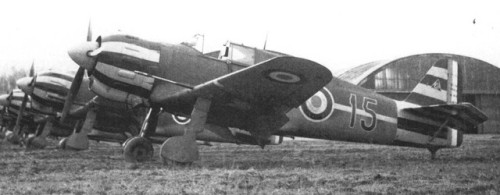
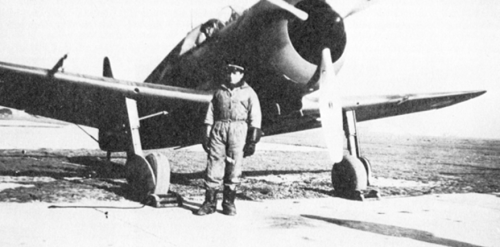
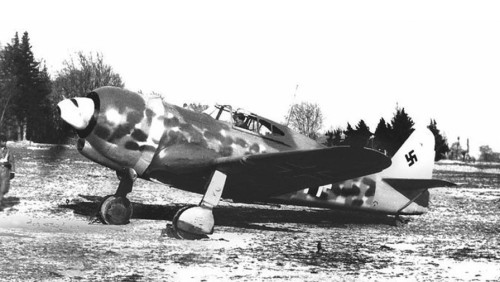
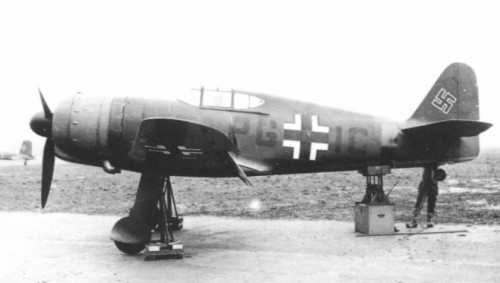
The Bloch MB.150, which was subsequently designated as MB.151 through MB.157, was a French fighter aircraft that was developed and manufactured by Société des Avions Marcel Bloch.
Following assessment, it was determined that the early deliveries were not suitable for combat operations, mainly due to issues with the tailplane; arrangements were made for the initial 157 production fighters to be kept in storage pending modifications, while further production units were constructed with the necessary corrections.
Initially, the aircraft type was restricted to training roles only; before the onset of the Second World War, only one squadron, assigned to the 1st Escadre de Chasse, had received this type.
On the brink of the conflict, approximately 249 aircraft had been produced; of these, about 123 had been accepted by the Armée de l’Air.
Nevertheless, very few of these were deemed airworthy, as most were lacking their gunsights and propellers.
On September 26, 1939, the initial modified MB.152s were supplied to the French Air Force; the allocation to active squadrons commenced by early October, and by mid-November 1939, two Groupes de Chasse (fighter wings) had been outfitted with 26 MB.152s each.
At this stage, the aircraft still exhibited some undesirable flight characteristics, particularly during steep dives.
An increasing number of MB.151 aircraft were being sent to squadrons for training in preparation for their transition to the MB.152.
During the early Phoney War, there were very few confrontations between the MB.152 and Luftwaffe aircraft; during this time, only the downing of a Junkers Ju 88 was documented.
During the Battle of France, nine Groupes de Chasse were equipped with MB.151s and MB.152s; the MB.152 was the most prevalent aircraft still in operation during the final weeks leading up to the signing of the Armistice on 22 June 1940.
These aircraft demonstrated remarkable durability, capable of enduring significant battle damage, achieving high speeds quickly during dives, and serving as stable platforms for gunnery.
However, in aerial combat, they were consistently outperformed by the Messerschmitt Bf 109E in nearly every aspect and were also slower than the twin-engine Messerschmitt Bf 110.
All Bloch units experienced substantial losses.
Between 10 and 17 May, it became almost routine for a Bloch squadron to launch with eight or nine aircraft, only to return with just two or three.
The pilots of the MB.152 claimed at least 188 enemy aircraft, while approximately 86 Blochs were lost.
By the third week of May, the Bloch units had endured heavy losses and were withdrawn to the Paris area for reorganisation.
In contrast to its French counterparts, aviation author Michel Cristesco noted that “the MB.152 was the least successful in combat and incurred the most significant losses”.
This aircraft had several deficiencies; among these were poor manoeuvrability, unreliable armaments, a limited range of 600 km (370 mi) compared to the Bf 109E’s 660 km (410 mi), and a notable lack of power.
Discussing its shortcomings, Cristesco identified two primary factors contributing to its performance issues: insufficient manoeuvrability and limited range.
After the Armistice, six groups remained operational within the Vichy French Air Force until its dissolution on 1 December 1942, at which point the aircraft were transferred to the Royal Romanian Air Force by the Germans.
By April 1941, the German Armistice Commission had concurred with a plan to standardise the Vichy Air Force with the Dewoitine D.520, leading to the retirement of all other single-engine fighters.
The Germans confiscated approximately 173 fighters, with 83 reportedly in working condition, which were then integrated into the Luftwaffe’s operations.
Chrisesco claimed that around 95 MB.152s were covertly modified in late 1941 to early 1942 by adding a rear-fuselage fuel tank, thereby enhancing their range to enable crossing the Mediterranean Sea to reach safety.
Although the Greek government had placed an order for 25 MB.151s, only nine had arrived in Greece by the time the armistice was declared.
The delivered aircraft was still being prepared when the Greco-Italian War commenced, which subsequently led to the broader Balkan Campaign involving various European powers.
The MB.151 fighters were operated by the 24th Fighter Squadron of the Hellenic Royal Air Force, based in Elefsina, where they engaged the Italians and Germans, achieving several air-to-air victories until 19 April 1941, when the final Greek MB.151 was downed.
At one point, the Bulgarian government was negotiating to acquire MB.152 fighters from the Vichy government.
In February 1943, a contract for the delivery of 20 aircraft was finalised, but it was ultimately vetoed by the Germans, who had gained significant influence over Vichy French politics by that time.
Subsequently, Bulgaria received Dewoitine D.520s to fulfil their requirements.
Variants
MB.150
Engine
Gnome-Rhône 14N-07 radial, ~950 hp
Built
1 prototype
Notes
First flown in 1936, the MB.150.01 was a stubby, all-metal monoplane with fixed landing gear and poor takeoff performance.
It was grounded due to structural deficiencies and underpowered flight characteristics.
However, its basic airframe formed the foundation for the entire MB.150 series.
MB.151
Engine
Gnome-Rhône 14N-35, 920 hp
Built
144 units
Armament
Typically, 2 × 20 mm Hispano-Suiza HS.404 cannons
and
2 × 7.5 mm MAC 1934 machine guns
Performance
Max speed
~460 km/h (285 mph);
limited climb rate and range
Notes
The MB.151 was rushed into production in 1938 to meet urgent French Air Force needs.
It suffered from engine overheating, poor high-altitude performance, and limited manoeuvrability.
Many were used for training or second-line duties once the MB.152 became available.
MB.152
Engine
Gnome-Rhône 14N-25, 1,050 hp
Built
482 units
Armament
2 × 20 mm cannons and 2 × 7.5 mm machine guns
(Some variants had 4 × machine guns instead.)
Performance
Max speed
~509 km/h (316 mph)
Range
~600 km
Notes
Entering service in early 1940, the MB.152 was sturdier and better armed than its predecessor but still inferior to German Bf.109s in speed and climb.
It was the most widely used Bloch fighter during the Battle of France, serving in multiple Groupes de Chasse.
Its ruggedness earned respect, but its short range and sluggish handling limited effectiveness.
MB.153
Engine
Pratt & Whitney R-1830 Twin Wasp, ~1,050 hp
Built
1 prototype
Notes
Developed to explore compatibility with American engines for export or contingency use.
The MB.153 retained the MB.152 airframe but required extensive cowling redesign.
Performance was comparable, but the project was abandoned due to logistical and political complications.
MB.155
Engine
Gnome-Rhône 14N-49, 1,100 hp
Built
35 units
Armament
Same as MB.152, with improved fuel capacity
Performance
Slightly better speed and range than MB.152;
max speed
~520 km/h
Notes
The MB.155 featured aerodynamic refinements, including a lengthened fuselage and redesigned cowling.
It was intended to replace the MB.152, but only a handful were completed before the June 1940 armistice.
Some were later used by Vichy forces.
MB.157
Engine
Gnome-Rhône 14R-4, 1,590 hp
Built
1 prototype
Performance
Estimated max speed
700 km/h (435 mph)
Notes
A radical redesign based on the MB.152, the MB.157 was a high-speed interceptor with a streamlined fuselage and powerful engine.
It showed exceptional promise in testing, outperforming contemporary French and German fighters.
However, the fall of France halted development before it could be weaponised or mass-produced.