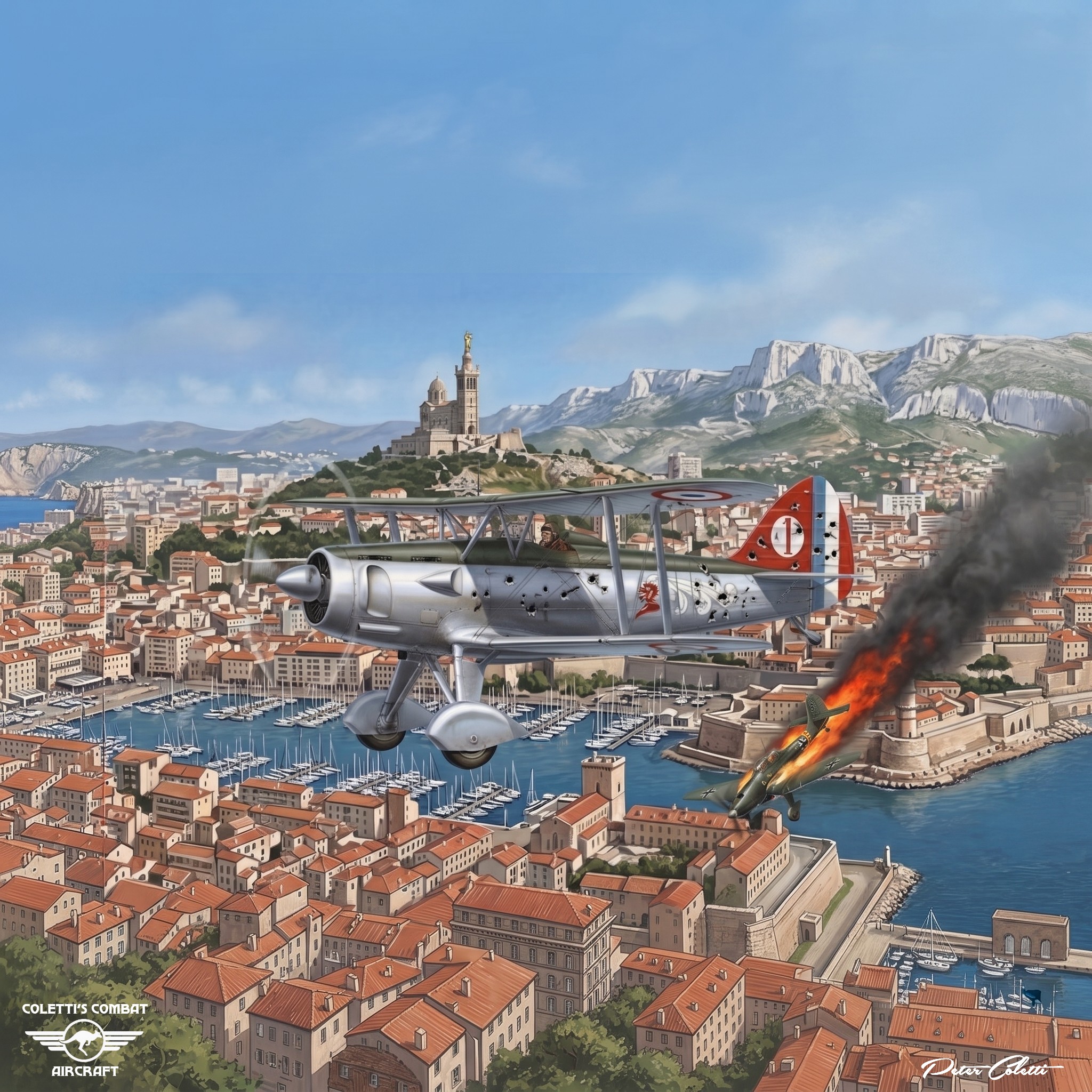
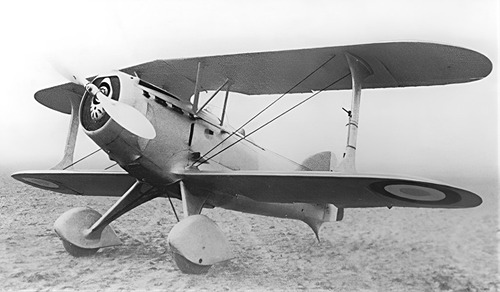
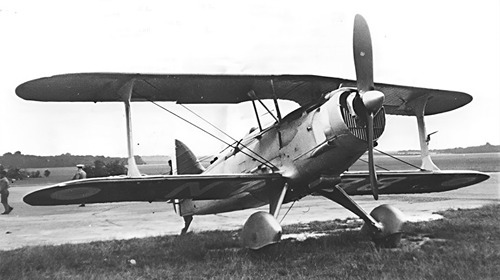
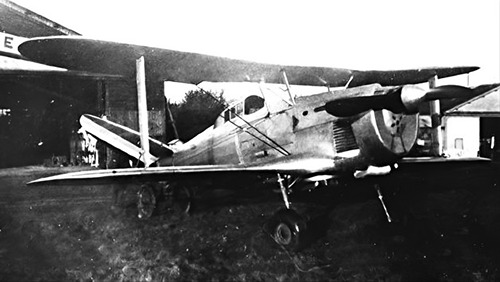
The Blériot-SPAD S.510 was France’s last biplane fighter to enter production, and its operational history during World War II reflects both its obsolescence and its transitional role in the Armée de l’Air.
Pre-War Deployment and Role
Production and Entry into Service
Although outdated by the time it entered service in 1936, 60 S.510s were delivered to the French Air Force.
They were assigned to the 7ème Escadre de Chasse at Dijon, equipping GC I/7 and GC II/7 squadrons from mid-1937.
Performance and Limitations
The S.510 was praised for its manoeuvrability and climb rate, but its fixed landing gear was fragile and caused frequent accidents.
It was also considered dangerous in spins during early testing.
Modifications and Training Use
Night Fighting and Radios
In 1938, some aircraft received Bronzavia exhaust collectors for night fighting training, and radios were fitted starting in January of that year.
Replacement Begins
GC I/7 began replacing the S.510 with Morane-Saulnier M.S.405s in June 1938.
GC II/7 still had 17 S.510s as of May 1939.
World War II Service
Mobilisation and Coastal Defence
With the outbreak of war in September 1939, S.510s were reassigned to Escadrilles Régionales de Chasse (ERC) units for coastal defence.
ERC 3/561 operated from St Inglevert near Boulogne, later moving to Le Havre-Octeville and joining ERC 4/561.
Final Operations and Retirement
These units were gradually re-equipped with Bloch MB.151 and MB.152 monoplanes from December 1939 onward.
However, some S.510s remained in service until France’s collapse in June 1940.
One was found abandoned at Bergerac on 20 June 1940.
Despite its antiquated design, the S.510 played a modest role in early WWII as a stopgap fighter and trainer, bridging the transition from biplanes to modern monoplanes in French service.
S.510.01 – Prototype
First Flight
6 January 1933
Design Origin
Based on André Herbemont’s earlier S.91 design, the S.510.01 was submitted to meet a 1930 French Air Ministry requirement for a single-seat fighter capable of 325–350 km/h at 3,500 m.
Construction
All-metal fuselage with fabric-covered wings and tail; monocoque rear fuselage; fixed landing gear with faired mainwheels and tail tailskid.
Powerplant
The Hispano-Suiza 12Xbrs V-12 liquid-cooled engine is rated at 690 hp.
Armament
Initially two 7.5 mm MAC 1934 machine guns were in the fuselage and two underwing gondolas.
Flight Testing
Revealed handling issues—spin recovery problems and instability—leading to a 40 cm fuselage stretch and enlarged vertical tail surfaces.
S.510 – Production Model
Quantity Built
60 units (plus prototype)
Engine
Same Hispano-Suiza 12Xbrs, driving a two-bladed wooden propeller.
Armament
Standardised to four 7.5 mm MAC 1934 machine guns mounted under the lower wings.
The last two aircraft were fitted with the 12XCRS engine, allowing a 20 mm cannon to fire through the propeller hub.
Performance
Comparable to the Gloster Gladiator, it had superior manoeuvrability and climb rate over the Dewoitine D.500 during the 1935 CEAM trials at Reims.
Operational Role
Initially a frontline fighter (1936–1938), later relegated to training and coastal defence.
Used by GC I/7 and GC II/7 and briefly by ERC 3/561 and ERC 4/561 during WWII.
S.710 – Advanced Prototype
Purpose
Experimental evolution of the S.510, aiming to modernise the biplane concept.
Tail Configuration
Featured a rare butterfly (V-tail) design—unusual for the era and intended to reduce drag and weight.
Engine
Upgraded to the Hispano-Suiza 12Ycrs V-12, delivering 860 hp.
Armament
One 20 mm HS.404 cannon is firing through the propeller hub.
Two 7.5 mm MAC 1934 machine guns mounted in the wings.
Outcome
Only one built.
The design was ultimately abandoned as France shifted decisively towards monoplane fighters like the MS.406 and D.520.