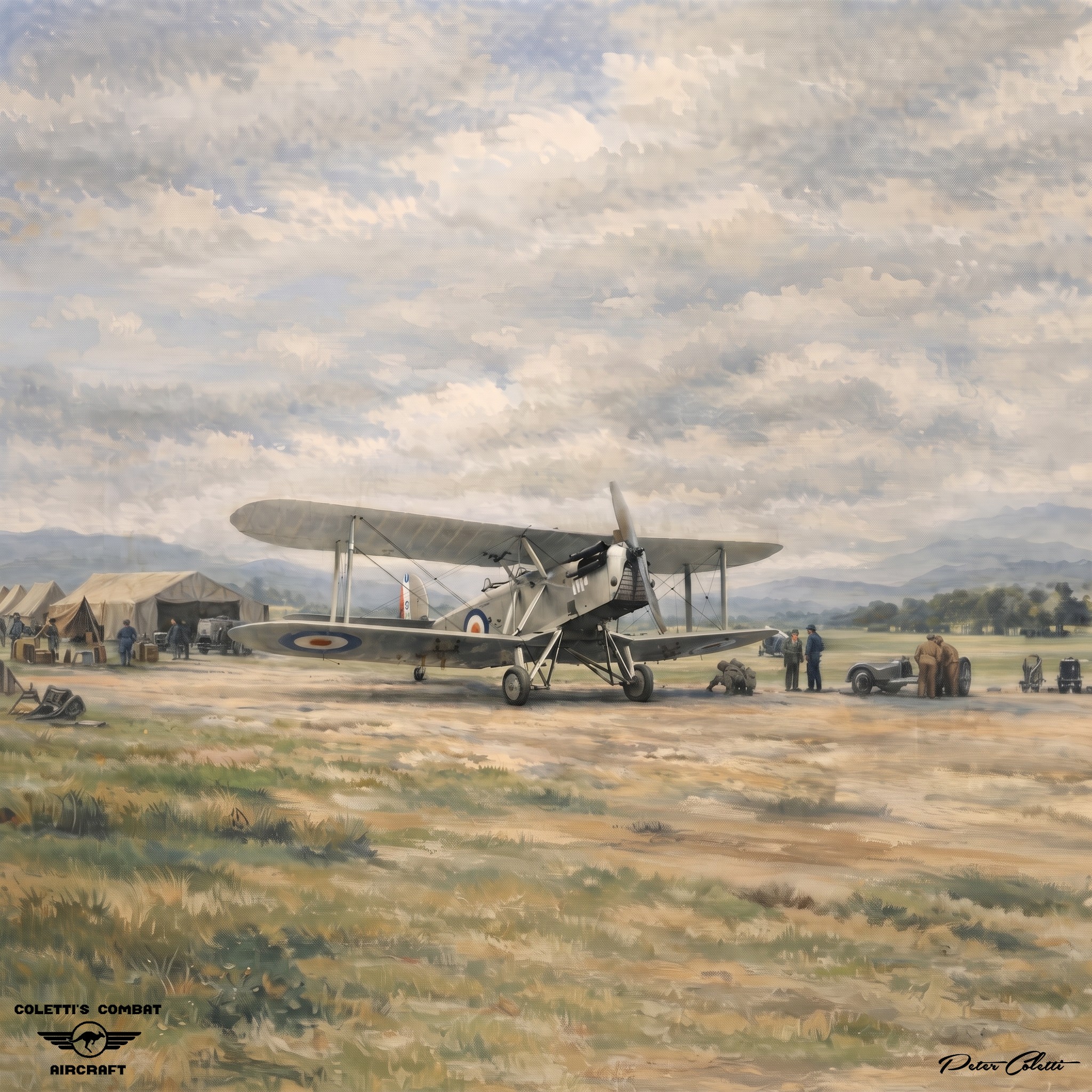
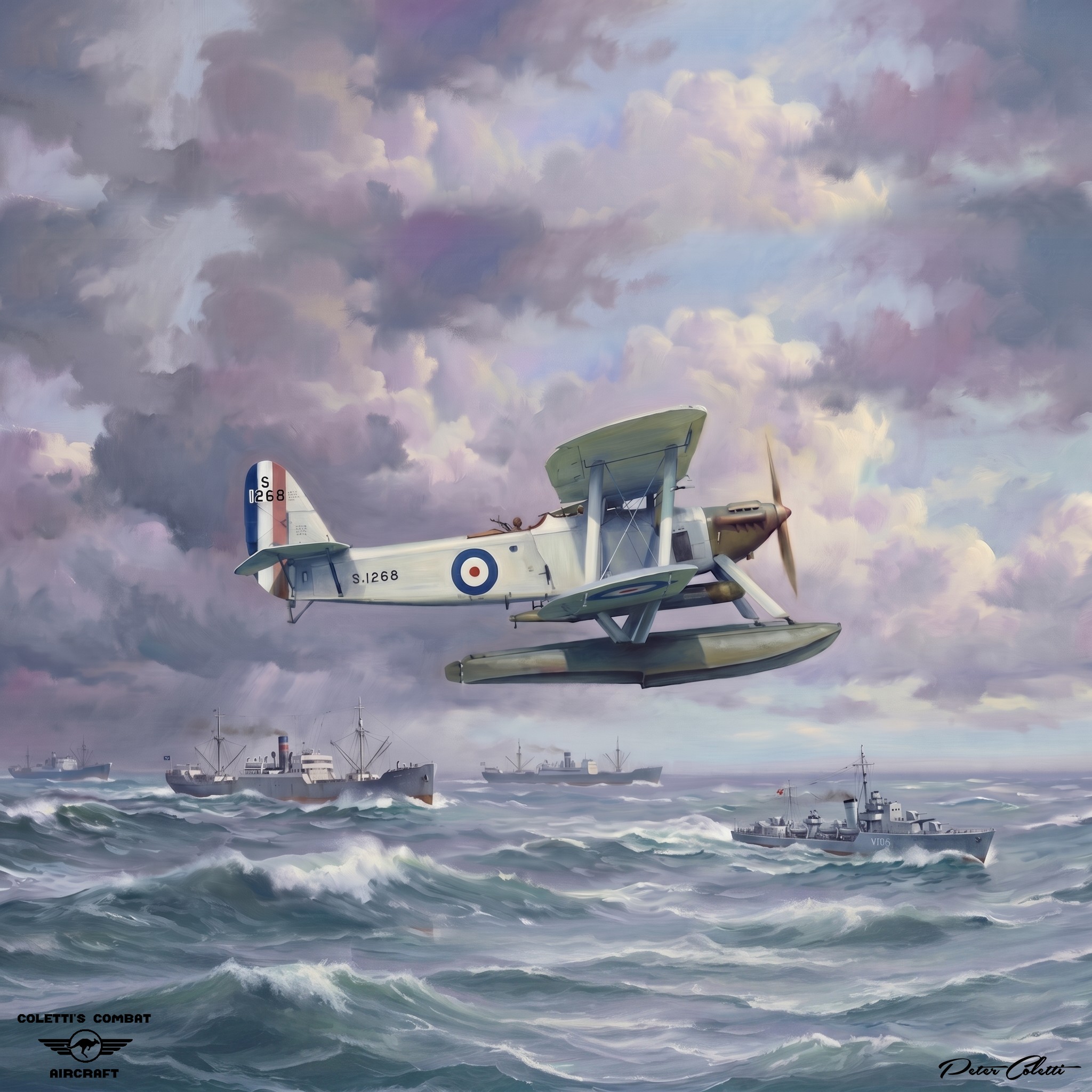
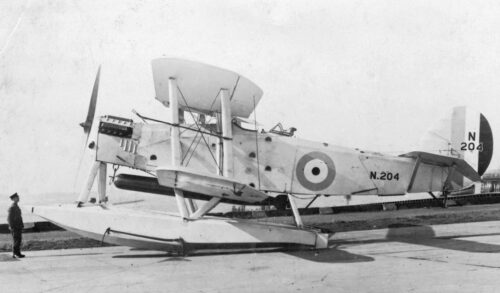
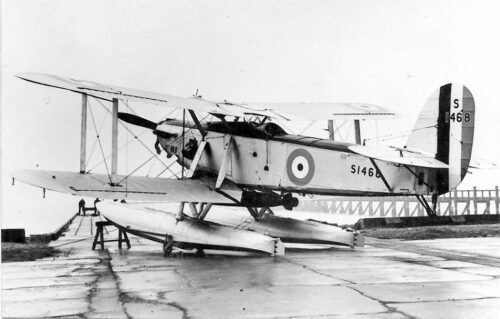
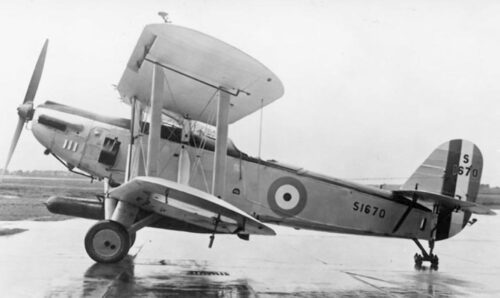
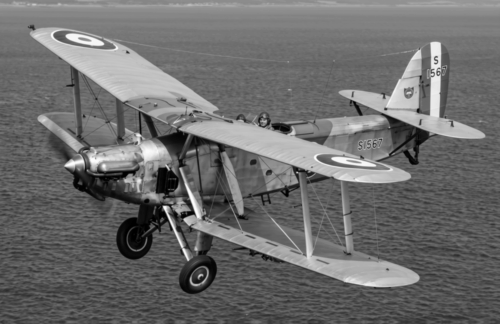
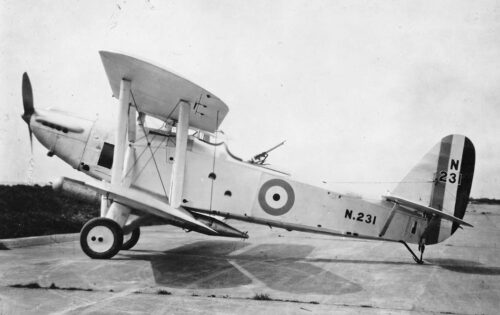
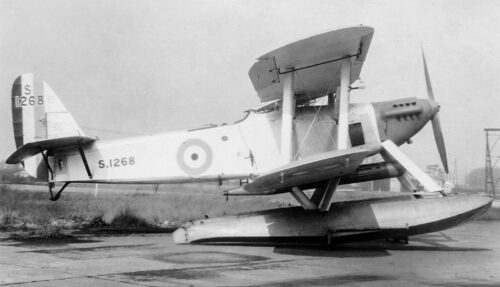
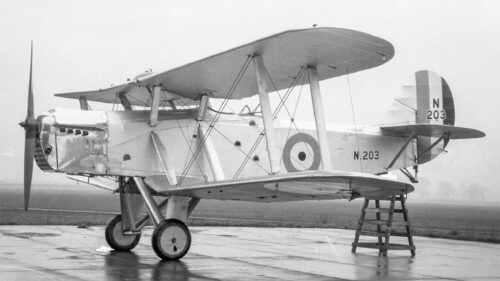
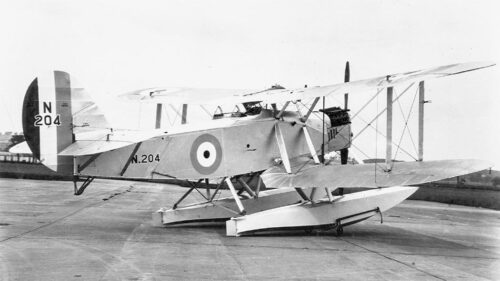
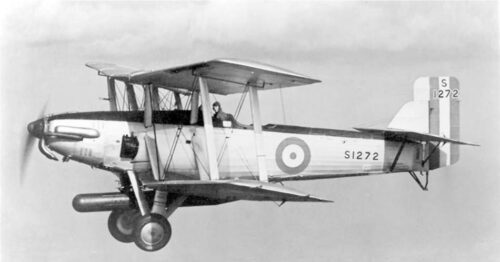
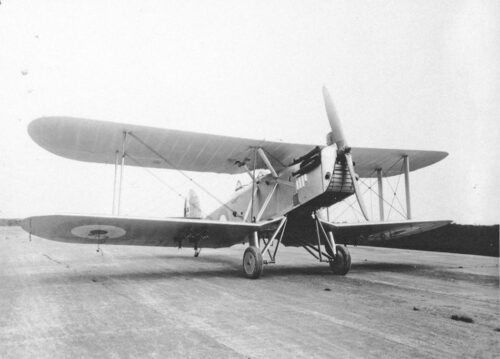
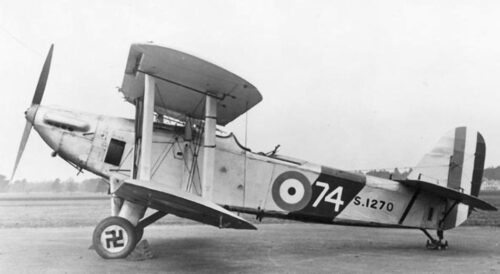
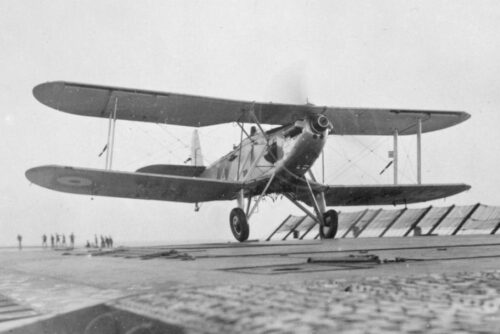
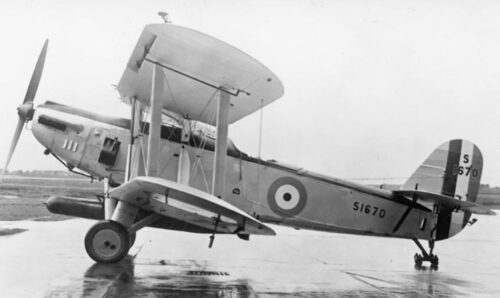
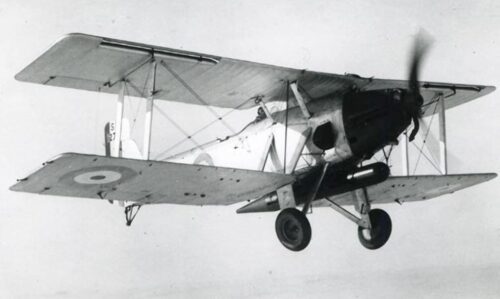
The Blackburn T.5 Ripon emerged from the British Air Ministry’s Specification 21/23, issued in 1923 to replace the single‑seat Blackburn Dart with a more capable two‑seat torpedo bomber and long‑range reconnaissance aircraft.
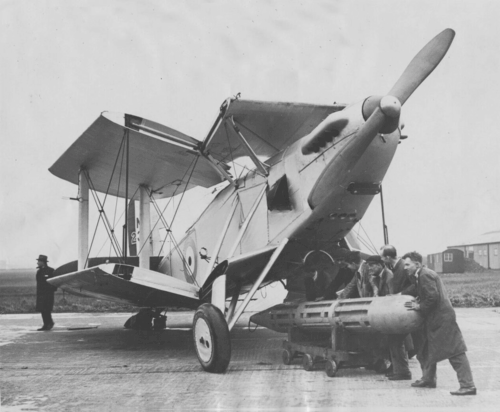
The specification demanded a 12‑hour endurance, a range approaching 900 miles, and the ability to carry either a standard 18‑inch torpedo or an equivalent bomb load.
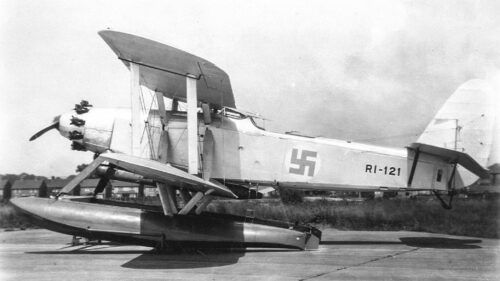
It also required interchangeable wheeled and float undercarriages, enabling operation from both carriers and waterbases.
Blackburn’s design team, led by F. A. Bumpus, drew heavily on the firm’s earlier Swift/Dart/Velos lineage.
Two prototypes were ordered in 1926: one landplane and one seaplane.
The first prototype flew on 17 April 1926, powered by a Napier Lion V engine; the second, configured as a floatplane, flew that August.
Early trials at Martlesham Heath and Felixstowe revealed shortcomings not only in the Ripon but in all competing designs, prompting a major redesign.
The revised aircraft — effectively a new model with a more powerful Napier Lion X, an enlarged rudder, and increased wing sweep — won the second round of evaluations and was ordered into production as the Ripon II.
This marked the beginning of a long refinement process that would produce several sub‑variants and ultimately lead to the derivative Blackburn Baffin.
Design and Construction
Airframe
The Ripon was a two‑bay biplane of mixed construction, typical of late‑1920s British naval aircraft.
Its structure combined steel tube fuselage elements with wooden wing components in early versions, later replaced by all‑metal wings in the Ripon IIC.
The lower wing featured slight anhedral at the centre section, and the aircraft incorporated Blackburn’s characteristic lower-wing root fairing.
The wings folded for carrier stowage, and the airframe was designed for rapid conversion between wheeled and float undercarriages.
Crew and Equipment
The Ripon carried a pilot and an observer/gunner.
The rear cockpit mounted a rotating ring for a Lewis gun, later replaced by a Fairey high‑efficiency turret in the Ripon IIA.
The observer’s station also housed navigation and reconnaissance equipment, including a ventral sighting position for bombing.
Powerplant
Most British Ripons used the Napier Lion X/XI/XIA, a 12‑cylinder W‑engine producing around 570 hp.
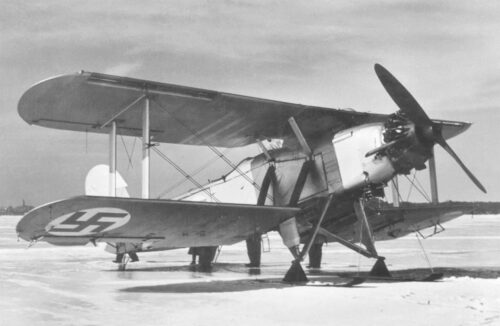
Finnish‑built aircraft used a variety of radial engines — Bristol Jupiter, Gnome‑Rhône Jupiter, Armstrong Siddeley Panther, and Bristol Pegasus — depending on availability.
This flexibility allowed the Ripon to serve as both a torpedo bomber and a general-purpose reconnaissance aircraft.
Performance Characteristics
(Representative figures for the Ripon IIC, the definitive British version)
Maximum speed: ~111 mph (179 km/h) at sea level
Range: ~410 miles (660 km)
Service ceiling: ~10,000 ft (3,000 m)
Crew: 2–3 depending on configuration
Powerplant: 1 × Napier Lion X/XI/XIA, 570 hp
These performance numbers were adequate for the mid‑1920s but quickly became outdated as aviation technology advanced into the 1930s.
Production and Service in the Fleet Air Arm
Entry into Service
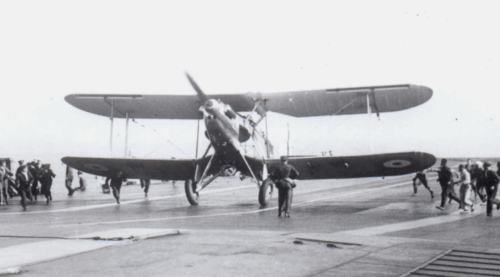
The Ripon entered Fleet Air Arm service in 1929, initially with No. 462 Flight aboard the HMS Furious.
Additional flights on Glorious and Courageous soon followed.
The aircraft was used primarily in its landplane configuration, despite its ability to operate as a floatplane.
Operational Use
In FAA service, the Ripon performed:
Torpedo training and exercises
Reconnaissance flights
Long‑range navigation and fleet shadowing
Public demonstrations, including a 1931 deployment to Argentina for the British Empire Exhibition
By 1933, the FAA reorganised its torpedo bomber flights into squadrons 810, 811, and 812, all operating Ripons.
However, the aircraft was already becoming obsolete.
Beginning in 1934, the Ripon was replaced by the Blackburn Baffin, an improved derivative with a Bristol Pegasus radial engine.
The last FAA Ripons were retired in January 1935.
Finnish Production and Wartime Service
Finland became Ripon’s most significant foreign user.
After receiving a single-pattern aircraft in 1929, the Finnish Air Force purchased a licence and built 25 Ripon IIFs at the State Aircraft Factory between 1929 and 1934.
These aircraft differed from British versions primarily in their radial engines and operational equipment.
Operational Roles in Finland
Finnish Ripons served in:
Maritime reconnaissance
Night bombing and harassment missions
Anti‑submarine patrols
Leaflet dropping
Casualty evacuation
Supply flights to isolated units
During the Winter War (1939–1940) and Continuation War (1941–1944), the Ripon was increasingly vulnerable to Soviet fighters.
After losing an aircraft in 1939, Finland restricted Ripons to night operations only.
Despite their obsolescence, they remained in service until December 1944, when the last airworthy example was struck off.
One aircraft, RI‑140, survives today in the Päijänne Tavastia Aviation Museum.
Ripon III — Prototype with lengthened nose and revised tail; not produced.
Export / Foreign Variants
Ripon IIF (Finland) — 25 licence-built aircraft with radial engines and interchangeable wheel/float gear.
Context and Legacy
The Blackburn Ripon represents the transitional era of naval aviation between World War I–style biplanes and the more modern monoplanes of the late 1930s.
When introduced, it met the Royal Navy’s needs for a long‑range torpedo bomber, but rapid technological progress soon left it behind.
Its significance lies in:
Serving as the direct predecessor to the Blackburn Baffin
Influencing the design of the Mitsubishi B2M, built under licence in Japan
Providing Finland with a durable, if outdated, maritime aircraft that saw combat service throughout WWII
Although obsolete by the outbreak of the Second World War, the Ripon’s long service life — especially in Finland — demonstrates the adaptability of its basic design.