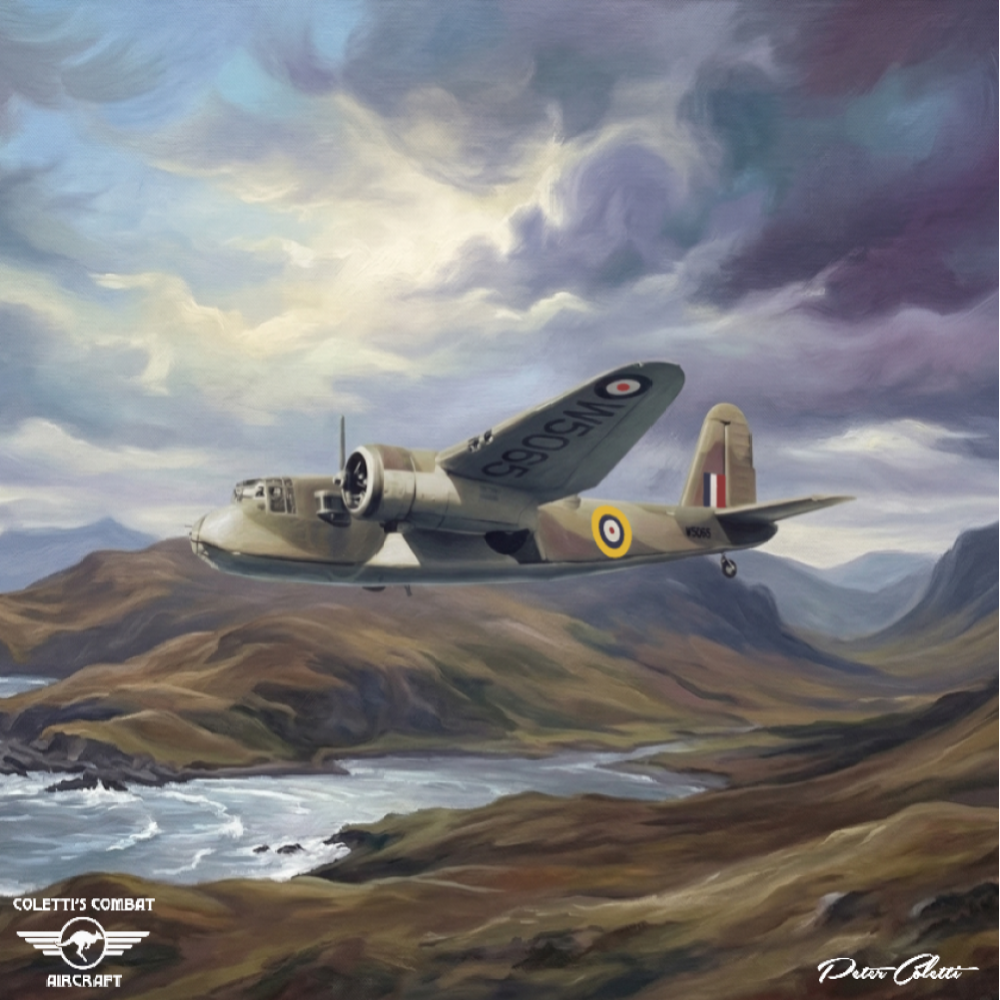
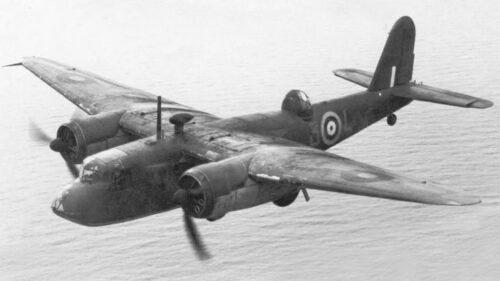
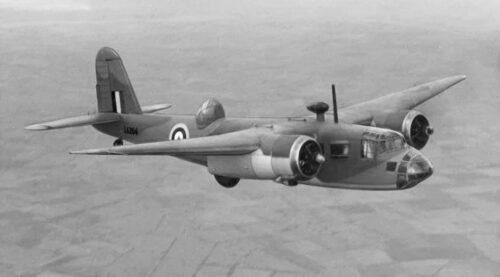
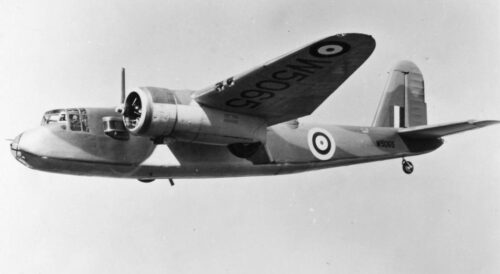
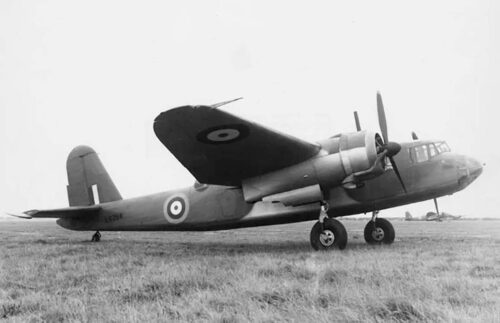
The Blackburn B.26 Botha emerged from a period of rapid expansion and doctrinal uncertainty within Britain’s pre‑war Coastal Command.
In September 1935, the Air Ministry issued Specification M.15/35, calling for a twin‑engine reconnaissance and torpedo bomber capable of carrying a single internally stowed torpedo and crewed by three men.
Blackburn and Bristol both submitted designs, and the Ministry—seeking to accelerate rearmament—ordered both aircraft “off the drawing board”, meaning no prototypes would precede production.
The design process was soon disrupted.
The ministry revised the requirement as specification M.10/36, abruptly increasing the crew from three to four, enlarging the fuselage, and raising the aircraft’s weight beyond what the originally intended Bristol Perseus engines could comfortably support.
Bristol’s competing Beaufort received the more powerful Taurus engines, but limited supply meant the Botha was forced to retain the lower‑powered Perseus X, producing only 880–930 hp depending on the sub‑variant.
Despite these concerns, the Air Ministry placed a substantial order for 442 aircraft in December 1936, later expanded to 580 total airframes built at Blackburn’s Brough and Dumbarton factories.
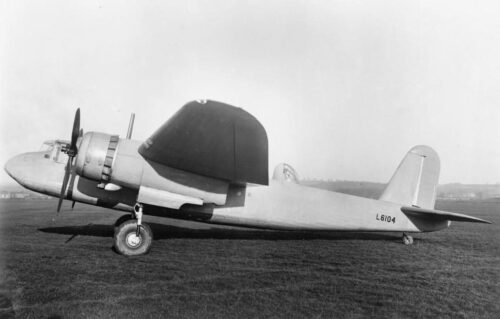
The first production aircraft—there were no prototypes—flew on 28 December 1938, piloted by H. Bailey.
Early trials at the Aeroplane and Armament Experimental Establishment revealed inadequate elevator authority, prompting an increase in tailplane area and a larger horn‑balanced elevator on subsequent aircraft.
These fixes improved longitudinal control but did not address deeper aerodynamic and power-related issues that would later define the Botha’s reputation.
Design and Technical Characteristics
General Configuration
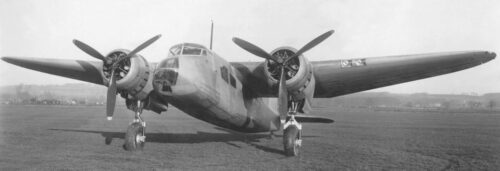
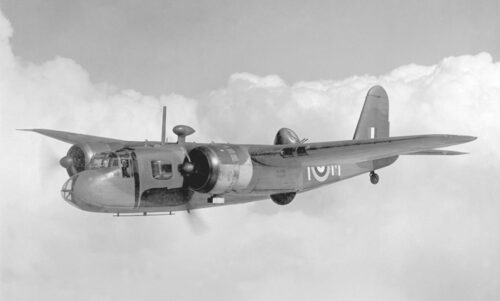
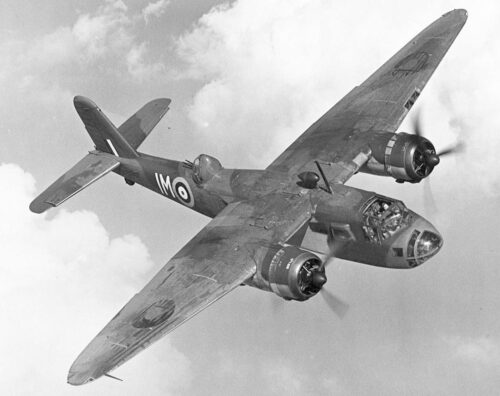
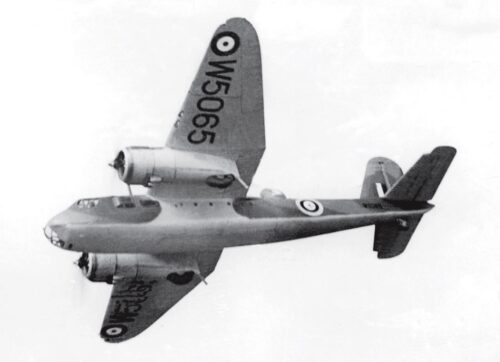
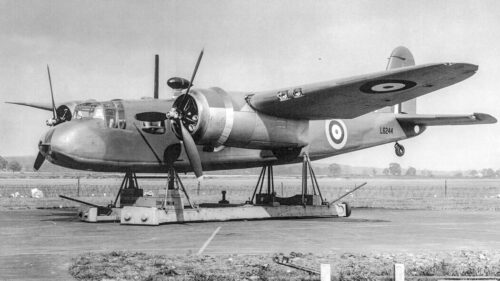
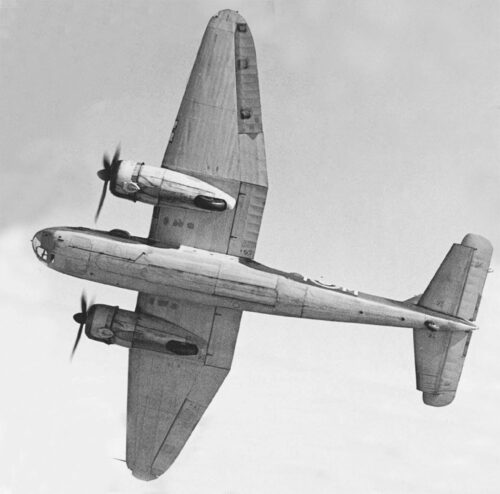
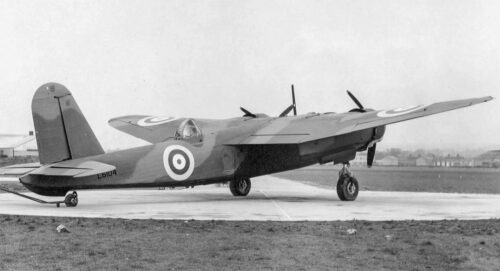
The Botha was a twin‑engine, high‑wing, all‑metal monoplane with a crew of four.
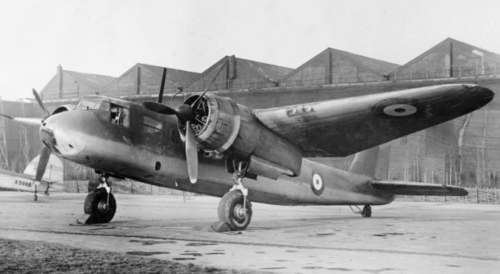
The high wing was chosen to maximise downward visibility for reconnaissance work, though the placement of the engines severely restricted lateral and rearward fields of view—an issue that would later prove operationally crippling.
The forward fuselage was reminiscent of Blackburn’s earlier Skua, with flush‑riveted Alclad skinning, while the rear fuselage used metal skin over a tubular structure.
Control surfaces were fabric‑covered.
Crew Layout
The cockpit was relatively spacious, giving the pilot an excellent forward view.
Behind him sat the navigator and wireless operator in a separate cabin, connected by a narrow gangway.
The observer accessed the prone bomb‑aiming position in the nose through this passage.
A fourth crewman operated the power‑assisted dorsal turret mounted aft of the wing.
Powerplant and Systems
The Botha Mk I was powered by two Bristol Perseus XA nine‑cylinder radials, each producing 930 hp and driving three‑bladed de Havilland Hydromatic constant‑speed propellers.
The engines were mounted in wide‑chord cowlings with controllable cooling gills.
Fuel was carried in three wing tanks with a normal capacity of 435.75 imperial gallons, extendable to 565.75 gallons for special operations.
A problematic fuel‑selector panel—located behind the cockpit and out of the pilot’s reach—made it possible to accidentally shut off all tanks, causing engine failure that could not be corrected by a single pilot in flight.
Undercarriage and Structure
The main undercarriage retracted rearwards into the engine nacelles, using oleo‑pneumatic legs and spring‑loaded doors.
Hydraulically actuated split flaps occupied the centre-section trailing edge.
Armament
The Botha’s intended armament reflected its dual reconnaissance and torpedo-bomber role:
One fixed forward‑firing. 303 Vickers machine gun
Twin .303 Lewis guns in the dorsal turret
Internal bay for one torpedo, one 500 lb bomb, or two 250 lb bombs
Additional external racks for bombs or depth charges up to 2,000 lb total
Performance and Handling
The Botha’s performance was constrained from the outset by its underpowered engines.
With a gross weight of 18,450 lb, the aircraft struggled to achieve competitive speeds or climb rates:
Maximum speed: 209 mph at sea level and 220 mph at 15,000 ft
Cruise speed: 212 mph
Range: 1,270 miles
Service ceiling: 18,400 ft
Initial climb: 985 ft/min, dropping to 355 ft/min at 15,000 ft
More troubling were its lateral stability issues, which made the aircraft tiring to fly and difficult for inexperienced pilots.
The poor side and rear visibility—caused by the engine placement—rendered it “useless as a general reconnaissance aircraft”, according to contemporary evaluations.
Operational History
The first Botha entered RAF service on 12 December 1939 with No. 5 maintenance unit.
By mid‑1940, the type was issued to No. 608 Squadron, the only unit to operate it in frontline reconnaissance patrols.
Typical loads included combinations of 100 lb anti‑submarine bombs and 250 lb general‑purpose bombs.
However, the aircraft quickly developed a reputation for the following:
Underpowered performance
Poor stability
Restricted visibility
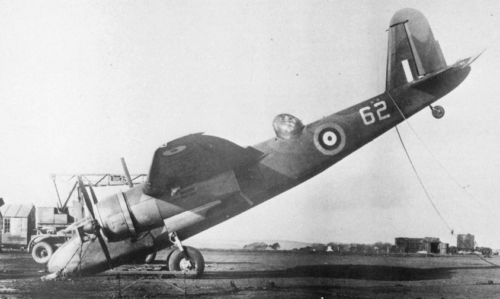
A high accident rate, especially in training units
Although no single design flaw was identified as the cause of the accidents, the combination of marginal handling and inexperienced wartime pilots proved hazardous.
By April 1940, the Air Staff decided the Botha was unsuitable for torpedo‑bomber squadrons and reassigned it to general reconnaissance units already flying the Avro Anson.
After the fall of France, the operational need for the Botha diminished further, and the type was withdrawn from frontline service in 1941.
Large numbers were transferred to training establishments, where accidents continued.
Some airframes were converted to target tugs, redesignated as the Botha TT Mk I.
The aircraft was declared obsolete in August 1943 and fully retired by September 1944.
Variants
Botha Mk I
The standard reconnaissance/torpedo‑bomber version is powered by Bristol Perseus XA engines.
Botha TT Mk I
Target‑tug conversion used in training units.
No further variants were produced, though Blackburn proposed a Botha II with Bristol Hercules engines; it was never pursued due to shifting priorities and engine allocation constraints.
Assessment and WWII Context
Botha’s troubled career reflects the broader pressures of Britain’s pre‑war rearmament.
The Air Ministry’s decision to enlarge the aircraft without providing more powerful engines doomed the design before it flew.
The Beaufort, benefiting from the Taurus engine, became the RAF’s primary torpedo bomber, while the Botha struggled to meet even basic reconnaissance requirements.
By the time the Botha entered service:
Coastal Command’s needs had evolved.
Long‑range land‑based aircraft (e.g., Hudsons, later Liberators) were becoming available.
The Fall of France reduced the urgency for short‑range coastal patrol aircraft.
The Botha thus became a victim of shifting strategic priorities, inadequate powerplant allocation, and a design stretched beyond its limits.
Legacy
Although 580 Bothas were built, the aircraft left little positive legacy.
It is remembered primarily for:
Its high accident rate
Its role as a cautionary example of specification creep
The dangers of ordering aircraft directly from the drawing board
Yet the Botha remains historically significant as a case study in the challenges of rapid wartime procurement and the consequences of mismatched requirements and resources.