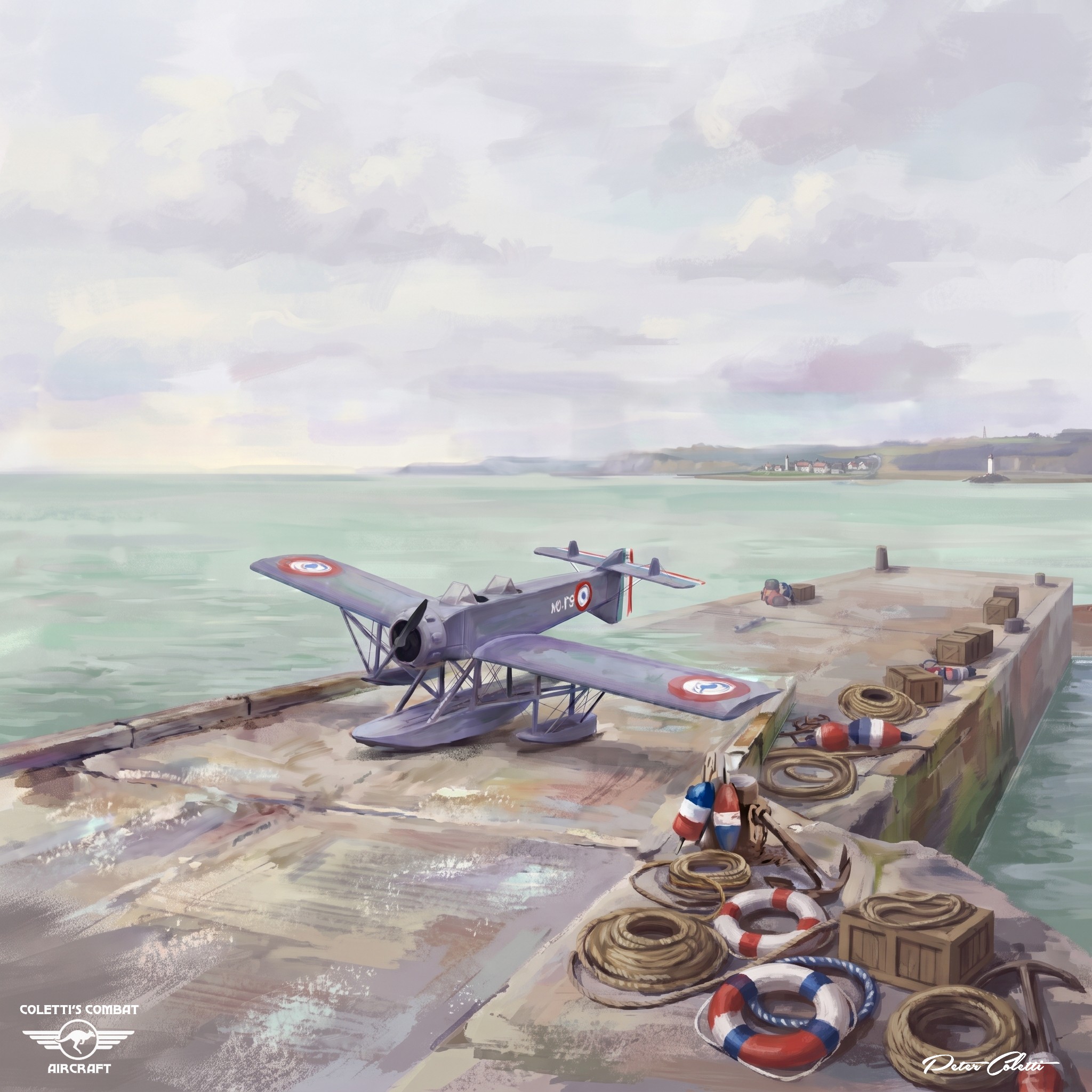
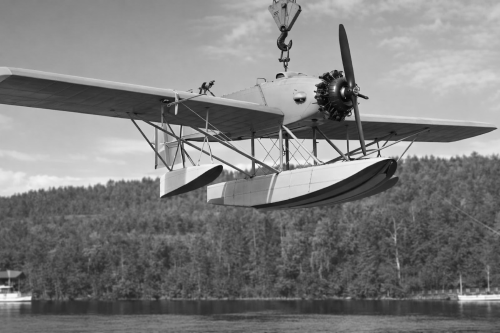
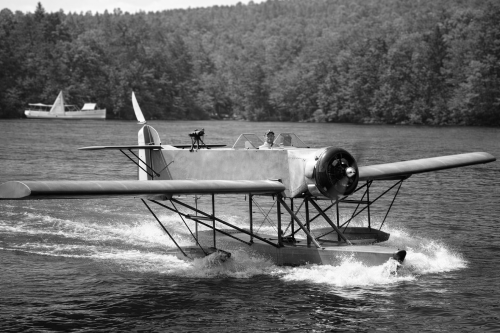
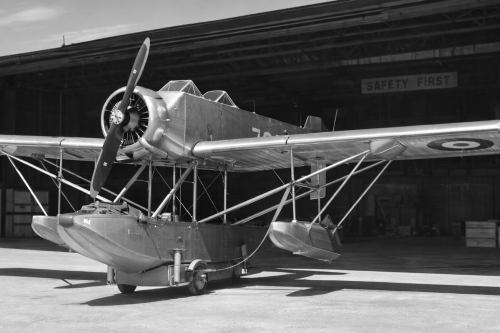
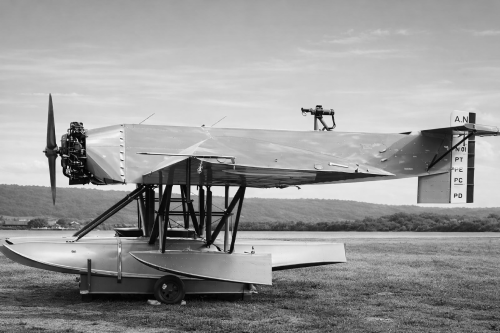
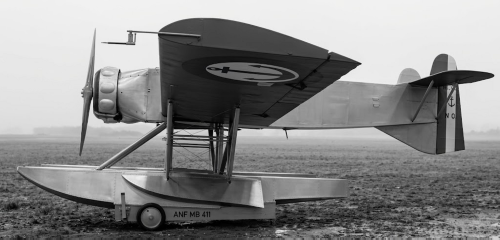
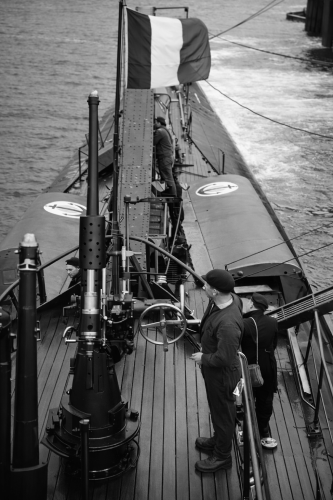
The Besson MB.411 was a compact French two‑seat observation floatplane of the mid‑1930s, designed specifically to operate from the cruiser‑submarine Surcouf.
It sat at the intersection of two experimental ideas of the interwar period—submarines carrying aircraft and very small, quickly assembled seaplanes for naval reconnaissance.
Only two production aircraft and one prototype were built, but their story ties together French naval aviation, inter‑war experimentation, and the early years of the Second World War.
Development and programme history
Origins in the MB.35 and MB.410
Early Besson seaplanes
Marcel Besson had already made a name designing small naval floatplanes when the French Navy began to explore aircraft‑carrying submarines.
His MB.35 of the late 1920s was a two‑seat biplane floatplane, powered by a Salmson radial and fitted with twin floats.
It was intended for reconnaissance and spotting, and it introduced Besson’s recurring themes: compact dimensions, mixed construction, and rapid disassembly for cramped shipboard storage.
Transition to a monoplane: MB.410
In 1932 Besson evolved the MB.35 into a more modern monoplane, the MB.410.
The twin main floats were replaced by a single large central float with two small outrigger stabilising floats mounted inboard of the wingtips.
The engine received a tighter cowling, and the fuselage was streamlined, reflecting contemporary aerodynamic thinking.
The MB.410 served as a proof‑of‑concept for a compact, efficient submarine‑borne aircraft, but it was destroyed in a fatal accident during testing, ending its direct development path.
Requirement for the submarine Surcouf
Surcouf’s need for a spotter
The French cruiser‑submarine Surcouf, commissioned in the early 1930s, was conceived as a long‑range commerce raider with a heavy gun armament—twin 203 mm (8‑inch) guns in a turret ahead of the conning tower.
To exploit these guns at long range, the Navy wanted an aircraft that could spot fall of shot, perform reconnaissance, and extend the submarine’s visual horizon.
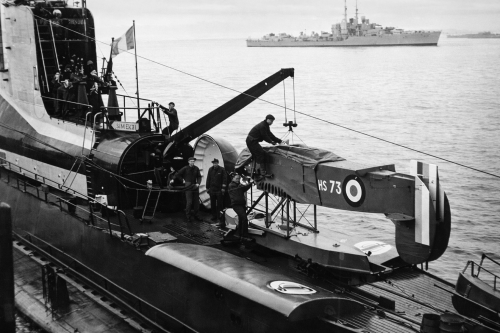
This requirement drove the specification for a small, two‑seat observation floatplane that could be stowed in a cylindrical hangar built into the rear of Surcouf’s conning tower.
From MB.410 to MB.411
After the loss of the MB.410, the Navy ordered a refined production design, designated MB.411.
Construction was entrusted to ANF Les Mureaux, while Besson provided the basic design.
The new aircraft had to meet strict dimensional limits to fit the submarine’s hangar and be capable of rapid assembly and disassembly at sea.
The first MB.411 underwent boarding trials with Surcouf at Brest in 1934, even before its official first flight, to validate handling, stowage, and crane operations.
Prototypes, trials, and production
First MB.411 and early trials
The first MB.411 prototype completed its initial boarding and handling trials in 1934, then made its official first flight at Les Mureaux in June 1935.
Shortly afterwards, Surcouf embarked on the aircraft for extended sea trials in the Caribbean, arriving there in September 1935.
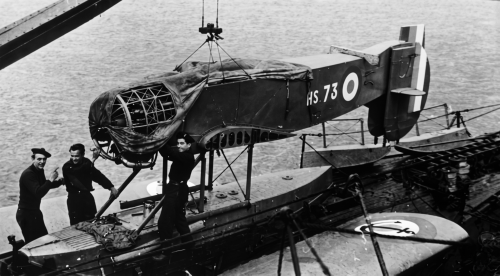
These trials evaluated the full cycle: extraction from the hangar, assembly, crane launch, water handling, recovery, disassembly, and stowage, all under operational conditions.
Refinements and second aircraft
Following the Caribbean trials, the first MB.411 returned to the factory in early 1936 for modifications—fine-tuning of structure, systems, and handling based on operational feedback.
A second MB.411 was completed in early 1937, flew for the first time in December 1937, and was delivered in mid‑1938.
This second aircraft effectively replaced the first as Surcouf’s dedicated floatplane, while the earlier machine was reassigned to a shore‑based naval squadron.
Design and technical characteristics
General configuration
Layout and structure
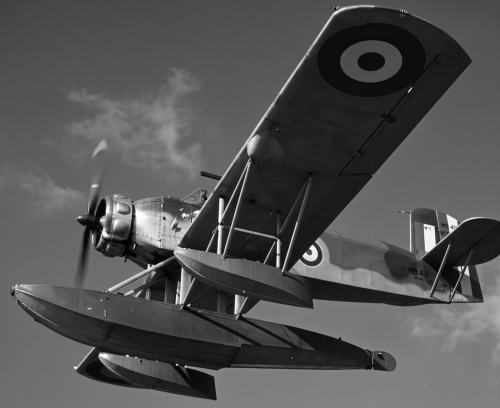
The MB.411 was a low‑wing monoplane floatplane with a single large central float and two small outrigger floats mounted under the wings, just inboard of the tips.
The airframe used mixed construction: metal and wood primary structure with fabric covering over much of the surface, a common compromise in the early 1930s that balanced strength, weight, and ease of repair.
The aircraft was compact—about 8.25 m in length, with a 12 m wingspan and a height of roughly 2.85 m—dimensions dictated by the diameter and length of Surcouf’s cylindrical hangar.
Crew and cockpit arrangement
The MB.411 carried a crew of two: a pilot in the forward cockpit and an observer in the rear.
The observer’s role was to conduct navigation, reconnaissance, and artillery spotting, often using binoculars and simple plotting tools rather than sophisticated electronics.
The cockpits were arranged in tandem, with good all‑round visibility being more important than heavy protection or armament.
Powerplant and systems
Engine and propeller
Power came from a single Salmson 9Nd air‑cooled radial engine, rated at about 130 kW (175 hp), driving a two‑blade wooden propeller.
This engine choice reflected the need for reliability, compactness, and ease of maintenance in a naval environment.
The engine was tightly cowled to reduce drag, a step forward from earlier, more drag‑heavy installations on Besson’s biplane designs.
Fuel and endurance
Standard fuel capacity gave the MB.411 a range of roughly 400 km, adequate for reconnaissance around a submarine’s patrol area.
With auxiliary fuel, endurance could reach up to about seven hours, allowing extended spotting or patrol missions when required.
This long endurance was particularly valuable for artillery spotting, where the aircraft might need to loiter for prolonged periods while the submarine manoeuvred and fired.
Float and folding/assembly arrangements
Central and outrigger floats
The central float provided the main buoyancy and was robust enough to handle open-sea operations, while the small wingtip-mounted stabilising floats prevented excessive roll and improved stability on the water.
This arrangement reduced drag compared to twin large floats and simplified stowage, since the central float formed a narrow keel that fit more easily into the submarine’s hangar.
Rapid assembly and stowage
A defining feature of the MB.411 was its ability to be quickly assembled and disassembled.
Once removed from the hangar, the wings could be attached and the aircraft readied for launch in about four minutes under ideal conditions; in rough open‑sea conditions, this might extend to around twenty minutes.
After flight, the aircraft was hoisted aboard by crane, partially disassembled, and slid back into the cylindrical hangar.
This entire process had to be executed quickly to minimise the submarine’s exposure on the surface.
Armament and equipment
Lightly armed spotter
The MB.411 was essentially unarmed in its final form, carrying no fixed guns and, in practice, no regular defensive armament.
Its mission profile emphasised observation and spotting rather than combat.
Equipment consisted mainly of basic navigation instruments, communication gear to relay observations to Surcouf or other ships, and optical devices for the observer.
This light equipment fit the aircraft’s weight and size constraints and reflected its specialised role.
Performance
Basic performance figures
With its 175 hp Salmson engine and relatively clean monoplane layout, the MB.411 achieved a maximum speed of about 190 km/h (118 mph).
Its service ceiling was around 5,000 m, sufficient for reconnaissance and spotting but modest compared to contemporary land-based fighters.
The aircraft’s range of roughly 400 km and endurance of several hours made it suitable for extended patrols around a task force or submarine operating area.
Handling and operational suitability
The MB.411’s low‑wing monoplane configuration and central float gave it reasonable stability on the water and acceptable handling in the air, though it was not designed for high‑performance manoeuvres.
Takeoff and landing runs on water were constrained by sea state; in rough seas, launching from a surfaced submarine was inherently risky.
Nonetheless, trials in the Caribbean and later operations from shore bases showed that the aircraft could operate reliably in moderate conditions, fulfilling its reconnaissance role.
Variants and related types
MB.41 / MB.410 prototype line
MB.41 / MB.410 origins
The immediate predecessor to the MB.411 is sometimes referred to as MB.41 or MB.410 in sources.
This prototype was powered by a lower‑powered Salmson 9NC radial of about 101 kW (135 hp) and embodied the shift from the MB.35 biplane to a streamlined monoplane floatplane.
Its loss in a fatal accident curtailed direct development but provided the aerodynamic and structural lessons that fed into the MB.411.
MB.411 production aircraft
Production standard
The MB.411 designation covered the two production aircraft built to operate with the Surcouf and, secondarily, from large warships or shore bases.
They incorporated the more powerful Salmson 9Nd engine, a refined structure, and the full quick‑assembly system tailored to the submarine’s hangar.
In practice, although conceived as submarine aircraft, they spent much of their service life operating from shore installations.
Operational history and Second World War context
Pre‑war service with Surcouf
Caribbean trials and peacetime operations
After its first flight in 1935, the initial MB.411 embarked on Surcouf for extended trials in the Caribbean.
These exercises tested the concept of a submarine‑borne spotter aircraft in realistic conditions, including long‑range patrols and simulated gunnery spotting.
The trials confirmed that the aircraft could be launched and recovered at sea but also highlighted the vulnerability of a surfaced submarine during flight operations and the practical difficulties of handling a floatplane in anything but moderate seas.
Refit and replacement
The first MB.411 returned to France for modifications in 1936, while the second aircraft, completed in 1937 and delivered in 1938, took over as Surcouf’s primary aircraft.
By the late 1930s, however, the concept of submarine‑borne aircraft was already being questioned: advances in radar and other detection methods, as well as the increasing danger of surfacing in wartime, reduced the appeal of such systems.
Fate of the first MB.411 in France
Service with Aeronavale
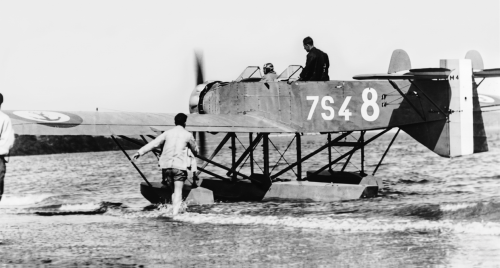
The first MB.411, once replaced aboard Surcouf, was assigned to the French naval air arm, Aeronavale, specifically to Escadrille 7‑S‑4 at Saint‑Mandrier.
There it served as a shore-based observation floatplane, operating from coastal waters rather than a submarine. Its tasks likely included local reconnaissance, training, and liaison flights.
Loss under German occupation
Following the fall of France in 1940 and the subsequent German occupation of much of the country, surviving French aircraft were either seized, scrapped, or left to deteriorate.
The first MB.411 was ultimately scrapped by German forces, ending its relatively modest career without seeing significant combat.
The second MB.411 and the Free French / British connection
Surcouf’s escape to Britain
In June 1940, as France collapsed, Surcouf was undergoing work in Brest.
With the German advance, the submarine escaped across the Channel—limping with mechanical issues and a jammed rudder—to seek refuge in Plymouth.
The MB.411 associated with Surcouf did not remain permanently aboard during these movements; instead, it stayed in England and became entangled in the complex politics of the Free French and British forces.
Renaming and Fleet Air Arm service
In French service the aircraft had carried the nickname “Passe‑Partout” (“all‑purpose”), echoing the MB.35’s earlier moniker.
In British hands it was renamed “Petrel”, aligning with the Royal Navy tradition of naming aircraft after seabirds.
After being damaged in a Luftwaffe bombing raid on Plymouth in April 1941, it was repaired—apparently with some changes to its appearance—and taken on charge by the Royal Navy’s Fleet Air Arm.
It then served with 765 Naval Air Squadron from RNAS Sandbanks, primarily in a training and utility role rather than front-line combat.
Withdrawal and scrapping
The MB.411’s service with the Fleet Air Arm was short-lived.
As a unique type with no spare‑parts pipeline, it quickly became difficult to maintain.
Once rendered unserviceable due to lack of spares, it was withdrawn and eventually scrapped at RAF Mount Batten.
By that time, the aircraft was an oddity in a rapidly modernising wartime air force, overshadowed by more capable and standardised types.
Broader WWII context and significance
Submarine aircraft concept in wartime
The MB.411’s story illustrates the limitations of submarine-borne aircraft in the Second World War.
While the idea promised extended reconnaissance and gunnery spotting, the realities of wartime operations—air patrols, radar, and the danger of prolonged surface exposure—made such systems increasingly impractical.
Other navies, notably Japan with its I‑class submarines and E‑series floatplanes, persisted longer with the concept, but even there the operational impact was limited.
The French experiment with Surcouf and the MB.411 remained a niche, largely experimental effort.
Technological and historical legacy
Technically, the MB.411 was a competent small floatplane but not revolutionary.
Its mixed construction, modest performance, and simple systems were typical of early‑1930s naval aircraft.
Its real significance lies in its role as a tailored solution to a very specific naval concept: the gun‑armed cruiser‑submarine.
As that concept faded, so too did the need for aircraft like the MB.411.
Today it stands as a curiosity in aviation history—a reminder of the experimental, sometimes eccentric paths navies explored between the wars in search of an edge at sea.