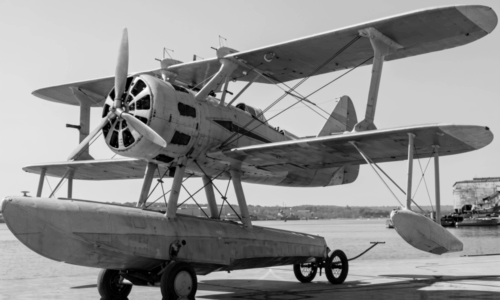
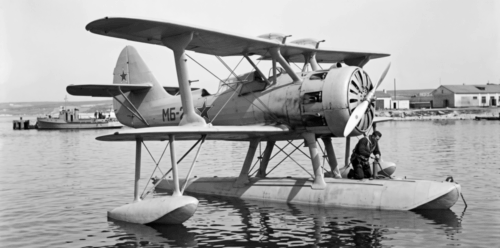
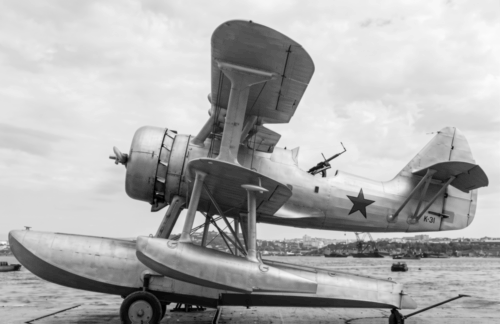
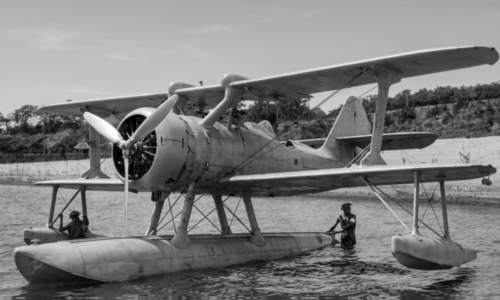
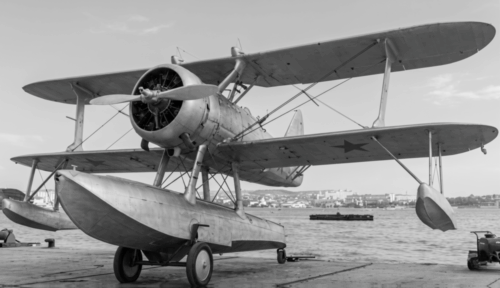
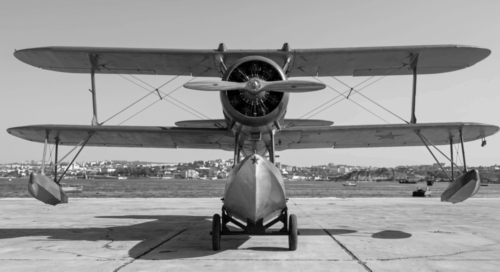
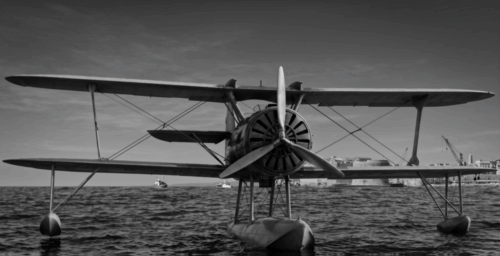
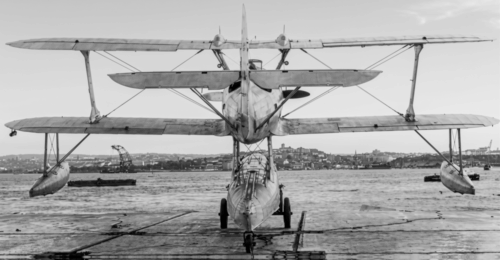
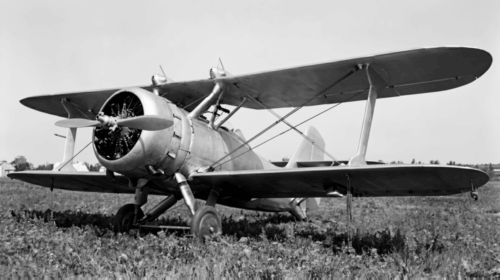
The Beriev Be‑2—originally designated KOR‑1 (Korabelny Orazvedchik, “shipborne reconnaissance aircraft”)—was conceived during a period when the Soviet Navy sought to modernise its fleet aviation capabilities.
By the early 1930s, the USSR relied on imported Heinkel HD‑55 seaplanes and a single German K‑3 pneumatic catapult, a combination that was rapidly becoming obsolete.
As new cruisers were planned under the Second Five‑Year Plan, the Navy required a domestically designed catapult‑launched reconnaissance seaplane with better performance, improved seaworthiness, and compatibility with folding‑wing shipboard storage requirements.
In 1934, the Air Force issued formal tactical‑technical requirements for a new catapult aircraft powered by the Wright Cyclone engine.
The assignment reached Georgy M. Beriev, who had just returned from studying Italian naval aviation facilities and catapult systems.
Soon after, Beriev was appointed head of the newly created Central Design Bureau for Marine Aircraft (TsKB MS) at Taganrog, and the KOR‑1 became one of its first major projects.
Early design studies examined three configurations—single‑float, twin‑float, and flying boat—but the Navy ultimately approved a single‑float biplane layout in November 1934.
This configuration allowed operation both from water and from land using an interchangeable wheel or ski undercarriage, a flexibility the Navy valued.
The prototype, designated TsKB MS‑3, was scheduled for state trials by late 1935, but development delays pushed construction into 1936.
The first flight occurred on 4 September 1936, piloted by P.A. Noman. Factory testing revealed generally stable flight characteristics but also significant shortcomings—particularly poor water stability in crosswinds, inadequate engine cooling, and structural vibration in the tail.
These issues triggered multiple rounds of redesign, including enlarged wingtip floats, strengthened tail bracing, and eventually the adoption of a NACA‑type engine cowling to improve cooling.
State trials in 1937–1938 were harshly critical.
The aircraft was judged unsafe in moderate sea states, difficult to maintain aboard ship, and inferior in performance to contemporary foreign designs.
Nevertheless, because the Navy urgently needed a catapult aircraft and catapult procurement was already underway, the KOR‑1 was accepted into limited production as a transitional type while work began on its successor, the KOR‑2 (later the Beriev Be‑4).
Production at Factory No. 31 in Taganrog ran from 1937 to 1940, yielding only 12 aircraft, as the plant was heavily committed to other seaplane programmes.
Technical Description
General Configuration
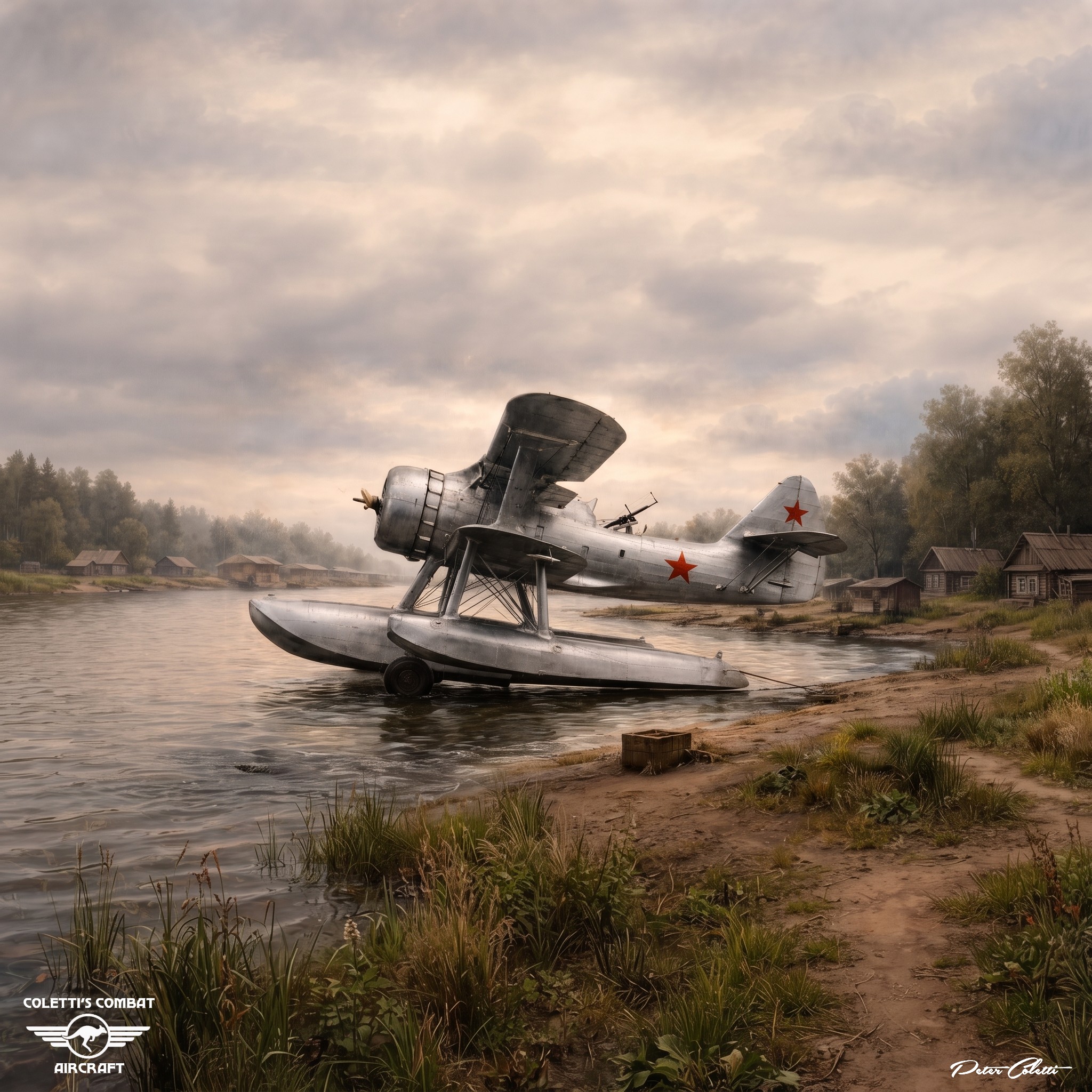
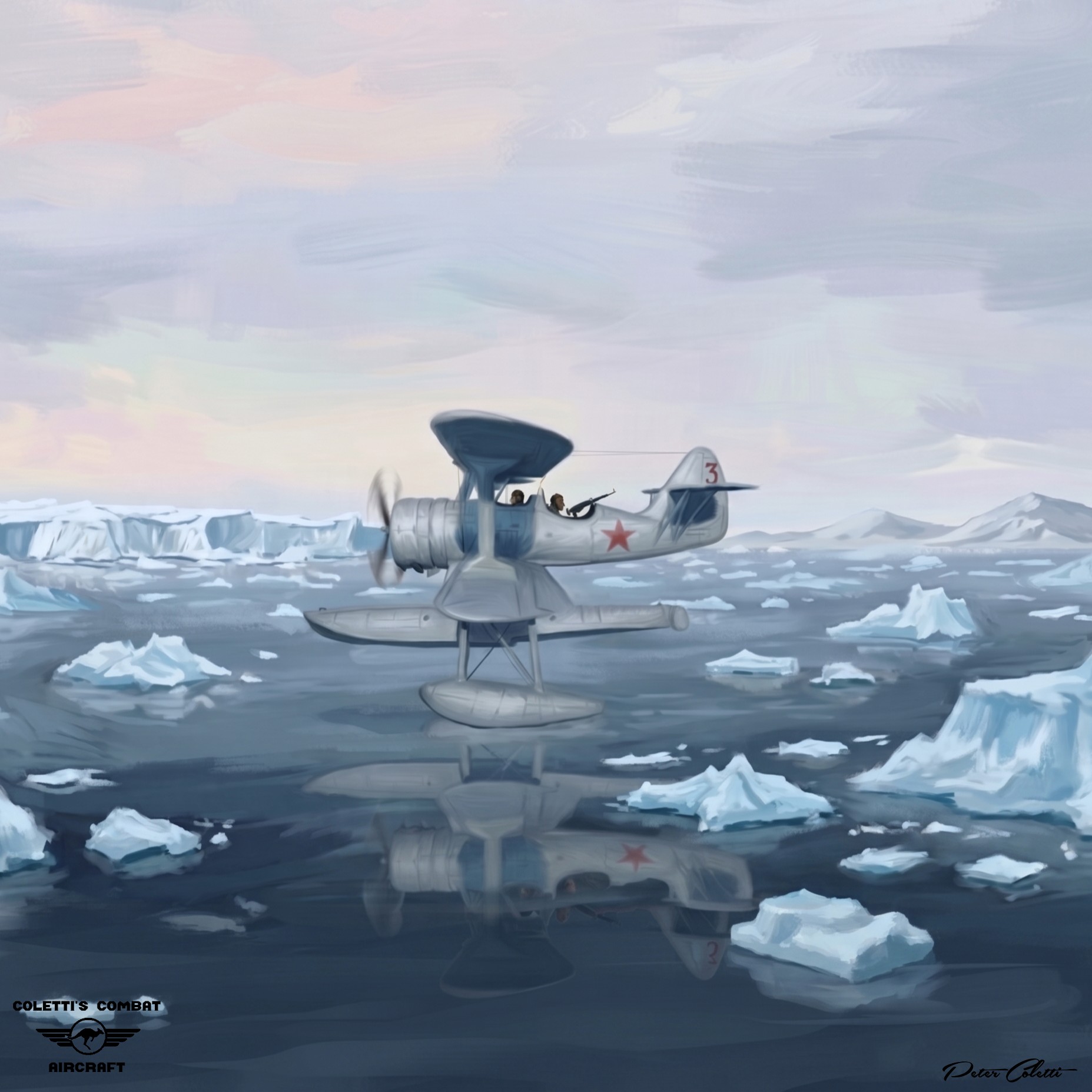
The Be‑2 was a single‑float, two‑seat reconnaissance biplane of mixed construction.
It was designed for catapult launch from cruisers and for recovery by crane after water landing.
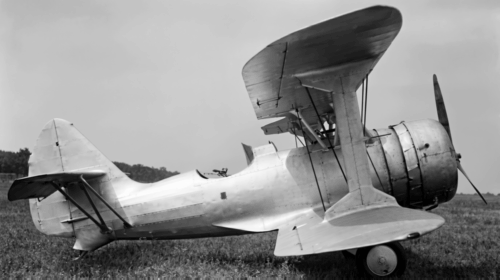
The aircraft could also operate from land using a fixed wheeled undercarriage or skis.
Structure
Fuselage: Welded chrome‑molybdenum steel‑tube frame with duralumin skin forward and fabric covering aft.
Wings: Two‑bay biplane with duralumin spars and fabric covering.
Both wings folded rearwards for shipboard stowage.
Tail Unit: Duralumin structure with fabric surfaces; tailplane incidence adjustable on the ground.
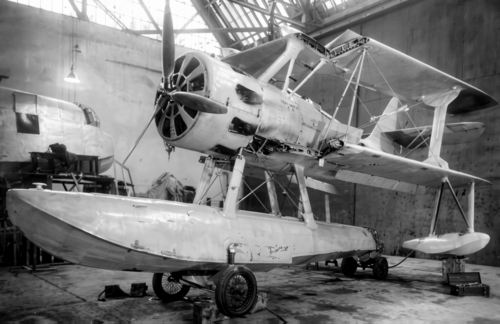
Float Gear: One large central float with five watertight compartments and a water rudder.
Two wingtip stabilising floats, each with three compartments.
All floats were braced with struts and tension wires.
Landplane Gear: Fixed main wheels attached to the same mounting points as the central float, a tail skid, and optional skis for winter use.
Difficult shipboard handling: Folding/unfolding wings took far longer than specified, and maintenance access was poor.
Despite these issues, pilots noted good longitudinal stability, acceptable water handling in calm conditions, and reliable landing gear performance in the landplane configuration.
Dive‑bombing behaviour was considered manageable, though target acquisition during the dive was hampered by the lower wing obscuring the view.
Variants and Experimental Concepts
Although only one main production version existed, several proposed variants were studied:
Land‑based attack version: Four additional ShKAS guns in streamlined underwing pods.
Civilian adaptations: Concepts for Arctic utility or mail transport aircraft.
None of these reached production.
Operational History and WWII Context
Pre‑war Service
By 1939, the Soviet Navy had received imported Heinkel K‑12 catapults for its new cruisers Kirov and Voroshilov.
These were tested extensively with the KOR‑1, including more than 30 successful catapult launches from ship and shore platforms.
However, the aircraft’s limitations were already clear, and the Navy pressed for a new design.
Deployment at the Outbreak of War
At the start of the German invasion in June 1941, the USSR possessed 11 operational KOR‑1s:
Baltic Fleet: 6 aircraft
Black Sea Fleet: 5 aircraft (including one prototype)
Combat Use
The Be‑2’s wartime service was brief and largely improvised:
Baltic Fleet
Conducted sporadic reconnaissance flights in June–August 1941.
One floatplane force‑landed behind enemy lines and was captured by Finnish forces.
By late August, only two remained airworthy; both were converted to landplanes.
One was destroyed in a German air raid; the last was transferred to a naval aviation school.
Black Sea Fleet
In September 1941, three surviving aircraft were reassigned as ground‑attack aircraft in the improvised “Fraidorf Group”.
Their low speed and poor manoeuvrability made them ineffective and vulnerable; two were lost in combat.
The final aircraft served with the 11th Assault Regiment and was destroyed by German artillery during the siege of Sevastopol on 3 December 1941.
Why It Never Served in Its Intended Role
The Be‑2 was never used operationally as a shipborne catapult aircraft during the war.
Several factors made this impossible:
Soviet cruisers operated within enemy air range, making catapult launches suicidal for a slow, lightly armed biplane.
Recovering a seaplane required the ship to stop—an unacceptable risk under air and submarine threat.
Catapults were removed from Baltic cruisers in 1941–42 to make room for additional anti‑aircraft guns.
Post‑war Legacy
The Be‑2 was quickly replaced by the far superior Beriev KOR‑2 (Be‑4).
After 1947, the Soviet Navy removed all catapults from its cruisers, as radar and helicopters rendered catapult seaplanes obsolete.
Summary Assessment
The Beriev Be‑2 was a pioneering but flawed aircraft—the Soviet Union’s first indigenous catapult‑launched seaplane and a crucial learning step for Beriev’s design bureau.
Although its operational career was short and largely unsuccessful, the experience gained directly enabled the creation of the successful Be‑4 and laid the foundation for Beriev’s later mastery of maritime aviation.