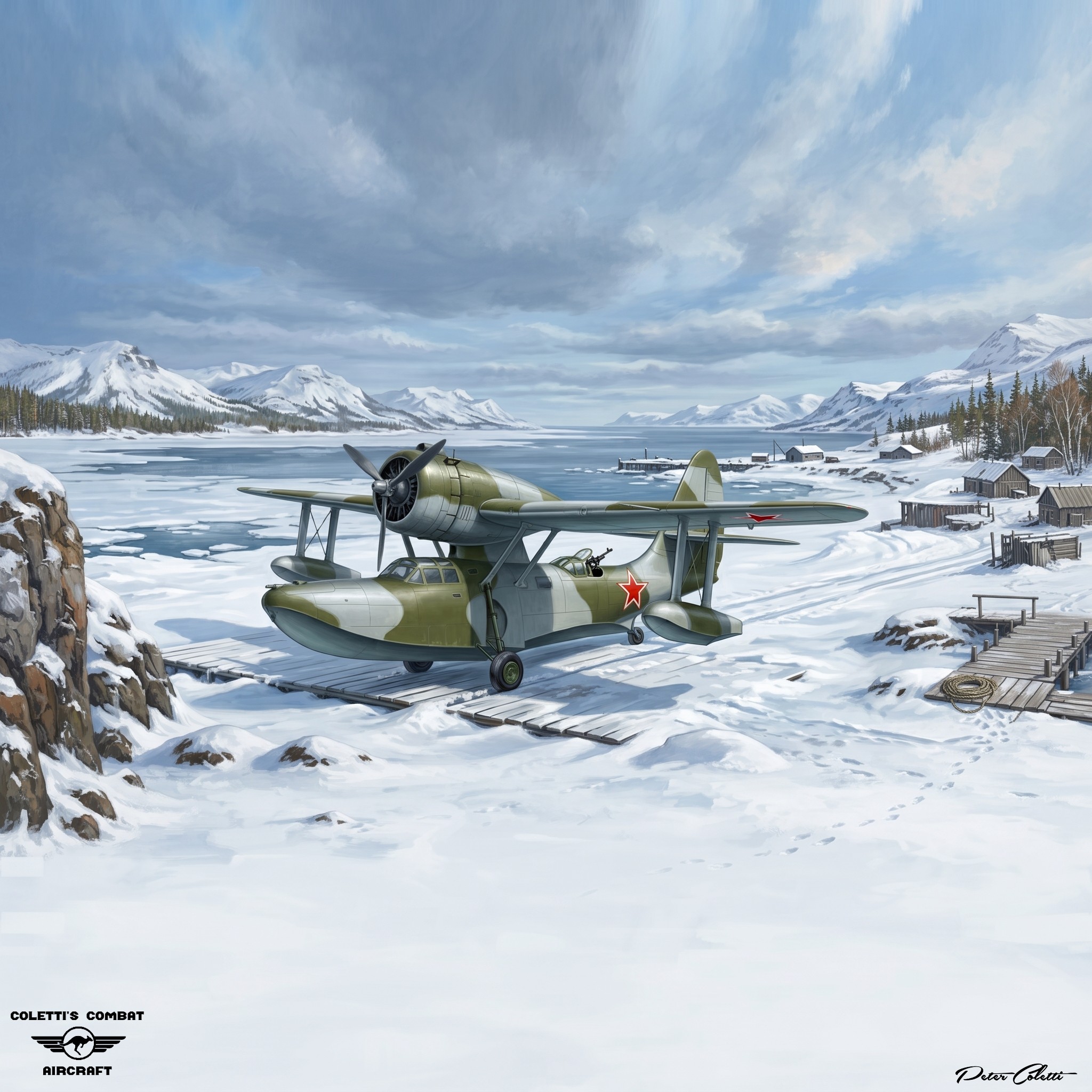
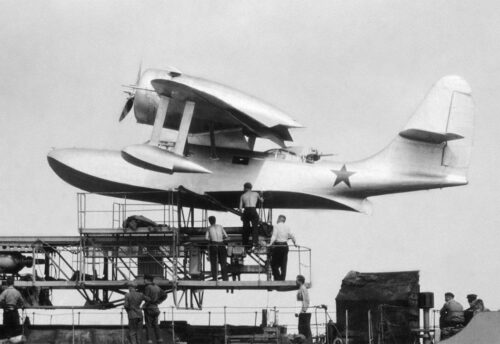
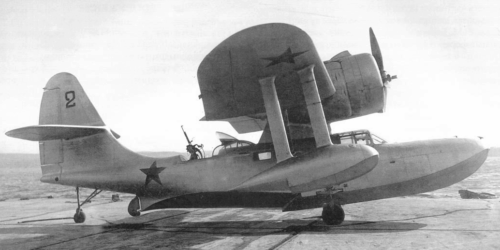
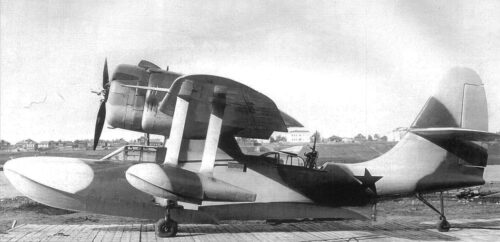
The Beriev Be‑4—initially known by its design bureau designation KOR‑2—emerged from a 1939 Soviet Navy requirement for a modern catapult‑launched reconnaissance seaplane.
The aircraft it was meant to replace, the KOR‑1 (Be‑2), had proved troublesome in service: it suffered from poor seaworthiness, structural fragility, and inadequate performance.
The Navy demanded a successor capable of reliable shipboard operation, improved handling on rough seas, and better range and speed for reconnaissance missions.
Beriev’s design bureau at Taganrog responded with a completely new aircraft rather than an incremental improvement.
The prototype flew on 21 October 1940, demonstrating that the bureau had successfully addressed the shortcomings of the earlier model.
Testing continued into early 1941, and the aircraft was formally ordered into production under the service designation Be‑4 in January of that year.
However, the German invasion of the Soviet Union in June 1941 disrupted the production plan.
The Moscow‑area factory assigned to build the Be‑4 was dismantled after completing only two aircraft.
Production equipment and personnel were evacuated first to Omsk and later to Krasnoyarsk, where manufacturing resumed in May 1943 and continued until the end of 1945.
In total, approximately 47 aircraft were completed — a modest number, but sufficient for the specialised naval reconnaissance role the aircraft was designed to fill.
Design Characteristics
General Configuration
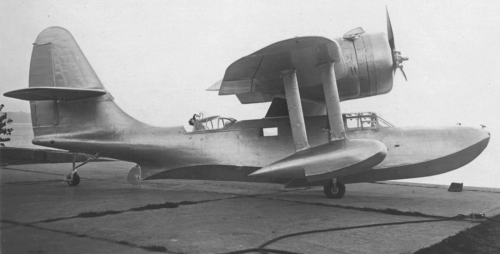
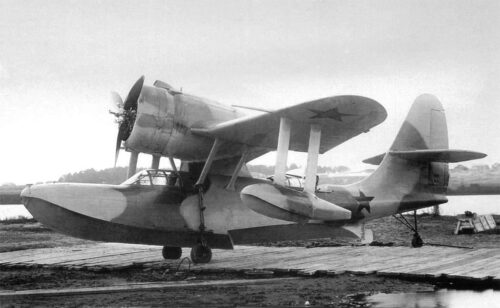
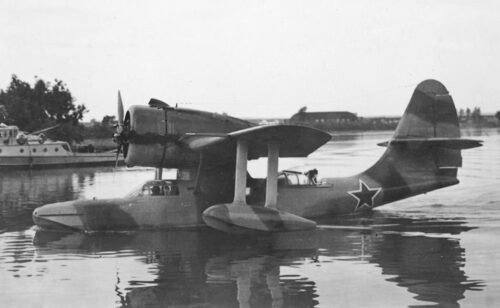
The Be‑4 was a parasol‑wing monoplane flying boat, a configuration chosen to keep the wing clear of sea spray and to provide excellent downward visibility for reconnaissance.
The wing featured a slight inverse-gull geometry, which improved aerodynamic efficiency and allowed shorter, sturdier wing struts.
A single Shvetsov M‑62 radial engine, producing around 1,000 hp, was mounted in a streamlined nacelle above the fuselage on struts.
This high‑mounted tractor engine kept the propeller clear of water during takeoff and landing and contributed to the aircraft’s clean aerodynamic profile.
Hull and Seaworthiness
The hull was a major improvement over the KOR‑1.
It was designed for better hydrodynamic performance, with a more refined step and improved stability on rough seas.
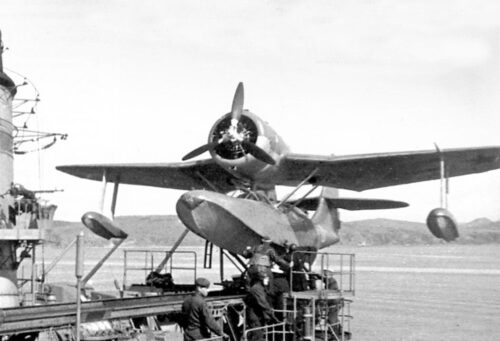
The aircraft could be launched via catapult from cruisers or operate from sheltered coastal waters.
Crew and Layout
The Be‑4 carried a crew of three: pilot, observer/navigator and rear gunner.
The observer had excellent visibility thanks to the parasol wing and glazed cockpit sections, while the gunner operated a 7.62 mm ShKAS machine gun mounted in an open dorsal position.
Armament and Payload
Although primarily a reconnaissance aircraft, the Be‑4 could carry up to 300 kg of bombs or depth charges for anti‑submarine patrols or light attack missions.
Performance
The Be‑4’s performance was respectable for a compact flying boat of its era:
Maximum speed: 356 km/h (221 mph)
Range: 1,150 km (716 mi)
Service ceiling: 8,100 m (26,575 ft)
Wingspan: 12.0 m
Length: 10.5 m
Empty weight: 2,082 kg
Gross weight: 2,760 kg
These figures gave the aircraft enough endurance for extended coastal patrols and enough speed to evade most enemy fighters when operating near friendly naval forces.
Operational History
The Be‑4 entered service with the Black Sea Fleet in 1942.
Its missions included the following:
Coastal reconnaissance
Artillery spotting for naval gunfire
Anti‑submarine patrols
Light transport and liaison duties
The aircraft also served aboard the cruisers Maxim Gorki and Kirov, where it was launched via catapult and recovered by crane after landing alongside the ship.
Although produced in small numbers, the Be‑4 proved reliable and well‑suited to its niche.
Its seaworthiness and handling were praised by crews, and it remained in service through the end of the war.
Variants
The Be‑4 did not spawn major variants, largely due to wartime production disruptions and its limited manufacturing run.
Minor improvements were incorporated during the shift to the Krasnoyarsk facility, but no distinct subtypes were designated.
Context Within WWII Naval Aviation
The Be‑4 filled a role similar to that of the German Arado Ar 196 and the Japanese Aichi E13A—ship‑launched reconnaissance seaplanes used for scouting, anti‑submarine patrols, and artillery spotting.
However, the Soviet Navy’s limited number of large surface combatants meant that the Be‑4’s shipboard use was more restricted than its Axis counterparts.
Most Be‑4s operated from coastal bases rather than cruisers.
Even so, the aircraft contributed meaningfully to Black Sea operations, where reconnaissance and anti‑submarine patrols were vital to protecting Soviet shipping and supporting coastal offensives.
Legacy
The Be‑4 was the last catapult‑launched flying boat produced by the Soviet Union.
After the war, the rapid shift towards radar‑equipped land‑based patrol aircraft and helicopters made such designs obsolete.
Nevertheless, the Be‑4 represented a significant step forward in Soviet naval aviation design and demonstrated Beriev’s growing expertise in flying boats—a specialisation the bureau would continue to develop for decades.