The BI‑1 emerged from the Soviet Union’s early and ambitious exploration of rocket propulsion, a field energised by the work of Sergey Korolev and the GIRD‑6 project beginning in 1932.
Korolev’s unmanned and manned rocket‑aircraft experiments culminated in the RP‑318‑1, which achieved its first powered flight on 28 February 1940.
These successes, combined with the advocacy of Marshal Mikhail Tukhachevsky, helped legitimise rocket propulsion as a viable military technology.
In spring 1940, the Central Aerohydrodynamic Institute (TsAGI) convened a conference on ramjet and rocket propulsion, drawing leading designers including Viktor Bolkhovitinov and his engineers Aleksandr Bereznyak and Aleksei Isayev.
Inspired by the discussions and by Korolev’s progress, Bereznyak and Isayev began conceptual work on a compact, high‑speed rocket interceptor, internally known as ”Project G”.
By autumn 1940 they had produced a preliminary design built largely of plywood and duralumin, with an estimated takeoff weight of 1,500 kg and intended to use a new 13.7 kN nitric‑acid/kerosene rocket engine under development at RNII.
The German invasion of the Soviet Union in June 1941 transformed the project from an experimental curiosity into an urgent military requirement.
The Soviet Air Force needed a short-range, point-defence interceptor capable of extremely rapid climb to counter high-altitude Luftwaffe bombers.
In July 1941, the Kremlin approved the BI programme and ordered the first prototype to be completed in 35 days, forcing the OKB‑293 design bureau to work continuously in three shifts.
Design and Engineering
Airframe and Structure
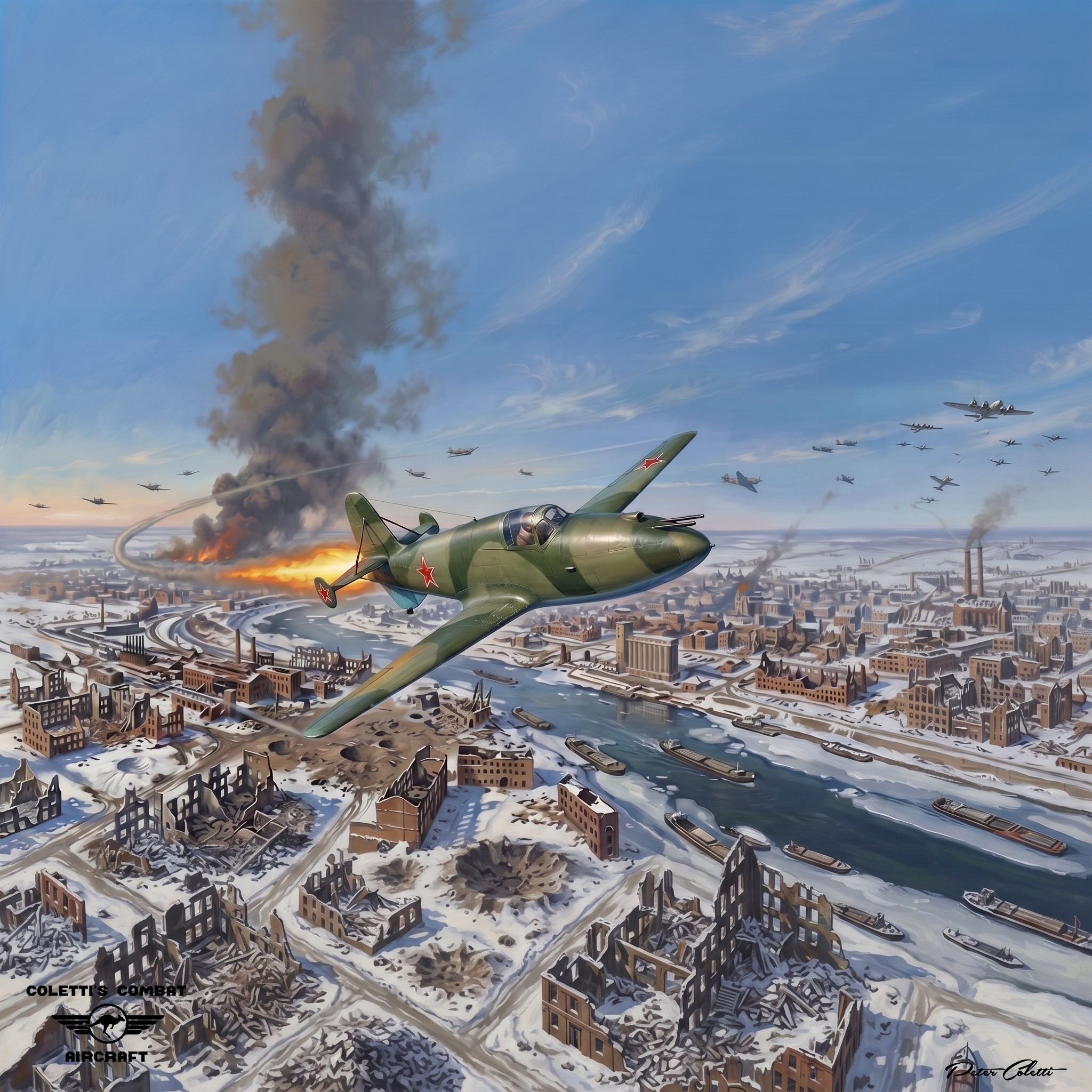
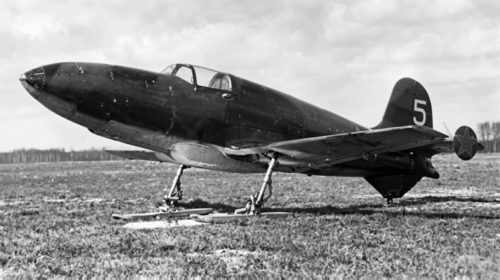
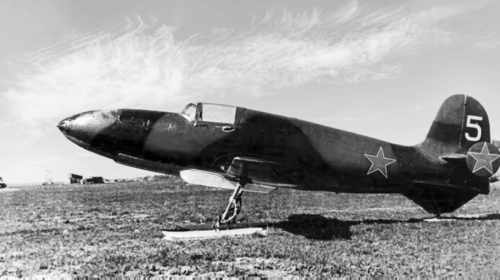
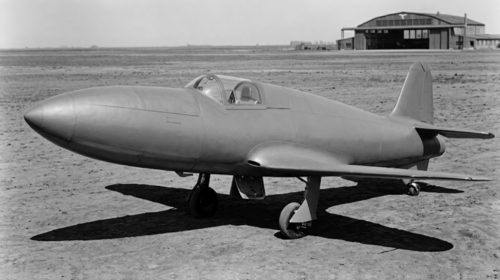
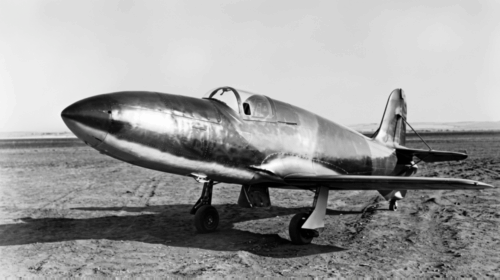
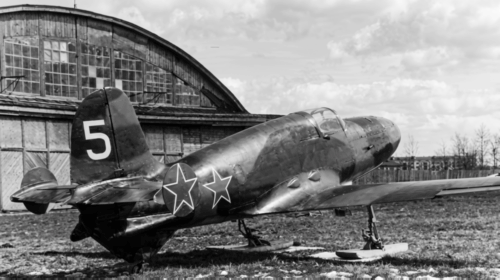
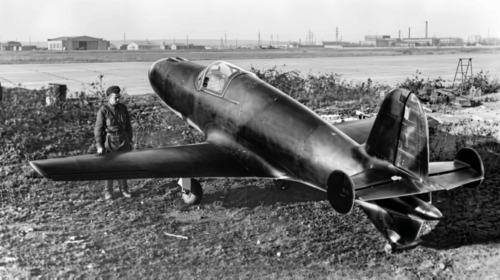
The BI‑1 was designed as a compact, streamlined monoplane optimised for rapid acceleration and steep climbs.
Its structure combined plywood, fabric, and metal, reflecting both aerodynamic needs and wartime material shortages.
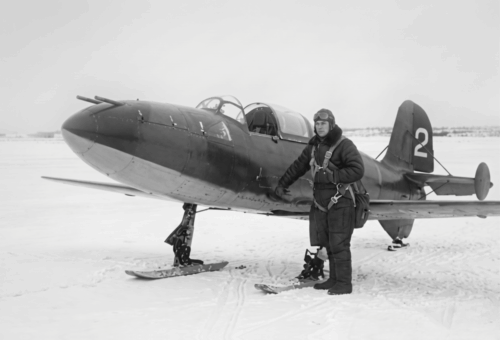
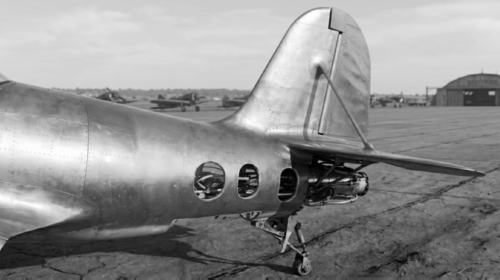
The fuselage featured a pointed nose, a raised dorsal spine to accommodate the rocket engine, and a conventional tail‑dragger undercarriage.
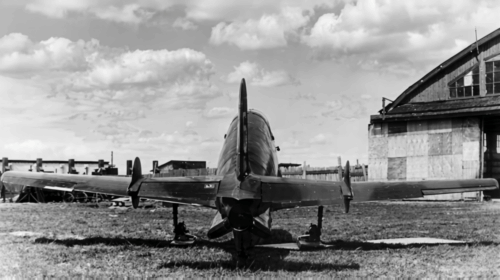
The wings were straight, mid-mounted, and relatively small to reduce drag.
Dimensions (prototype):
Length: ~6.4 m
Wingspan: ~6.5 m
Maximum takeoff weight: ~1,680 kg
Propulsion System
The BI‑1 used the D‑1‑A‑1100 liquid‑propellant rocket engine, developed by Leonid Dushkin and refined by Aleksei Isayev. Key characteristics:
Thrust: ~10.8 kN (1,100 kgf)
Propellants: kerosene + red fuming nitric acid
Pump system: hot‑gas/steam‑driven turbine pump
The engine was throttleable—an advanced feature for the era—but plagued by reliability issues, including explosions and corrosive fuel leaks.
A major explosion during ground testing on 20 February 1942 injured personnel and delayed powered flight.
Armament (Intended)
Although no prototype flew with weapons installed, the planned armament evolved from:
4 × 14.5 mm heavy machine guns → later
2 × 20 mm ShVAK cannons
Performance (Test‑Derived)
Maximum speed: up to ~800 km/h (approaching transonic)
Climb rate: >100 m/s
Powered endurance: ~4 minutes
These figures made the BI‑1 theoretically competitive with the German Me 163 Komet, though the Soviet aircraft never reached operational maturity.
Development and Flight Testing (1941–1943)
Glider and Tow Tests
The first unpowered BI‑1 glider flew on 10 September 1941, towed by a Pe‑2 bomber.
Fifteen gliding flights provided aerodynamic data before the OKB was evacuated eastward to Sverdlovsk in October 1941.
First Powered Flight
After months of engine troubleshooting, test pilot Grigory Bakhchivandzhi conducted the first powered flight on 15 May 1942, making the BI‑1 the first fully engineered Soviet rocket interceptor to fly.
The aircraft still used skis for takeoff and achieved 400 km/h at 840 m during a 189‑second engine burn.
Continued Testing and Catastrophic Failure
By early 1943, seven prototypes had been built, but powered testing had been repeatedly interrupted by engine failures and acid spills.
When powered flights resumed, the aircraft demonstrated extraordinary climb performance, reaching 3,000 m in 30 seconds during a March 1943 test.
On 27 March 1943, during a high‑speed run in aircraft No. 3, Bakhchivandzhi was killed when the BI‑1 abruptly pitched nose‑down and crashed.
Later wind‑tunnel analysis revealed that at ~900 km/h the aircraft developed an uncontrollable nose‑down pitching moment, a transonic aerodynamic instability not understood at the time.
This discovery effectively ended hopes for mass production.
Variants and Experimental Modifications
Nine prototypes (BI‑1 through BI‑9) were built between 1941 and 1945.
Key variant developments included:
BI‑1 / BI‑2: Initial prototypes; BI‑1 performed the first powered flight.
BI‑3 to BI‑4: Structural refinements and stability adjustments.
BI‑5 to BI‑7: Experimental auxiliary ramjets added to extend endurance—an innovative but ultimately unsuccessful concept.
BI‑8 / BI‑9: Final airframes incorporating incremental aerodynamic improvements and landing‑skid systems.
None reached operational readiness.
Operational Assessment and Programme Termination
The BI‑1 was conceived as a point‑defence interceptor capable of launching from a small airfield, climbing almost vertically, and destroying enemy bombers before gliding back to base.
Its 4‑minute fuel supply and extreme climb rate suited this role in theory, but in practice,
The rocket engine was unreliable and dangerous.
Nitric acid fuel caused severe corrosion and handling hazards.
Aerodynamic behaviour near transonic speeds was poorly understood.
The aircraft lacked endurance and operational flexibility.
After the fatal 1943 crash, the planned production run of 50 improved aircraft was cancelled, though testing of remaining prototypes continued into 1945.
Legacy
Although the BI‑1 never entered service, it played a crucial role in Soviet aerospace development:
It was the first Soviet manned aircraft powered by a liquid‑fuel rocket engine.
It provided essential data on high‑speed aerodynamics and rocket propulsion.
Its engineers—especially Aleksei Isayev—went on to become major figures in postwar Soviet missile and space programmes.
The BI‑1 stands today as a bold wartime experiment, reflecting both the technological ambition and the severe constraints of the Soviet Union during the darkest years of World War II.