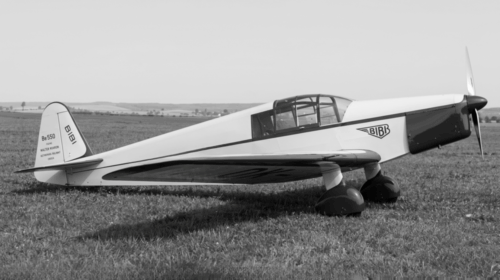
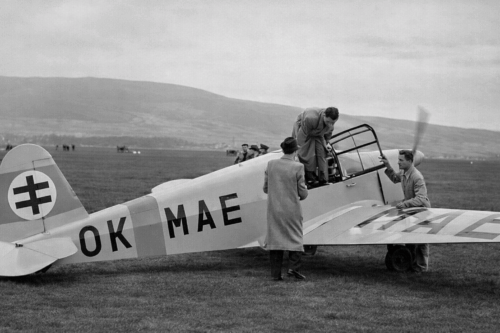
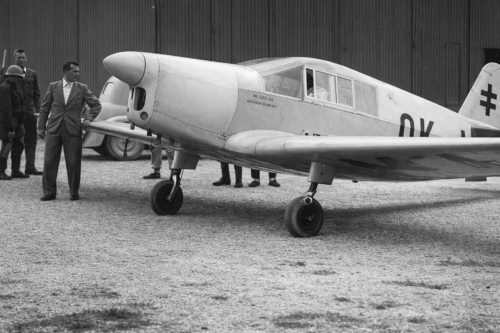
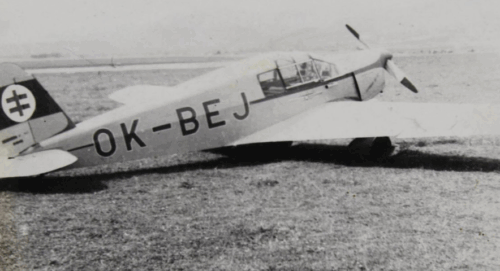
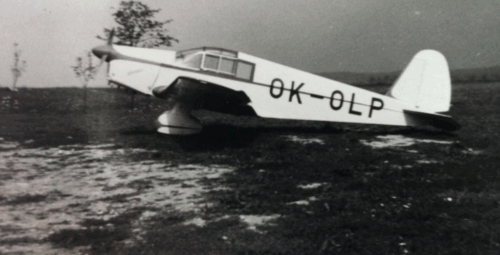
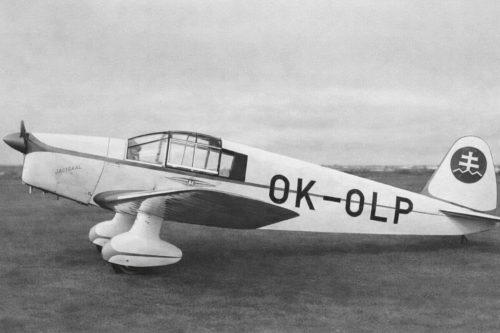
The Beneš‑Mráz “Bibi” family was a compact line of light touring and sporting aircraft developed in Czechoslovakia in the mid‑1930s.
Conceived as a modern, economical private and club aeroplane, it evolved from experimental single‑seat prototypes into a refined two‑seat cabin tourer that survived into the early years of the Second World War and even saw limited postwar use.
At its core, the Bibi story is about a design team—Pavel Beneš and Jaroslav Mráz—trying to squeeze maximum utility, comfort, and performance out of the smallest possible airframe at a time when European general aviation was still finding its identity.
Experimental single‑seat Bibis: Be.501 and Be.502
Rather than jump directly to a new two-seat cabin aircraft, Beneš‑Mráz first built a pair of closely related single-seat prototypes in 1936: the Be.501 and Be.502, “Bibi”.
These were essentially flying testbeds for the new wing structure, fuselage proportions, and systems layout.
Be.501 Bibi: Powered by a 45 hp (about 33 kW) Walter Mikron II inverted inline engine, the Be.501 was the lighter of the two prototypes.
It allowed the designers to explore how far they could reduce structural weight while still achieving acceptable strength and handling.
Be.502 Bibi: The Be.502 used a more powerful Walter Minor 4 engine of roughly 85 hp, giving it a noticeably livelier performance.
Structurally, it was very similar to the Be.501, differing mainly in engine installation and some detail refinements.
Both aircraft took part in local competitions and flying events, which gave the company valuable feedback on handling, reliability, and field performance.
However, they were always stepping stones: once the basic configuration was proven, development effort shifted to the true goal—a compact two‑seat cabin tourer.
Transition to the production-cabin aircraft:
Be.550, Bibi
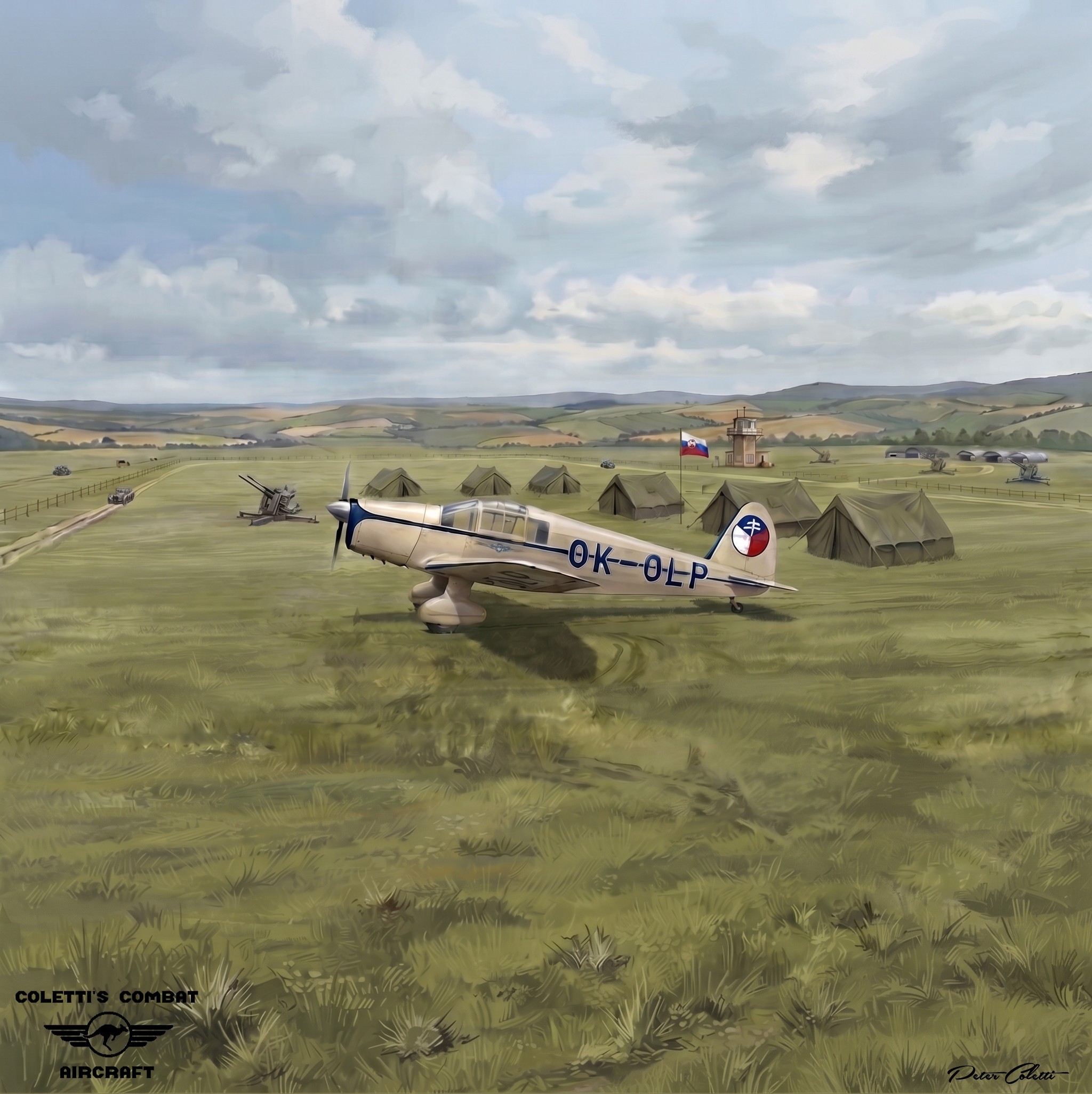
The first true production member of the family was the Be. 550 Bibi, introduced in 1936.
This aircraft embodied the lessons of the single‑seat prototypes but rearranged the cockpit into a side‑by‑side two‑seat layout under a fully enclosed canopy.
The Be.550 was marketed as a sporting and touring aircraft, suitable for private owners, aero clubs, and light touring duties across Central Europe.
The Be.550 retained the modest Walter Mikron II engine, rated at about 60 hp (45 kW), which kept operating costs low and simplified maintenance.
Despite the small powerplant, careful aerodynamic design and low structural weight allowed the aircraft to achieve respectable performance for its class.
Final refinement:
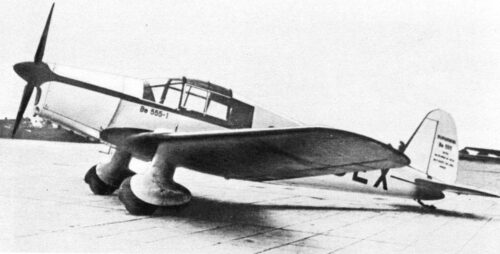
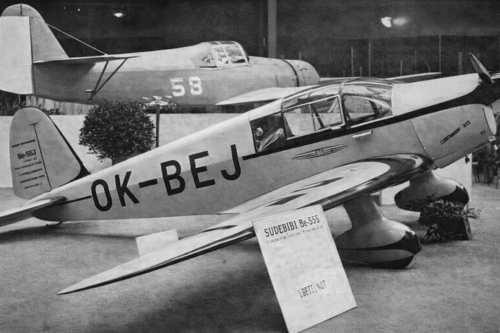
Be.555 “Super Bibi” The last and most advanced member of the line was the Be.555 “Super Bibi”.
This variant incorporated a series of improvements—detailed aerodynamic clean-up, structural refinements, and cabin enhancements—aimed at making the aircraft more capable and more comfortable without losing its essential simplicity.
Production of the Be.555 continued even after the outbreak of the Second World War, with at least ten examples built, suggesting that the type remained useful under changing political and military conditions.
Design and technical characteristics
Airframe and layout
All Bibi variants shared a common design philosophy: a compact, aerodynamically clean, low‑wing monoplane with fixed tailwheel undercarriage and wooden construction.
Wing:
The Bibi used a cantilever low wing with no external bracing, reducing drag and simplifying maintenance.
The wing had a relatively small area—about 14 m² on the Be.550—contributing to the aircraft’s compact footprint and higher wing loading compared to some contemporaries.
This gave it a slightly more “sporting” feel in flight, with crisper responses but a bit higher take‑off and landing speeds than very lightly loaded trainers.
Fuselage:
The fuselage was a streamlined wooden structure, typically built around a framework of longerons and frames, covered with plywood.
The side‑by‑side cockpit was placed near the wing’s mid-chord, giving good visibility and a compact cabin.
The fully enclosed canopy was a key selling point, offering protection from weather and noise and making the aircraft feel more like a small car than an open‑cockpit sports plane.
Empennage:
The tail unit was conventional, with a fixed fin and tailplane and fabric‑covered control surfaces.
The tailwheel undercarriage, with the main wheels on simple, faired legs, kept the aircraft light and mechanically straightforward.
Powerplant and systems
The standard engine for the Be.550 Bibi was the Walter Mikron II, an air‑cooled, four‑cylinder inverted inline engine producing about 60 hp.
This engine was widely used in Central European light aircraft of the period and was valued for its compactness, smooth running, and relatively low fuel consumption.
Fuel was typically carried in wing or fuselage tanks sufficient for several hours of cruising, giving the Bibi a touring range of around 780 km.
Systems were deliberately simple: a fixed‑pitch propeller, basic engine instruments, and a modest flight instrument panel suitable for day VFR operations.
This simplicity kept acquisition and operating costs low and made the aircraft attractive to aero clubs.
Performance and handling
For the Be.550 Bibi, typical performance figures were:
Maximum speed: about 200 km/h at low altitude
Cruise speed: around 175 km/h
Range: approximately 780 km
Service ceiling: about 5 200 m
Time to 1,000 m: roughly 6½ minutes
With an empty weight of about 330 kg and a maximum takeoff weight around 560 kg, the Bibi had a useful load sufficient for two occupants, fuel, and a modest amount of baggage.
The combination of low weight and clean aerodynamics meant that, despite its small engine, the aircraft could cruise at speeds comparable to some larger, more powerful contemporaries.
In handling terms, contemporary descriptions and the aircraft’s configuration suggest a responsive but not overly demanding aeroplane: the low‑wing layout and higher wing loading gave it a more “sporting” character than basic trainers, but the fixed gear, simple systems, and benign stall characteristics made it suitable for competent private pilots and club members.
Variants and evolution
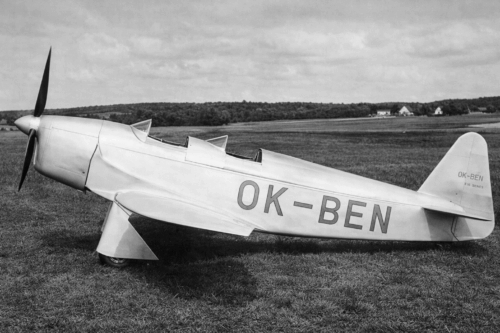
Beneš‑Mráz Be‑250 Beta‑Major
The Beneš‑Mráz Be‑250 Beta‑Major was a Czechoslovak two‑seat sport and training low‑wing monoplane developed in 1936 as the most powerful derivative of the firm’s “Beta” series.
It retained the wooden low‑wing structure and fixed, faired undercarriage of the Be‑50 lineage but introduced the Walter Major 4 engine, producing 88/96 kW (120/130 hp), making it the strongest of the two‑seat “Bet” aircraft.
The prototype, OK‑BEN, first flew on 20 July 1936, but despite promising performance, the type suffered from severe low‑RPM vibration from the Major 4 engine, preventing further development or production.
Only one aircraft was built.
An attempted sale failed when the customer returned it, and during the German occupation the prototype was damaged by a Luftwaffe commission pilot.
In October 1943, it was transported to Nitra, Slovakia, where it served with the Slovak State and ultimately became the only pre‑war Beneš‑Mráz aircraft of its family to survive the war.
After 1945 it briefly flew in Czechoslovakia as the C‑25 trainer before being withdrawn.
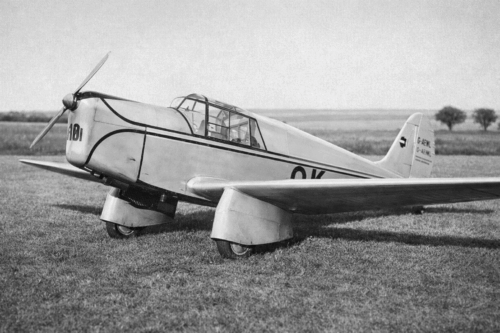
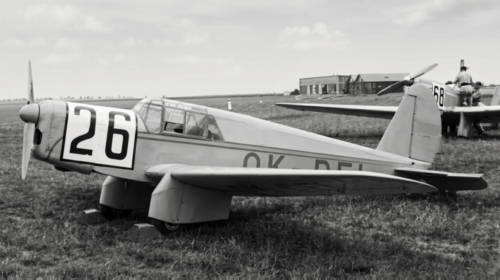
Be.501 Bibi
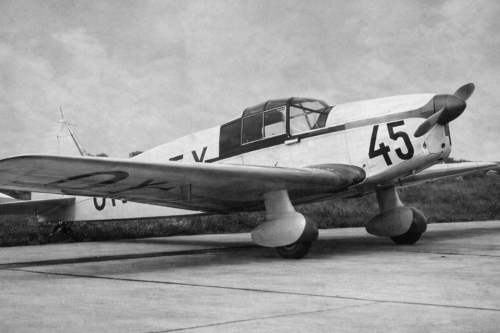
The Be.501 was the first of the Bibi prototypes, a single-seat aircraft powered by the 45 hp Walter Mikron II.
It was primarily a development platform to validate the new wing and fuselage concept.
Its participation in competitions helped demonstrate the efficiency of the design and provided data on performance and reliability.
Only one Be.501 is known to have been built, registered as OK‑BEI.
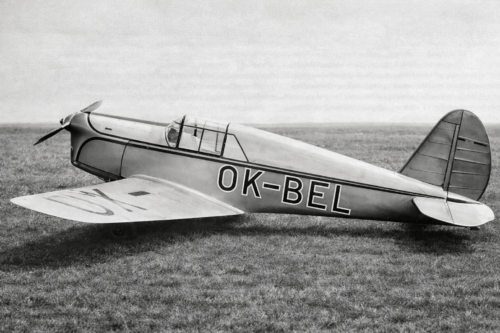
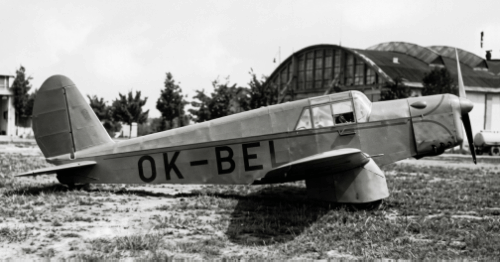
Be.502 Bibi
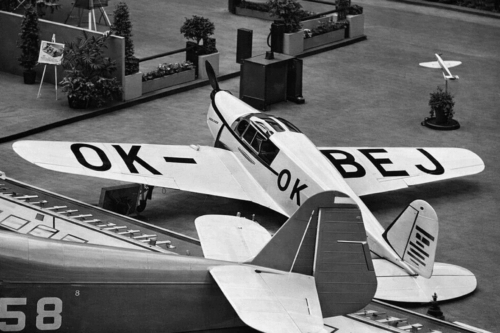
The Be.502 was a parallel single‑seat prototype, structurally similar to the Be.501 but fitted with the more powerful Walter Minor 4 engine.
This allowed the designers to compare performance and handling with different powerplants on essentially the same airframe.
Like the Be.501, it appears to have remained a one‑off, registered OK‑BEL, and did not proceed to series production.
Be.550, Bibi
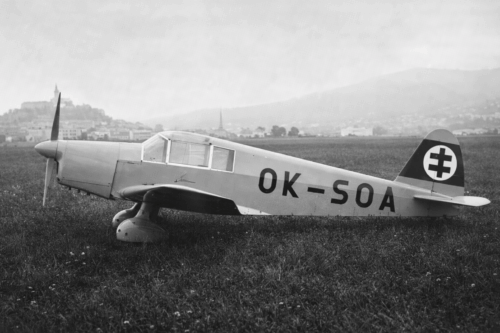
The Be.550 was the first production two‑seat Bibi and the main representative of the type in pre‑war service.
Introduced in 1936, it featured:
Side‑by‑side seating for two in an enclosed cabin
Walter Mikron II engine of about 60 hp
Fixed tailwheel undercarriage
Cantilever low wing
At least six Be.550s were built, including individual exports to Egypt and the United Kingdom.
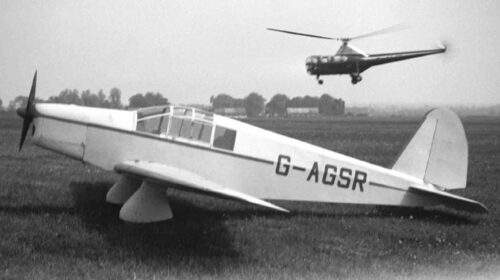
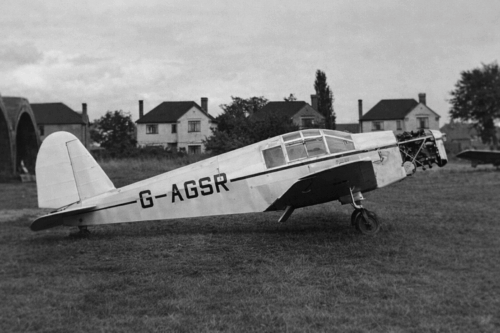
The UK example, originally registered OK‑BET, later became G‑AGSR after the war and remained in use until a fatal crash in 1951, which ended its operational life.
Be.555 “Super Bibi”
The Be.555 represented the final evolution of the design.
While detailed differences varied, the “Super Bibi” incorporated aerodynamic refinements, structural improvements, and cabin upgrades that made it more capable and attractive.
Production continued into the early war years, with at least ten examples built, indicating that the type retained utility even as the political and military environment changed dramatically.
Operational history and WWII context
Pre‑war civil use
Before the Second World War, the Bibi family served primarily in civil roles:
Aero clubs and private owners:
The aircraft’s low operating costs, enclosed cabin, and decent performance made it a natural fit for aero clubs and private pilots in Czechoslovakia and a small
number of foreign customers.
It was used for local touring, cross-country flights, and general sport flying.
Competitions and rallies:
The prototypes and early Bibis took part in regional competitions, where their efficiency and compactness were assets.
These events helped promote the type and the Beneš‑Mráz brand more broadly.
After the occupation: Bibis under German control
Following the German occupation of Czechoslovakia in 1939, many civil aircraft were impressed, confiscated, or otherwise absorbed into German-controlled organisations.
Contemporary sources indicate that aircraft of the Bibi family, particularly the early single‑seat Be.501 and Be.502, were used in Luftwaffe flying schools after the annexation.
In this context, Bibi’s role was modest but practical:
Primary and continuation training:
The Bibi’s simple systems and light handling made it suitable for basic flying training, familiarisation, and liaison duties.
It would have been one of many small types used to keep pilots current or to introduce new trainees to powered flight.
Utility and liaison:
Some Bibis likely served as runabout aircraft for local transport, liaison, and communication tasks around airfields and training centres, where their low fuel consumption and short-field capability were useful.
The Be.555 “Super Bibi” continued to be produced in small numbers even after the war began, suggesting that the occupying authorities or associated organisations still saw value in a light, economical aircraft for training and utility roles.
However, the type never had a front-line military function; it remained firmly in the background as a support and training asset.
Export and postwar fate
The most documented export example is the Be. 550 Bibi that went to the United Kingdom.
Imported before the war and stored during the conflict, it was re‑registered as G‑AGSR afterwards and returned to civil flying.
Its postwar career illustrates the durability and continuing relevance of the design: even in the late 1940s and early 1950s, a well‑maintained Bibi could still serve as a useful light tourer.
Its career ended in a fatal crash in 1951, which effectively closed the operational chapter of the type in Britain.
Other Bibis in Central Europe had more fragmented fates—some likely scrapped during or shortly after the war, others possibly absorbed into postwar flying clubs or replaced by newer designs as the aviation landscape modernised.
Assessment and significance
In the broader panorama of 1930s European light aircraft, the Beneš‑Mráz Bibi family occupies a niche but interesting place:
It represents a clear step in the evolution from open‑cockpit sport planes to enclosed, car‑like touring aircraft for private owners.
Technically, it shows how careful aerodynamic design and low structural weight can extract respectable performance from very modest engine power.
Historically, it illustrates how small civil types were swept up into the machinery of war—relegated to flying schools and utility roles under the Luftwaffe after the occupation of Czechoslovakia.
The continued production of the Be.555 into the early war years, and the survival of at least one Be.550 into the 1950s, underline the robustness and practical value of the design.