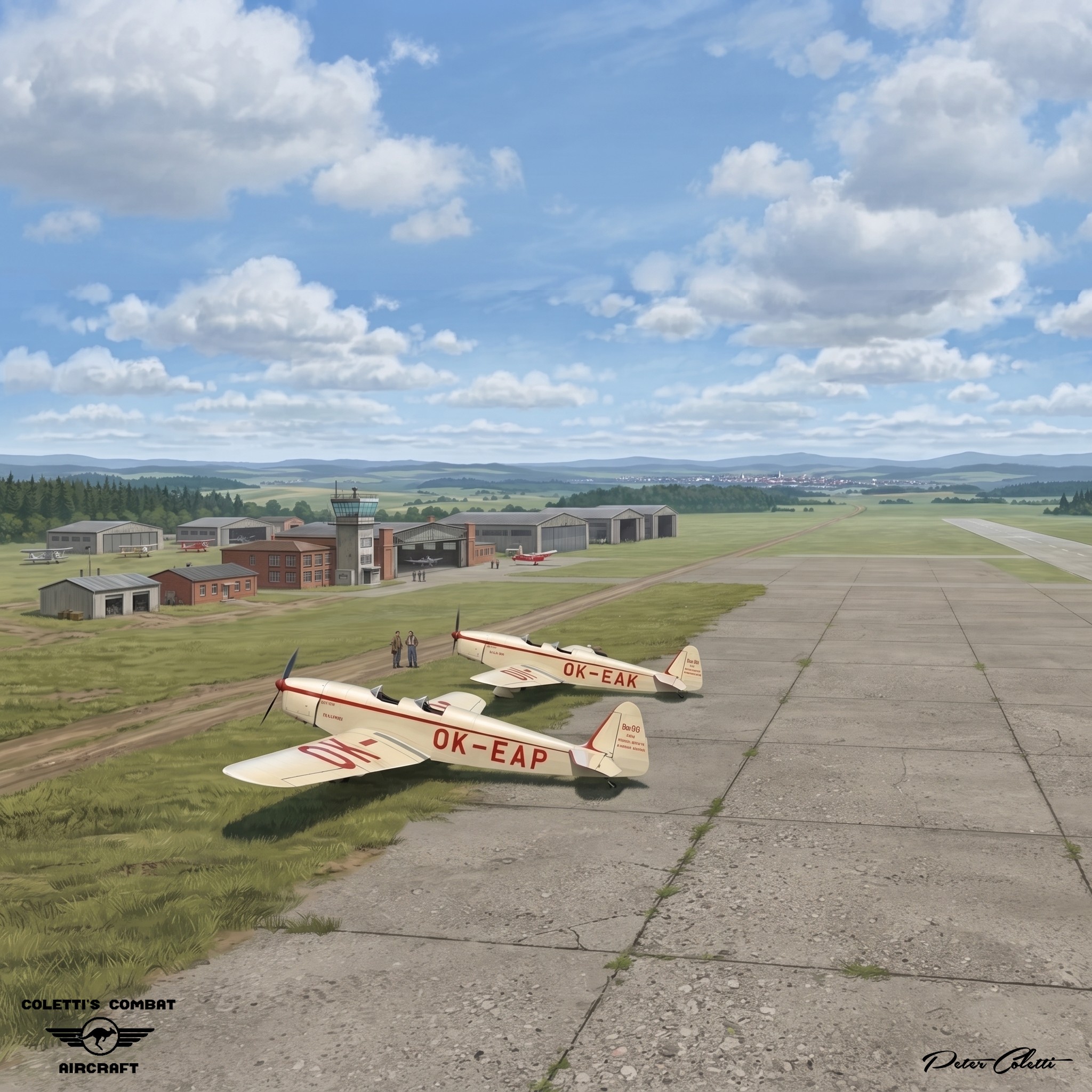
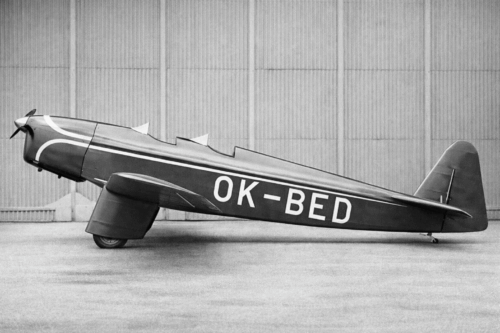
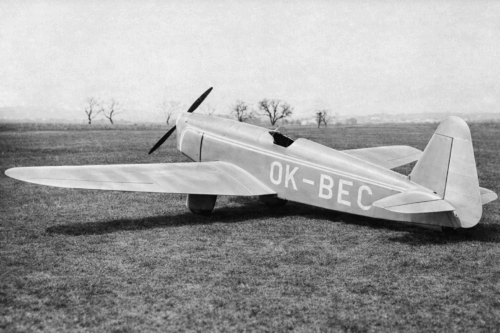
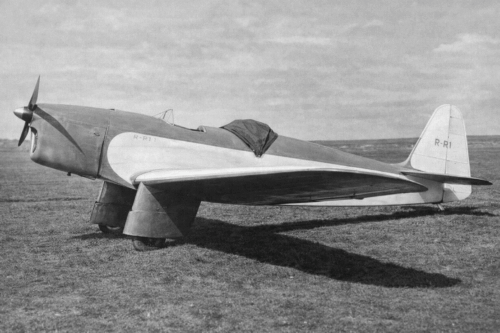
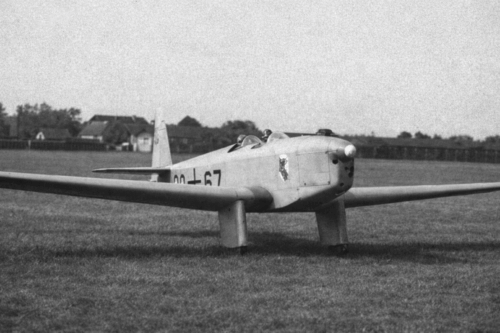
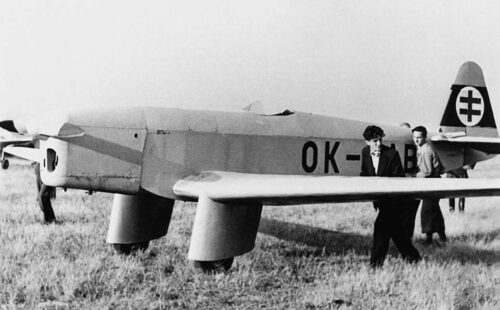
The Beneš‑Mráz Be‑50 Beta‑Minor emerged from the dynamic Czechoslovak light‑aircraft scene of the mid‑1930s.
The firm Beneš‑Mráz, founded by designer Pavel Beneš and engineer Jaroslav Mráz, set out to produce modern, affordable touring and training aircraft for the country’s rapidly expanding network of aeroclubs.
Czechoslovakia already had a strong aviation industry—companies like Aero, Avia, and Letov built military and civil types—but there was a clear niche for light sport and club aircraft that were economical to operate and easy to maintain.
The Be‑50 was the company’s first original design to fly, taking to the air in 1935.
It was conceived as a multipurpose light aircraft: suitable for basic training, sport flying, touring, and participation in distance and reliability competitions.
From the outset, the design philosophy emphasised simplicity, low operating cost, and forgiving handling so that relatively low-time pilots in aeroclubs could fly it safely.
The aircraft quickly proved itself in service, giving the young company a strong reputation and forming the basis for a family of improved variants.
Airframe and structural design
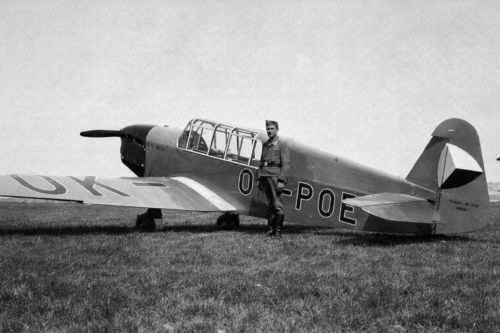
The Be‑50 was a low‑wing cantilever monoplane of largely wooden construction, reflecting both the material technology of the time and the desire to keep weight and cost down.
The wing was built around wooden spars and ribs, with plywood skinning over much of the surface, providing a smooth aerodynamic profile without external bracing struts or wires.
This cantilever layout reduced drag and gave the aircraft a clean, modern appearance compared with earlier parasol or biplane trainers.
The fuselage was also primarily wooden, typically a box or semi‑monocoque structure with plywood covering, tapering gracefully towards the tail.
The tail unit—fin, rudder, tailplane, and elevators—was conventional in layout, again using wood and fabric or plywood coverings.
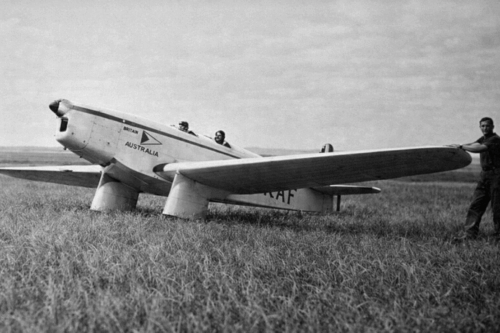
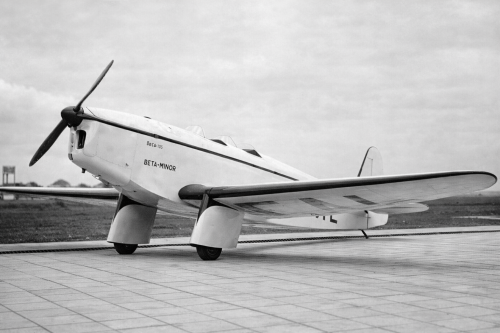
The undercarriage was a fixed, tailskid or tailwheel type with main wheels faired but not retractable, chosen for robustness and simplicity on grass airfields.
This fixed gear, while adding drag, was entirely appropriate for a light trainer and touring aircraft where reliability and low cost outweighed the need for maximum speed.
The cockpit arrangement was tandem, with two open cockpits in line under individual windscreens.
This layout suited training, allowing the instructor and student to sit one behind the other, and also kept the fuselage narrow, reducing drag.
Controls were conventional, with dual controls for training use.
The overall result was a compact, light airframe that could be built in modest facilities yet offered performance and handling competitive with contemporary European light aircraft.
Powerplant, systems, and performance
At the heart of the Be‑50 was the domestically produced Walter Minor four‑cylinder inverted in‑line engine.
In its typical form for the Beta‑Minor, this engine delivered around 70–95 hp (roughly 71 kW for take‑off in later data), driving a two‑bladed fixed‑pitch wooden propeller.
The inverted layout improved forward visibility over the nose and kept the centre of gravity low, while the engine’s reputation for reliability and ease of maintenance made it attractive for club use.
Performance figures for the Be‑50 family reflect a well‑designed light aircraft rather than a high‑performance racer.
Typical maximum speeds are quoted around 190–205 km/h (about 120–127 mph), with cruising speeds in the 170–180 km/h range.
The range was on the order of 750–800 km, giving ample endurance for cross‑country touring and competition flights.
Service ceiling figures around 5,000 m (over 16,000 ft) were more than adequate for its intended roles.
Empty weight was roughly 460–480 kg, with maximum takeoff weight around 730–760 kg, illustrating how light and efficient the airframe was.
Pilots and contemporary accounts praised the Be‑50’s handling.
It was described as “viceless”, with benign stall characteristics and good control harmony, making it an excellent basic trainer and a pleasant touring aircraft.
Short takeoff and landing performance was another strong point, allowing operation from relatively small grass strips—an important factor for aeroclubs scattered across Czechoslovakia.
Mechanical reliability and straightforward maintenance further reinforced its popularity.
Operational use before World War II In the pre‑war years, the Be‑50 Beta‑Minor became a familiar sight at Czechoslovak aeroclubs.
Around forty‑plus examples of the original Be‑50 series were built, a respectable production run for a small manufacturer and a niche market.
These aircraft were used for ab‑initio training, advanced club flying, touring, and participation in national and international competitions.
The type performed well in distance and reliability races, where its combination of modest fuel consumption, good range, and dependable handling allowed pilots to complete long routes efficiently.
Such events were important showcases for manufacturers, and the Be‑50’s success helped establish Beneš‑Mráz as a serious player in the light‑aircraft field.
The aircraft also served as a stepping stone for pilots progressing towards more powerful touring or military types, giving them experience in a modern low‑wing monoplane configuration.
Variants and evolutionary development
Although “Be‑50 Beta‑Minor” is often used as a shorthand for the family, the design evolved through several distinct variants, each addressing specific operational or performance goals.
Be‑50 Beta‑Minor:
The original version, first flown in 1935, featured tandem open cockpits and a wingspan of about 12.16–12.66 m.
It was powered by the Walter Minor engine and optimised for club training and sport flying.
This baseline model established the airframe and systems that later variants refined.
Be‑51 Beta‑Minor:
Introduced around 1936–1937, the Be‑51 was a modernised development.
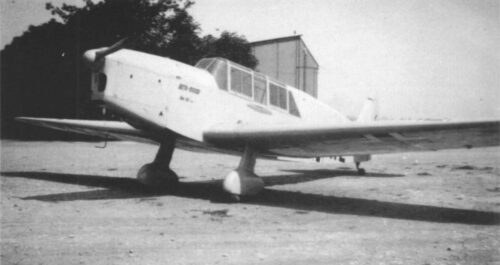
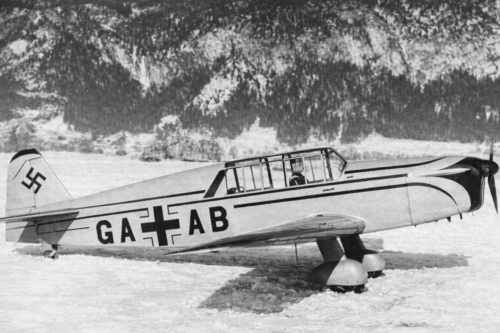
It retained the general configuration but adopted fully enclosed tandem cockpits, improving comfort and aerodynamics.
The wingspan was reduced to about 11.44m, and the airframe was refined for better performance.
Many published specifications for the “Beta‑Minor” family actually refer to this Be‑51 version, which became an important production and operational variant.
Be‑52 Beta‑Major:
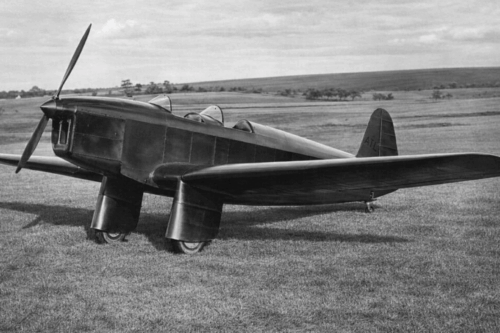
This variant kept the open‑cockpit arrangement of the original Be‑50 but incorporated improved aerodynamics and a more powerful Walter Major engine.
It was intended as a strengthened, more capable two‑seat aerobatic trainer, with a reduced wingspan of about 10.66m.
The more powerful engine and strengthened structure allowed more demanding manoeuvres while preserving the basic handling qualities of the family.
Be‑56 Beta‑Major:
A further development of the Beta‑Major concept, the Be‑56 was a single‑seat aerobatic trainer, again with a wingspan around 10.66m.
It emphasised aerobatic performance and pilot training for more advanced flying, using the same general structural and aerodynamic lineage as the Be‑50.
Together, these variants show how a successful basic light aircraft could be adapted into enclosed‑cockpit tourers and more powerful aerobatic trainers, all while sharing a common design DNA.
Be‑150 Beta‑Junior
A compact derivative of the Beta‑Minor family, the Be‑150 Beta‑Junior was developed in 1937 to make use of available Walter Junior/Minor engines and to create a lighter, more agile two‑seat sport and training aircraft.
It retained the family’s wooden low‑wing monoplane structure but used a shortened fuselage and a reduced‑span wing (about 10.66 m), giving it noticeably crisper handling.
Powered by a 105 hp Walter Junior/Minor 4‑I, it achieved a maximum speed of roughly 215 km/h, with cruising speeds around 180–185 km/h and a range of about 750 km.
Only three examples were built, the first being OK‑BEB, which performed well in competitions.
Although praised for its lively performance, the type did not enter mass production; surviving aircraft were used in aeroclubs, and at least one served with the Slovak Air Force during WWII in training and liaison roles.
World War II context and military use
The outbreak of World War II transformed the fate of many Czechoslovak civil aircraft, including the Be‑50 family.
After the dismemberment and occupation of Czechoslovakia, available aircraft were impressed into service by the occupying forces or by successor states.
Like other Czechoslovak types, Be‑50 and especially Be‑51 aircraft were taken over and used primarily in secondary roles.
Within the Luftwaffe, surviving Be‑51s were employed as liaison and training aircraft.
Their light weight, good handling, and economical operation made them suitable for communications flights, staff transport over short distances, and basic or continuation training away from the front lines.
They were not combat aircraft and did not play a direct role in front‑line operations, but they contributed to the everyday logistical and training backbone that any large air force requires.
Other operators included the Slovak Air Force (1939–1945) and the Air Force of the Independent State of Croatia, which used Be‑50‑family aircraft in similar support roles.
In these services, the aircraft’s origins as civil trainers and tourers remained evident: they were valued for liaison, training, and utility tasks rather than combat.
Their presence in multiple Axis‑aligned air arms illustrates how pre‑war civil fleets were absorbed into wartime structures wherever they could be useful.
Post‑war legacy and historical significance
After the war, relatively few original Be‑50‑series aircraft survived, in part because wooden light aircraft are vulnerable to time, weather, and neglect.
Nonetheless, the type retained a certain affection among pilots and historians as a symbol of the vibrant Czechoslovak aeroclub culture of the 1930s and as an example of the country’s capable light‑aircraft industry.
The design’s legacy is also seen in later reconstructions and replicas.
In the 2010s, a replica Be‑50 was built and flown, demonstrating that the aircraft’s elegant lines and pleasant flying qualities still held appeal decades after its original debut; tragically, that particular replica was lost in an airshow accident in 2018.
Even so, the effort to recreate it underlines the historical interest in the type.
In an encyclopaedic context, the Beneš‑Mráz Be‑50 Beta‑Minor stands as a representative of interwar European light aviation: a clean, modern low‑wing monoplane that bridged the worlds of sport, training, and utility flying.
Its evolution into enclosed-cockpit and aerobatic variants and its subsequent absorption into Axis-aligned air forces as a liaison and trainer provide a compact case study of how civil light aircraft could be adapted to the demands of a continent sliding from peace into war.