The Avro 685 York emerged from one of the most pressured periods in British aviation history.
Conceived in 1941, at a moment when the United Kingdom’s aircraft industry was consumed by the demands of total war, the York represented an unusual act of foresight: a transport aircraft designed in the middle of a conflict that had little immediate room for such luxuries.
Yet this foresight proved justified.
The York would become one of the most important British transport aircraft of the 1940s, serving in military, civil, and VIP roles, and ultimately playing a decisive part in the Berlin Airlift.
Origins and Development
The York’s story begins with Roy Chadwick, Avro’s chief designer, who recognised that Britain would eventually require a long-range, four-engine transport aircraft capable of supporting both wartime logistics and post-war civil aviation.
Although the nation’s resources were overwhelmingly directed towards combat aircraft, Chadwick believed that a transport derived from the new Avro Lancaster bomber could be produced with minimal disruption to the bomber programme.
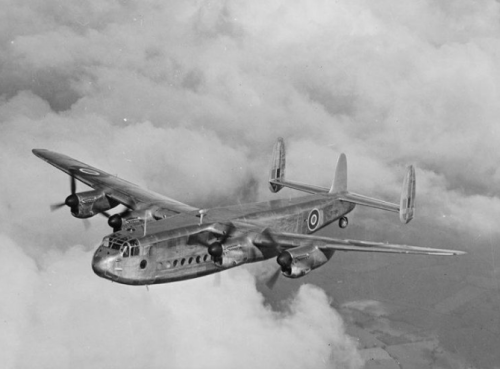
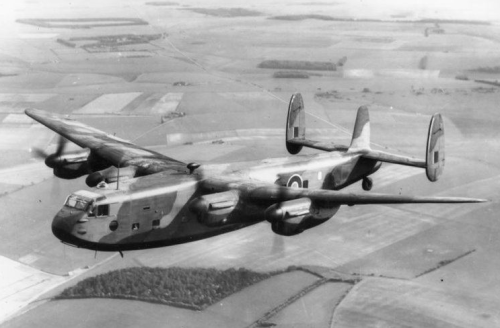
His concept, designated Type 685, combined Lancaster wings, tail surfaces, undercarriage, and Rolls‑Royce Merlin engines with a completely new, box-section fuselage offering roughly double the internal volume of the bomber.
By February 1942, Chadwick’s drawings were complete, and Avro rapidly assembled the first prototype.
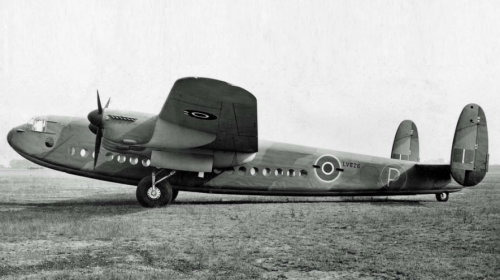
On 5 July 1942, prototype LV626 made its maiden flight from Ringway Airport.
Initially fitted with the Lancaster’s twin fins, the aircraft soon revealed directional stability issues caused by the York’s much larger fuselage side area.
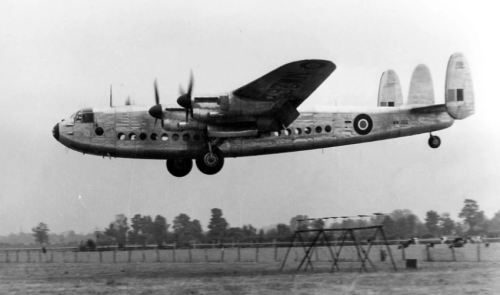
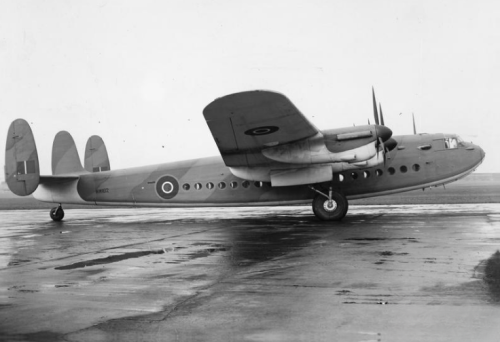
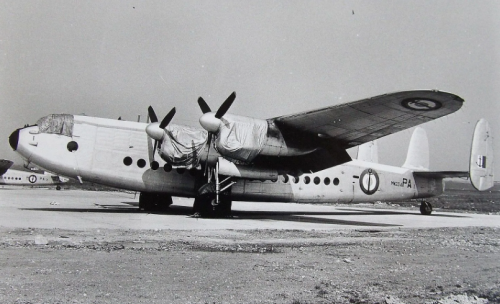
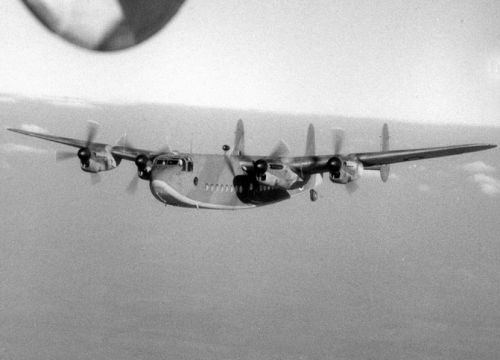
A third central fin was added, becoming a defining feature of the production aircraft.
The Air Ministry, impressed by the prototype’s performance, ordered three additional prototypes and an initial production batch under Specification C. 1/42.
These prototypes explored different configurations, including a Hercules‑powered variant and a paratroop transport, though the latter proved unsuitable due to slipstream effects around the tailwheel.
Production Challenges and Wartime Priorities
Despite official interest, York production advanced slowly.
The Lancaster remained a strategic priority, and shortages of materials further constrained output.
By the end of 1943, only four prototypes and three production aircraft had been completed.
Production gradually increased through 1944, reaching a modest rate of three aircraft per month.
Early Yorks were often diverted to VIP duties, including the third prototype, LV633 “Ascalon”, which became Winston Churchill’s personal transport.
The Royal Air Force’s newly formed Transport Command urgently needed modern long‑range transports, and the York became its first major British‑built type.
The RAF ultimately ordered 300 aircraft, though only 208 were completed before production ended in April 1948.
A single example was also built in Canada by Victory Aircraft, though no further Canadian production followed.
Design and Technical Characteristics
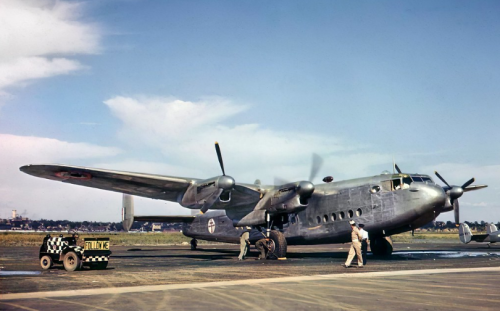
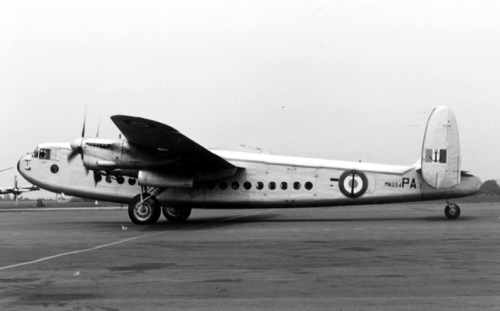
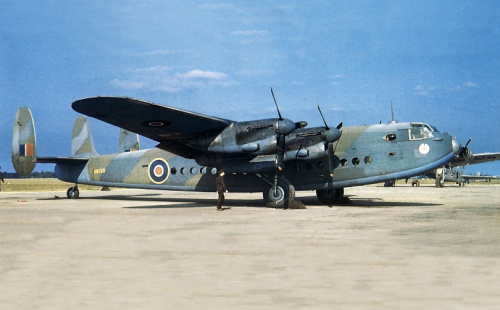
The Avro York was a high‑wing, four‑engined, all‑metal monoplane, structurally conservative but highly functional.
Its design philosophy was simple: maximise internal volume while reusing as many Lancaster components as possible.
Airframe and Structure
Fuselage: A five‑section, semi‑monocoque, flush‑riveted structure with a square cross‑section to maximise cargo and passenger space.
Wings: Two‑spar construction with seven integral fuel tanks holding 2,478 imperial gallons.
Outboard panels tapered on both edges and carried detachable tips.
Tail: A distinctive triple‑fin arrangement, adopted after early stability trials.
Landing Gear: Retractable tailwheel undercarriage inherited from the Lancaster.
Powerplant
Four Rolls‑Royce Merlin 24 V‑12 engines, each producing 1,280 hp, driving three‑bladed de Havilland Hydromatic constant‑speed, fully feathering propellers.
Cabin and Layout
In the typical passenger configuration, the York carried 21 passengers in two cabins separated by a central entrance area containing lavatories and cloakrooms.
A galley and baggage compartment occupied the rear.
Noise levels were high, but pilots generally found the aircraft pleasant to fly.
Performance
Maximum speed: 298 mph
Range: 3,000 miles
Service ceiling: 23,000 ft
Payload: Up to 56 passengers or 16,500 lb of cargo (and in one case, even a 21,000 lb propeller shaft).
Operational History
RAF Service
The first fully equipped York squadron, No. 511 Squadron, entered service in 1945.
Ultimately, ten RAF squadrons operated the type.
Yorks flew on all major Transport Command routes, including the vital England–India corridor.
Their most famous contribution came during the Berlin Airlift (1948–49), where Yorks flew over 58,000 sorties and carried more than 230,000 tonnes of supplies—an extraordinary 43% of the British total.
After the airlift, many RAF Yorks were retired or sold to civilian operators, though corrosion issues led to the scrapping of numerous airframes.
Civilian Service
The first civilian, York, G‑AGJA, entered BOAC service in early 1944.
BOAC and British South American Airways became the largest civil operators, using the type on routes to Africa, the Middle East, the Caribbean, and South America.
Some Yorks were fitted with sleeping berths for long‑distance flights, such as the Johannesburg service.
BOAC withdrew the type from passenger service in 1952 but continued to use Yorks for freight until 1957.
After BOAC disposal, many Yorks found new life with independent British airlines—Skyways, Dan‑Air, and Scottish Airlines—and were heavily used for trooping flights and cargo operations into the early 1960s.
VIP and Government Use
The York’s spacious fuselage made it ideal for VIP transport.
Notable users included:
Winston Churchill, whose aircraft, Ascalon, was fitted as a flying conference room.
Lord Mountbatten, whose aircraft served as a mobile headquarters.
Charles de Gaulle, Jan Smuts, and other heads of state.
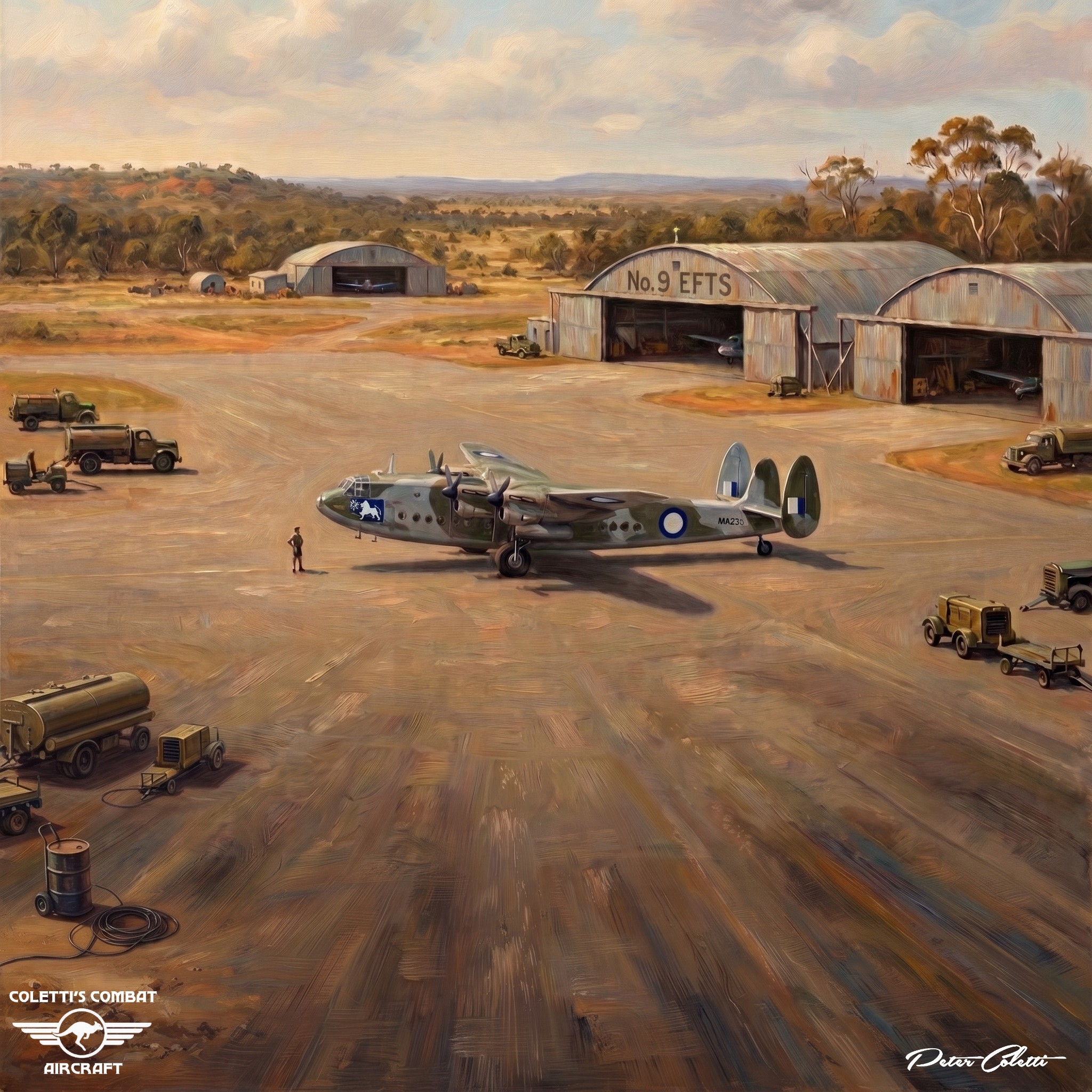
The Duke of Gloucester, whose aircraft Endeavour served as Australia’s vice-regal transport.
Variants
Avro 685 Prototypes
LV626: First prototype; later converted to Hercules‑powered C.II standard.
LV629: Passenger‑configured prototype.
LV633 “Ascalon”: VIP conference aircraft for Churchill.
LV639: Paratroop prototype with ventral drop hatch.
York, I Civilian transport version; 45 built.
York C.I. Main RAF transport version: 208 built by Avro plus one by Victory Aircraft.
York C.II Single Hercules‑powered prototype.
Accidents and Incidents The York suffered 87 hull-loss incidents, reflecting both its heavy use and the challenging environments in which it operated.
Notable events included the 1944 crash that killed Air Chief Marshal Trafford Leigh‑Mallory and several fatal accidents involving BOAC, BSAAC, and independent operators.
Despite this, the type maintained a generally solid reputation for reliability under demanding conditions.
Surviving Aircraft
Two complete Yorks survive today, both in the United Kingdom:
TS798 (G‑AGNV) at the RAF Museum Cosford.
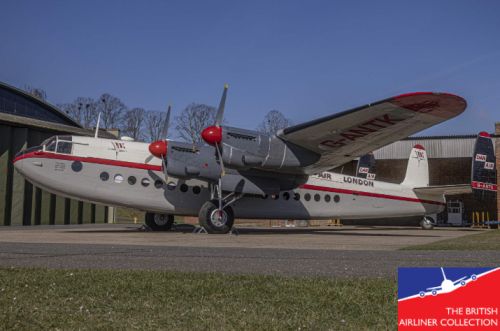
MW232 (G‑ANTK) at the Imperial War Museum Duxford.
Both spent most of their careers in civil service before preservation.
Conclusion The Avro York stands as a testament to British ingenuity under wartime pressure.
Born from the Lancaster bomber yet transformed into a capable long-range transport, it served across continents, carried world leaders, and played a pivotal role in one of the greatest humanitarian air operations in history.
Though overshadowed by more glamorous contemporaries, the York’s contribution to both wartime logistics and post‑war civil aviation was profound, and its legacy endures in the preserved examples that remain today.