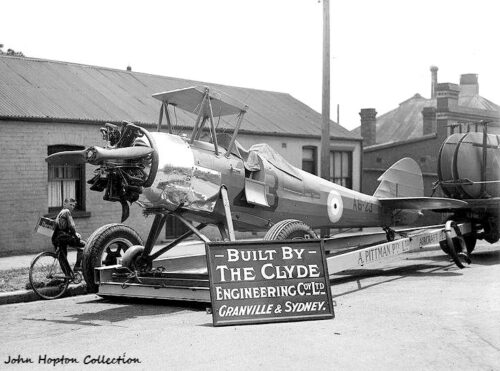
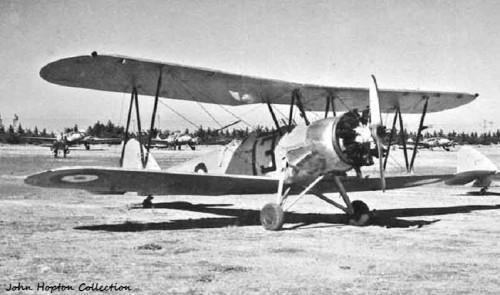
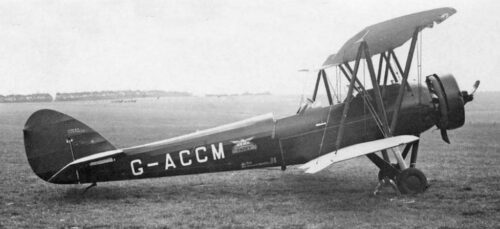
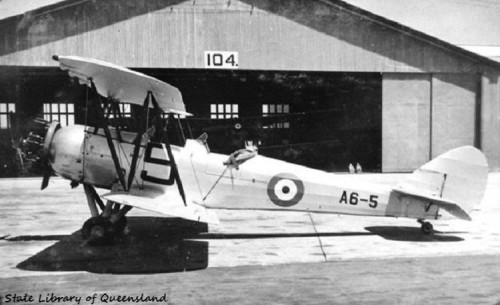
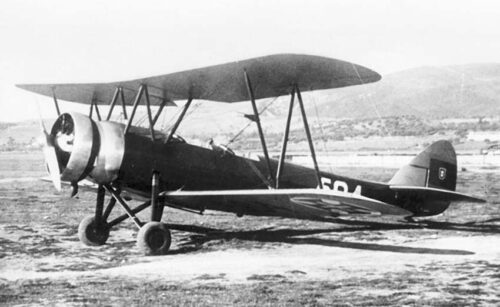
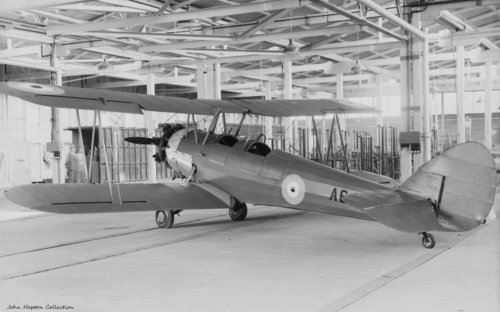
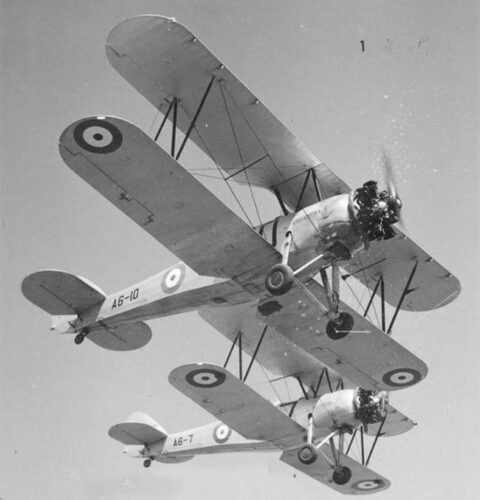
The Avro 643 Cadet emerged in the mid‑1930s as part of A.V. Roe & Company’s effort to refine its line of light training biplanes.
Avro had already achieved considerable success with the Avro 621 Tutor, a robust and forgiving trainer widely used by the RAF and export customers.
The Tutor’s popularity demonstrated a global demand for economical, reliable primary trainers, especially for civilian flying schools and smaller air forces that could not afford the cost or complexity of military‑grade machines.
In 1931 Avro introduced the Avro 631 Cadet, a smaller, lighter, and more economical derivative of the Tutor.
It retained the same general configuration—a two-bay biplane, open cockpits, and a steel-tube fuselage—but was optimised for private flying clubs and commercial training organisations.
The Cadet proved successful enough that Avro continued to refine the design, leading to the Avro 643, which represented the definitive and most capable version of the type.
The Avro 643 was developed to meet the needs of customers who wanted the Cadet’s low operating cost but required improved performance, better handling, and more modern equipment.
The redesign incorporated structural strengthening, aerodynamic refinements, and a more powerful engine.
The result was a trainer that preserved the cadet’s docile characteristics while offering a more professional training environment suitable for both civilian and military use.
Design Characteristics
Airframe and Structure
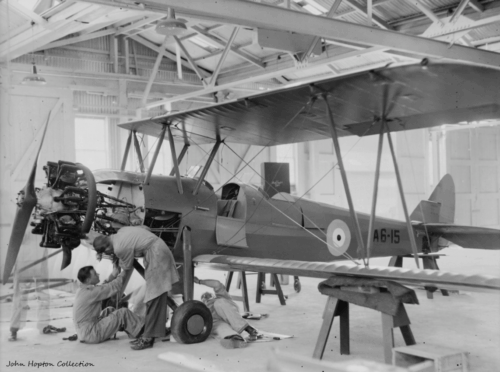
The Avro 643 retained the classic Avro biplane layout: a fabric‑covered steel‑tube fuselage, wooden wings with fabric covering, and a fixed tailskid undercarriage.
The structure was intentionally simple, allowing easy maintenance in remote or lightly equipped airfields.
Avro’s designers emphasised ruggedness, knowing that student pilots would subject the aircraft to hard landings and frequent handling errors.
The wings were of unequal span, with the upper wing slightly larger and supported by N‑struts and bracing wires.
Ailerons were fitted to the lower wings only, a common Avro practice that simplified construction and maintenance.
The tail surfaces were generous and well-balanced, contributing to the cadet’s reputation for predictable handling.
Cockpit and Controls
The Avro 643 featured two open cockpits in tandem, each equipped with full dual controls.
The instructor’s cockpit in the rear had good visibility over the student’s position, and the layout was intentionally similar to contemporary RAF trainers to ease transition for pilots moving into military service.
Instrumentation was basic but adequate for primary training: airspeed indicator, altimeter, tachometer, oil pressure gauge, and a simple compass.
Some export aircraft were fitted with additional instruments depending on customer requirements.
Powerplant
The Avro 643 was powered by the Armstrong Siddeley Genet Major 1A, a 7‑cylinder air‑cooled radial engine producing approximately 140 hp.
This engine represented a significant improvement over earlier Cadet variants, providing better climb performance, improved reliability, and smoother operation.
The engine drove a two‑bladed wooden propeller and was enclosed in a neat Townend ring to reduce drag and improve cooling efficiency.
Undercarriage
The fixed undercarriage used a simple divided axle arrangement with rubber‑cord shock absorption.
It was designed to withstand repeated training landings and operate from grass fields, which were the norm for flying schools of the era.
Performance and Handling
The Avro 643 offered modest but entirely adequate performance for its role as a primary trainer.
Its 140 hp engine gave it a respectable climb rate and a cruising speed suitable for cross‑country navigation training.
Typical performance characteristics included the following:
Maximum speed: ~105–110 mph (170–177 km/h)
Cruising speed: ~90 mph (145 km/h)
Range: ~300 miles (480 km)
Service ceiling: ~14,000 ft (4,270 m)
Pilots consistently praised the Cadet family for its forgiving handling.
The Avro 643 maintained this reputation, offering:
Stable flight characteristics
Predictable stall behavior
Light and responsive controls
Excellent visibility from both cockpits
These qualities made it ideal for ab initio training, aerobatic familiarisation, and general flying school operations.
Variants and Related Models
The Avro 643 was part of a broader Cadet lineage:
Avro 631 Cadet
The original production model, powered by a 135‑hp Armstrong Siddeley Genet Major.
It established the basic configuration and served as the foundation for later improvements.
Avro 643 Cadet
The improved and strengthened version, with a more powerful engine and refined structure.
This is the variant most widely exported and used in professional flying schools.
Avro 643 Mk II (sometimes referenced in export documentation)
Some aircraft delivered to overseas customers incorporated minor equipment changes, such as upgraded instruments, modified fuel systems, or strengthened undercarriage components.
These were not formal RAF‑style marks but are sometimes referenced in historical records.
Operational Use and Pre‑WWII Context
The Avro 643 was primarily a civilian and export aircraft.
It was never adopted in large numbers by the RAF, which preferred the larger and more powerful Avro Tutor for its training syllabus.
However, the Cadet family filled an important niche in the global aviation market during the 1930s.
Civilian Flying Schools
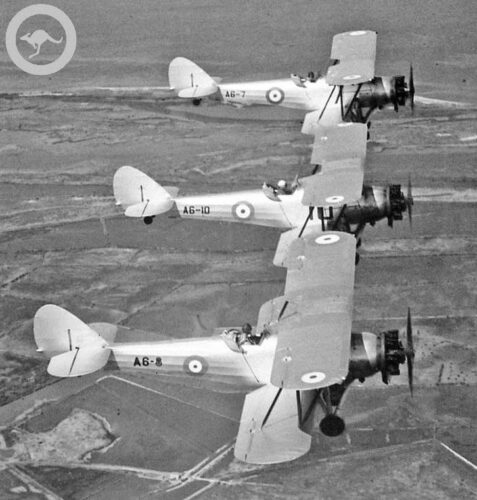
Many Avro 643s were purchased by flying clubs in Britain, Australia, and South Africa.
They were used for:
Initial pilot training
Aerobatic instruction
Navigation and cross‑country training
General club flying and hire
The aircraft’s low operating cost made it attractive to organisations that needed a reliable trainer without the expense of military-grade equipment.
Export Customers
The Avro 643 found buyers in several Commonwealth and foreign countries.
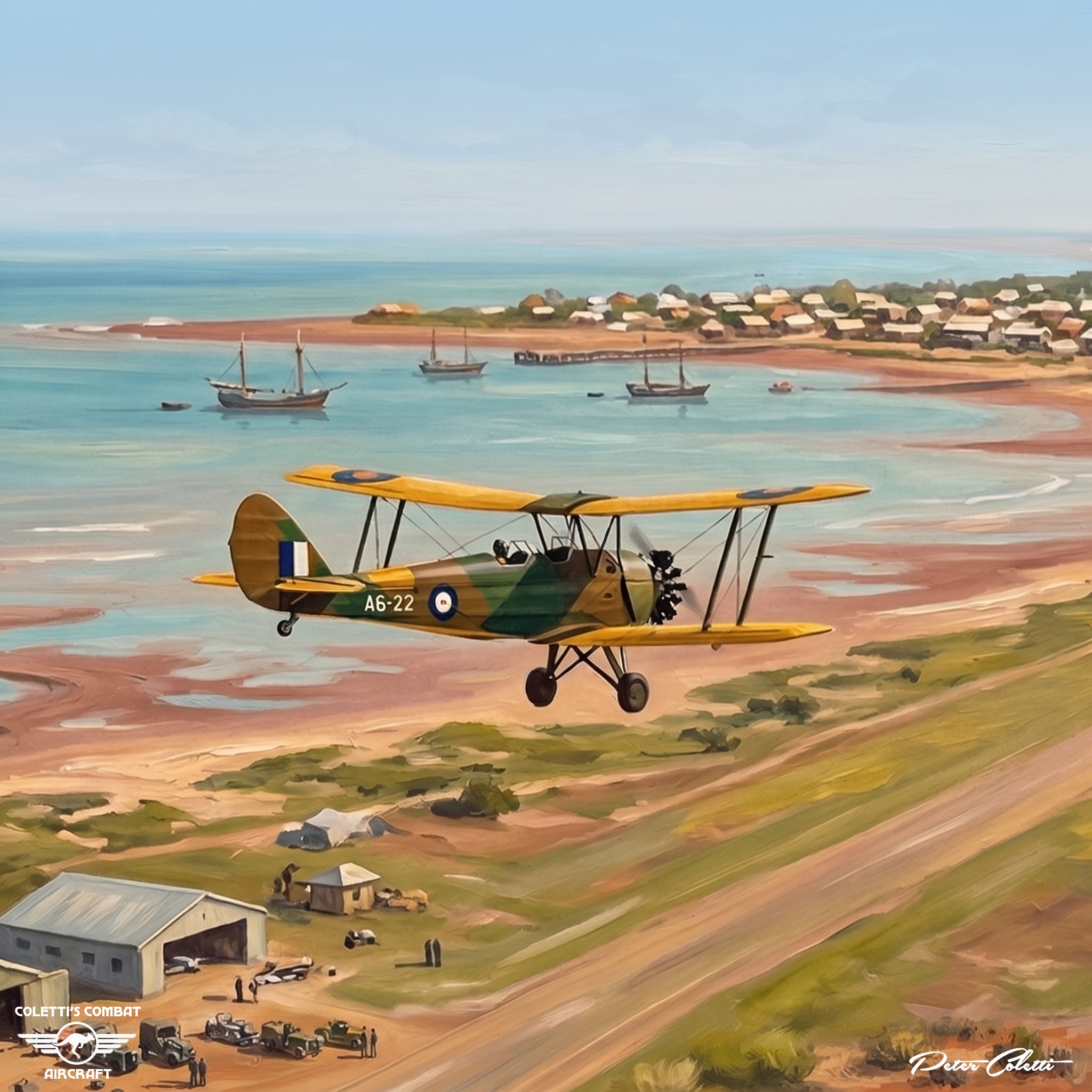
Australia was a particularly enthusiastic user, with numerous cadets operating in civilian flying schools and later being impressed into military service.
Role in the Lead-up to WWII
Although the Avro 643 was not a frontline military trainer, it played a quiet but important role in preparing pilots who would later serve in WWII.
Many Commonwealth pilots who joined the Royal Air Force or the Royal Australian Air Force in the late 1930s had taken their first flights in cadets.
When war broke out in 1939, several civilian cadets were impressed into service for:
Elementary flying training
Communications and liaison duties
General utility roles
Their simple construction and forgiving handling made them useful stopgaps during the rapid expansion of wartime training programmes.
Legacy
The Avro 643 Cadet represents a transitional moment in aviation history: the last generation of simple, open‑cockpit biplane trainers before the widespread adoption of enclosed, monoplane designs.
While overshadowed by more famous Avro aircraft, the 643 played a meaningful role in shaping pre‑war pilot training across the Commonwealth.
Its legacy endures in the small number of surviving airframes preserved in museums and private collections, where the Cadet continues to be appreciated for its elegance, simplicity, and historical significance.