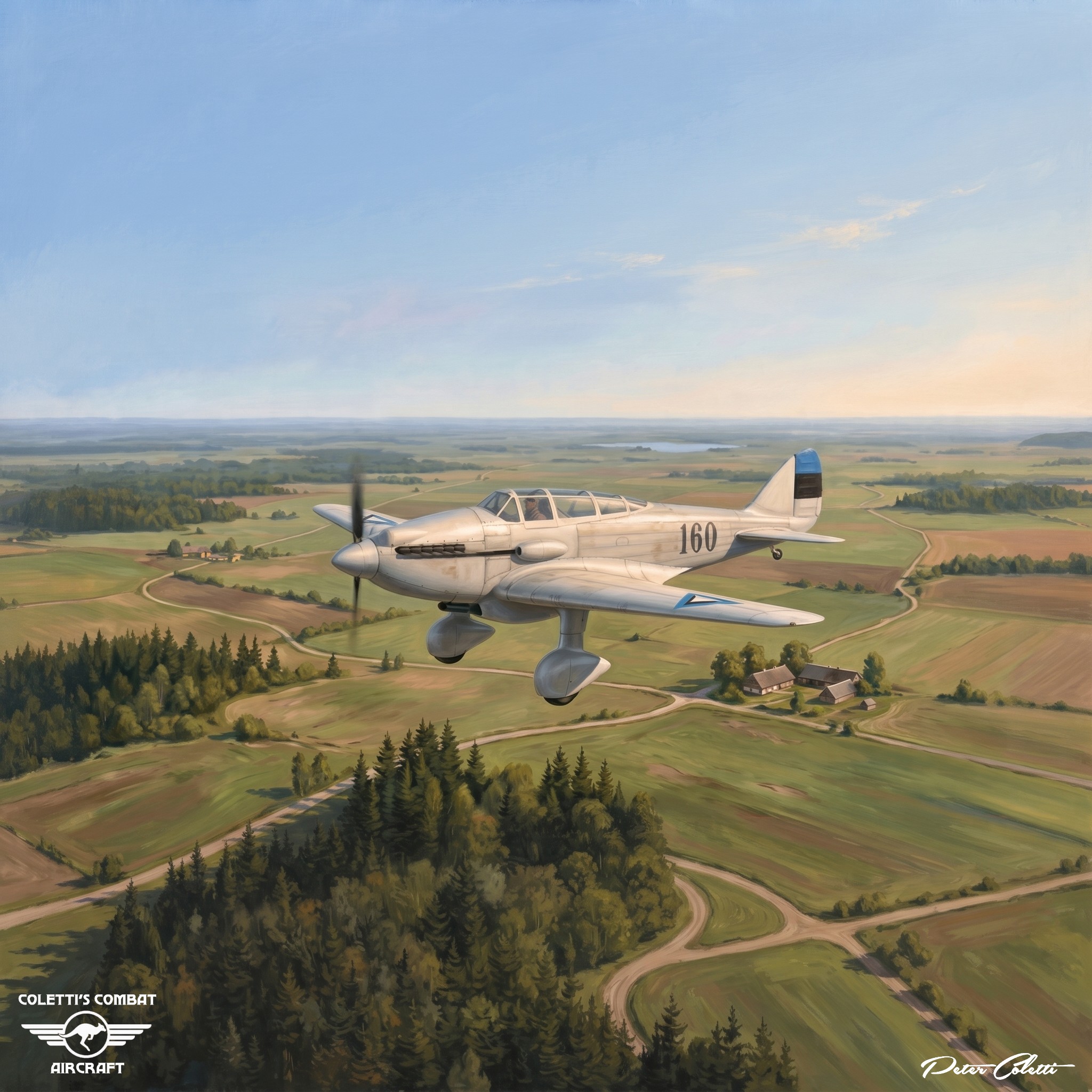
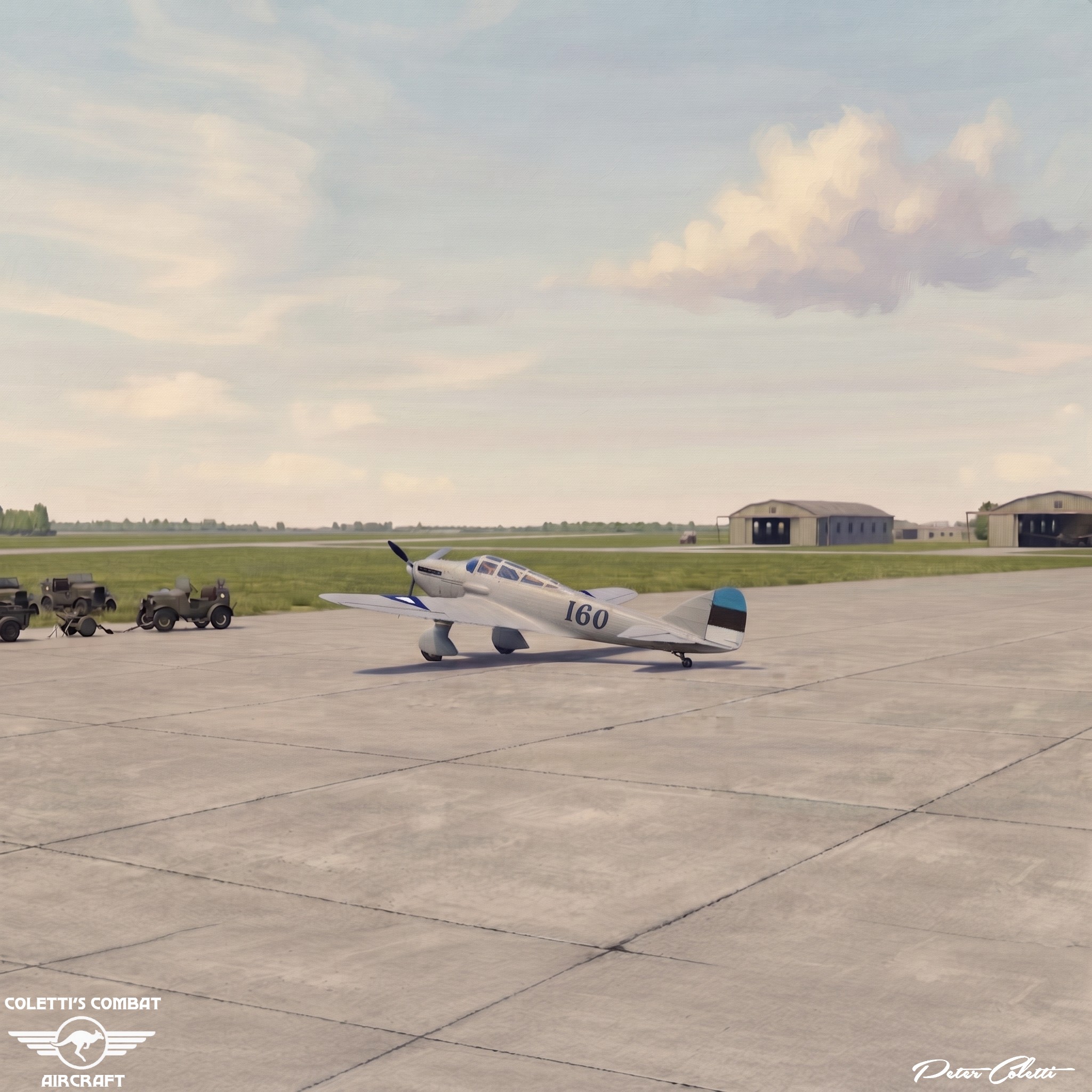
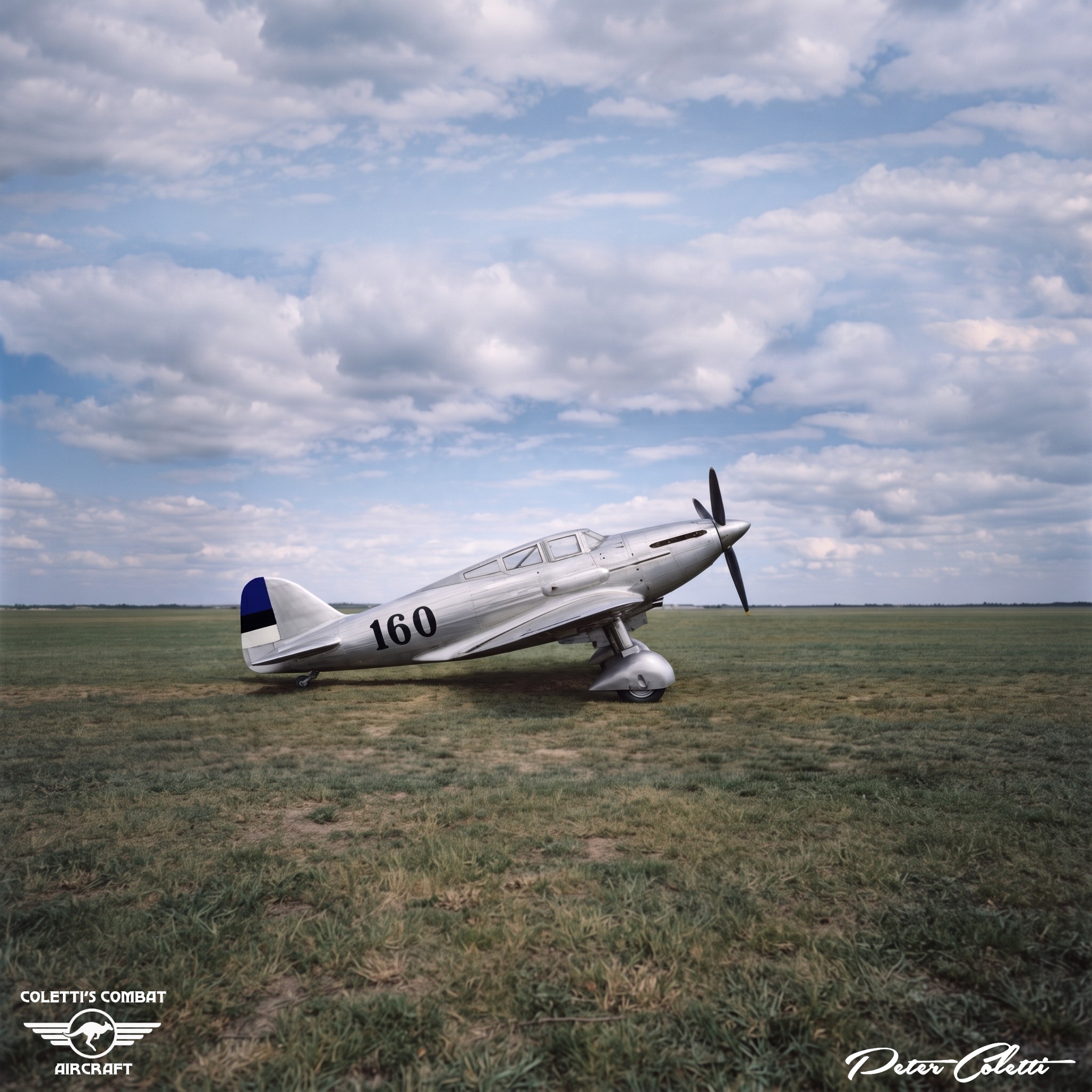
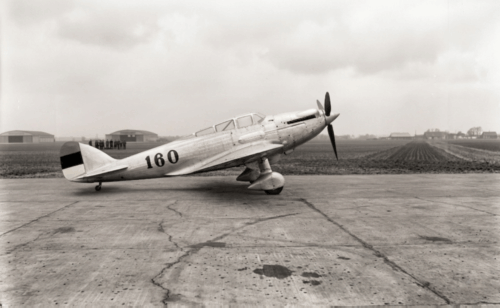
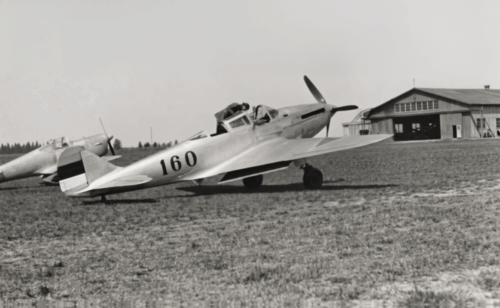
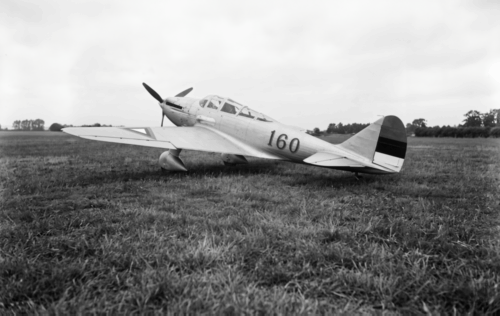
The Aviotehas PN‑3 was the final indigenous aircraft design undertaken by Estonia before the country’s independence was extinguished by the Soviet occupation in 1940.
It emerged from a period in which the Estonian Air Force sought to modernise its small fleet and reduce dependence on foreign suppliers.
Estonia’s aviation industry was modest, but by the mid‑1930s the state‑supported company Aviotehas (“Aviation Factory”) had gained experience producing licensed aircraft and performing major overhauls.
This experience encouraged the Air Force to request a domestically designed liaison and training aircraft that could also serve as a light reconnaissance platform.
The design team was led by engineer Peeter Nurk, whose initials gave the aircraft its designation: PN‑3 (his third major design study).
The project began around 1938, at a time when Estonia was attempting to strengthen its neutrality through modest military modernisation.
The PN‑3 was intended to replace ageing imported types used for pilot training, artillery spotting, and general liaison duties.
By the time the prototype neared completion in 1939–1940, the geopolitical situation had deteriorated sharply.
Estonia was forced to accept Soviet military bases in late 1939, and in June 1940 the country was fully occupied.
The PN‑3 prototype was completed and flown, but the programme was immediately halted by the new Soviet administration, which had no interest in continuing small‑nation indigenous aircraft projects.
Design Philosophy and Construction
The PN‑3 was conceived as a modernised, multi-purpose light aircraft with emphasis on the following:
Ease of manufacture using Estonia’s limited industrial base
Good low‑speed handling for training and liaison roles
Short‑field capability for operations from improvised airstrips
Simple maintenance for small air force workshops
Airframe
The PN‑3 was a low‑wing monoplane, a progressive choice for a country whose earlier designs had been biplanes.
The structure combined:
Wooden wings with plywood skinning
A welded steel‑tube fuselage with fabric covering
Fixed, spatted landing gear to reduce complexity and cost
This hybrid construction reflected both the available materials and the desire to keep the aircraft light and inexpensive.
Cockpit and Crew Arrangement
The aircraft featured tandem seating for two, typically instructor and student or pilot and observer.
The cockpit was enclosed, improving comfort and allowing operation in poor weather—an important consideration in the Baltic climate.
Powerplant
The PN‑3 was powered by a single inline piston engine, generally identified as a Walter Minor series engine (commonly used in Central and Eastern European light aircraft of the period).
Output was in the 120–160 hp range, giving the aircraft respectable performance for its class.
Flight Characteristics
Test pilots described the PN‑3 as the following:
Stable and forgiving, ideal for training
Responsive, with good control harmony
Capable of short takeoff and landing distances
Its performance was not exceptional, but it met the requirements for a light utility aircraft in a small air force.
Performance
Because the PN‑3 never entered production and documentation is sparse, performance figures are reconstructed from prototype test notes and comparison with similar aircraft of the era.
Maximum speed: approx. 180–200 km/h
Cruise speed: approx. 150–160 km/h
Range: approx. 500–600 km
Service ceiling: approx. 4,000–5,000 m
Crew: 2
Engine: Walter Minor (120–160 hp class)
These values place the PN‑3 in the same general category as contemporary light trainers such as the Polish RWD‑8 or the Czech Beneš‑Mráz Beta‑Minor.
Variants
The PN‑3 never progressed beyond the prototype stage, but internal Aviotehas documents indicate that several variants were envisioned:
PN‑3 (Prototype) The only completed aircraft.
Served as the basis for flight testing in 1939–1940.
PN‑3A (Proposed) A refined production model with:
Slightly more powerful engine
Improved cockpit glazing
Optional light reconnaissance camera installation
PN‑3B (Proposed Armed Version)
A militarised variant intended for:
Light observation
Border patrol
Training in gunnery and reconnaissance
It would have carried a single flexible rear machine gun and small underwing racks for flares or message containers.
None of these variants were built due to the Soviet occupation.
Operational History and WWII Context
The PN‑3’s operational life was extremely short.
The prototype was undergoing evaluation when Estonia was annexed by the Soviet Union in June 1940.
The Red Army Air Force seized all Estonian military equipment, including the PN‑3.
Fate Under Soviet Control
The Soviets had no interest in a one‑off Estonian light aircraft.
The PN‑3 was reportedly the following:
Test-flown briefly by Soviet pilots
Evaluated for potential training use
Ultimately discarded or scrapped by 1941
There is no evidence it survived the German invasion of the Soviet Union.
Symbolic Significance
Although militarily insignificant, the PN‑3 holds symbolic importance as the following:
The last indigenous Estonian aircraft design before WWII
A representation of Estonia’s attempt to maintain technological independence
A reminder of the abrupt end of Baltic aviation development under Soviet occupation
Assessment and Legacy
The Aviotehas PN‑3 was not a revolutionary aircraft, but it was a competent and well‑designed light monoplane that demonstrated the growing maturity of Estonia’s small aviation industry.
Had history unfolded differently, the PN‑3 might have entered limited production and served as a useful trainer and liaison aircraft for the Estonian Air Force.
Instead, it became a historical footnote—an aircraft completed at the very moment its nation lost the ability to pursue independent aviation development.