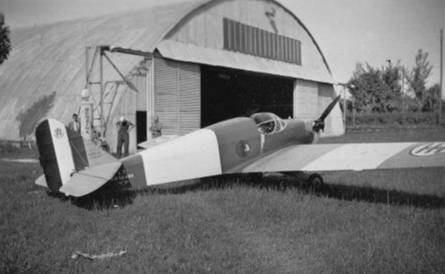
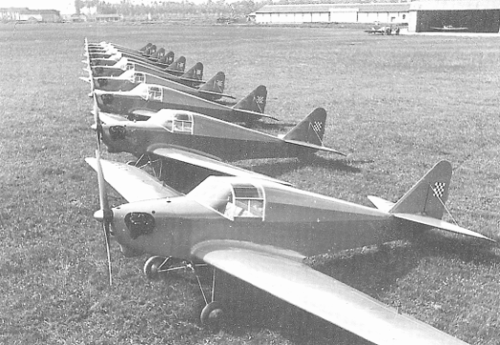
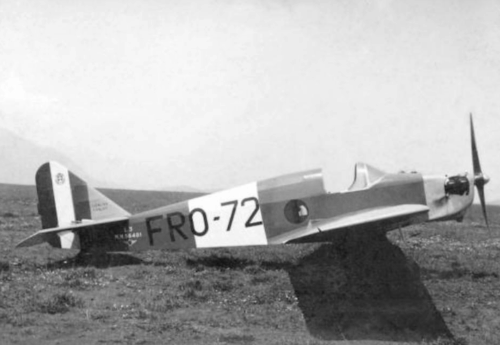
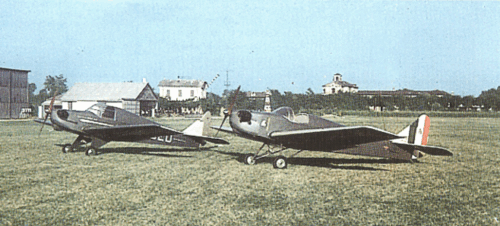
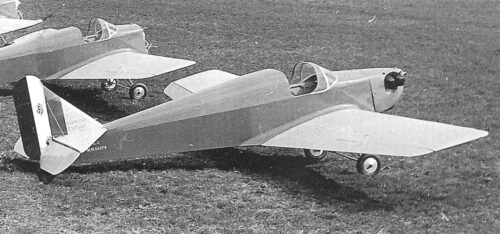
The Avia FL.3 was one of those modest little machines that quietly did a huge amount of work.
Conceived on the eve of the Second World War as a cheap, forgiving trainer and club aircraft, it went on to serve with Italian aero clubs, the Regia Aeronautica, the Luftwaffe, and several post-war operators.
Its simple wooden structure, low operating cost, and gentle handling made it a classic Italian light aircraft of the 1930s–40s and a fertile basis for a whole family of post‑war derivatives.
Development and programme history
Origins and design requirements
In the second half of the 1930s, the Italian Air Ministry encouraged the development of low‑cost light aircraft that could serve both civilian aero clubs and the Regia Aeronautica’s expanding training system.
The goal was an economical, easy‑to‑fly two‑seater suitable for ab‑initio training, liaison, and touring, with low production and maintenance costs so it could be built in quantity.
Francis (Francesco) Lombardi—pilot, engineer, and head of the small firm AVIA (Anonima/Azionaria Vercellese Industria Aeronautica) at Vercelli—responded with a compact low‑wing monoplane that became the FL. 3.
His design philosophy was pragmatic: all‑wood construction, a fixed undercarriage, modest power, and side‑by‑side seating to make instruction more natural and to appeal to private owners.
Prototype and early production
The prototype, initially known simply as the Lombardi or Avia FL.3, flew in 1938 (some sources give 1939 for the first flight of the definitive production configuration).
It was first powered by a small 45 hp Persy II engine, mainly to prove the airframe and meet the “low-cost” brief.
Flight tests confirmed the aircraft’s benign handling, low stall speed, and adequate performance for basic training and club flying.
For series production, AVIA adopted the 60 hp CNA D.IV (or D/IVS) four‑cylinder engine, which offered better reliability and slightly improved performance while remaining economical.
The Italian Air Ministry evaluated the type and selected it as an “ab initio” trainer for the Regia Aeronautica while also promoting it for aeroclub use.
Production began just before the outbreak of the Second World War.
Wartime production and interruption
With Italy’s entry into the war in 1940, the FL.3 found itself in demand as a primary trainer and liaison aircraft.
AVIA continued to build the type, but wartime priorities, material shortages, and the shifting focus towards combat aircraft limited the scale and continuity of production.
Figures vary by source, but around 335–355 FL.3s (plus the prototype) were built by AVIA during the main production run, including aircraft destined for foreign customers such as the Air Force of the Independent State of Croatia.
Post-war continuation and industrial succession After the war, the basic FL.3 design proved too useful to abandon.
Production resumed, and in 1947 AVIA was taken over by Lombardi, which continued to build the aircraft as the Lombardi FL. 3.
By the time of production of the basic FL. 3 families ended in 1948; more than 700 examples had been built by AVIA and Lombardi combined, according to some accounts—this figure likely includes both wartime and immediate post-war production.
In 1953, Meteor SpA acquired the rights to the design and developed a series of progressively more powerful and capacious derivatives (FL.53, FL.54, FL.55 and subvariants), extending the lineage well into the 1950s and 1960s.
Airframe design and construction
General configuration
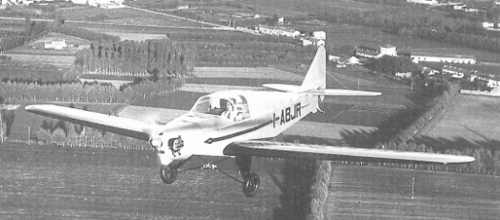
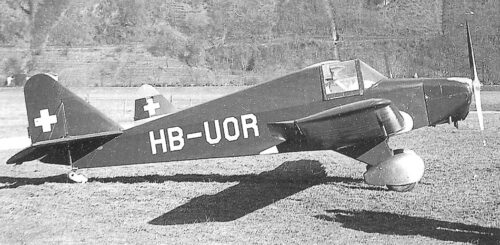
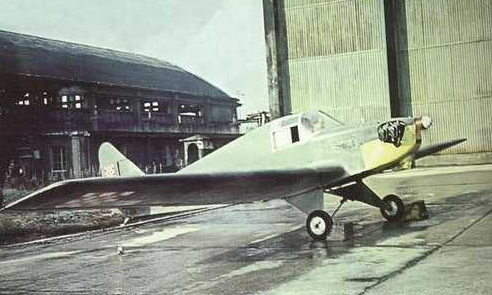
The Avia FL.3 was a low‑wing, cantilever monoplane of simple, clean lines.
It featured:
Wing: Low‑mounted, single‑spar wooden wing with plywood skinning, providing good lift at low speeds and forgiving stall characteristics.
Fuselage: Wooden semi‑monocoque structure, built from frames and stringers covered with plywood, giving a smooth aerodynamic shape and adequate strength for training manoeuvres.
Tail unit: Conventional tailplane and fin, also of wooden construction, with fabric‑covered control surfaces.
Undercarriage: Fixed, tailskid (or tailwheel) undercarriage with faired main wheels, chosen for robustness and low cost.
The aircraft’s compact dimensions—about 6.35–6.37 m in length, a 9.85 m wingspan, and 1.70–1.71 m in height—made it easy to house in small hangars and to handle on the ground.
Cockpit and controls The FL.3’s cockpit was one of its defining features.
It seated two occupants side‑by‑side, with dual controls as standard.
This arrangement:
Improved instruction: Instructor and student could share instruments and communicate easily.
Enhanced civil appeal: Side‑by‑side seating suited touring and club flying, making the aircraft attractive beyond purely military use.
Depending on the version and customer preference, the FL.3 could be fitted with an open cockpit (with windscreens) or a light cabin canopy, giving some weather protection while keeping weight and complexity low.
The instrument panel was basic, reflecting its role as a primary trainer and light tourer.
Structure and materials
The all-wood structure was a deliberate choice.
Italy had a strong tradition of wooden aircraft construction, and wood was relatively cheap and available compared to light alloys.
The FL.3 used:
Plywood skinning over frames and ribs for the fuselage and wing.
Fabric covering on control surfaces.
Simple fittings and systems to minimise manufacturing time and maintenance demands.
This construction made repairs straightforward for small workshops and aero clubs, an important factor in its widespread adoption.
Powerplant and performance
Engines
The FL.3 family used several engines over its life, but the core wartime trainer version was powered by a single CNA D.IV (or D/IVS) four-cylinder air-cooled engine of about 60 hp (45 kW).
Earlier prototypes used a 45 hp Persy II, and later post-war civil versions and derivatives adopted various Continental and Lycoming engines of higher power.
For the standard FL.3 trainer:
Engine: 1 × CNA D/IVS, 60 hp (45 kW)
Propeller: Two‑blade fixed‑pitch wooden propeller
Weights and dimensions (FL.3 trainer)
Typical figures for the FL. 3 trainer variants are:
Length: 6.37 m
Wingspan: 9.85 m
Height: 1.71 m
Wing area: 14.35 m²
Empty weight: 300 kg
Loaded (flying) weight: 515 kg
These numbers underline how light the aircraft was, which in turn contributed to its low stall speed and gentle handling.
Flight performance
With its modest power and lightweight, the FL.3 offered adequate but not spectacular performance—exactly what was needed for a primary trainer:
Maximum speed: about 195 km/h
Stall speed: about 72 km/h
Range: roughly 555–600 km
Service ceiling: about 5 000–6 000 m
Climb to 3 000 m: around 30 minutes
Take-off run: about 200 m
Landing run: about 130 m
These figures made the FL.3 well suited to small airfields and grass strips.
Its low landing and take‑off distances, combined with forgiving stall behaviour, were ideal for student pilots.
The aircraft’s handling was generally described as docile and predictable, with no vicious tendencies—one of the reasons it was selected as an ab initio trainer.
Variants and derivatives
Core FL.3 variants
Within the basic Avia/Lombardi production, the main distinctions were manufacturer and engine fit rather than radical airframe changes:
Avia FL.3
Role: Two‑seat trainer and club aircraft Manufacturer: AVIA (Anonima/Azionaria Vercellese Industria Aeronautica) Engine: 60 hp CNA D.4/D.IVS This was the principal wartime trainer version used by the Regia Aeronautica and aero clubs.
Lombardi FL.3: Post‑war production by Lombardi after the 1947 takeover of AVIA.
The airframe and role remained essentially the same, though equipment and finish reflected post‑war civil standards.
Meteor‑built derivatives
Meteor SpA’s acquisition of the design in 1953 led to a family of more powerful and more capable aircraft, all clearly descended from the FL.3 but increasingly oriented towards civil touring and utility roles:
Meteor FL.53: Two‑seat derivative with structural refinements, powered by a 65 hp Continental engine; eight were built.
Meteor FL.53BM: FL.53 with a 90 hp Continental engine; four built.
Meteor FL.54: Three‑seat variant powered by a 90 hp Continental C90‑12F; about 10 built.
Meteor FL.55: Four-seat variant, initially with a 135 hp Lycoming engine; four built.
Meteor FL.55BM: FL.55 with a 150 hp Lycoming; around 10 built.
Meteor FL.55CM: FL.55 with a 180 hp Lycoming; only one built.
Meteor Super: A more powerful four‑seat FL.55 with an enlarged vertical tail and a 220 hp Meteor Alfa 4 engine; one built.
Meteor Bis: Two‑seat variant of the Super, powered by a 110 hp Meteor Alfa 2 engine.
These Meteor variants moved the design away from its original low‑power trainer roots into the realm of light touring and utility aircraft, but they testify to the robustness and adaptability of Lombardi’s original concept.
Operational use and Second World War context
Regia Aeronautica and Italian aero clubs
Before and during the early years of the war, the FL.3 served primarily as the following:
Ab initio trainer: Used by the Regia Aeronautica’s flying schools to introduce new pilots to powered flight.
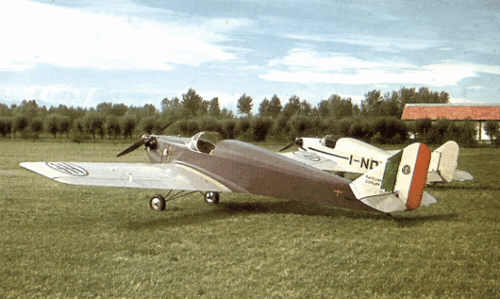
Aero‑club aircraft: Operated by Italian flying clubs for basic training, local touring, and pilot proficiency flying.
Its low operating cost and forgiving handling made it a natural fit for both roles.
Foreign operators and Axis allies The Air Force of the Independent State of Croatia (Zrakoplovstvo Nezavisne Države Hrvatske) ordered around 20 FL.3s, using them for training and liaison duties.
This reflected both the aircraft’s availability within Axis supply networks and its suitability for small air forces needing a simple trainer.
Luftwaffe use of captured aircraft
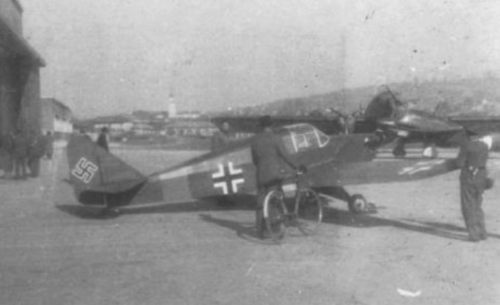
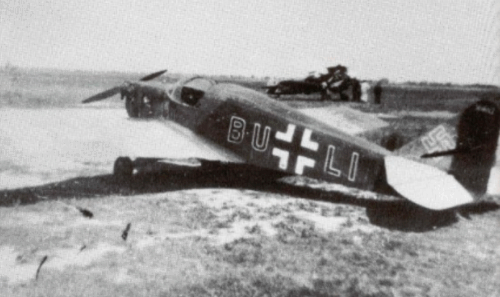
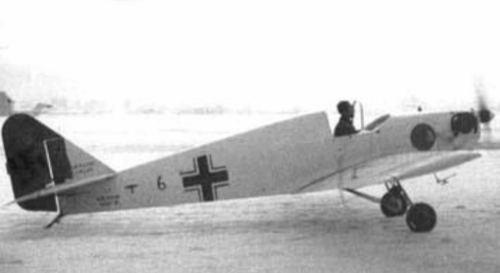
Following Italy’s armistice in 1943 and the subsequent German occupation of much of the country, the Luftwaffe seized large numbers of Italian aircraft, including the FL. 3.
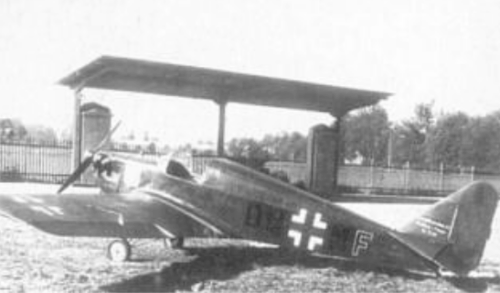
Approximately 250 FL.3s were taken over and used primarily as training and communication aircraft.
At least 145 FL.3s were recorded in April 1944 serving with various Flugzeugführerschule A/B (elementary flying schools), including units such as the following:
Flugzeugführerschule A/B 2
A/B 14
A/B 72
A/B 114
A/B 115
A/B 118
A/B 121
A/B 123
A/B 125
In Luftwaffe service, the FL.3 filled much the same niche as in Italy: basic training, liaison, and general communications.
Its modest performance was no handicap in these roles, and its simplicity was appreciated in the resource‑strained late‑war environment.
Late-war Italian use
Within the Italian Social Republic (RSI) and associated training organisations, FL.3s continued to appear in gliding schools and flying units, sometimes in mixed fleets with gliders and other light aircraft.
Their presence in late‑war training establishments underlines how deeply embedded the type had become in Italian flying culture.
Assessment and legacy
The Avia FL.3 was never a frontline combat aircraft, yet it played a crucial supporting role in the air arms of Italy and its allies.
As a trainer and club aircraft, it
Lowered the barrier to entry for new pilots, thanks to its low cost and gentle handling.
Provided a versatile platform for training, liaison, and communications duties.
Demonstrated the value of simple design, with its all‑wood structure and fixed gear proving durable and easy to maintain.
Its post-war continuation under Lombardi and Meteor and the evolution into more powerful three- and four-seat derivatives show how sound the original concept was.
For an aircraft encyclopaedia, the FL.3 stands as an archetypal example of a late‑interwar European light trainer: modest in performance but rich in influence and service life.