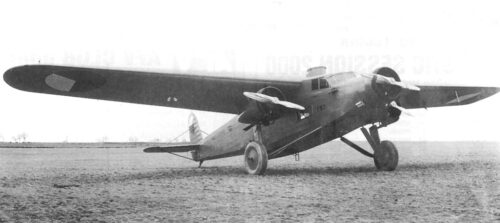
The Avia F.39 originated from Czechoslovakia’s effort to acquire a heavy bomber during the early 1930s, at a time when domestic attempts to design such an aircraft had repeatedly failed.
Czechoslovakia’s aviation industry was strong in fighters, reconnaissance aircraft, and light bombers but lacked a viable heavy bomber design.
This led the Ministry of National Defence to pursue licensed production instead.
Avia was already producing the Fokker F.VIIb/3m, and attention soon turned to the larger Fokker F.IX, a three‑engined passenger aircraft built in only two prototypes in the Netherlands.
The Fokker F.IX had been designed for KLM as a long‑range airliner with a 17–18 seat cabin and a range of 1150 km, but the Great Depression prevented large‑scale production.
Only two were built, one of which crashed in 1931, while the other was later sold to the Spanish Republicans and used as a bomber.
Avia acquired a licence and redesigned the aircraft for military use.
Chief designer Ing. František Novotný lengthened the nose, added a ventral step for a defensive gun position, and installed an internal bomb bay.
Multiple defensive armament layouts were tested before a final configuration was chosen.
The Czechoslovak Air Force ordered twelve aircraft, designated Avia F.IX, delivered between 1932 and 1934.
Two additional civil transports (F.IXD) were built for CSA, and two export aircraft were produced for Yugoslavia under the designation Avia F.39.
Design
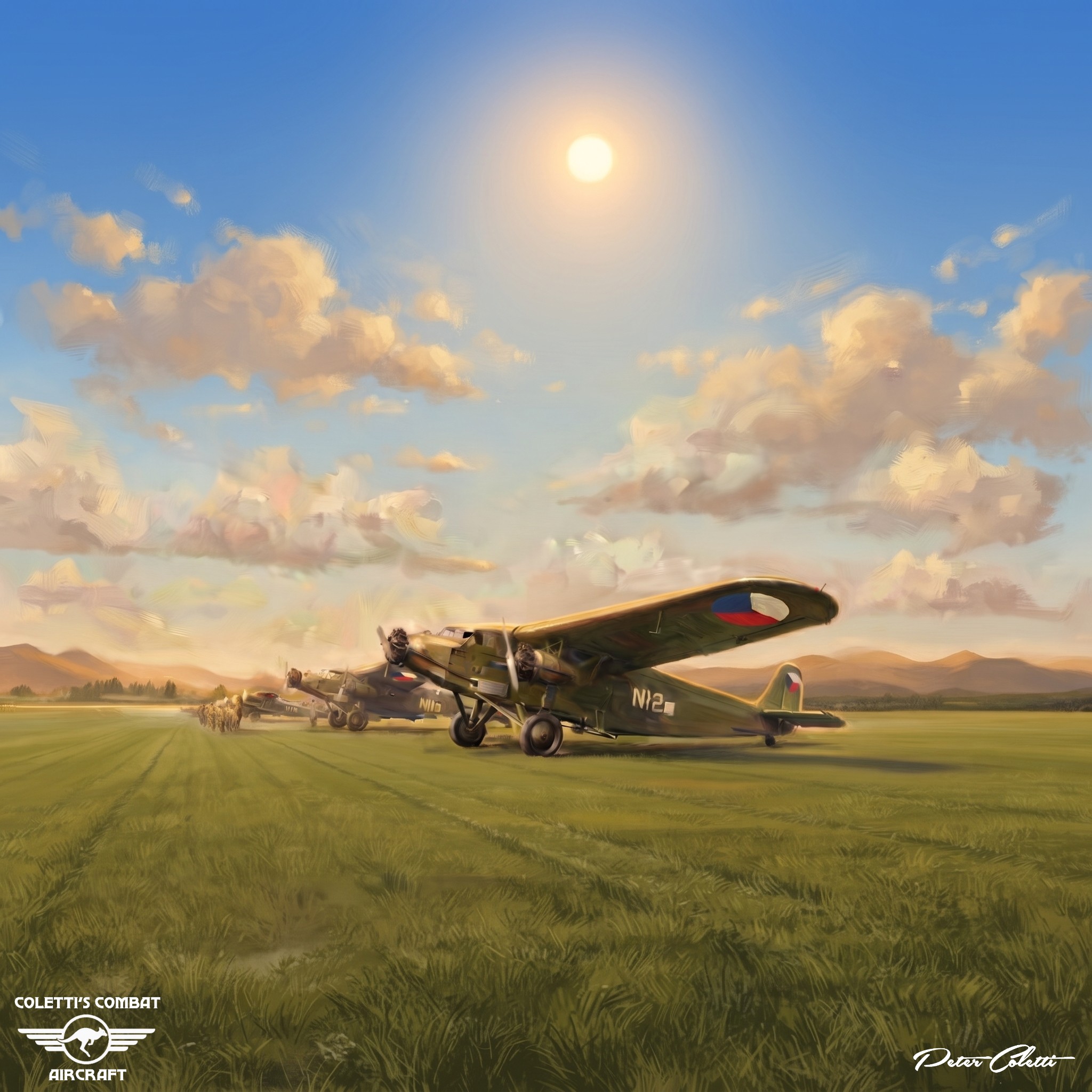
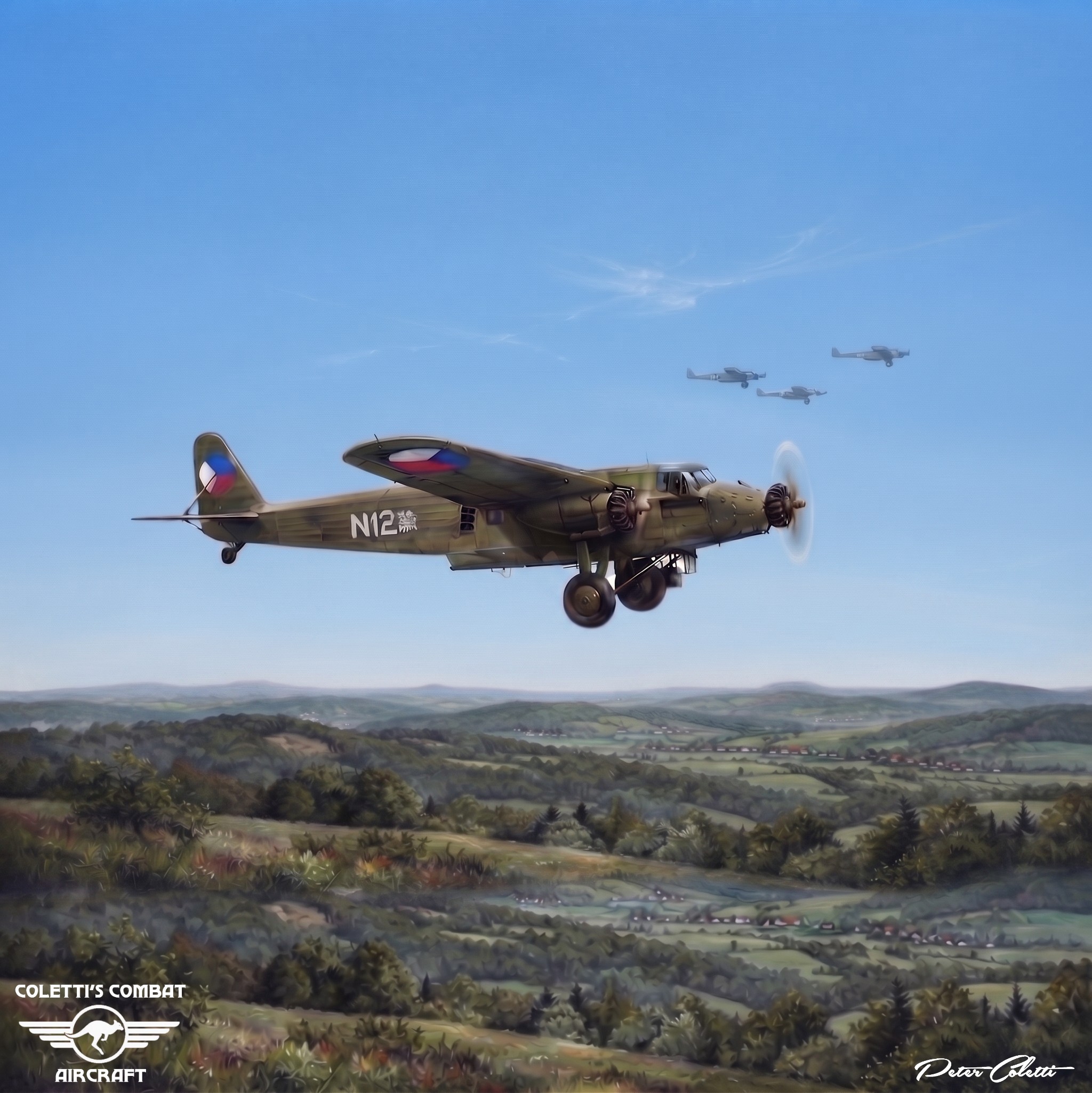
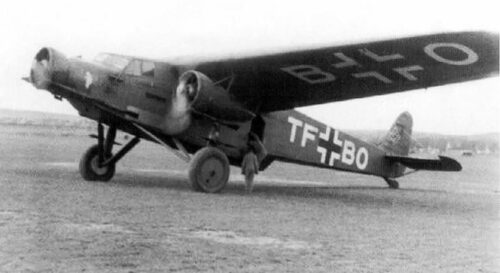
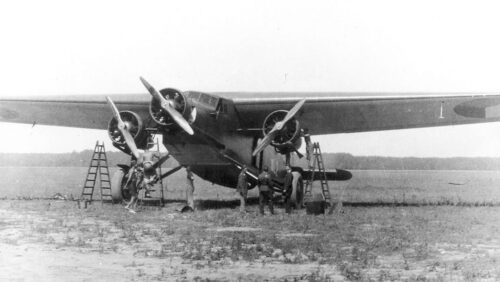
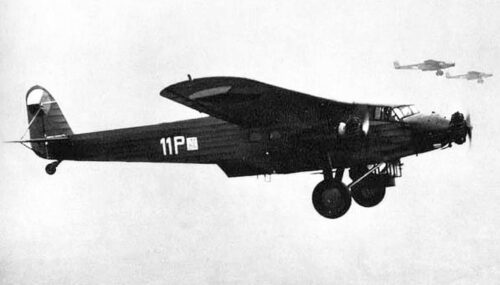
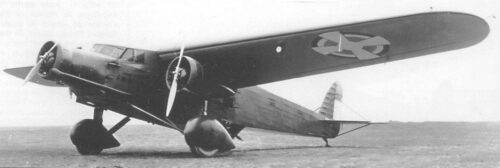
The Avia F.39 was a three‑engined, high‑wing monoplane of mixed construction, typical of Fokker‑derived aircraft of the era.
The fuselage used a welded steel‑tube frame with metal skin forward and fabric covering aft.
The wing was a large, thick, fully wooden structure with fabric covering.
The tail unit used steel‑tube framing with fabric surfaces.
The landing gear was fixed, with a wide track and U‑shaped struts attaching the wheels to the fuselage and shock‑absorbing vertical legs attached to the engine nacelles.
The aircraft was powered by three Walter (Gnome‑Rhône) Jupiter VI radial engines, each producing 450 hp, mounted in the nose and in two wing nacelles.
All engines were fitted with Townend ring cowlings and drove two-bladed wooden propellers.
The standard military crew consisted of three to four men: a pilot, an observer/navigator, a radio operator, and a gunner/bombardier.
Armament consisted of four 7.92 mm vz.28 machine guns in dorsal, ventral, and beam positions.
The internal bomb bay carried between 800 and 1500 kg of bombs.
Performance
Wingspan: 27.14 m
Length: 19.30 m
Height: 4.80 m
Wing area: 103 m²
Empty weight: 5450 kg
Normal takeoff weight: 9160 kg
Engines: 3 × Walter Jupiter VI, 450 hp each
Maximum speed: 210 km/h
Cruising speed: 188 km/h
Range: 1000 km
Service ceiling: 4500 m
Rate of climb: 150 m/min
Crew: 2–4
Armament: Four 7.92 mm machine guns; 800–1500 kg bombs
Variants
F.IX (Military Bomber): Standard Czechoslovak Air Force version with full defensive armament and bomb bay.
F.IXD (Civil Transport): Two aircraft built for CSA, fitted with more powerful 550 hp Walter Pegasus II engines and configured for 17 passengers.
One crashed in 1937; the other served until the German occupation.
F.39 (Export Version): Two aircraft built for Yugoslavia, fitted with French‑built Jupiter engines and later metal propellers.
F.139 (Projected Variant): A proposed twin‑engine version that never left the design stage.
Operation history in World War Two
Czechoslovak Air Force (1932–1939)
All twelve Avia F.IX bombers were assigned to the four heavy bomber squadrons of the 5th Bomber Regiment.
They were used for night navigation training, bombing practice, air defence exercises, and long‑range navigation flights.
By the mid‑1930s, they were obsolete and replaced by Aero MB.200 bombers.
The remaining aircraft were relegated to training and transport duties.
At the time of the German occupation on 15 March 1939, eight aircraft remained, all classified as obsolete and intended for sale abroad.
Luftwaffe (1939–1945)
The Luftwaffe showed little interest in the outdated F.IX, but a few were taken over.
One aircraft, TR+VO, served in 1940 with Flugzeugführerschule VRB 2 at Neuberg.
Another is photographed with the registration WL+ARZP.
These aircraft were used only for training, liaison, and general transport.
Royal Yugoslav Air Force (1932–1941)
Yugoslavia purchased two Avia F.39 aircraft in 1939 (serials 101 and 102) and acquired a production licence that was never exercised.
The aircraft served in the 261st Aviation Group, the “Three‑Engine Group”, alongside Junkers G.24 and Dornier DoY aircraft.
They were used for heavy bomber crew training, navigation training, and transport duties until the Axis invasion in April 1941.
Air Force of the Independent State of Croatia (1941–1944)
After Yugoslavia’s collapse, at least one F.39 was captured and put into service.
This aircraft, serial 1801, was nicknamed “Baba Roga” and assigned to the 9th Squadron, 3rd Air Group, based at Rajlovac near Sarajevo.
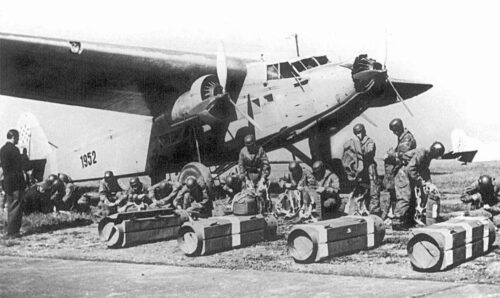
It was used for ammunition and supply transport, paratrooper training, and anti‑partisan operations.
On 23 March 1942, it was damaged by ground fire but returned safely on two engines.
It continued operations until it was shot down on 20 August 1943.
Croatian sources claim two more F.IX aircraft were acquired in 1942, but Czech records confirm only two Fokker F.VIIb/3m and one Avia F.IXD were sold.
One Croatian F.IX was destroyed in a USAAF raid on Zagreb on 12 April 1944.
Summary
The Avia F.39 was a militarised adaptation of the Fokker F.IX airliner, serving as Czechoslovakia’s first practical heavy bomber.
Though slow and outdated by the mid‑1930s, it played an important role in training heavy bomber crews and supporting early bomber doctrine.
During World War II it served with four air forces: Czechoslovakia, the Luftwaffe, the Royal Yugoslav Air Force, and the Independent State of Croatia.
Its long service life, despite obsolescence, reflects its reliability and the adaptability of the original Fokker design.