The Arsenal‑Delanne 10‑C2 emerged from a uniquely French fascination with unconventional aerodynamic configurations during the interwar period.
Among the most persistent advocates of alternative lifting arrangements were Maurice Delanne and Roland Payen, who spent the early 1930s exploring the tandem‑wing concept — sometimes called the Nenadovich biplane configuration.
Their research suggested that two lifting surfaces of comparable area, spaced along the fuselage, could produce:
A continuous slot effect between the wings
A very wide centre‑of‑gravity range
Improved manoeuvrability
Shorter takeoff and landing distances
However, these advantages came with penalties: increased drag, complex structural requirements, and delicate stability considerations.
Despite these challenges, Delanne’s early experimental aircraft – culminating in the Delanne 20T – demonstrated enough promise that the French Ministry of Aviation took notice in the mid-1930s.
Encouraged by the results, the Ministry issued a requirement for a two‑seat fighter (C2 category) using the tandem‑wing layout.
To accelerate development, Delanne’s small design bureau was paired with the state‑owned Arsenal de l’Aéronautique, which had the industrial capacity to build a full‑scale combat aircraft.
Work on the new fighter, designated Arsenal‑Delanne 10‑C2, began in late 1939, only months before France entered the Second World War.
Design and Structural Features
General Configuration
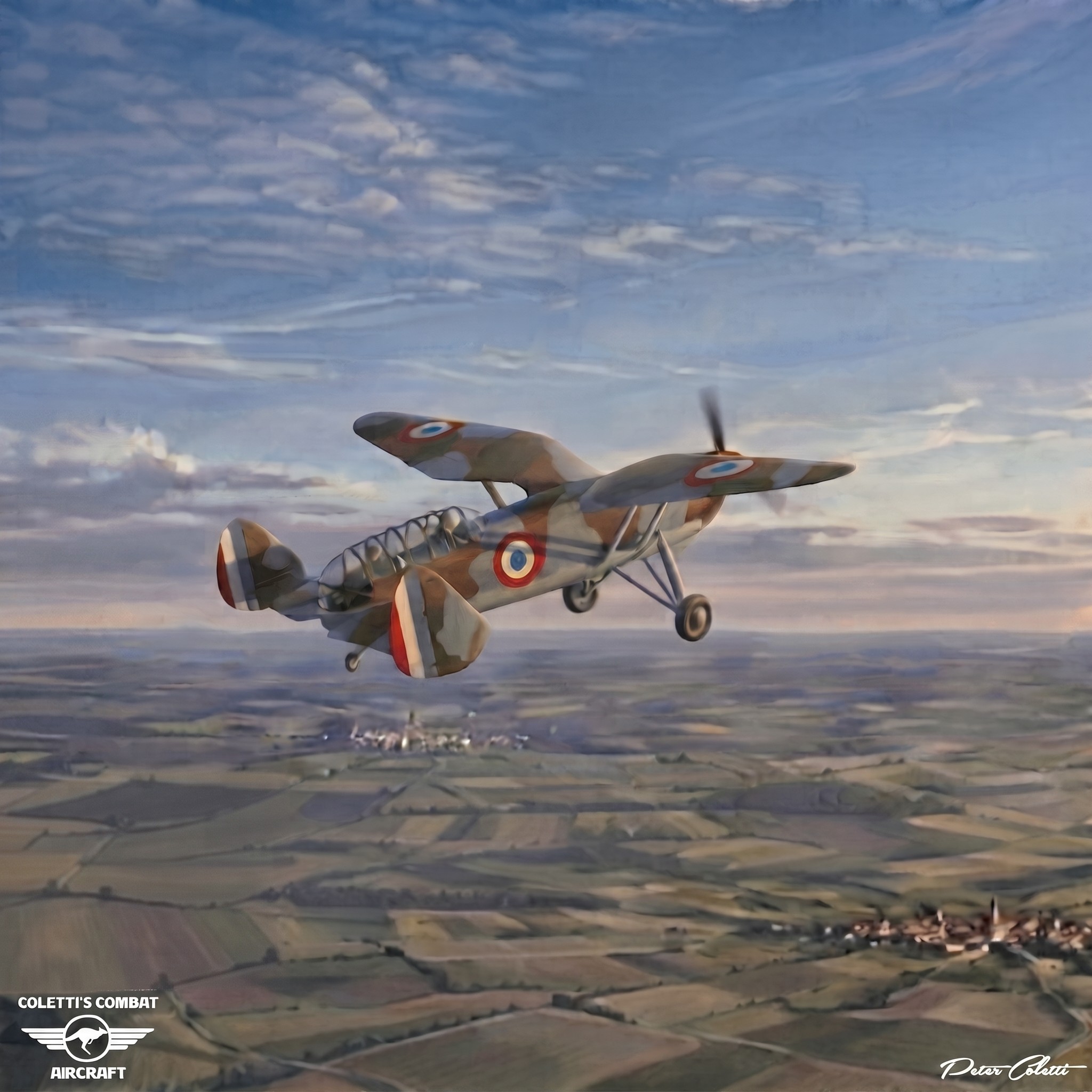
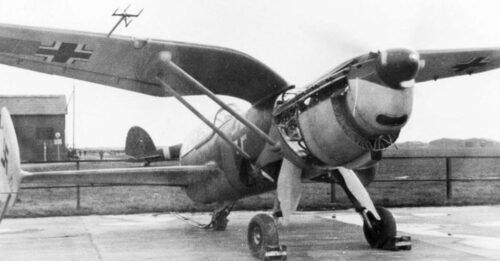
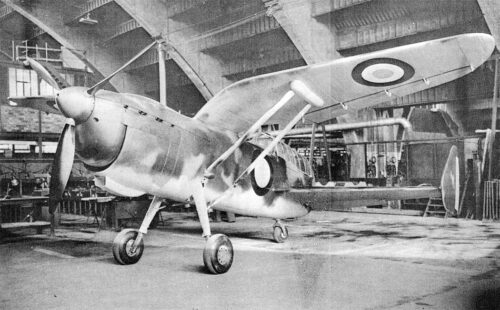
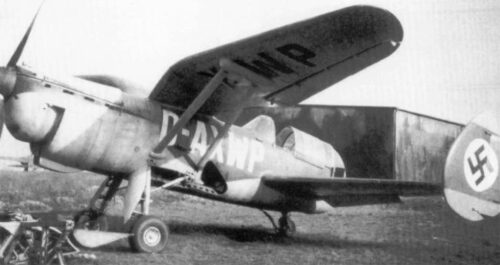
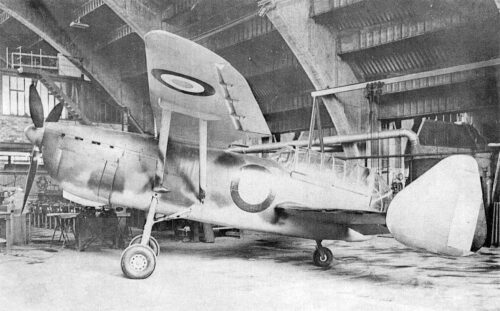
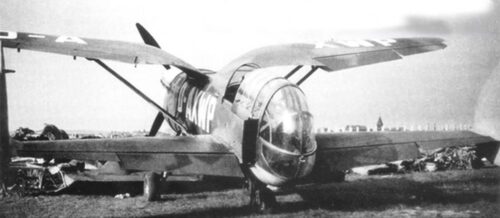
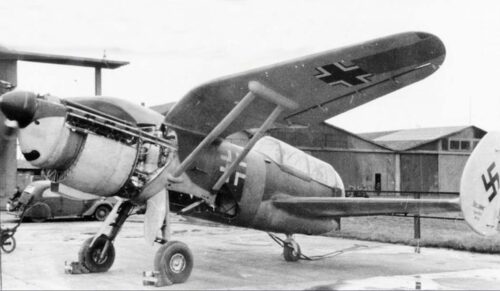
The Arsenal‑Delanne 10‑C2 was a two‑seat, single‑engine fighter with a highly distinctive silhouette:
A gull‑shaped front wing mounted high on the fuselage
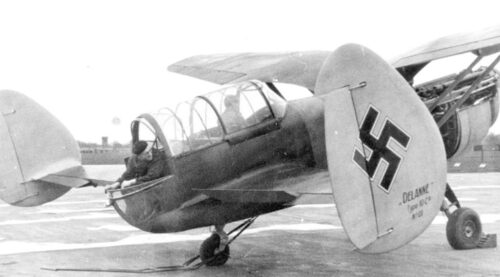
A rear wing of a smaller area, positioned near the tail and carrying twin vertical fins
A long, continuous canopy placed unusually far aft, level with the rear wing
This arrangement gave the rear gunner an exceptionally wide field of fire — one of the primary tactical goals of the design — but it severely compromised the pilot’s forward visibility, especially during landing.
Structure and Materials
The aircraft was built entirely of metal using an advanced stressed‑skin sandwich technique:
A smooth outer duralumin skin
Welded to an underlying corrugated sheet
This produced a strong, lightweight shell that was ahead of its time in French aircraft construction.
Landing Gear
The prototype initially used fixed, non‑retractable landing gear, though the design was intended for later production aircraft to receive a fully retractable undercarriage.
German evaluators later recommended enlarging the vertical stabilisers but otherwise found the basic structure sound.
Powerplant
The fighter was powered by a Hispano‑Suiza 12Ycrs, a 12‑cylinder liquid‑cooled inline engine producing 860 hp.
This engine drove a three‑blade propeller and was standard equipment in many French fighters of the era.
Cockpit and Crew Arrangement
Both crew members — the pilot and the gunner — sat in tandem beneath a single canopy.
The cockpit’s position at the rear of the fuselage was dictated by the tandem-wing layout:
The pilot sat forward within the canopy but still far behind the aircraft’s nose
The gunner sat directly behind, operating a pair of flexible 7.5 mm machine guns.
The rearward placement improved defensive coverage but created serious ergonomic and operational drawbacks for the pilot, particularly in forward visibility and situational awareness.
Armament (Planned)
The Arsenal‑Delanne 10‑C2 was intended to carry a mixed offensive and defensive armament typical of French fighters in 1939–40.
1 × 20 mm Hispano‑Suiza HS‑404 cannon firing through the propeller hub
2 × 7.5 mm MAC 1934 (or M39) machine guns in the wings
2 × 7.5 mm MAC 1934/M39 machine guns on a flexible mount for the rear gunner
No bomb load was planned; the aircraft was conceived strictly as a two‑seat escort and defensive fighter.
Development Under German Occupation
By June 1940, when German forces overran the Villacoublay test centre, the prototype was nearly complete.
The Germans collected all experimental French aircraft for evaluation, including the unfinished Delanne 10‑C2.
Initially, German engineers showed little interest in the odd‑looking fighter.
However, higher‑level directives ordered that the aircraft be completed for testing.
French technicians, still working under occupation, finished the prototype in 1941.
Testing
Ground tests began in mid‑1941.
The aircraft received German camouflage and markings.
The first flight occurred in October 1941.
Flight tests reportedly confirmed many of Delanne’s aerodynamic predictions.
The aircraft handled well enough that retractable landing gear trials were considered.
However, by late 1941, German interest had evaporated.
The Luftwaffe was fully committed to mass‑producing proven designs and had no appetite for an unconventional French two‑seat fighter.
The prototype completed only 15 flights, totalling roughly 6 hours of airborne testing.
Eventually, the aircraft was ferried to Germany for further evaluation, after which it disappeared from records.
Performance (Prototype Figures)
(Values synthesised from both technical sources)
Maximum speed: ~550 km/h at altitude
Cruising speed: ~465 km/h
Service ceiling: ~10,000 m
Rate of climb: ~770 m/min
Endurance: ~1.5 hours
Crew: 2
These figures were respectable for a two‑seat fighter of its era, especially given the aerodynamic penalties of the tandem‑wing layout.
Assessment and Legacy
The Arsenal‑Delanne 10‑C2 was an ambitious attempt to combine the following:
Heavy forward armament
Strong defensive coverage
Innovative aerodynamic theory
However, the design was fundamentally compromised by:
Poor pilot visibility
Structural and aerodynamic complexity
The collapse of France in 1940
German disinterest in non‑standard aircraft
Had development continued, the aircraft would have required major redesigns — including a more powerful engine, revised cockpit placement, and refined aerodynamics — effectively becoming a new aircraft altogether.
Influence
Although the 10‑C2 never entered production, Delanne’s tandem‑wing ideas lived on in later experimental aircraft, including the Payen PA.22, which pushed the concept even further into unconventional territory.
Variants
Only one prototype of the Arsenal‑Delanne 10‑C2 was built.
Some sources refer to the prototype as AD.10S2, but this appears to be an internal or alternative designation rather than a true variant.
Context in WWII Aviation
The Arsenal‑Delanne 10‑C2 represents a “what‑if” branch of French fighter development cut short by the rapid German victory in 1940.
France’s aviation industry was in the midst of modernisation, and several advanced designs — including the Dewoitine D.520, Bloch MB.157, and Arsenal VG.33 — were poised to challenge contemporary German fighters.
In this environment, the Delanne 10‑C2 was an outlier: a bold but risky experiment.
Its cancellation was not merely a result of occupation but also of wartime pragmatism.
Even in a free France, it is unlikely that such an unconventional aircraft would have been prioritised over more conventional, easier‑to‑produce fighters.
Summary
The Arsenal‑Delanne 10‑C2 stands today as one of the most unusual French aircraft of the Second World War — a rare example of a tandem‑wing fighter brought nearly to completion.
Though it never progressed beyond a single prototype, it remains a fascinating case study in aerodynamic experimentation, wartime disruption, and the limits of unconventional design.