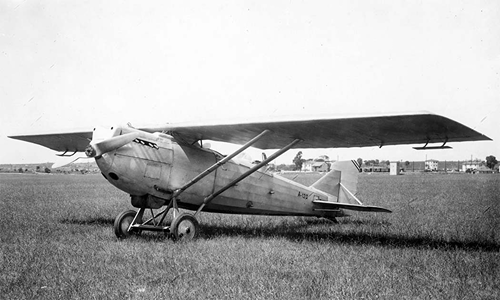
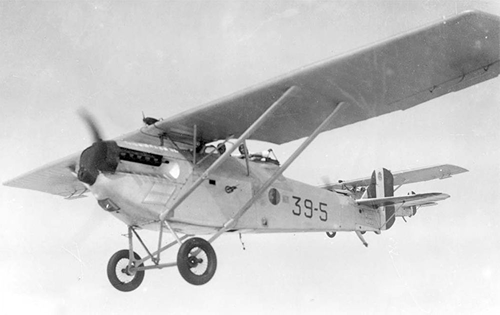
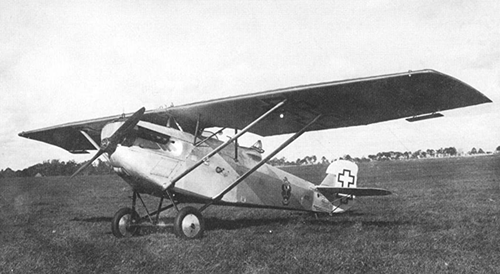
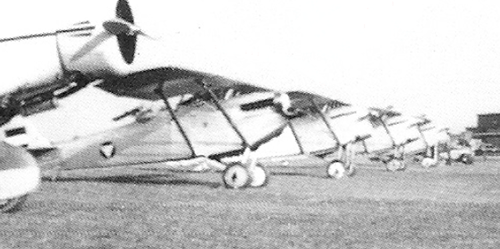
The A.120 entered service with the Regia Aeronautica in limited numbers during the late 1920s and early 1930s.
Though not produced in large quantities, it filled a niche role in Italy’s evolving air doctrine, supporting ground forces with aerial reconnaissance and battlefield observation.
Italy
The A.120 Ady served primarily in home defence and training roles.
Its long endurance (up to 7 hours) made it suitable for extended patrols over Italy’s varied terrain.
However, rapid advances in aircraft design soon rendered it obsolete, and it was phased out in favour of more modern monoplanes by the mid-1930s.
Austria
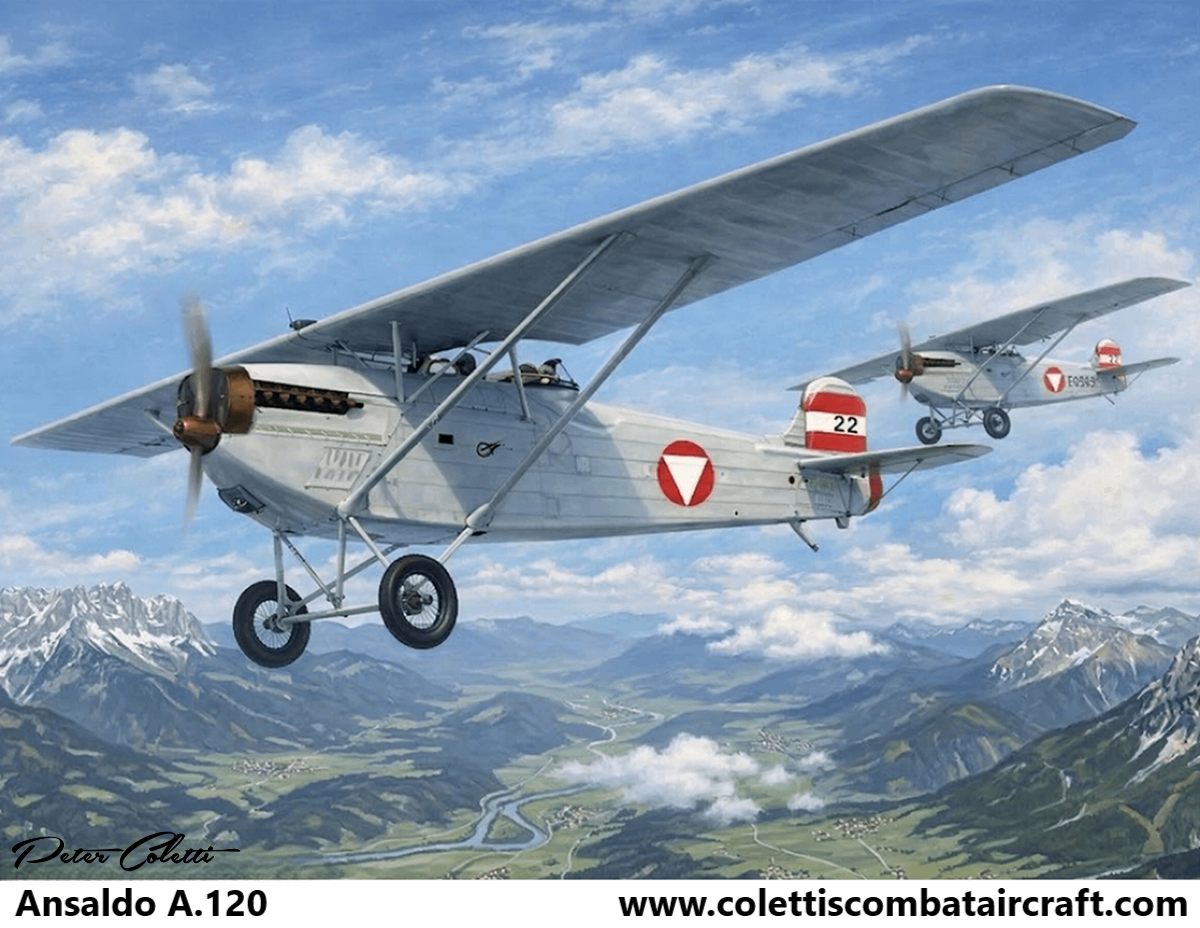
Six aircraft were delivered to the Austrian Air Force as the A.120R variant, tailored to local specifications.
These were used for border surveillance and tactical reconnaissance until Austria’s annexation in 1938.
Austrian pilots reportedly appreciated the aircraft’s stability and visibility, though its performance lagged behind newer contemporaries.
Lithuania
Lithuania was the largest foreign operator, acquiring 20 A-120Ady aircraft between 1929 and 1931.
These served with the Lietuvos karo aviacija (Lithuanian Military Aviation) and were deployed for coastal patrols, border observation, and training.
Lithuanian modifications included twin rear-mounted machine guns and radio equipment.
The aircraft remained in service until 1940, when the Soviet Union annexed Lithuania and absorbed its air assets.
Despite its modest production run, the A.120 played a formative role in interwar reconnaissance aviation and marked a transitional phase in Italy’s shift from biplanes to more modern monoplane designs.
A.120
(Prototype with Lorraine 12 dB engine)
Overview
The original prototype of the A.120 series, this version was powered by the French-built Lorraine 12Db engine, a liquid-cooled V12 delivering around 400 hp.
Design Notes
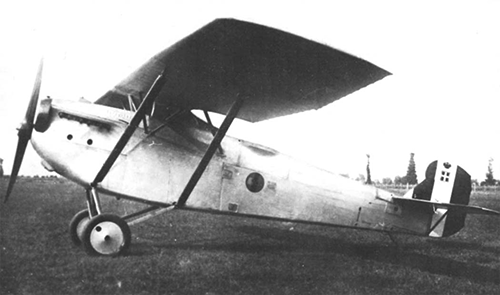
It featured a parasol-wing monoplane layout with tandem open cockpits and fixed-tail skid undercarriage.
The fuselage was derived from the Dewoitine D.1 fighter, which Ansaldo had built under licence.
Production
Only two units were constructed, serving primarily as testbeds for aerodynamic and structural refinement before production began.
A.120bis
(Improved version with Fiat A.20 engine)
Overview
This transitional variant introduced the Italian Fiat A.20 engine, a water-cooled V12 producing approximately 420 hp.
Enhancements
The A.120bis incorporated minor aerodynamic improvements and structural adjustments based on feedback from the prototype trials.
It marked the shift towards domestic powerplants and operational readiness.
Role
Used for further testing and limited operational evaluation, paving the way for the definitive production model.
A. 120 Ady
(Definitive production version with Fiat A.22 engine)
Overview
The main production variant, the A.120Ady, was equipped with the more powerful Fiat A.22 engine (550 hp), offering improved performance and endurance.
Production
A total of 57 units were built, making it the most widely produced version.
Operational Use
Served with the Regia Aeronautica and was exported to Lithuania, where 20 aircraft were operated until 1940.
Lithuanian examples featured twin rear machine guns for enhanced defensive capability.
Performance
Max speed of 254 km/h, endurance of 7 hours, and service ceiling of 7,000 m.
Armament included forward-firing and rearward-firing 7.7 mm machine guns.
A.120R
(Revised version for Austrian service)
Overview
A customised variant for the Austrian Air Force, the A.120R featured modifications tailored to local operational requirements.
Production
Six aircraft were built and delivered between 1927 and 1938.
Service
Used primarily for reconnaissance and light observation duties.
The A.120R retained the core airframe and engine configuration of the Ady but may have included radio equipment or other mission-specific adaptations.
Specifications
(A.120Ady)
Crew
Two, pilot and observer
Length
8.60 m (28 ft 3 in)
Wingspan
12.80 m (42 ft 0 in)
Height
2.80 m (9 ft 2 in)
Wing area
27.4 m² (295 sq ft)
Powerplant
1 × Fiat A.22 piston engine,
410 kW (550 hp)
Performance
Maximum speed
254 km/h (158 mph, 137 kn)
Endurance
7 hours
Service ceiling
7,000 m (23,000 ft)
Armament
1 × or 2 × fixed, forward-firing 7.7 mm machine guns
1 × trainable, rearward-firing 7.7 mm machine gun for observer.